Love this? Save it for later!
Share the inspiration with your friends
My husband claimed he hated focaccia. For years. He’d poke at the dense, oily slabs served at chain restaurants, make a face, and quietly push the bread basket my way. I just assumed focaccia wasn’t his thing. Then, last Thursday, I pulled this no-knead rosemary sourdough version out of the oven, golden and crackling, and caught him standing over the cooling rack, tearing off pieces with his bare hands. He didn’t even see me watching. I didn’t say a word—I just let him keep eating. Honestly, that moment felt better than any compliment he could have given me out loud.
The funny thing is, this no-knead rosemary sourdough focaccia wasn’t even supposed to be a project. I had leftover sourdough discard sitting in the fridge—you know the stuff, the part you feel guilty throwing away but never know what to do with. I figured I’d toss it into a simple dough, let time do the work, and see what happened. What came out of the oven was something else entirely. It had that chewy, airy crumb you get from a bakery, with a crust so crisp it shattered when you bit into it. The rosemary on top got all crackly and fragrant, and the olive oil pooled into every little dimple. It was, honestly, the best focaccia I’d ever made. And I barely did anything.
Maybe you’ve been there—intimidated by the idea of working with sourdough, or convinced focaccia requires hours of kneading and a lot of muscle. I promise you, this recipe is the opposite of that. It’s the kind of bread that makes you feel like a pro without the stress. Let me show you how it’s done.
Why You’ll Love This Recipe
This no-knead rosemary sourdough focaccia has become my go-to for a reason. It’s the recipe I bring to potlucks, the one I make on lazy Sunday afternoons, and the one I send friends home with when they need a little comfort. Here’s why it works so well:
- No Kneading Required – You don’t need a stand mixer or any arm strength. Just a bowl, a spatula, and some patience. The gluten develops naturally over time.
- Uses Sourdough Discard – This is the perfect way to use up that extra starter you’ve been feeding. No waste, just flavor.
- Simple Pantry Ingredients – Flour, water, olive oil, salt, rosemary, and your sourdough starter. That’s it. You probably have everything right now.
- Perfect for Beginners – If you’ve never made bread before, start here. The dough is forgiving, and the results are stunning.
- Bakery-Quality Results – That crispy, golden crust and airy, chewy interior? It looks and tastes like it came from a fancy Italian bakery.
- Make-Ahead Friendly – The dough can rest in the fridge for up to 24 hours, so you can prep it the day before and bake it fresh when you’re ready.
What really sets this focaccia apart is the sourdough. It adds a subtle tanginess that balances the rich olive oil and the piney rosemary. It’s not overpowering—just a gentle, complex flavor that keeps you coming back for one more piece. I’ve tested this recipe a dozen times to get the hydration and timing just right, and I can tell you with confidence: this is the version you want to make.
What Ingredients You Will Need
This no-knead rosemary sourdough focaccia relies on a short list of ingredients, but each one plays an important role. Let’s walk through what you’ll need and why it matters.
For the Dough
- Bread flour – 3 cups (360 grams). Bread flour has a higher protein content than all-purpose, which gives the focaccia its signature chewy structure. I prefer King Arthur Baking Company for consistent results, but any good bread flour works.
- Sourdough starter (discard or active) – 1 cup (240 grams), unfed or fed. This is where the magic happens. The starter adds flavor and helps with the rise. If you’re using discard straight from the fridge, that’s perfect—no need to feed it first.
- Warm water – 1 cup (240 ml), around 80°F. Not too hot or you’ll kill the natural yeast. Think bathwater temperature.
- Olive oil – ¼ cup (60 ml), plus extra for the pan. Use a good-quality extra virgin olive oil here—it’s a major flavor component. I like California Olive Ranch for a reliable everyday option.
- Salt – 1½ teaspoons (9 grams). Fine sea salt works best. It dissolves more evenly than coarse salt.
For the Topping
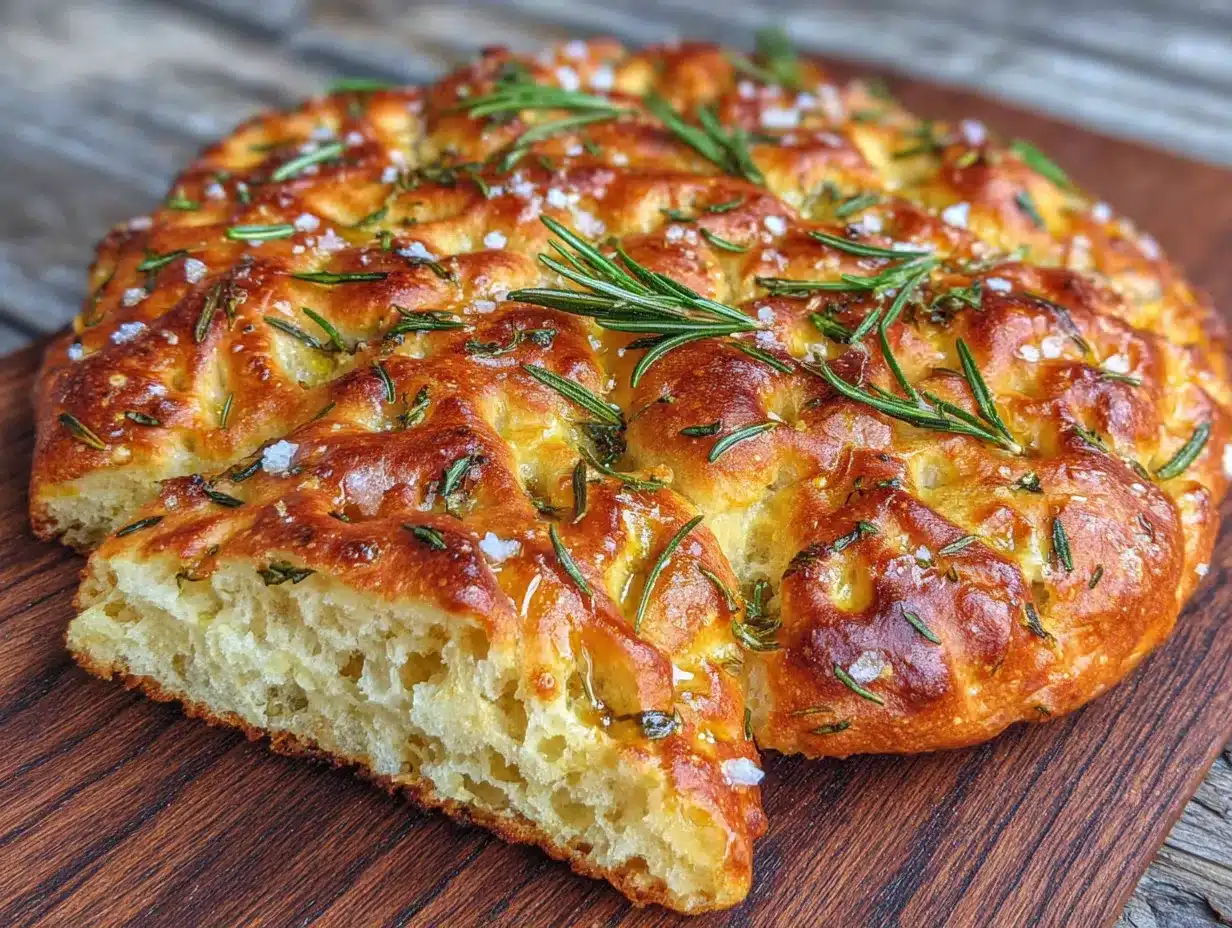
- Fresh rosemary – 2 tablespoons, finely chopped. Fresh is non-negotiable here. Dried rosemary won’t give you that same fragrant, almost crispy texture.
- Flaky sea salt – 1 teaspoon, for sprinkling. Maldon is my go-to. It adds little bursts of saltiness that contrast beautifully with the olive oil.
- Extra olive oil – 2 tablespoons, for drizzling before baking.
One thing I’ve learned the hard way: don’t skimp on the olive oil. Focaccia is an oil-based bread, and that generous amount in the pan and on top is what gives it that crispy, almost fried exterior. If you’re nervous about using too much, just trust the process. The dough absorbs what it needs, and the rest creates that gorgeous golden crust.
If you don’t have bread flour, all-purpose flour will work in a pinch, but the texture will be a little softer and less chewy. For a gluten-free version, I’ve had success with a 1:1 gluten-free baking flour blend, though the rise won’t be quite as dramatic.
Equipment Needed
You don’t need much for this no-knead rosemary sourdough focaccia. That’s part of the beauty. Here’s what I use:
- Large mixing bowl – Any bowl will do, but I prefer a wide ceramic or glass bowl. It makes mixing easier and holds the dough during its long rise.
- Measuring cups and kitchen scale – A scale is your best friend for consistent results. I use a simple Escali scale, and it’s never let me down.
- Spatula or wooden spoon – For mixing the shaggy dough. A silicone spatula works great because it doesn’t stick.
- 9×13-inch baking pan – A metal or glass pan works. I’ve used both, and metal gives a slightly crispier bottom crust. If you only have a round cake pan, that works too—just adjust the baking time slightly.
- Plastic wrap or a damp kitchen towel – To cover the dough while it rests. A reusable beeswax wrap is also a great eco-friendly option.
- Cooling rack – Essential for letting the focaccia cool so the bottom doesn’t get soggy.
If you don’t have a 9×13 pan, a cast iron skillet works beautifully. It holds heat well and creates an especially crispy bottom. Just make sure it’s well-oiled before you add the dough.
Preparation Method
Making this no-knead rosemary sourdough focaccia is more about patience than skill. The dough does most of the work. Here’s how it comes together.
- Mix the dough – In a large bowl, combine the bread flour, sourdough starter, warm water, olive oil, and salt. Stir with a spatula until a shaggy, sticky dough forms. It will look rough and uneven—that’s exactly what you want. Don’t overmix. Cover the bowl with plastic wrap or a damp towel and let it rest for 30 minutes. This short rest, called autolyse, lets the flour absorb the liquid and makes the dough easier to handle later.
- Perform the first fold – After the rest, wet your hands slightly (this prevents sticking) and grab one edge of the dough. Fold it over toward the center. Rotate the bowl a quarter turn and repeat. Do this four times total, folding the dough over itself. Cover again and let it rest for 30 minutes. This folding technique builds strength without kneading.
- Repeat the folds – Do the same folding process two more times, with 30-minute rests in between. After the third set of folds, the dough should feel smoother and more elastic. It will still be sticky, but it will hold its shape better. Cover the bowl and let it rise at room temperature for 8 to 12 hours, or overnight. The dough should double in size and look bubbly on top.
- Prepare the pan – Pour about 2 tablespoons of olive oil into your 9×13-inch baking pan. Use your fingers to spread it evenly over the bottom and sides. This generous oiling is crucial—it prevents sticking and creates that crispy crust.
- Transfer the dough – Gently scrape the risen dough into the oiled pan. It will be loose and jiggly. Don’t try to shape it too much yet. Just let it settle into the pan. Cover with plastic wrap and let it rest for 30 minutes.
- Stretch the dough – After 30 minutes, use your fingertips to gently stretch the dough toward the edges of the pan. It will resist at first, so work slowly. If it springs back, let it rest another 15 minutes and try again. You want the dough to fill the pan evenly. Cover and let it rise for another 1 to 2 hours, until it’s puffy and almost doubled in height.
- Dimple the dough – Preheat your oven to 425°F (220°C). Once the dough is puffy, drizzle the remaining 2 tablespoons of olive oil over the top. Dip your fingers in the oil and press deep dimples all over the surface of the dough. Don’t be shy—go all the way down to the bottom of the pan. This is what creates those iconic focaccia pockets that catch all the oil and rosemary.
- Add the toppings – Sprinkle the chopped fresh rosemary evenly over the dimpled dough. Finish with a generous sprinkle of flaky sea salt. The salt crystals will melt slightly into the oil, creating little bursts of flavor.
- Bake – Place the pan on the middle rack and bake for 25 to 30 minutes, until the top is deep golden brown and the edges look crispy. If the bottom isn’t browning enough, you can place the pan on the lowest rack for the last 5 minutes. The focaccia should sound hollow when you tap it on the bottom.
- Cool – Let the focaccia cool in the pan for 5 minutes, then transfer it to a cooling rack. This step is important—if you leave it in the pan, the steam will soften the bottom crust. Let it cool for at least 20 minutes before slicing. I know it’s hard to wait, but it’s worth it.
One thing I’ve learned: don’t rush the final rise. That last hour or two is when the dough really develops its airy structure. If you bake it too soon, the focaccia will be denser. Patience pays off here.
Cooking Tips & Techniques
After making this no-knead rosemary sourdough focaccia more times than I can count, I’ve picked up a few tricks that make a real difference.
Use a kitchen scale. I know it seems fussy, but measuring flour by volume can vary wildly. A cup of flour can weigh anywhere from 120 to 150 grams depending on how you scoop it. That difference affects the hydration of your dough. A scale removes the guesswork entirely. I use 360 grams of bread flour every time, and my results are consistent.
Don’t skip the folds. The folding technique might feel repetitive, but it’s what builds the gluten structure without kneading. I once tried to shortcut it by just letting the dough sit without folding, and the focaccia came out flat and dense. Those three sets of folds are non-negotiable.
Watch your water temperature. If your kitchen is cold (below 65°F), use slightly warmer water, around 85°F. If it’s hot and humid, use cooler water, around 75°F. The goal is to keep the dough at a comfortable room temperature during the rise. I’ve had batches that took 14 hours to rise in a cold kitchen, and others that were ready in 8 hours during summer.
Dimple with confidence. The first time I made focaccia, I was too gentle with the dimpling. The result was a flat top with no texture. Now I press firmly, almost all the way to the bottom of the pan. Those deep pockets are what catch the olive oil and create those crispy, flavorful spots.
Let it cool completely. I know the smell is intoxicating, but slicing into warm focaccia compresses the airy crumb. Let it cool for at least 20 minutes. The texture improves dramatically as it sets.
One mistake I made early on: I used dried rosemary because I thought it was close enough. It was not. Dried rosemary stays hard and almost woody, even after baking. Fresh rosemary gets crispy and fragrant. It’s worth the extra trip to the store.
Variations & Adaptations
This no-knead rosemary sourdough focaccia is incredibly versatile. Here are some ways to change it up.
Herb and Garlic Focaccia – Replace the rosemary with a mix of fresh thyme, oregano, and minced garlic. Add the garlic to the olive oil before drizzling it over the dough for a milder, roasted flavor. I made this version for a pasta dinner, and it disappeared in minutes.
Everything Bagel Focaccia – After dimpling, sprinkle the dough with everything bagel seasoning (sesame seeds, poppy seeds, dried garlic, dried onion, and salt). This is my kids’ favorite version. It’s great for sandwiches or just snacking.
Cheesy Focaccia – About 5 minutes before the focaccia is done baking, sprinkle ½ cup of shredded Parmesan or pecorino over the top. Return it to the oven to finish baking. The cheese gets all crispy and golden. I’ve also used crumbled feta, which adds a tangy, salty punch.
Sun-Dried Tomato and Olive – Press halved cherry tomatoes and sliced Kalamata olives into the dough before the final rise. The tomatoes get jammy and sweet in the oven. This version is perfect for summer when tomatoes are at their peak.
Gluten-Free Adaptation – Substitute the bread flour with a high-quality 1:1 gluten-free baking flour blend. Add 1 teaspoon of xanthan gum if your blend doesn’t already include it. The dough will be wetter and won’t rise as much, but the flavor is still fantastic. I’ve made this for a gluten-sensitive friend, and she said it was the best bread she’d had in years.
For a sweeter twist, skip the rosemary and salt, and add a tablespoon of honey to the dough. Top with flaky sea salt and fresh figs or grapes before baking. It’s incredible with a cheese board.
Serving & Storage Suggestions
This no-knead rosemary sourdough focaccia is best served warm, but it’s still delicious at room temperature. Here’s how I like to serve it.
As a Side Dish – Serve it alongside soups, stews, or salads. It’s perfect for sopping up the last bits of broth or dressing. I especially love it with a hearty minestrone or a creamy tomato basil soup.
For Sandwiches – Slice the focaccia horizontally and use it as bread for sandwiches. The sturdy, chewy texture holds up well to moist fillings like roasted vegetables, mozzarella, and pesto. My go-to is a roasted red pepper and provolone sandwich on focaccia.
With Dips – Cut it into strips and serve with balsamic vinegar and olive oil, hummus, or a white bean dip. It’s a great appetizer for parties.
For Breakfast – Toast a slice and top it with a fried egg and a sprinkle of flaky salt. The combination of the crispy bread, runny yolk, and rosemary is unexpectedly amazing.
Storage – Store leftover focaccia in an airtight container at room temperature for up to 2 days. Do not refrigerate it—the fridge dries out the bread and makes it stale faster. If you need to keep it longer, wrap it tightly in plastic wrap and freeze for up to 3 months.
Reheating – The best way to reheat focaccia is in a 350°F oven for 5 to 7 minutes. It brings back the crispy crust and soft interior. A toaster oven works well too. Avoid the microwave—it makes the bread chewy and sad.
One thing I’ve noticed: the flavors actually improve after the first day. The rosemary and olive oil meld together, and the sourdough tang becomes more pronounced. If you can resist eating it all on day one, day two is even better.
Nutritional Information & Benefits
This no-knead rosemary sourdough focaccia is a treat, but it also has some redeeming qualities. Here’s a rough estimate per serving (based on 12 servings):
- Calories: Approximately 220
- Carbohydrates: 32g
- Protein: 5g
- Fat: 8g
- Fiber: 1g
- Sodium: 290mg
Health Benefits – Sourdough fermentation breaks down some of the gluten and phytic acid in the flour, making the nutrients more bioavailable. This means your body can absorb more of the minerals present in the wheat. The olive oil provides healthy monounsaturated fats, which are good for heart health. Rosemary is rich in antioxidants and has anti-inflammatory properties.
Dietary Considerations – This recipe is vegetarian and can be made vegan by ensuring your sourdough starter is plant-based (most are). It’s not gluten-free in its standard form, but the gluten-free adaptation works well. The fermentation process may make it easier to digest for some people with mild gluten sensitivities, though it’s not suitable for celiac disease.
I’m not a nutritionist, but I’ve found that making bread with sourdough feels more nourishing than using commercial yeast. The slow fermentation adds depth and character that you just can’t rush.
Conclusion
This no-knead rosemary sourdough focaccia has become a staple in my kitchen for good reason. It’s forgiving, rewarding, and produces bread that looks and tastes like it took hours of effort—when really, the dough did all the work. I love that I can start it in the evening, let it rise overnight, and have fresh, warm focaccia ready by lunchtime the next day. It makes me feel like I’ve accomplished something meaningful, even on a lazy weekend.
I hope you give this recipe a try. Don’t worry if your first batch isn’t perfect—mine wasn’t either. The dough is forgiving, and each time you make it, you’ll learn something new. Maybe you’ll add more rosemary, or less salt, or try a topping I haven’t thought of. That’s the beauty of bread. It’s yours to play with.
If you do make this no-knead rosemary sourdough focaccia, I’d love to hear how it turned out. Drop a comment below and let me know what variations you tried. And if you snap a photo, tag me—I love seeing your creations. Happy baking, friend!
Frequently Asked Questions
Can I use active sourdough starter instead of discard?
Yes, absolutely. You can use either active starter or discard. If you use active starter, the dough may rise a bit faster since the yeast is more active. Both work beautifully.
Why is my focaccia dense and not airy?
This usually happens for one of three reasons: the dough didn’t rise long enough, the water was too hot and killed the yeast, or you didn’t do enough folds. Next time, make sure your water is around 80°F and give the dough a full 8 to 12 hours to rise.
Can I make this recipe without a sourdough starter?
You can, but it won’t have the same tangy flavor. Substitute the sourdough starter with an equal amount of water and flour (1/2 cup each) and add 1 teaspoon of active dry yeast. Let the dough rise for 2 to 3 hours instead of overnight.
How do I know when the focaccia is fully baked?
The top should be deep golden brown, and the edges should look crispy and slightly darker. Lift the focaccia with a spatula and tap the bottom—it should sound hollow. An internal temperature of 200°F is a good indicator.
Can I freeze the baked focaccia?
Yes. Let it cool completely, then wrap it tightly in plastic wrap and place it in a freezer bag. It will keep for up to 3 months. To reheat, thaw at room temperature and warm in a 350°F oven for 5 to 7 minutes.
Pin This Recipe!
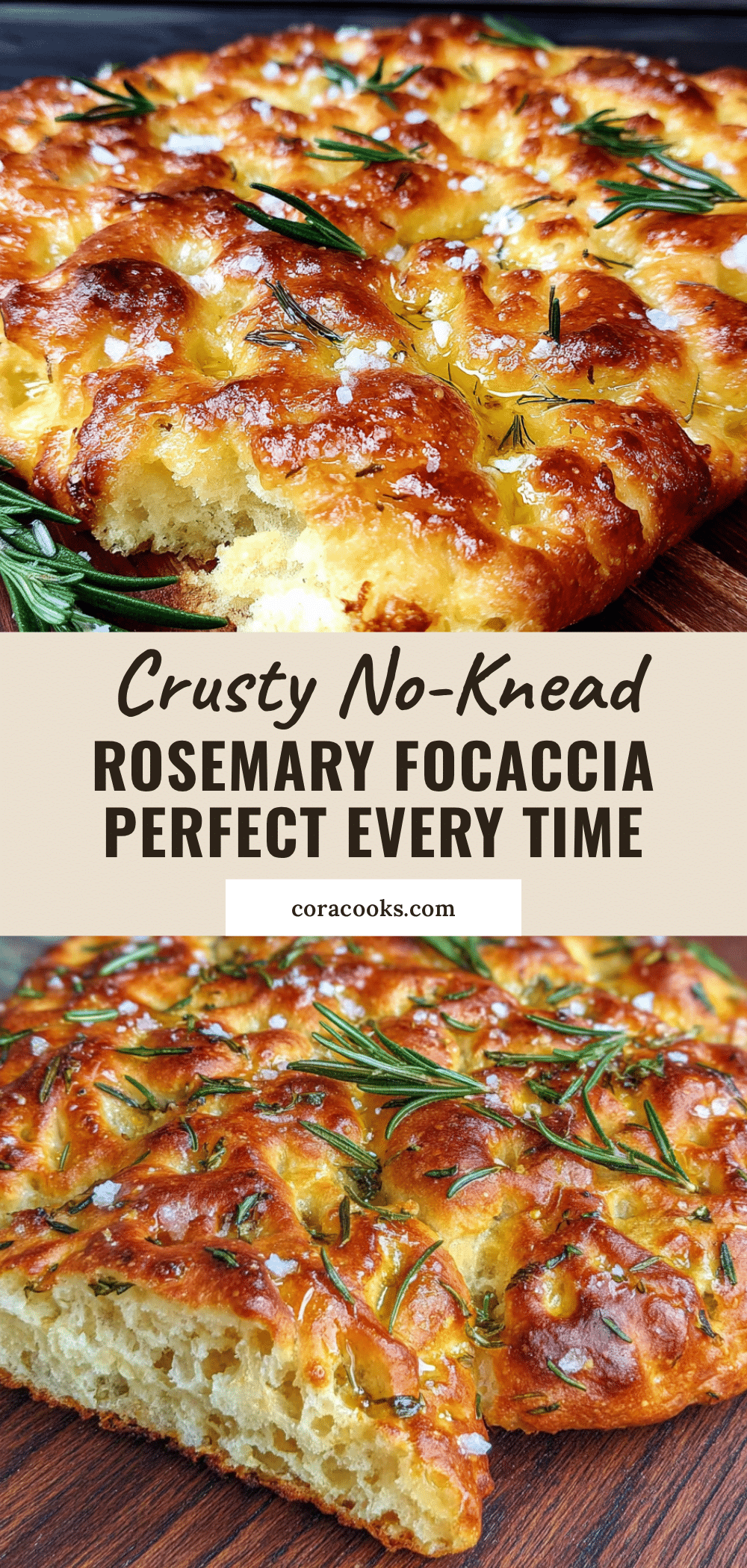
The Best No-Knead Rosemary Sourdough Focaccia (Easy!)
This no-knead rosemary sourdough focaccia is incredibly easy to make, with a chewy, airy crumb and a crispy, golden crust. It’s the perfect way to use up sourdough discard and requires minimal effort for bakery-quality results.
- Prep Time: 15 minutes
- Cook Time: 30 minutes
- Total Time: 13 hours 45 minutes (includes rising time)
- Yield: 12 servings 1x
- Category: Bread
- Cuisine: Italian
Ingredients
- 3 cups (360 grams) bread flour
- 1 cup (240 grams) sourdough starter (discard or active)
- 1 cup (240 ml) warm water (around 80°F)
- 1/4 cup (60 ml) olive oil, plus extra for the pan
- 1 1/2 teaspoons (9 grams) fine sea salt
- 2 tablespoons fresh rosemary, finely chopped
- 1 teaspoon flaky sea salt (e.g., Maldon)
- 2 tablespoons olive oil (for drizzling before baking)
Instructions
- Mix the dough: In a large bowl, combine the bread flour, sourdough starter, warm water, olive oil, and salt. Stir with a spatula until a shaggy, sticky dough forms. Cover and let rest for 30 minutes.
- Perform the first fold: Wet your hands slightly, grab one edge of the dough, and fold it over toward the center. Rotate the bowl a quarter turn and repeat. Do this four times total. Cover and let rest for 30 minutes.
- Repeat the folds: Do the same folding process two more times, with 30-minute rests in between. After the third set of folds, cover the bowl and let it rise at room temperature for 8 to 12 hours, or overnight, until doubled in size and bubbly.
- Prepare the pan: Pour about 2 tablespoons of olive oil into a 9×13-inch baking pan and spread evenly over the bottom and sides.
- Transfer the dough: Gently scrape the risen dough into the oiled pan. Cover and let rest for 30 minutes.
- Stretch the dough: Use your fingertips to gently stretch the dough toward the edges of the pan. If it springs back, let it rest another 15 minutes and try again. Cover and let rise for another 1 to 2 hours, until puffy and almost doubled in height.
- Dimple the dough: Preheat oven to 425°F (220°C). Drizzle the remaining 2 tablespoons of olive oil over the dough. Dip your fingers in the oil and press deep dimples all over the surface.
- Add the toppings: Sprinkle the chopped fresh rosemary evenly over the dimpled dough, then finish with a generous sprinkle of flaky sea salt.
- Bake: Place the pan on the middle rack and bake for 25 to 30 minutes, until deep golden brown and the edges look crispy. The focaccia should sound hollow when tapped on the bottom.
- Cool: Let the focaccia cool in the pan for 5 minutes, then transfer to a cooling rack. Let cool for at least 20 minutes before slicing.
Notes
Don’t rush the final rise; it develops the airy structure. Use fresh rosemary for best results. The flavors improve after the first day. For a gluten-free version, use a 1:1 gluten-free flour blend with xanthan gum.
Nutrition
- Serving Size: 1 slice (1/12 of rec
- Calories: 220
- Sodium: 290
- Fat: 8
- Saturated Fat: 1
- Carbohydrates: 32
- Fiber: 1
- Protein: 5
Keywords: no-knead focaccia, sourdough focaccia, rosemary focaccia, easy focaccia, sourdough discard recipe, homemade bread