Love this? Save it for later!
Share the inspiration with your friends
I wasn’t expecting baking advice from my accountant, but there I was, knee-deep in spreadsheets during tax season, listening to him describe exactly how to make a gingerbread bundt cake with cream cheese glaze. He was this quiet guy, always in cardigans, never said much beyond “sign here” and “you’ll owe a bit this year.” But that afternoon, while I was stressing over receipts, he just started talking about molasses and fresh ginger like he was describing an old friend. Honestly, I almost missed the deadline that day because I was too busy scribbling his notes on the back of a tax form.
He told me this cake was his secret weapon for holiday parties. “People expect cookies,” he said, pushing his glasses up. “They don’t expect a bundt cake that tastes like Christmas morning and looks like it came from a bakery.” He was right. I made it that weekend, just to test it out, and let me tell you—my kitchen smelled like a spice market exploded in the best way. The glaze dripped down the sides, and I stood there eating a slice straight from the pan, no plate, no shame. My dog looked at me like I’d lost my mind.
There was a moment where I almost over-mixed the batter because I was too busy texting my sister about it. Classic me. But even with that tiny panic, the cake came out perfect—tender, moist, with that deep gingerbread warmth that just wraps around you. I’ve made it for every gathering since. It’s the kind of recipe that makes you look like you planned everything perfectly, even when you’re just hoping the cream cheese is soft enough. Maybe you’ve been there, standing in your kitchen, praying to the baking gods. This cake answers that prayer.
Why You’ll Love This Recipe
This isn’t just another gingerbread cake. After testing this recipe at least six times—yes, six—I can tell you it’s the one. My neighbor, who is a professional pastry chef, tried a slice and asked for the recipe. That’s when I knew it was special. Here’s why this gingerbread bundt cake with cream cheese glaze will become your go-to for hosting:
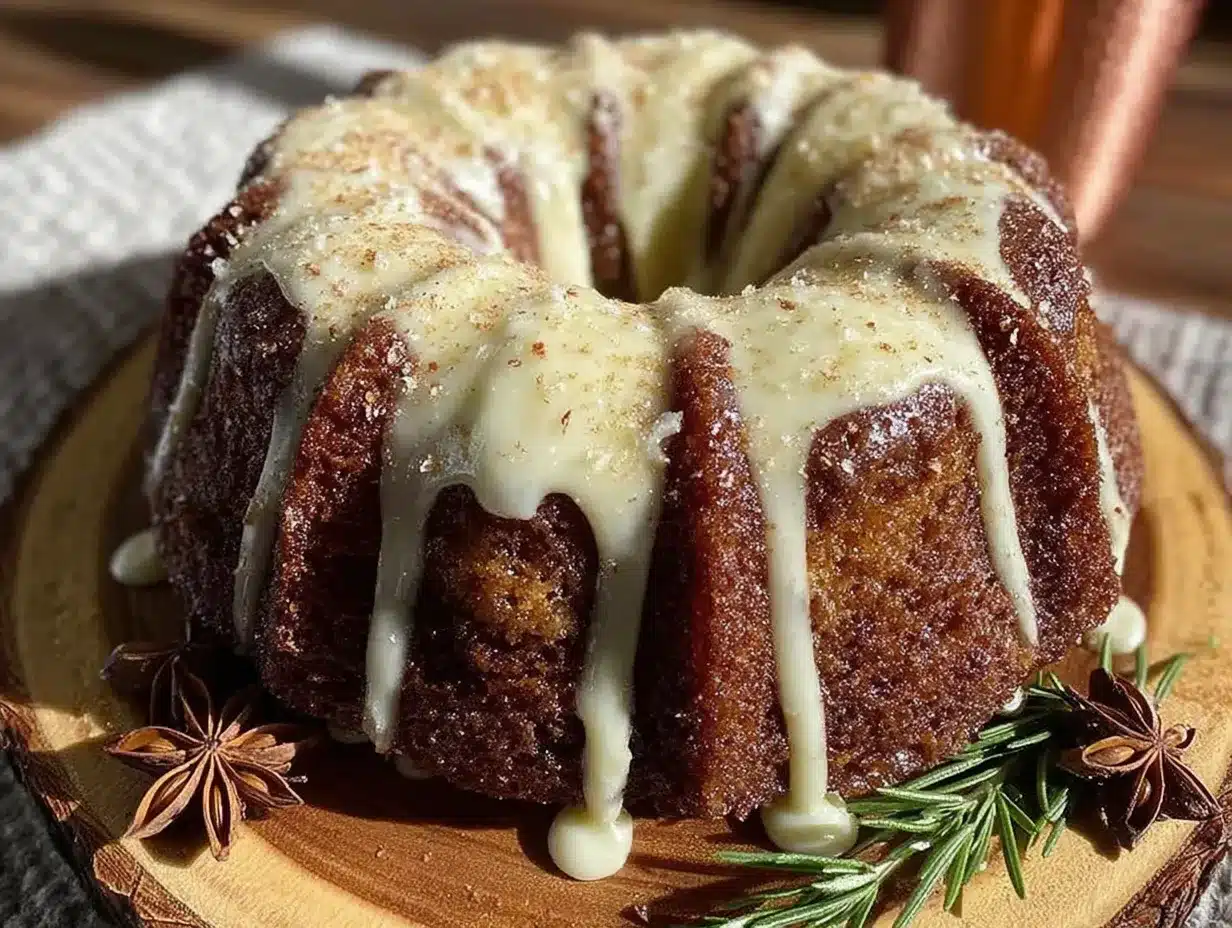
- Show-Stopping Presentation: That glossy cream cheese glaze dripping over the ridges of a bundt pan? It’s pure magic. Your guests will think you spent hours on it.
- Simple Ingredients: No fancy extracts or hard-to-find spices. You probably have most of these in your pantry right now.
- Perfect for Gatherings: This cake feeds a crowd and only gets better after a day or two. Make it the night before your party.
- Foolproof Texture: The blend of molasses and buttermilk creates a crumb that’s moist but not dense. It’s forgiving, even if you over-measure the flour by a tablespoon.
- Crowd-Pleaser: I’ve served this at potlucks, dinner parties, and casual Sunday brunches. It disappears every single time.
What makes this version different? It’s the balance. So many gingerbread cakes are either too dry or too spicy. This one has a tender, almost velvety crumb with just enough ginger to warm you up without overwhelming your taste buds. The cream cheese glaze cuts through the molasses sweetness perfectly. Honestly, it’s comfort food reimagined—familiar but somehow better than you remember.
What Ingredients You Will Need
This recipe uses simple, wholesome ingredients to deliver that bold gingerbread flavor and tender texture without any fuss. Most of these are pantry staples, which makes it perfect for last-minute hosting emergencies.
- Unsalted butter, softened (1 cup / 2 sticks) — I always use unsalted so I can control the salt level. Let it sit out for at least an hour.
- Dark brown sugar, packed (1 ½ cups / 300g) — This gives the cake its deep, caramel-like sweetness. Light brown sugar works, but dark is better for that molasses kick.
- Large eggs (3, at room temperature) — Cold eggs can seize the butter mixture. Leave them on the counter for 30 minutes.
- Unsulphured molasses (1 cup / 340g) — Don’t use blackstrap molasses here; it’s too bitter. Grandma’s brand is my go-to for consistent flavor.
- All-purpose flour (3 cups / 360g) — Spoon and level it into your measuring cup. Scooping directly can add too much flour.
- Baking soda (1 ½ teaspoons) — This helps the cake rise and gives it a tender crumb.
- Ground ginger (2 teaspoons) — Use fresh ground ginger if you can find it. The flavor is brighter.
- Ground cinnamon (2 teaspoons) — I prefer Ceylon cinnamon for its milder, sweeter taste.
- Ground cloves (½ teaspoon) — A little goes a long way. Too much can make the cake taste medicinal.
- Salt (½ teaspoon) — Balances the sweetness and enhances the spices.
- Buttermilk (1 cup / 240ml) — This is the secret to a moist cake. No buttermilk? Add 1 tablespoon of lemon juice to regular milk and let it sit for 5 minutes.
For the Cream Cheese Glaze:
- Cream cheese (4 oz, softened) — Full-fat is best for a rich, thick glaze.
- Unsalted butter (2 tablespoons, softened)
- Powdered sugar (1 ½ cups / 180g) — Sift it first to avoid lumps.
- Vanilla extract (1 teaspoon)
- Milk (2-3 tablespoons) — Add slowly until you reach your desired consistency.
Equipment Needed
You don’t need a professional kitchen for this one. Here’s what I use every time:
- 10-cup bundt pan — A non-stick pan is ideal. I’ve used a vintage Nordic Ware pan for years, and it releases cakes perfectly.
- Stand mixer or hand mixer — Either works. A hand mixer is fine, but a stand mixer makes creaming the butter and sugar effortless.
- Large mixing bowls — At least two: one for dry ingredients, one for wet.
- Whisk — For combining dry ingredients evenly.
- Rubber spatula — For scraping down the bowl and folding in the flour mixture.
- Cooling rack — Essential for letting the cake cool completely before glazing.
- Sifter — For the powdered sugar. Lumpy glaze is nobody’s friend.
If you don’t have a bundt pan, you can use two 9-inch loaf pans. Just reduce the baking time to 40-45 minutes and check for doneness with a toothpick.
Preparation Method
Take your time with this one. The batter comes together quickly, but a few mindful steps make all the difference.
- Preheat and prep the pan: Preheat your oven to 350°F (175°C). Generously grease your bundt pan with butter or non-stick baking spray. Make sure you get into all the nooks and crannies. I use a pastry brush to spread melted butter evenly, then dust with a light coating of flour. Tap out the excess.
- Cream the butter and sugar: In a large bowl, beat the softened butter and brown sugar together until light and fluffy, about 3-4 minutes. The mixture should look pale and airy. Scrape down the sides of the bowl halfway through.
- Add the eggs and molasses: Add the eggs one at a time, beating well after each addition. Then, pour in the molasses and mix until fully incorporated. The batter will look dark and glossy. Don’t worry if it smells intensely molasses-y at this stage—it mellows out as it bakes.
- Whisk dry ingredients: In a separate bowl, whisk together the flour, baking soda, ground ginger, cinnamon, cloves, and salt. This ensures the spices are evenly distributed throughout the cake.
- Alternate adding dry ingredients and buttermilk: With the mixer on low speed, add about one-third of the flour mixture, then half of the buttermilk. Repeat, ending with the flour mixture. Mix just until combined. Over-mixing at this stage can make the cake tough. A few streaks of flour are okay.
- Fold the batter: Use a rubber spatula to give the batter a few gentle folds from the bottom up. This catches any flour hiding at the bottom of the bowl.
- Pour into the pan: Spoon the batter into the prepared bundt pan and spread it evenly. Tap the pan on the counter a few times to release any air bubbles.
- Bake: Bake for 50-60 minutes, or until a toothpick inserted into the center comes out clean or with a few moist crumbs. The top should be springy to the touch. If the cake is browning too quickly, tent it loosely with foil after 40 minutes.
- Cool in the pan: Let the cake cool in the pan on a wire rack for 15 minutes. This allows the structure to set. Then, invert the pan onto the rack and let it cool completely. Don’t rush this step—a warm cake will melt the glaze into a puddle.
- Make the glaze: While the cake cools, beat the softened cream cheese and butter together until smooth. Gradually add the sifted powdered sugar, then the vanilla extract. Add milk one tablespoon at a time until the glaze is thick but pourable. It should coat the back of a spoon.
- Glaze the cake: Once the cake is completely cool, place it on your serving plate. Drizzle the glaze over the top, letting it cascade down the sides. Use a spoon to guide it into the ridges if needed.
Cooking Tips & Techniques
I’ve made this cake so many times that I’ve learned a few tricks the hard way. Here’s what I wish someone had told me:
- Room temperature ingredients matter: Cold butter doesn’t cream properly, and cold eggs can curdle the batter. Set everything out an hour before you start. I’ve forgotten this more than once, and the cake was noticeably denser.
- Don’t over-mix the batter: Once you add the flour, mix just until you can’t see dry streaks. Over-mixing develops gluten, which makes the cake tough and rubbery. I learned this lesson after a particularly sad, brick-like loaf.
- Test for doneness early: Ovens run differently. Start checking at 50 minutes. If the toothpick comes out with wet batter, give it 5 more minutes. If it comes out clean, it’s done.
- Let it cool completely: I know it’s tempting to glaze a warm cake, but trust me—the glaze will slide right off and pool at the bottom. Patience is key.
- Use a kitchen scale: For the most consistent results, weigh your flour. A cup of flour can vary by 20-30 grams depending on how you scoop it. A scale eliminates that guesswork.
Variations & Adaptations
This recipe is a great base for experimentation. Here are a few twists I’ve tried and loved:
- Gluten-Free Version: Substitute the all-purpose flour with a 1:1 gluten-free baking blend. I’ve used Bob’s Red Mill with great results. Add 1 teaspoon of xanthan gum if your blend doesn’t include it.
- Spiced Orange Gingerbread: Add the zest of one orange to the batter along with the molasses. The citrus brightens the spices beautifully. Top with a simple orange glaze instead of cream cheese.
- Chocolate Gingerbread Bundt: Replace ¼ cup of the flour with unsweetened cocoa powder. The chocolate and ginger are a surprisingly perfect pair. My kids devour this version.
- Vegan Adaptation: Use flax eggs (1 tablespoon ground flaxseed + 3 tablespoons water per egg), coconut oil instead of butter, and a dairy-free cream cheese for the glaze. The texture will be slightly denser but still delicious.
- Extra Spicy: Add ¼ teaspoon of black pepper and ½ teaspoon of cardamom to the spice mix. It gives the cake a subtle warmth that lingers.
Serving & Storage Suggestions
This cake is a showstopper at any gathering. Here’s how to serve and store it like a pro:
- Serving Temperature: Serve at room temperature. The glaze sets perfectly, and the crumb is at its most tender. If you’ve refrigerated the cake, let it sit out for 30 minutes before serving.
- Presentation: Place the glazed cake on a beautiful stand or a wooden board. Dust with a little extra cinnamon or a sprinkle of candied ginger for a festive touch.
- What to Serve Alongside: A dollop of whipped cream or a scoop of vanilla ice cream is heavenly. For a brunch spread, pair it with fresh fruit and coffee. It also goes beautifully with a warm cup of chai or spiced cider.
- Storage: Store the cake in an airtight container at room temperature for up to 3 days. If you’ve glazed it, refrigerate it to keep the glaze firm. Bring slices to room temperature before eating.
- Freezing: You can freeze the unglazed cake for up to 3 months. Wrap it tightly in plastic wrap, then foil. Thaw overnight in the refrigerator, then glaze before serving. The flavors actually deepen after freezing.
Nutritional Information & Benefits
Per slice (based on 12 servings):
- Calories: 420
- Fat: 18g
- Carbohydrates: 62g
- Protein: 6g
- Fiber: 1g
- Sugar: 42g
While this is definitely a treat, there are some surprising benefits. Molasses is a good source of iron, calcium, and magnesium. Ginger has anti-inflammatory properties and can aid digestion—which is perfect after a big holiday meal. The buttermilk adds a touch of probiotics. I’m not saying this cake is health food, but it’s nice to know there’s a little goodness hiding in that slice. Just enjoy it in moderation, and maybe save it for a special occasion.
Conclusion
This gingerbread bundt cake with cream cheese glaze is more than just a dessert—it’s the kind of recipe that makes you feel like a host who has it all together. It’s forgiving enough for a beginner baker and impressive enough to steal the show at any gathering. I love how it fills my kitchen with that nostalgic holiday scent, and how the glaze creates those beautiful, glossy drips that make everyone gasp a little.
I’d love for you to try this one. Make it for your next dinner party, or just for a quiet weekend at home. Adjust the spices to your liking, or throw in some chocolate chips if that’s your thing. The best recipes are the ones you make your own. When you do make it, come back and tell me how it turned out. Drop a comment, share a photo, or send me a message. I read every single one, and honestly, your wins make my day. Happy baking, friend!
Frequently Asked Questions
Can I use light molasses instead of dark?
Yes, you can. Light molasses has a milder flavor, so the cake will be less intensely spiced. It will still be delicious, just a bit subtler. I prefer dark molasses for that classic gingerbread kick.
How do I prevent my bundt cake from sticking to the pan?
Grease the pan thoroughly with butter or non-stick spray, making sure to get into all the crevices. Then, dust it with flour and tap out the excess. Let the cake cool in the pan for exactly 15 minutes before inverting—too long, and it can steam and stick.
Can I make this cake ahead of time?
Absolutely. This cake actually tastes better the next day as the flavors meld. Bake it a day ahead, cool it completely, wrap it tightly in plastic wrap, and store it at room temperature. Glaze it just before serving.
Why did my cream cheese glaze turn out runny?
This usually happens if the cream cheese or butter is too soft, or if you added too much milk. Make sure your cream cheese is just softened, not warm. If the glaze is too thin, add a little more sifted powdered sugar to thicken it up.
Can I add nuts or dried fruit to the batter?
Yes! Fold in 1 cup of chopped pecans or walnuts, or ½ cup of dried cranberries or crystallized ginger. Toss them in a tablespoon of flour first to prevent them from sinking to the bottom of the pan.
Pin This Recipe!
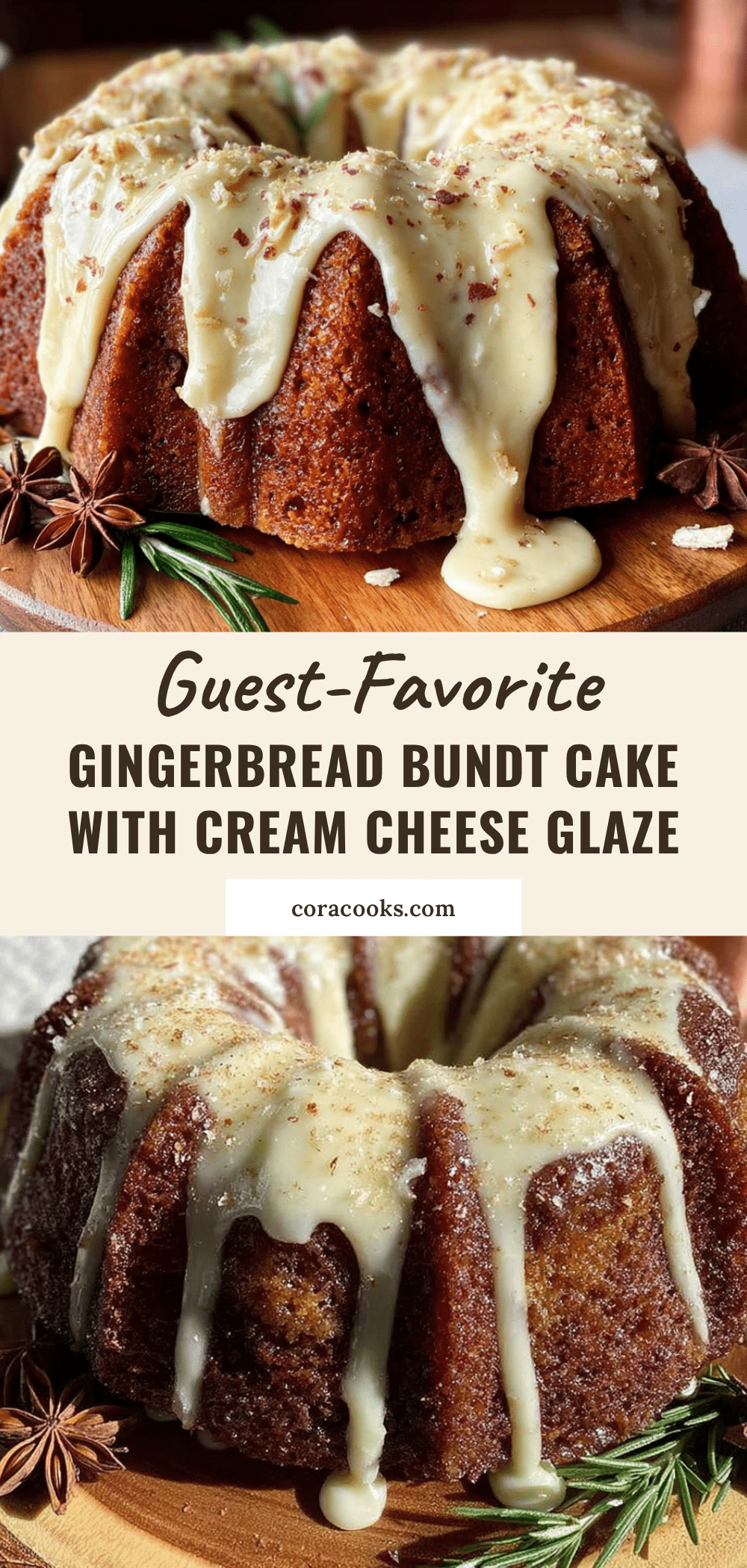
Gingerbread Bundt Cake with Cream Cheese Glaze (Best Easy Recipe)
This gingerbread bundt cake with cream cheese glaze is a show-stopping dessert that tastes like Christmas morning. With a tender, moist crumb and a glossy cream cheese glaze, it’s perfect for holiday parties, potlucks, or any gathering.
- Prep Time: 20 minutes
- Cook Time: 55 minutes
- Total Time: 1 hour 15 minutes
- Yield: 12 servings 1x
- Category: Dessert
- Cuisine: American
Ingredients
- 1 cup (2 sticks) unsalted butter, softened
- 1 ½ cups (300g) dark brown sugar, packed
- 3 large eggs, at room temperature
- 1 cup (340g) unsulphured molasses
- 3 cups (360g) all-purpose flour
- 1 ½ teaspoons baking soda
- 2 teaspoons ground ginger
- 2 teaspoons ground cinnamon
- ½ teaspoon ground cloves
- ½ teaspoon salt
- 1 cup (240ml) buttermilk
- 4 oz cream cheese, softened
- 2 tablespoons unsalted butter, softened
- 1 ½ cups (180g) powdered sugar, sifted
- 1 teaspoon vanilla extract
- 2–3 tablespoons milk
Instructions
- Preheat oven to 350°F (175°C). Generously grease a 10-cup bundt pan with butter or non-stick spray, then dust with flour and tap out excess.
- In a large bowl, beat softened butter and brown sugar together until light and fluffy, about 3-4 minutes. Scrape down sides halfway through.
- Add eggs one at a time, beating well after each. Add molasses and mix until fully incorporated. Batter will be dark and glossy.
- In a separate bowl, whisk together flour, baking soda, ground ginger, cinnamon, cloves, and salt.
- With mixer on low, add one-third of the flour mixture, then half of the buttermilk. Repeat, ending with flour mixture. Mix just until combined; a few streaks of flour are okay.
- Use a rubber spatula to fold batter gently from bottom up to incorporate any remaining flour.
- Spoon batter into prepared bundt pan and spread evenly. Tap pan on counter a few times to release air bubbles.
- Bake for 50-60 minutes, until a toothpick inserted into center comes out clean or with a few moist crumbs. If browning too quickly, tent with foil after 40 minutes.
- Let cake cool in pan on a wire rack for 15 minutes. Invert onto rack and cool completely.
- While cake cools, beat softened cream cheese and butter together until smooth. Gradually add sifted powdered sugar, then vanilla. Add milk one tablespoon at a time until glaze is thick but pourable.
- Once cake is completely cool, place on serving plate. Drizzle glaze over top, letting it cascade down sides. Use a spoon to guide into ridges if needed.
Notes
Room temperature ingredients are crucial for best texture. Don’t over-mix the batter once flour is added. Let cake cool completely before glazing to prevent glaze from sliding off. For gluten-free version, use a 1:1 gluten-free baking blend with xanthan gum if needed.
Nutrition
- Serving Size: 1 slice
- Calories: 420
- Sugar: 42
- Sodium: 320
- Fat: 18
- Saturated Fat: 10
- Carbohydrates: 62
- Fiber: 1
- Protein: 6
Keywords: gingerbread bundt cake, cream cheese glaze, holiday dessert, easy gingerbread cake, bundt cake recipe