Love this? Save it for later!
Share the inspiration with your friends
My neighbor Frank had claimed to hate persimmons for forty-seven years. Swore up and down that they were “slimy little things” with no business in a respectable kitchen. I’d nod along, not really caring, because honestly—I wasn’t a persimmon person either. They always seemed like one of those fruits that looked beautiful at the market but delivered absolutely nothing in the flavor department. Too astringent when underripe, too mushy when ready. I’d bought them exactly twice in my life and regretted it both times.
Then last November, I came home with a bag of Hachiya persimmons from a farm stand that was practically giving them away. The farmer told me they were “seconds”—too soft for display but perfect for baking. I figured I’d try one more time. If this batch failed, I was done with persimmons forever. I let them sit on my counter until they felt like water balloons, then spent a Sunday afternoon experimenting. I wasn’t trying to convert anyone. I was just tired of wasting food.
I pulled that loaf out of the oven around 4 PM, the whole apartment smelling like a candle shop had exploded. The walnuts on top had toasted into this gorgeous golden crown, and the cinnamon had woven through every pore of the crumb. I cut myself a slice while it was still warm, butter melting into the crevices. That first bite stopped me mid-chew. It was like banana bread’s sophisticated cousin—richer, more complex, with this honeyed undertone that made no sense for a fruit I’d written off. I ate two more slices standing at the counter, telling myself it was quality control.
Frank knocked on my door at 6 PM. Said the smell had drifted through the shared wall and he couldn’t take it anymore. I handed him a slice, trying not to smirk. He took a bite. Then another. “Alright,” he said, staring at the bread like it had personally betrayed him. “This doesn’t count. This is cake.” Maybe you’ve been there—that moment when you catch someone in the act of proving themselves wrong. It’s a quiet kind of victory, honestly. And this walnut persimmon bread is the recipe that made it happen. I keep making it because it reminds me that some things just need the right moment—and the right recipe—to shine.
Why You’ll Love This Recipe
This isn’t just another quick bread that disappears after breakfast. This walnut persimmon bread has earned a permanent spot in my baking rotation, and here’s why it’ll earn one in yours too.
- Simple Ingredients: You probably have everything except the persimmons in your pantry right now. No weird extracts, no obscure flours. Just real food that comes together beautifully.
- Perfect for Fall and Winter: This bread was made for those months when you want something warm and spiced but don’t want to roll out pie crust. It fills your kitchen with that cozy holiday smell without the stress.
- Crowd-Pleaser: I’ve brought this to brunches, holiday parties, and casual coffee dates. It gets devoured every single time. Even the persimmon skeptics go back for seconds.
- Forgiving Recipe: Overmixed the batter? Used slightly too-ripe fruit? This bread handles mistakes like a champ. It’s hard to mess up, which makes it perfect for beginner bakers or distracted ones (me, most days).
- Next-Level Comfort Food: The texture is what gets people. It’s moist without being heavy, tender without being crumbly. The walnuts add crunch, the cinnamon adds warmth, and the persimmon adds a subtle sweetness that you can’t quite place but can’t stop eating.
What makes this recipe different from the dozens of persimmon breads out there? It’s the balance. I tested this thing six times before I got it right—too dry, too wet, not enough spice, too much spice. This version hits that sweet spot where every ingredient has a job and does it well. The persimmon puree keeps the crumb incredibly tender without making it gummy. The cinnamon is present but not overpowering. And the walnuts? They’re not just decoration. They add that savory contrast that keeps you coming back for “just one more slice.”
This is comfort food reimagined—simple enough for a Tuesday afternoon, special enough for Thanksgiving morning. It’s the kind of bread that makes you close your eyes after the first bite, not because it’s fancy, but because it tastes like exactly what you needed.
What Ingredients You Will Need
This recipe uses simple, wholesome ingredients to deliver bold flavor and satisfying texture without the fuss. Most of these are pantry staples, which makes this an easy last-minute bake when you have ripe persimmons staring at you from the counter.
For the Persimmon Puree:
- 2 cups ripe Hachiya persimmon pulp (about 3-4 very soft persimmons) — Hachiyas are the tart-shaped ones that need to be jelly-soft before you use them. Fuyu persimmons (the squat ones) work too, but you’ll need to blend them since they stay firm.
- 1 teaspoon lemon juice (optional, helps preserve color and brightens flavor)
For the Dry Ingredients:
- 1 ¾ cups (210g) all-purpose flour — Spoon and level for accuracy. I’ve tested this with half whole wheat pastry flour and it works great if you want a heartier texture.
- 1 teaspoon baking soda
- ½ teaspoon baking powder
- ½ teaspoon salt
- 1 ½ teaspoons ground cinnamon — I prefer Saigon cinnamon for its stronger, sweeter profile, but regular works fine.
- ¼ teaspoon ground nutmeg (freshly grated if you have it)
- ¼ teaspoon ground ginger (adds a gentle warmth that plays well with persimmon)
For the Wet Ingredients:
- ½ cup (113g) unsalted butter, melted and slightly cooled — You can use coconut oil for a dairy-free version, but the flavor won’t be as rich.
- ¾ cup (150g) granulated sugar
- ¼ cup (50g) packed light brown sugar — Adds moisture and a deeper sweetness.
- 2 large eggs, room temperature
- 1 teaspoon vanilla extract
- 1 cup persimmon puree (from above)
- ¼ cup (60ml) plain yogurt or buttermilk — This keeps the crumb tender. Sour cream works too.
For the Add-Ins and Topping:
- 1 cup (100g) walnut halves or pieces, toasted and roughly chopped — Toast them first! It makes a huge difference in flavor. I recommend buying raw walnuts and toasting them yourself for the freshest taste.
- Extra walnut halves for topping (about ¼ cup)
- 1 tablespoon turbinado sugar for sprinkling (optional, adds a lovely crunch)
Ingredient Notes:
For the persimmons, patience is key. Hachiyas need to be so soft they feel like they’re about to burst. If they’re still firm, they’ll be astringent and ruin your bread. I’ve made that mistake exactly once. If you’re in a hurry, you can speed things up by placing them in a paper bag with a banana for a day or two. For the walnuts, I buy them from the bulk section at my local co-op and toast them in a dry skillet for about 3 minutes until they smell nutty. It takes almost no time and makes the bread taste exponentially better.
Equipment Needed
You don’t need a fancy kitchen to make this walnut persimmon bread. Here’s what you’ll actually use:
- 9×5-inch loaf pan — Standard size works perfectly. If you only have an 8×4, the bread will take longer to bake and have a higher dome. Adjust your timing accordingly.
- Large mixing bowl and medium mixing bowl — Any bowls you have. I use my grandmother’s old ceramic mixing bowls that have seen better days but still get the job done.
- Whisk and rubber spatula — A wooden spoon works for mixing, but a spatula helps you scrape every bit of batter into the pan.
- Parchment paper — Lining the pan makes removal so much easier. I’ve forgotten this step and regretted it deeply.
- Food mill, sieve, or blender — For making the persimmon puree. A potato masher works in a pinch if your persimmons are extremely soft, but you’ll get a smoother texture with a blender or food processor.
- Cooling rack — Essential for even cooling. If you don’t have one, you can use the grates from your oven (just make sure they’re clean).
- Toaster oven or skillet — For toasting the walnuts. The oven works too, but I’m lazy and the skillet is faster.
Budget-friendly tip: Skip the parchment paper and generously butter your pan instead. Run a knife around the edges after baking and the bread should come out fine. Also, you don’t need a stand mixer for this—hand mixing is actually better since you’re less likely to overmix.
Preparation Method
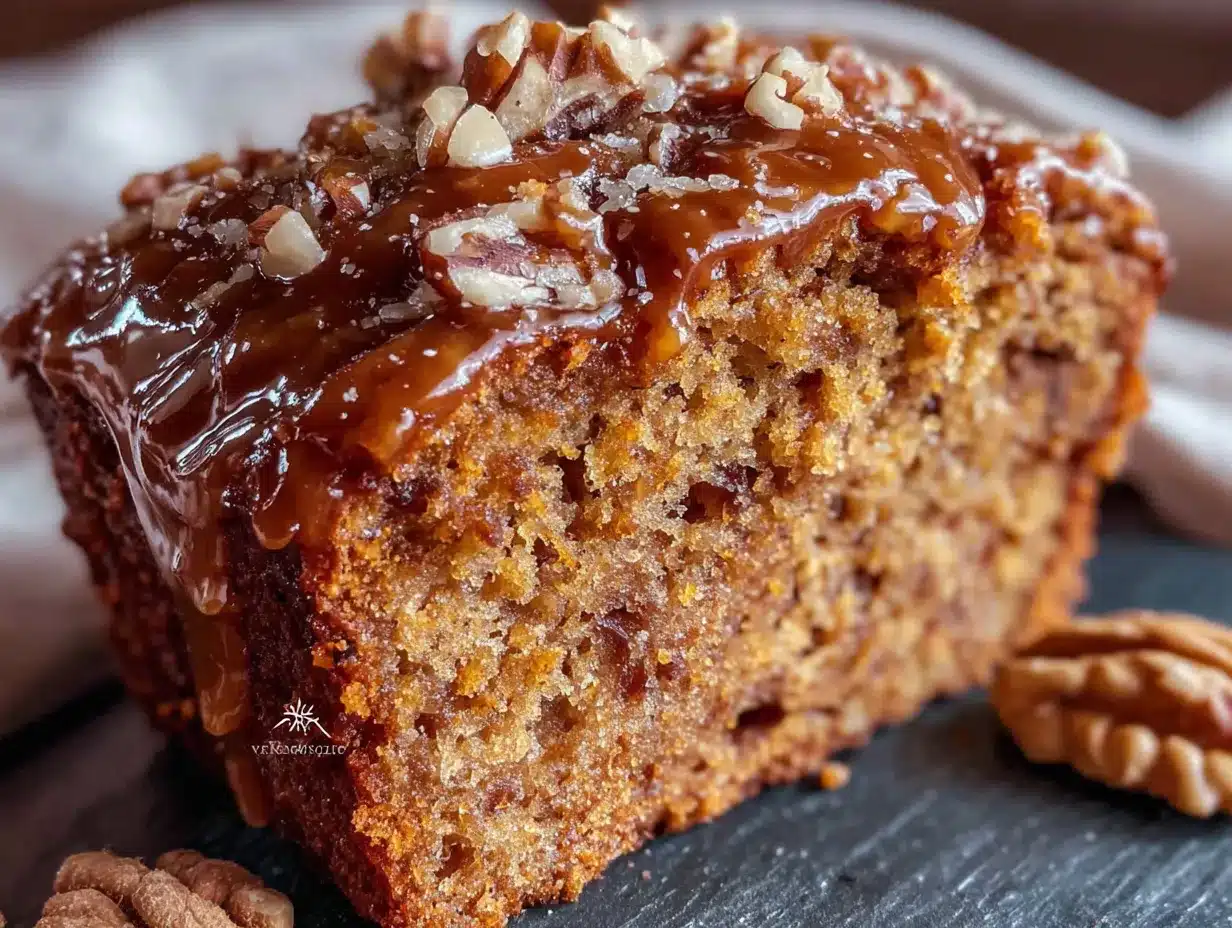
Let me walk you through this step by step. I’ve made this bread more times than I can count, and these are the exact moves that work every time.
Step 1: Prepare the Persimmons (30 minutes to 2 days ahead, depending on ripeness)
If your Hachiya persimmons aren’t jelly-soft yet, give them time. Once they’re ready, cut off the green tops and scoop the flesh into a blender or food mill. Puree until smooth. You should have about 1 cup of puree. If it’s slightly stringy, that’s okay—the baking will take care of it. Set aside. I sometimes make extra puree and freeze it in 1-cup portions for later.
Step 2: Preheat and Prep (10 minutes)
Preheat your oven to 350°F (175°C). Position the rack in the center of the oven. Grease your 9×5-inch loaf pan with butter or non-stick spray, then line it with parchment paper, leaving overhang on the long sides. This creates handles for lifting the bread out later. Trust me on this one.
Step 3: Toast the Walnuts (5 minutes)
Spread the walnuts on a baking sheet and toast in the preheating oven for 5-7 minutes, or until fragrant. Watch them carefully—they go from toasted to burnt very quickly. I’ve ruined a batch by looking away for thirty seconds. Let them cool, then roughly chop. Reserve about ¼ cup of whole or half walnuts for topping the bread.
Step 4: Mix the Dry Ingredients (5 minutes)
In a medium bowl, whisk together the flour, baking soda, baking powder, salt, cinnamon, nutmeg, and ginger. Whisking aerates the flour and ensures everything is evenly distributed. No shortcuts here—if you skip this, you might end up with a pocket of baking soda in one bite.
Step 5: Mix the Wet Ingredients (10 minutes)
In a large bowl, whisk the melted butter with both sugars until combined. It should look like wet sand. Add the eggs one at a time, whisking well after each addition. Stir in the vanilla extract, persimmon puree, and yogurt (or buttermilk). The mixture will look slightly separated at this point—that’s normal. Don’t panic.
Step 6: Combine Wet and Dry (5 minutes)
Pour the dry ingredients into the wet ingredients. Use a rubber spatula to fold everything together gently. Stop as soon as you no longer see streaks of flour. A few lumps are fine—overmixing will make the bread tough. I repeat: stop mixing early. This is the most common mistake people make with quick breads.
Step 7: Fold in the Walnuts (2 minutes)
Gently fold in the chopped toasted walnuts until they’re evenly distributed throughout the batter. Don’t overmix here either. The batter will be thick and slightly sticky—that’s exactly what you want.
Step 8: Fill the Pan and Top (5 minutes)
Scrape the batter into the prepared loaf pan and spread it evenly. Arrange the reserved walnut halves on top in a single layer—press them in gently so they stick. Sprinkle with turbinado sugar if using. This gives the top a beautiful sparkle and extra crunch.
Step 9: Bake (55-65 minutes)
Bake for 55-65 minutes, or until a toothpick inserted in the center comes out clean or with just a few moist crumbs. If the top is browning too quickly (after about 40 minutes), tent loosely with aluminum foil. My oven runs hot, so I usually check at 50 minutes. The bread should be golden brown and the kitchen should smell like heaven.
Step 10: Cool and Serve (1 hour minimum)
Let the bread cool in the pan on a wire rack for 15 minutes. Then use the parchment overhang to lift it out and transfer to the rack to cool completely. I know it’s tempting to slice into it right away, but warm bread is fragile and will crumble. Wait at least an hour if you can. If you can’t—well, I’ve been there too. Just expect imperfect slices.
Cooking Tips & Techniques
After six rounds of testing this walnut persimmon bread, I’ve collected some hard-won wisdom. Here’s what I wish someone had told me before I started.
Don’t rush the persimmons. I cannot stress this enough. If your Hachiya persimmons are even slightly firm, they will make your mouth feel fuzzy and your bread taste bitter. They need to be so soft that the skin feels like it’s about to split. I once tried to speed things up by microwaving them—don’t. It ruins the texture. Just be patient.
Measure your flour correctly. The most common reason for dry quick bread is too much flour. Use the spoon-and-level method: fluff the flour with a spoon, spoon it into your measuring cup, then level it off with a knife. Scooping directly from the bag can add up to 25% more flour, which will give you a dense, dry loaf.
Watch your mixing time. Quick breads are called “quick” for a reason. Overmixing develops gluten, which makes the bread tough and creates tunnels in the crumb. Mix until just combined, then stop. A few streaks of flour are fine. I’ve ruined plenty of loaves by trying to get the batter perfectly smooth.
Rotate your pan halfway through. Most ovens have hot spots. Rotating the pan at the 30-minute mark ensures even browning and baking. I learned this after pulling out a loaf that was burnt on one side and underdone on the other.
Test for doneness properly. A toothpick is your friend, but insert it in at least two places. If it comes out with wet batter, keep baking. If it comes out with a few moist crumbs, you’re done. Overbaking dries out the bread, so err on the side of slightly underdone.
Let it cool completely. I know you want to eat it warm. I do too. But cutting into hot bread releases steam and moisture, leaving you with a gummy texture. If you absolutely must have warm bread, pop individual slices in the microwave for 10 seconds after the loaf has cooled.
Variations & Adaptations
One of the best things about this walnut persimmon bread is how adaptable it is. Here are some variations I’ve tried and loved.
Gluten-Free Version: Substitute the all-purpose flour with a 1:1 gluten-free baking blend that contains xanthan gum. I’ve tested this with Bob’s Red Mill 1-to-1 Baking Flour and it worked beautifully. The texture is slightly more tender, so handle the batter gently. Add an extra tablespoon of yogurt to help with moisture.
Dairy-Free Version: Use melted coconut oil or a neutral vegetable oil instead of butter. Swap the yogurt with dairy-free yogurt or applesauce. The coconut oil version has a subtle coconut flavor that actually pairs nicely with the cinnamon and persimmon. I made this for a friend with dairy sensitivity and she asked for the recipe twice.
Spice It Up: Add ½ teaspoon of cardamom for a more complex spice profile. I tried this on a whim one rainy afternoon and now it’s my go-to winter version. You can also add a pinch of cloves or allspice, but go easy—they’re potent.
Add Dried Fruit: Fold in ½ cup of dried cranberries, chopped dates, or golden raisins along with the walnuts. The dried fruit adds little pockets of sweetness that contrast nicely with the nutty walnuts. I prefer dried cranberries for their tartness.
Make It a Loaf Cake: Turn this into a dessert by topping it with a simple cream cheese glaze. Mix 4 ounces of softened cream cheese with 1 cup of powdered sugar, 2 tablespoons of milk, and ½ teaspoon of vanilla. Drizzle over the cooled bread. It’s decadent and perfect for holiday brunches.
Mini Loaves or Muffins: Divide the batter among 3 mini loaf pans or 12 muffin cups. Bake mini loaves for 30-35 minutes and muffins for 18-22 minutes. Check for doneness with a toothpick. These make great gifts or freezer-friendly snacks.
Serving & Storage Suggestions
This walnut persimmon bread is versatile enough for any time of day. Here’s how I like to serve and store it.
Serving Suggestions: Serve at room temperature or slightly warm. For breakfast, spread a slice with salted butter and a drizzle of honey. For dessert, top with a dollop of whipped cream or a scoop of vanilla ice cream. The warm spices and tender crumb pair beautifully with a cup of chai or a dark roast coffee. I’ve also served it alongside a cheese board—the sweetness contrasts nicely with sharp cheddar or blue cheese.
Storage: Wrap the cooled bread tightly in plastic wrap and store at room temperature for up to 4 days. The flavors actually improve after a day or two as the spices meld with the persimmon. Do not refrigerate—it will dry out the bread. If your kitchen is very warm, store it in a cool, dry place.
Freezing: This bread freezes beautifully. Wrap the cooled loaf (or individual slices) in plastic wrap, then in aluminum foil, and freeze for up to 3 months. To thaw, leave it on the counter for a few hours or microwave individual slices for 20-30 seconds. I always keep a loaf in the freezer for unexpected guests or lazy Sunday mornings.
Reheating: For the best texture, reheat slices in a toaster oven at 300°F for 5 minutes. This crisps the edges slightly while keeping the center soft. The microwave works in a pinch but can make the bread rubbery. If you’re reheating the whole loaf, wrap it in foil and warm it in a 300°F oven for 10-15 minutes.
Flavor Development: Here’s something I discovered by accident: this bread tastes even better on day two. The persimmon flavor becomes more pronounced and the spices settle into something deeper and more harmonious. So if you can resist eating it all on day one, you’re in for a treat.
Nutritional Information & Benefits
While this walnut persimmon bread is definitely a treat, it does offer some surprising nutritional benefits. Here’s the breakdown per slice (based on 10 slices):
| Nutrient | Amount per Slice |
|---|---|
| Calories | 285 |
| Total Fat | 14g |
| Saturated Fat | 5g |
| Carbohydrates | 36g |
| Fiber | 2g |
| Sugar | 20g |
| Protein | 5g |
Health Benefits: Persimmons are packed with vitamin A, vitamin C, and antioxidants that support immune health—perfect for the fall and winter months when this bread shines. Walnuts provide omega-3 fatty acids and protein, which help keep you full and support brain health. The cinnamon has anti-inflammatory properties and can help regulate blood sugar. So while this isn’t health food, it’s not empty calories either. I feel good about serving this to my family because I know exactly what’s in it.
Dietary Considerations: This recipe is vegetarian. For a vegan version, substitute the eggs with flax eggs (2 tablespoons ground flaxseed mixed with 6 tablespoons water) and use plant-based yogurt and butter. It’s not gluten-free as written, but the gluten-free variation works well. Contains nuts (walnuts) and gluten (wheat flour).
Conclusion
This walnut persimmon bread is more than just a recipe—it’s a reminder that some of the best things in life come from second chances. I almost gave up on persimmons entirely, and I’m so glad I didn’t. That first perfect loaf changed my mind, my neighbor’s mind, and probably a dozen other people who’ve tried it since.
What I love most about this bread is how unpretentious it is. It doesn’t need fancy decorations or complicated techniques. It just needs good ingredients, a little patience, and someone willing to give it a try. The persimmon does the heavy lifting, the walnuts add their crunch, and the cinnamon ties it all together into something that feels both familiar and new.
I hope you give this recipe a chance, whether you’re a persimmon skeptic like I was or a longtime fan. Make it for a holiday brunch, a cozy weekend morning, or just because you have ripe persimmons and nowhere else to go. And if you try it, I’d love to hear how it turned out. Drop a comment below, share a photo, or tell me about your own conversion story. There’s something special about recipes that change minds—and this one does it one slice at a time.
Happy baking, friends. Your kitchen is about to smell amazing.
Frequently Asked Questions
Can I use Fuyu persimmons instead of Hachiya?
Yes, but you’ll need to adjust. Fuyu persimmons are firm and sweet even when crisp, so they won’t break down as easily. Puree them in a blender with a tablespoon of water until smooth. The texture will be slightly different—less silky—but the bread will still be delicious.
How do I know when Hachiya persimmons are ripe enough?
They should feel like a water balloon—very soft and almost squishy. The skin will look translucent and might have small brown spots. If they’re still firm, leave them at room temperature for several days. Speed things up by placing them in a paper bag with an apple or banana.
Can I skip the walnuts?
Absolutely. The bread works without them, though you’ll lose that nice textural contrast. You can substitute with pecans, chopped almonds, or even chocolate chips if walnuts aren’t your thing. For a nut-free version, try pumpkin seeds or leave them out entirely.
Why did my bread sink in the middle?
This usually happens for one of three reasons: the batter was overmixed, the oven temperature was too low, or the bread was underbaked. Make sure your oven is fully preheated and use an oven thermometer to verify the temperature. Also, don’t open the oven door during the first 30 minutes of baking.
Can I make this into muffins instead?
Yes! Grease a 12-cup muffin tin or line with paper liners. Fill each cup about ¾ full and bake at 350°F for 18-22 minutes. Check for doneness with a toothpick. Muffins will be slightly less moist than the loaf but perfect for grab-and-go breakfasts.
Pin This Recipe!
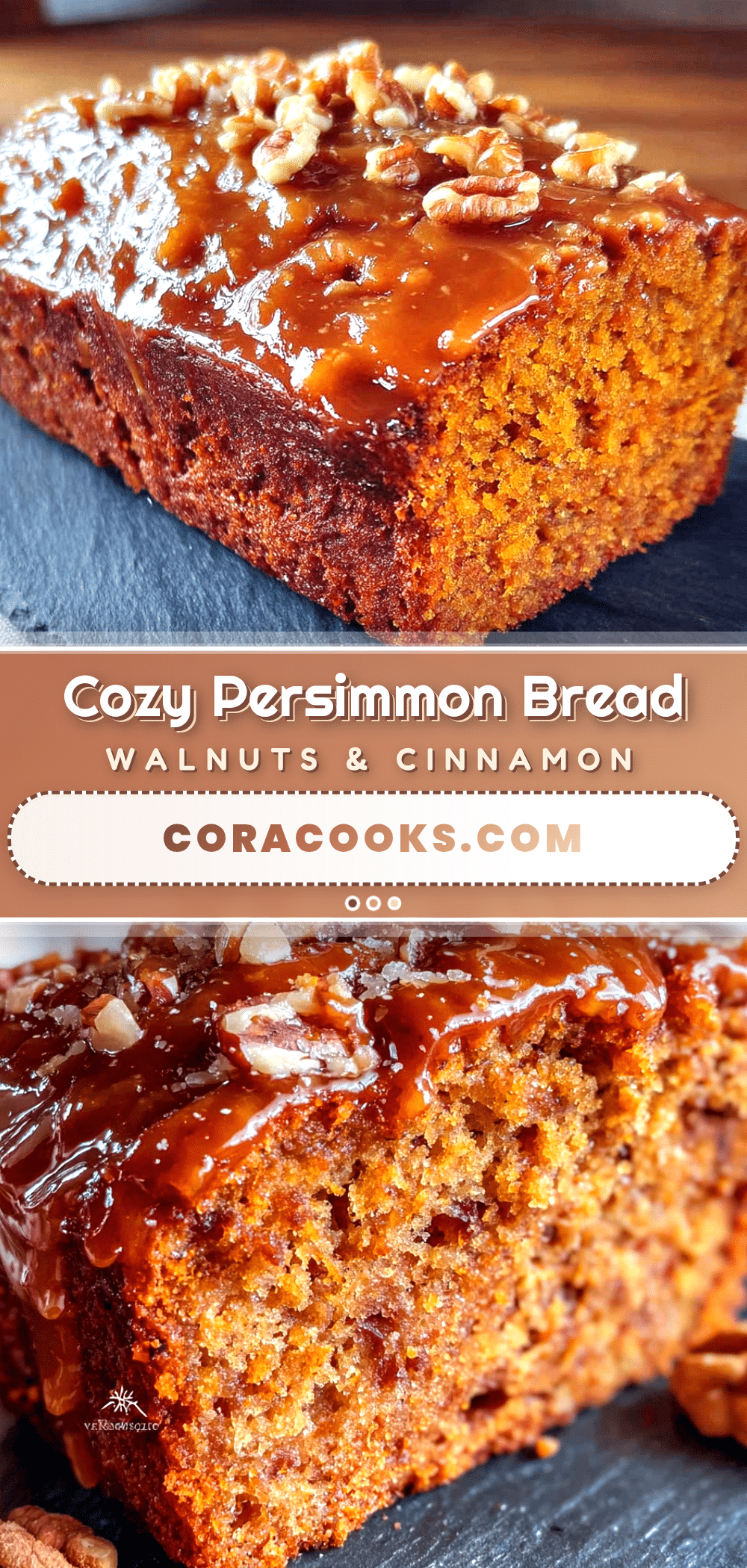
Easy Walnut Persimmon Bread Recipe with Warm Cinnamon

This moist and tender walnut persimmon bread is packed with warm cinnamon and crunchy walnuts. It’s the perfect fall and winter comfort food, easy to make and sure to convert even the biggest persimmon skeptics.
- Prep Time: 20 minutes
- Cook Time: 55-65 minutes
- Total Time: 1 hour 20 minutes to 1 hour 30 minutes
- Yield: 10 servings 1x
- Category: Bread
- Cuisine: American
Ingredients
- 2 cups ripe Hachiya persimmon pulp (about 3–4 very soft persimmons)
- 1 teaspoon lemon juice (optional)
- 1 ¾ cups (210g) all-purpose flour
- 1 teaspoon baking soda
- ½ teaspoon baking powder
- ½ teaspoon salt
- 1 ½ teaspoons ground cinnamon
- ¼ teaspoon ground nutmeg
- ¼ teaspoon ground ginger
- ½ cup (113g) unsalted butter, melted and slightly cooled
- ¾ cup (150g) granulated sugar
- ¼ cup (50g) packed light brown sugar
- 2 large eggs, room temperature
- 1 teaspoon vanilla extract
- 1 cup persimmon puree
- ¼ cup (60ml) plain yogurt or buttermilk
- 1 cup (100g) walnut halves or pieces, toasted and roughly chopped
- Extra walnut halves for topping (about ¼ cup)
- 1 tablespoon turbinado sugar for sprinkling (optional)
Instructions
- Prepare the Persimmons: If your Hachiya persimmons aren’t jelly-soft yet, give them time. Once they’re ready, cut off the green tops and scoop the flesh into a blender or food mill. Puree until smooth. You should have about 1 cup of puree. Set aside.
- Preheat and Prep: Preheat your oven to 350°F (175°C). Position the rack in the center of the oven. Grease your 9×5-inch loaf pan with butter or non-stick spray, then line it with parchment paper, leaving overhang on the long sides.
- Toast the Walnuts: Spread the walnuts on a baking sheet and toast in the preheating oven for 5-7 minutes, or until fragrant. Watch them carefully. Let them cool, then roughly chop. Reserve about ¼ cup of whole or half walnuts for topping the bread.
- Mix the Dry Ingredients: In a medium bowl, whisk together the flour, baking soda, baking powder, salt, cinnamon, nutmeg, and ginger.
- Mix the Wet Ingredients: In a large bowl, whisk the melted butter with both sugars until combined. Add the eggs one at a time, whisking well after each addition. Stir in the vanilla extract, persimmon puree, and yogurt (or buttermilk).
- Combine Wet and Dry: Pour the dry ingredients into the wet ingredients. Use a rubber spatula to fold everything together gently. Stop as soon as you no longer see streaks of flour. A few lumps are fine.
- Fold in the Walnuts: Gently fold in the chopped toasted walnuts until they’re evenly distributed throughout the batter.
- Fill the Pan and Top: Scrape the batter into the prepared loaf pan and spread it evenly. Arrange the reserved walnut halves on top in a single layer—press them in gently so they stick. Sprinkle with turbinado sugar if using.
- Bake: Bake for 55-65 minutes, or until a toothpick inserted in the center comes out clean or with just a few moist crumbs. If the top is browning too quickly (after about 40 minutes), tent loosely with aluminum foil.
- Cool and Serve: Let the bread cool in the pan on a wire rack for 15 minutes. Then use the parchment overhang to lift it out and transfer to the rack to cool completely. Wait at least an hour before slicing.
Notes
Don’t rush the persimmons. They need to be jelly-soft to avoid astringency. Measure flour correctly using the spoon-and-level method. Mix until just combined to avoid a tough bread. Rotate the pan halfway through baking for even browning. Let the bread cool completely before slicing for best texture. The bread tastes even better on day two.
Nutrition
- Serving Size: 1 slice
- Calories: 285
- Sugar: 20
- Fat: 14
- Saturated Fat: 5
- Carbohydrates: 36
- Fiber: 2
- Protein: 5
Keywords: persimmon bread, walnut persimmon bread, persimmon recipe, fall baking, quick bread, cinnamon bread, easy bread recipe