Love this? Save it for later!
Share the inspiration with your friends
I was elbow-deep in a pile of vintage linens at a church rummage sale last fall when the woman behind the folding table started talking about soup. Not just any soup, mind you. She was describing this slow cooker beef vegetable soup with such detail and passion that I stopped sorting through the doilies and just listened. Her name was Margaret, she was probably seventy-five, and she had the kind of no-nonsense energy that makes you trust everything she says about cooking. She told me she’d been making this soup for forty years, and that her secret was browning the meat first even though the slow cooker could technically handle it raw. “Don’t skip that step,” she said, pointing a gnarled finger at me. “It makes all the difference.” I bought the soup recipe written on a faded index card for fifty cents, along with a tablecloth I didn’t need. Honestly, that fifty cents might be the best money I’ve ever spent on food.
That first batch I made on a rainy Tuesday in October, and let me tell you, the smell filled my entire apartment by mid-afternoon. I kept wandering into the kitchen just to breathe it in. By dinner time, I had this rich, deeply flavored broth with tender chunks of beef and vegetables that had soaked up all that savory goodness. It was the kind of soup that makes you slow down and actually taste what you’re eating. Maybe you’ve been there—that moment when a simple bowl of something warm feels like exactly what you needed, even if you didn’t know it.
What I love about this recipe is how unfussy it is. You don’t need fancy ingredients or complicated techniques. It’s just good, honest food that comes together with minimal effort. And honestly, isn’t that what we all need on a busy weeknight? This slow cooker beef vegetable soup has become my go-to for those days when I know dinner needs to happen but I don’t have the energy to stand over a stove. It’s comfort in a bowl, and it came from a rummage sale table. You can’t make this stuff up.
Why You’ll Love This Recipe
I’ve tested this recipe at least a dozen times since that rummage sale, tweaking the seasoning and adjusting the cook times until it felt just right. Here’s why I keep coming back to it, and why I think you will too:
- Quick Prep, Set It, and Forget It: You’ll spend about 15 minutes browning the beef and chopping vegetables, then the slow cooker does the rest. Dinner is ready when you are, no hovering required.
- Simple Pantry Ingredients: Nothing fancy here. Beef chuck, carrots, potatoes, celery, canned tomatoes, and basic seasonings. You probably have most of these in your kitchen right now.
- Perfect for Busy Weeknights: This is the definition of set-it-and-forget-it cooking. Throw everything in the slow cooker in the morning, and come home to a hot, hearty meal that’s ready to serve.
- Budget-Friendly: Using affordable cuts of beef and seasonal vegetables keeps this soup economical without sacrificing flavor. It’s a meal that stretches your grocery dollar.
- Crowd-Pleasing Comfort: I’ve served this to picky kids, hungry teenagers, and adults who claim they don’t like soup. Every single person has asked for seconds. It’s just that good.
What makes this version different from others you might have tried? It’s the browning step, honestly. That extra five minutes of searing the beef creates a depth of flavor that you simply can’t get from dumping raw meat into a slow cooker. I’ve tested it both ways, and the difference is night and day. The browned bits that stick to the bottom of the pan? That’s pure flavor gold. Deglaze the pan with a splash of broth, add it all to the slow cooker, and you’ve got a soup that tastes like it simmered all day on the stovetop.
This isn’t just another beef soup recipe. It’s the one that makes you close your eyes after the first bite, the one that feels like a hug in a bowl. It’s comfort food at its finest—hearty, satisfying, and made with love, even if you barely lifted a finger to make it.
Ingredients You’ll Need
This recipe uses simple, wholesome ingredients that work together to create a rich, deeply flavorful broth without any fuss. Most of these are pantry staples, which makes this soup perfect for those weeks when you haven’t made it to the grocery store.
For the Soup Base
- 2 pounds beef chuck, cut into 1-inch cubes (look for well-marbled pieces—they’ll become tender as they cook)
- 2 tablespoons olive oil (for browning the beef)
- 1 large yellow onion, diced (about 1.5 cups)
- 3 cloves garlic, minced (fresh is best here)
- 4 medium carrots, peeled and sliced into rounds (about 2 cups)
- 3 celery stalks, sliced (about 1 cup)
- 3 medium potatoes, peeled and cut into 1/2-inch cubes (Yukon Gold or Russet work well)
- 1 can (14.5 ounces) diced tomatoes, with their juices (I prefer fire-roasted for extra flavor)
- 4 cups beef broth (low-sodium so you can control the salt)
- 2 cups water
- 2 tablespoons tomato paste (adds richness and depth)
- 1 teaspoon dried thyme
- 1 teaspoon dried rosemary
- 2 bay leaves
- 1 teaspoon salt, plus more to taste
- 1/2 teaspoon black pepper
Optional Add-Ins
- 1 cup frozen peas (add in the last 30 minutes of cooking for a pop of sweetness and color)
- 1/2 cup frozen corn (same timing as the peas)
- 1 cup green beans, trimmed and cut into 1-inch pieces
- Fresh parsley, chopped, for garnish
Ingredient Tips: For the beef, I recommend chuck or round roast—these cuts have enough marbling to stay tender during the long cooking time. Avoid lean cuts like sirloin, which can become dry and tough. If you’re using frozen vegetables, add them later in the cooking process to prevent them from turning mushy. I’ve found that homemade beef broth takes this soup to another level, but store-bought works perfectly fine in a pinch.
Substitution Notes: No potatoes on hand? Swap in parsnips or turnips for a lower-carb option. You can also use sweet potatoes for a slightly sweeter twist. For a gluten-free version, this recipe is naturally gluten-free as written—just double-check your broth label. If you want to make it dairy-free, it already is, but skip any butter-based garnishes.
Equipment Needed
You don’t need a lot of fancy equipment for this soup, which is part of its charm. Here’s what you’ll need:
- Slow Cooker (6-quart or larger): This is the star of the show. A 6-quart model gives you enough room for all the ingredients without overcrowding. I use a basic programmable model that switches to warm when the timer runs out—total lifesaver on busy days.
- Large Skillet or Dutch Oven: For browning the beef. A heavy-bottomed pan works best for getting a good sear. Cast iron is ideal, but any sturdy skillet will do.
- Cutting Board and Sharp Knife: You’ll be doing a fair amount of chopping, so a sharp chef’s knife makes the job easier and safer.
- Measuring Cups and Spoons: For accurate measurements, especially with the broth and seasonings.
- Wooden Spoon or Spatula: For stirring and scraping up those delicious browned bits from the pan.
- Mixing Bowl: For holding the chopped vegetables before they go into the slow cooker.
Budget-Friendly Tip: If you don’t own a slow cooker, you can absolutely make this soup in a Dutch oven on the stovetop or in the oven at 325°F for about 2.5 to 3 hours. The results are just as good, though you’ll need to keep an eye on the liquid level. I’ve done it both ways, and honestly, the slow cooker version wins for convenience every time.
Preparation Method
Let me walk you through this step by step. I’ve made this soup so many times that I could do it in my sleep, but I’ll share all the little details I’ve learned along the way.
- Prep the beef (5 minutes): Pat the beef cubes dry with paper towels. This is important—wet meat won’t brown properly. Season generously with salt and pepper. Don’t be shy here; most of that seasoning will stay in the pan and flavor the broth.
- Brown the beef (8-10 minutes): Heat the olive oil in your large skillet over medium-high heat until it shimmers. Working in batches (don’t crowd the pan!), add the beef cubes in a single layer. Let them sit undisturbed for 2-3 minutes until a deep brown crust forms. Flip and repeat on all sides. The smell at this stage is incredible—rich and savory. Transfer the browned beef to your slow cooker.
- Sauté the aromatics (3-4 minutes): Reduce the heat to medium and add the diced onion to the same skillet. Scrape up any browned bits from the bottom of the pan. Cook for 2 minutes until the onion softens, then add the minced garlic and cook for another 30 seconds until fragrant. Don’t let the garlic burn—it turns bitter fast. Transfer everything to the slow cooker.
- Deglaze the pan (1 minute): Pour about 1/2 cup of the beef broth into the hot skillet and stir vigorously with your wooden spoon, scraping up all those flavorful browned bits. This is where so much of the soup’s depth comes from. Pour this liquid into the slow cooker.
- Layer the vegetables (5 minutes): Add the carrots, celery, and potatoes to the slow cooker on top of the beef. Don’t stir yet—layering them helps everything cook evenly. The potatoes will soften and thicken the broth slightly as they cook.
- Add the liquids and seasonings (3 minutes): Pour in the remaining beef broth, water, diced tomatoes (with their juices), and tomato paste. Add the dried thyme, rosemary, bay leaves, salt, and pepper. Give everything a gentle stir to combine, being careful not to break up the beef too much.
- Set it and forget it (6-8 hours): Cover the slow cooker and cook on LOW for 7-8 hours or on HIGH for 4-5 hours. I prefer low and slow—it gives the beef more time to become meltingly tender and allows the flavors to develop fully. Your kitchen will start smelling amazing around hour three.
- Finish and serve (5 minutes): About 30 minutes before serving, remove the bay leaves. If you’re adding frozen peas or corn, stir them in now. They’ll warm through quickly without turning mushy. Taste the broth and adjust the seasoning—you might want more salt or a crack of fresh pepper. The soup should be rich, savory, and deeply satisfying.
- Rest and serve: Let the soup sit for 5-10 minutes before serving. This allows the flavors to settle and the soup to cool slightly. Ladle into bowls and garnish with fresh parsley if you have it. A slice of crusty bread on the side is never a bad idea.
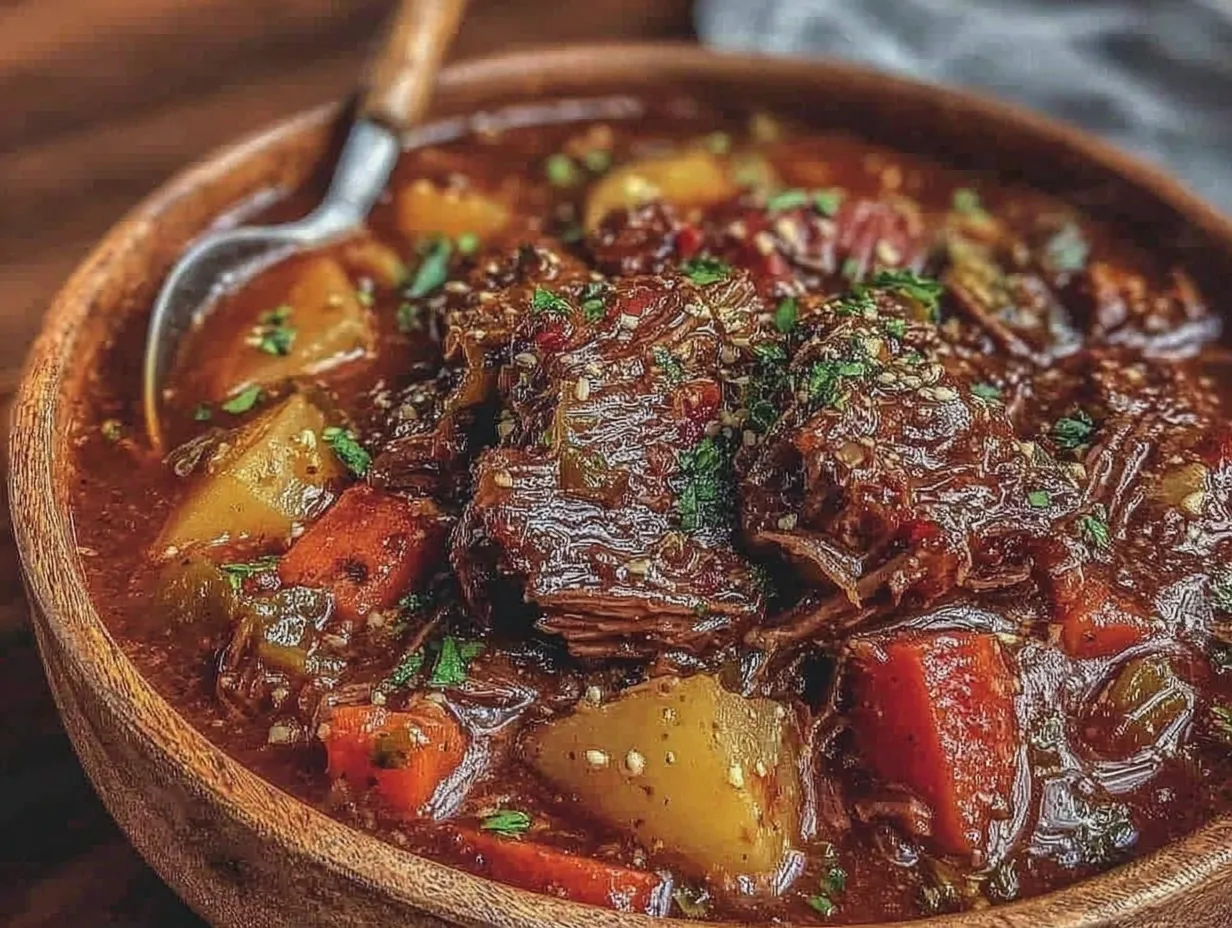
Sensory Cues: When the soup is done, the beef should be fork-tender—it should shred easily with minimal pressure. The vegetables should be soft but not falling apart. The broth will be rich and slightly thickened, with a deep brown color from the browned beef and tomato paste. If you dip a spoon in, it should coat the back of the spoon lightly.
Cooking Tips & Techniques
After making this soup more times than I can count, I’ve picked up a few tricks that make a real difference. Here are the things I wish someone had told me from the start:
Don’t skip the browning step. I know it’s tempting to just dump everything in the slow cooker raw—I’ve been there on busy mornings. But that extra 10 minutes of browning the beef creates a flavor foundation that you simply can’t replicate. The Maillard reaction (that browning process) produces hundreds of flavor compounds that make the broth taste like it simmered all day, because, well, it did.
Season in layers. I season the beef before browning, add salt with the other seasonings, and then taste and adjust at the end. This layering approach builds complexity. If you add all the salt at the beginning, you might end up with an overly salty soup as the liquid reduces slightly during cooking.
Watch your liquid level. Slow cookers don’t let moisture escape like stovetop cooking does, so you don’t need as much liquid as you might think. The vegetables and beef will also release their own juices as they cook. If your soup seems too thin at the end, you can remove the lid and cook on HIGH for 20-30 minutes to let some liquid evaporate.
One mistake I made early on: I once used pre-cut “stew meat” from the grocery store without checking the fat content. It was way too lean and came out tough and dry. Now I always buy a whole chuck roast and cut it myself. It’s cheaper and I can control the size of the pieces. Lesson learned the hard way.
Multitasking strategy: While the beef is browning in batches, I chop the vegetables. By the time all the beef is seared, the veggies are ready to go. This keeps the whole prep process under 20 minutes. If you’re really pressed for time, you can even chop the vegetables the night before and store them in the fridge.
Variations & Adaptations
One of the best things about this soup is how adaptable it is. Here are some variations I’ve tried and loved:
Hearty Italian Version
Add 1 teaspoon of dried oregano and 1/2 teaspoon of red pepper flakes along with the other seasonings. Swap the potatoes for 1 cup of small pasta (like ditalini or elbow macaroni) added in the last 30 minutes of cooking. Top with grated Parmesan cheese before serving. The red pepper flakes give it a gentle warmth that’s perfect for cold nights.
Low-Carb/Keto-Friendly
Skip the potatoes and add extra low-carb vegetables like cauliflower florets, zucchini, and green beans. You can also add 1 cup of chopped cabbage or kale in the last hour of cooking. The soup will still be hearty and satisfying without the extra carbs. I’ve made this version for friends who are watching their carb intake, and they couldn’t tell the difference.
Spicy Southwestern Twist
Add 1 teaspoon of cumin, 1/2 teaspoon of smoked paprika, and 1 minced chipotle pepper in adobo sauce along with the seasonings. Swap the potatoes for 1 cup of frozen corn and add a can of drained and rinsed black beans in the last hour. Top with fresh cilantro and a squeeze of lime juice. The smoky heat is incredible on a chilly evening.
Slow Cooker-Free Method
If you don’t have a slow cooker, make this soup in a Dutch oven on the stovetop. After browning the beef and sautéing the aromatics, add all the remaining ingredients and bring to a boil. Reduce the heat to low, cover, and simmer for 1.5 to 2 hours, or until the beef is tender. Check the liquid level occasionally and add more broth if needed. This method actually produces a slightly more concentrated flavor since some liquid evaporates during cooking.
Serving & Storage Suggestions
This soup is incredibly versatile when it comes to serving. Here’s how I like to enjoy it:
Serving Temperature: Serve this soup piping hot, straight from the slow cooker. Ladle it into deep bowls so nothing spills over the sides. A sprinkle of fresh parsley or a grind of black pepper on top adds a nice finishing touch.
What to Serve With It: Crusty bread is my go-to companion for this soup—something with a good crust that you can tear apart and dip into the broth. A simple green salad with a tangy vinaigrette balances the richness of the soup nicely. For a heartier meal, serve it over cooked egg noodles or rice. I’ve also been known to pour this soup over a baked potato for the ultimate comfort food mashup.
Storage Instructions: This soup keeps beautifully in the refrigerator for up to 5 days. Let it cool completely before transferring to airtight containers. The flavors actually deepen and meld together overnight, making leftovers even better than the first batch. I often make a double batch just so I have lunches for the week.
Freezer Instructions: This soup freezes wonderfully for up to 3 months. Let it cool completely, then portion it into freezer-safe containers or zip-top bags. Leave about an inch of headspace for expansion. To thaw, transfer the container to the refrigerator overnight. Reheat gently on the stovetop or in the microwave.
Reheating Tips: The best way to reheat this soup is on the stovetop over medium-low heat, stirring occasionally. If it’s thickened too much in the fridge, add a splash of broth or water to loosen it up. The microwave works in a pinch, but the stovetop gives you more control and better results.
Flavor Development: Here’s a little secret—this soup is actually better the next day. The flavors have time to meld and deepen, and the beef becomes even more tender. If you can plan ahead, make it a day before you want to serve it. Your future self will thank you.
Nutritional Information & Benefits
This soup is not just delicious—it’s also packed with nutrients that make it a wholesome choice for your family.
Estimated Nutritional Values (per serving, based on 8 servings):
| Nutrient | Amount |
|---|---|
| Calories | 320 |
| Protein | 28g |
| Fat | 12g |
| Carbohydrates | 25g |
| Fiber | 5g |
| Sugar | 7g |
| Sodium | 680mg |
Health Benefits: The beef provides high-quality protein and essential nutrients like iron, zinc, and B vitamins—all important for energy and immune function. The vegetables add fiber, vitamins A and C, and antioxidants. Carrots are rich in beta-carotene, while potatoes provide potassium and vitamin B6. The broth is hydrating and can help soothe a sore throat or cold.
Dietary Considerations: This recipe is naturally gluten-free and dairy-free, making it suitable for many dietary needs. It’s also relatively low in added sugars and can be adapted for lower-carb diets by swapping the potatoes for extra vegetables. If you’re watching your sodium intake, use low-sodium broth and go easy on the added salt.
Personal Note: I love that this soup makes me feel good about what I’m eating. It’s real food—no processed ingredients, no hidden additives. Just simple, wholesome ingredients that nourish your body and warm your soul. That’s the kind of cooking I can get behind.
Frequently Asked Questions
Can I use frozen beef in this recipe?
I don’t recommend using frozen beef directly in this recipe. Frozen meat won’t brown properly, and it will release excess water into the slow cooker, which can dilute the flavor. Thaw the beef completely in the refrigerator overnight before browning and adding it to the soup.
Can I make this soup in an Instant Pot?
Absolutely! Use the sauté function to brown the beef and cook the aromatics directly in the Instant Pot. Then add the remaining ingredients, pressure cook on HIGH for 35 minutes, and let the pressure release naturally for 10 minutes before quick-releasing the rest. The result is just as delicious and takes about half the time.
Why did my beef turn out tough?
Tough beef usually means it wasn’t cooked long enough or the wrong cut was used. Chuck roast needs time to break down its connective tissue—at least 7 hours on LOW or 4 hours on HIGH. If you used a lean cut like sirloin, it won’t become tender no matter how long you cook it. Stick with well-marbled chuck for the best results.
Can I add more vegetables to this soup?
Of course! This soup is very forgiving when it comes to vegetables. Feel free to add parsnips, turnips, zucchini, bell peppers, or even leafy greens like kale or spinach. Just keep in mind that delicate vegetables like zucchini or spinach should be added in the last 30 minutes to prevent them from turning mushy.
How can I thicken the soup if it’s too thin?
If your soup is thinner than you’d like, there are a few easy fixes. You can mash some of the potatoes against the side of the slow cooker to release their starch, which will naturally thicken the broth. Alternatively, mix 2 tablespoons of cornstarch with 2 tablespoons of cold water to form a slurry, then stir it into the soup and cook on HIGH for 15-20 minutes until thickened.
Conclusion
This slow cooker beef vegetable soup has become a staple in my kitchen for good reason. It’s the kind of recipe that delivers on every level—deep, comforting flavor, minimal effort, and ingredients that won’t break the bank. Whether you’re feeding a hungry family on a busy weeknight or just want a pot of something warm and nourishing to get you through the week, this soup has your back.
I love that this recipe came from such an unexpected place—a rummage sale table, shared by a woman who had been making it for decades. It’s a reminder that the best recipes often come from the most ordinary moments, passed along by people who cook with their hearts. Every time I make it, I think of Margaret and her no-nonsense advice about browning the meat. She was right, of course.
Now it’s your turn. I’d love to hear how this soup turns out for you. Did you add your own twist? Did your family go back for seconds? Drop a comment below and let me know. And if you’re looking for more cozy, comforting meals, you might also enjoy this hearty lentil soup or this classic chicken noodle soup—both are perfect for those days when you need a bowl of something warm and wonderful. Happy cooking, friends.
Pin This Recipe!
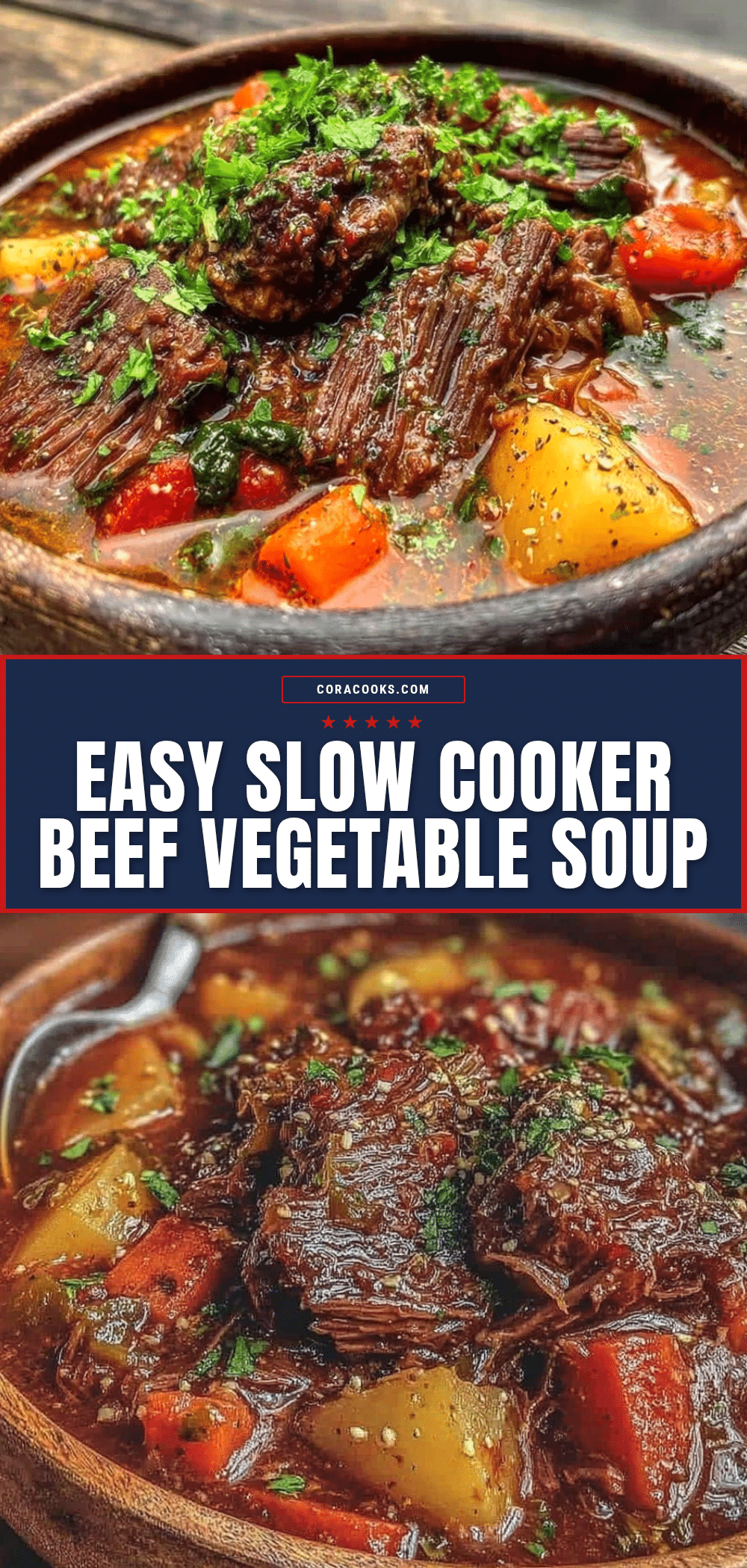
Easy Slow Cooker Beef Vegetable Soup: The Best Comfort Food
A hearty, deeply flavorful slow cooker beef vegetable soup made with tender beef chuck, carrots, potatoes, and celery in a rich broth. This set-it-and-forget-it recipe is perfect for busy weeknights and delivers comfort in every bowl.
- Prep Time: 15 minutes
- Cook Time: 7-8 hours (LOW) or 4-5 hours (HIGH)
- Total Time: 7 hours 15 minutes to 8 hours 15 minutes
- Yield: 8 servings 1x
- Category: Main Course
- Cuisine: American
Ingredients
- 2 pounds beef chuck, cut into 1-inch cubes
- 2 tablespoons olive oil
- 1 large yellow onion, diced (about 1.5 cups)
- 3 cloves garlic, minced
- 4 medium carrots, peeled and sliced into rounds (about 2 cups)
- 3 celery stalks, sliced (about 1 cup)
- 3 medium potatoes, peeled and cut into 1/2-inch cubes (Yukon Gold or Russet)
- 1 can (14.5 ounces) diced tomatoes, with their juices (fire-roasted preferred)
- 4 cups beef broth (low-sodium)
- 2 cups water
- 2 tablespoons tomato paste
- 1 teaspoon dried thyme
- 1 teaspoon dried rosemary
- 2 bay leaves
- 1 teaspoon salt, plus more to taste
- 1/2 teaspoon black pepper
- 1 cup frozen peas (optional)
- 1/2 cup frozen corn (optional)
- 1 cup green beans, trimmed and cut into 1-inch pieces (optional)
- Fresh parsley, chopped, for garnish (optional)
Instructions
- Prep the beef: Pat the beef cubes dry with paper towels. Season generously with salt and pepper.
- Brown the beef: Heat olive oil in a large skillet over medium-high heat. Working in batches, add beef cubes in a single layer and cook undisturbed for 2-3 minutes until a deep brown crust forms. Flip and repeat on all sides. Transfer browned beef to the slow cooker.
- Sauté the aromatics: Reduce heat to medium. Add diced onion to the same skillet, scraping up browned bits. Cook for 2 minutes until softened. Add minced garlic and cook for 30 seconds until fragrant. Transfer to the slow cooker.
- Deglaze the pan: Pour about 1/2 cup of beef broth into the hot skillet and stir vigorously, scraping up all browned bits. Pour this liquid into the slow cooker.
- Layer the vegetables: Add carrots, celery, and potatoes to the slow cooker on top of the beef. Do not stir yet.
- Add liquids and seasonings: Pour in remaining beef broth, water, diced tomatoes with juices, and tomato paste. Add dried thyme, rosemary, bay leaves, salt, and pepper. Stir gently to combine.
- Cook: Cover and cook on LOW for 7-8 hours or on HIGH for 4-5 hours, until beef is fork-tender.
- Finish: About 30 minutes before serving, remove bay leaves. If using frozen peas or corn, stir them in now. Taste and adjust seasoning.
- Rest and serve: Let soup sit for 5-10 minutes before serving. Ladle into bowls and garnish with fresh parsley if desired.
Notes
Don’t skip browning the beef—it creates deep flavor. Season in layers for best results. For a thicker soup, mash some potatoes against the side of the slow cooker or use a cornstarch slurry. This soup tastes even better the next day.
Nutrition
- Serving Size: 1 bowl (about 1.5 cu
- Calories: 320
- Sugar: 7
- Sodium: 680
- Fat: 12
- Saturated Fat: 3.5
- Carbohydrates: 25
- Fiber: 5
- Protein: 28
Keywords: slow cooker beef vegetable soup, beef soup, vegetable soup, comfort food, slow cooker soup, easy soup recipe