Love this? Save it for later!
Share the inspiration with your friends
Introduction
“You won’t believe this is gluten-free!” my friend Mark said, eyeing the golden crust as I pulled the focaccia from the oven. I’d stumbled upon this recipe almost by accident. It was a Wednesday evening, and I was halfway through prepping a completely different bread—only to realize I was out of regular flour. The kitchen timer was ticking, and honestly, I was ready to give up. But then I remembered a dusty little bag of gluten-free flour tucked away in the back of my pantry. So, I decided to experiment, tossing in fresh rosemary and thyme from my windowsill herb garden and extra virgin olive oil that my neighbor had gifted me last summer. The result was… well, magic.
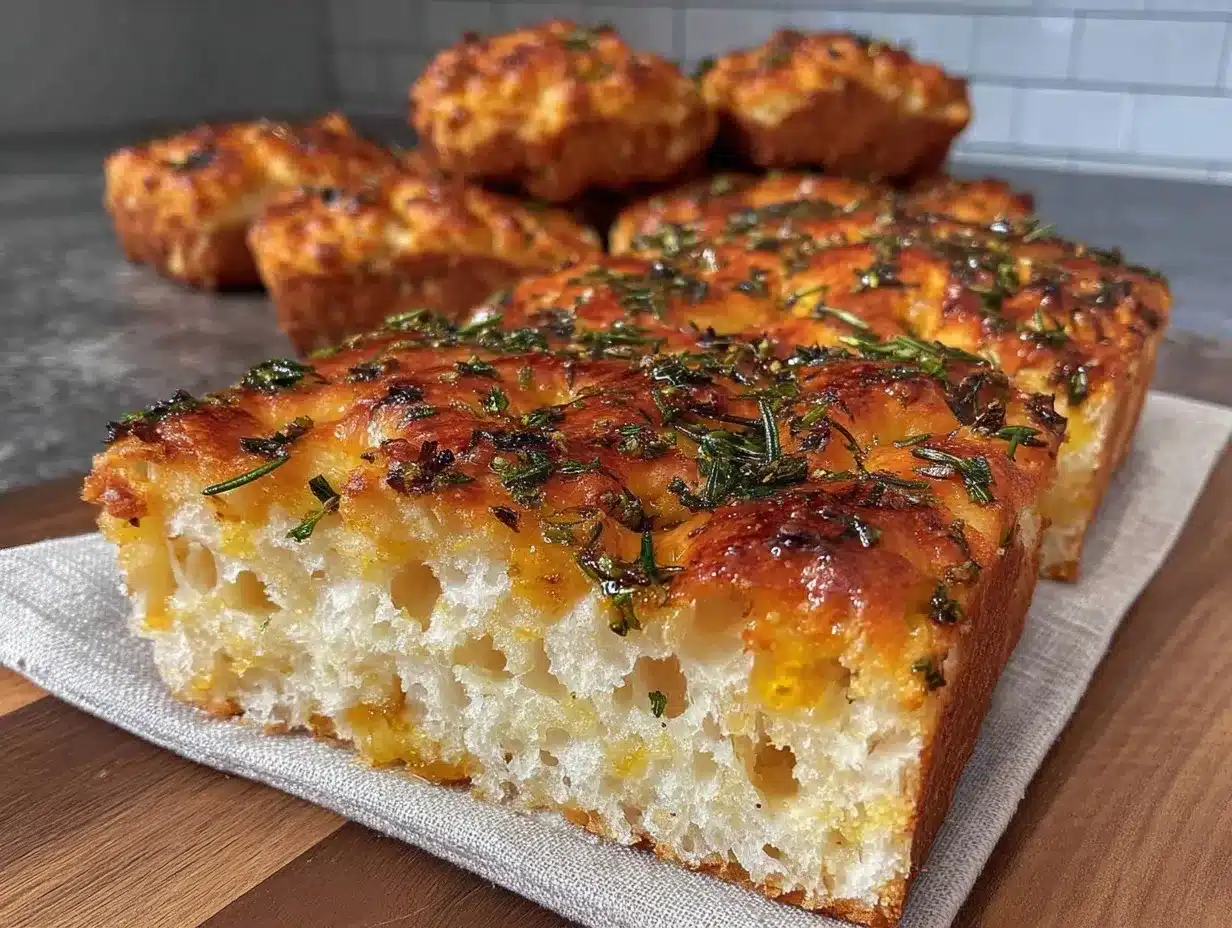
The crust turned out irresistibly crispy, the inside tender and airy, with just the right amount of herbal fragrance. I mean, who knew gluten-free could taste this good? Maybe you’ve been there—trying to find a gluten-free bread that doesn’t crumble to dust or taste like cardboard. This focaccia recipe stayed with me because it’s simple, forgiving (even when the dough gets a little sticky), and honestly, it makes your kitchen smell like a cozy Italian bakery. If you’re skeptical about gluten-free breads, this one might just change your mind.
Let me tell you, that cracked ceramic baking dish I used—the one I knocked over halfway through—still holds a special place in my heart. Because it was part of the moment that brought this recipe to life. So, get ready to make your own crispy gluten-free focaccia bread with olive oil and herbs that’s as comforting as it is delicious.
Why You’ll Love This Recipe
After testing countless gluten-free breads, I can confidently say this recipe stands out. It’s not just about being gluten-free; it’s about creating a focaccia that’s crispy on the outside, soft in the middle, and bursting with herbal goodness. Here’s why you’ll love making (and eating) this bread:
- Quick & Easy: Ready in just about 1 hour and 15 minutes, including rising and baking. Perfect for busy evenings or last-minute plans.
- Simple Ingredients: Uses pantry staples and fresh herbs that you can grow yourself or grab at any grocery store.
- Perfect for Any Occasion: Whether it’s a cozy dinner, a weekend brunch, or a potluck, this bread impresses without any fuss.
- Crowd-Pleaser: Gluten-free or not, guests keep asking for seconds, which says a lot!
- Unbelievably Delicious: The olive oil creates a golden, crispy crust that’s just heavenly, while the herbs add a fresh, aromatic touch.
This isn’t your average gluten-free bread. The magic lies in the blend of gluten-free flours I use, plus the technique of letting the dough rest just long enough for that perfect texture. Plus, I love brushing on extra olive oil before baking — it’s a small step that makes a huge difference. Honestly, this focaccia recipe has changed my idea of gluten-free baking, and I’m betting it will do the same for you.
What Ingredients You Will Need
This recipe uses simple, wholesome ingredients to deliver bold flavor and satisfying texture without the fuss. Most are pantry staples, and if you have the fresh herbs handy, you’re almost there. Here’s what you’ll want to gather:
- For the dough:
- 1 1/2 cups (180g) gluten-free all-purpose flour blend (I recommend Bob’s Red Mill 1-to-1 Baking Flour for best texture)
- 1/2 cup (60g) tapioca starch (adds chewiness and crispness)
- 1 tsp xanthan gum (helps bind the dough, essential for gluten-free baking)
- 1 tsp instant yeast (make sure it’s gluten-free)
- 1 tsp sugar (feeds the yeast for a better rise)
- 3/4 tsp salt
- 1 cup (240ml) warm water (about 110°F/43°C to activate the yeast)
- 1/4 cup (60ml) extra virgin olive oil, plus more for drizzling (I love Colavita for its rich flavor)
- For the topping:
- Fresh rosemary sprigs (about 2 tbsp chopped)
- Fresh thyme leaves (1 tbsp)
- Flaky sea salt for sprinkling (Maldon salt works beautifully)
If you don’t have fresh herbs, dried versions will work, but fresh definitely gives a brighter aroma. For a dairy-free option, this recipe is naturally free of dairy, so no changes needed there. You can swap tapioca starch with arrowroot powder but expect a slightly different texture. Also, if you want a bit more depth, a splash of white wine vinegar added to the water helps with the rise and flavor.
Equipment Needed
- Large mixing bowl (glass or stainless steel works best)
- Measuring cups and spoons (accuracy is key in gluten-free baking!)
- Whisk or fork (for mixing the yeast and wet ingredients)
- Wooden spoon or silicone spatula (for folding the dough)
- 9×13 inch (23×33 cm) baking pan or a similar sized ceramic or metal tray
- Kitchen towel or plastic wrap (to cover the dough while it rises)
- Oven mitts and cooling rack
If you don’t have a ceramic pan, a metal one works just fine—just drizzle a bit more olive oil to prevent sticking. I used to use my trusty cast-iron skillet for a deeper focaccia, but found this pan gives the perfect thin crust. Also, I recommend lightly oiling your tools to prevent the dough from sticking; gluten-free dough can be a bit sticky and tricky. No fancy mixers required—this recipe is easy enough for hand mixing, but if you want, a stand mixer with a paddle attachment can speed things up.
Preparation Method
- Activate the yeast: In your large mixing bowl, combine 1 cup (240ml) warm water, 1 tsp sugar, and 1 tsp instant yeast. Stir gently and let it sit for 5-7 minutes until it becomes foamy and bubbly. This means your yeast is alive and ready. If it doesn’t foam, your yeast might be old—better to start again.
- Mix dry ingredients: While the yeast activates, whisk together 1 1/2 cups (180g) gluten-free flour, 1/2 cup (60g) tapioca starch, 1 tsp xanthan gum, and 3/4 tsp salt in a separate bowl. This helps evenly distribute the xanthan gum and salt.
- Combine wet and dry: Pour the dry ingredients into the foamy yeast mixture. Add 1/4 cup (60ml) olive oil. Mix with a wooden spoon or silicone spatula until combined. The dough will be sticky and slightly wet—that’s normal for gluten-free focaccia.
- First rise: Cover the bowl with a kitchen towel or plastic wrap. Place it in a warm spot (like near a sunny window or on top of the fridge) and let it rise for 45-60 minutes. It should puff up a bit, but don’t expect it to double like traditional wheat dough.
- Prepare the baking pan: Drizzle olive oil generously over your 9×13 inch (23×33 cm) baking pan, making sure the bottom and sides are coated. This prevents sticking and helps develop that crispy crust.
- Transfer and shape: Once risen, pour the dough into the prepared pan. Using oiled hands (trust me, this helps a lot), gently press and spread the dough evenly to the edges. Don’t worry about perfection—this rustic look is part of the charm.
- Second rise and dimple: Cover the dough again and let it rest for 15-20 minutes. Then, use your fingertips to dimple the dough all over, creating those classic focaccia pockets that soak up olive oil and herbs.
- Add toppings: Sprinkle chopped fresh rosemary and thyme evenly over the surface. Drizzle an extra 2 tablespoons of olive oil all over. Finally, sprinkle flaky sea salt for that perfect savory crunch.
- Bake: Preheat your oven to 425°F (220°C). Place the pan in the center rack and bake for 20-25 minutes until the top is golden brown and crispy. You’ll know it’s done when it sounds hollow if you tap the edges lightly.
- Cool and serve: Remove from oven and let the focaccia cool in the pan for 10 minutes. Then transfer to a wire rack to cool slightly before slicing. Serve warm or at room temperature.
Pro tip: Don’t skip the dimpling step—it’s what makes focaccia focaccia! Also, if you’re worried about underbaking, check the underside of the bread; it should be nicely browned and firm, not doughy.
Cooking Tips & Techniques
Getting that perfect crispy gluten-free focaccia crust might seem tricky, but here are some tips I picked up from trial and error. First, warm water is your friend—it wakes up the yeast without killing it. Too hot, and you’ll have a sad, dead dough. Too cold, and the rise will be sluggish.
When mixing, resist the urge to add too much flour. Gluten-free dough is naturally wetter and stickier, so embrace a slightly tacky texture. That’s what creates a lighter crumb inside.
Also, don’t rush the resting times. The first rise might not look dramatic, but patience pays off in a better texture. I learned this the hard way after pulling a dense focaccia out of the oven too soon.
Another tip: olive oil isn’t just for flavor—it keeps the crust crispy and prevents sticking. Drizzling generously, especially before baking, is a small luxury worth every drop.
Finally, the herbs. Fresh herbs release essential oils when baked, infusing the bread with aroma and flavor. If you only have dried herbs, add them sparingly to avoid bitterness.
Variations & Adaptations
One of the best things about this crispy gluten-free focaccia bread is how easy it is to customize. Here are a few ideas:
- Cheese lovers: Sprinkle grated Parmesan or crumbled feta on top before baking for a savory twist.
- Seasonal herbs: Swap rosemary and thyme for basil and oregano in summer, or sage and rosemary in fall.
- Vegan option: This recipe is naturally vegan, but double-check your yeast and flour blend for hidden animal products.
- Gluten-free flour alternatives: Try a mix of brown rice flour and sorghum flour if you prefer a nuttier flavor.
- Spicy kick: Add a pinch of crushed red pepper flakes to the dough or sprinkle on top for subtle heat.
Personally, I once tried adding sun-dried tomatoes and olives to the dough for a Mediterranean flair—totally delicious, though a bit messier to handle. Feel free to experiment and make it your own!
Serving & Storage Suggestions
This focaccia is best served slightly warm, so the olive oil is still silky and the crust is at its crispiest. It pairs beautifully with a simple salad, roasted vegetables, or a bowl of hearty soup. For drinks, a chilled glass of white wine or sparkling water with lemon complements the herbs nicely.
To store, wrap leftover focaccia tightly in plastic wrap or place in an airtight container. It keeps well at room temperature for up to 2 days. For longer storage, freeze slices in a zip-top bag for up to 3 months. When reheating, pop slices in a toaster oven or regular oven at 350°F (175°C) for 5-7 minutes to regain crispness. Avoid microwaving, which makes the crust soggy.
Fun fact: the flavors actually deepen the next day as the herbs infuse the bread further—though I doubt it will last that long!
Nutritional Information & Benefits
This crispy gluten-free focaccia bread is a lighter alternative to traditional wheat focaccia, perfect for those avoiding gluten or looking for a tasty low-fat option. Here’s an approximate breakdown per serving (1/8 of the bread):
- Calories: 180
- Carbohydrates: 22g
- Fat: 8g (mostly from heart-healthy olive oil)
- Protein: 3g
- Fiber: 1.5g
Olive oil is rich in monounsaturated fats and antioxidants, supporting heart health. Fresh herbs add vitamins and anti-inflammatory compounds. Plus, this bread is free from common allergens like dairy and nuts, making it accessible to many.
As someone who values wholesome eating, I love how this recipe combines nutrition without sacrificing flavor or texture.
Conclusion
If you’ve been hesitant about gluten-free breads, this crispy gluten-free focaccia bread with olive oil and herbs might just be the recipe that changes your mind. It’s simple, satisfying, and full of that rustic charm we all crave in homemade bread. Feel free to tweak it to your liking—whether that means adding your favorite herbs, extra toppings, or adjusting the texture.
Honestly, I keep coming back to this recipe not just because it tastes great, but because it’s a little ritual of comfort and creativity in my kitchen. I’d love to hear how your batch turns out or what personal twists you add. Don’t hesitate to share your experiences and questions below—let’s make this focaccia a community favorite!
Now, grab your olive oil, preheat that oven, and let’s get baking!
FAQs
Can I make this focaccia without xanthan gum?
Xanthan gum helps bind gluten-free dough, but if you don’t have it, you can try using 1 1/2 tsp of ground flaxseed mixed with 3 tbsp water as a substitute. The texture might be slightly different, but it should still work.
How do I know when the focaccia is fully baked?
Look for a golden-brown, crispy crust on top and around the edges. You can gently tap the bread’s bottom—it should sound hollow. If it feels doughy, bake for a few more minutes.
Can I prepare the dough the night before?
Yes! After the first rise, cover the dough tightly and refrigerate overnight. Let it come to room temperature and rise slightly before baking.
What’s the best way to reheat leftover focaccia?
Reheat in a toaster oven or regular oven at 350°F (175°C) for 5-7 minutes to bring back crispness. Avoid microwaving, which softens the crust.
Is this recipe suitable for low-carb diets?
While gluten-free, this focaccia is still bread-based and contains carbohydrates. For a low-carb option, consider recipes using almond or coconut flour, but this focaccia is more of a moderate-carb treat.
Pin This Recipe!
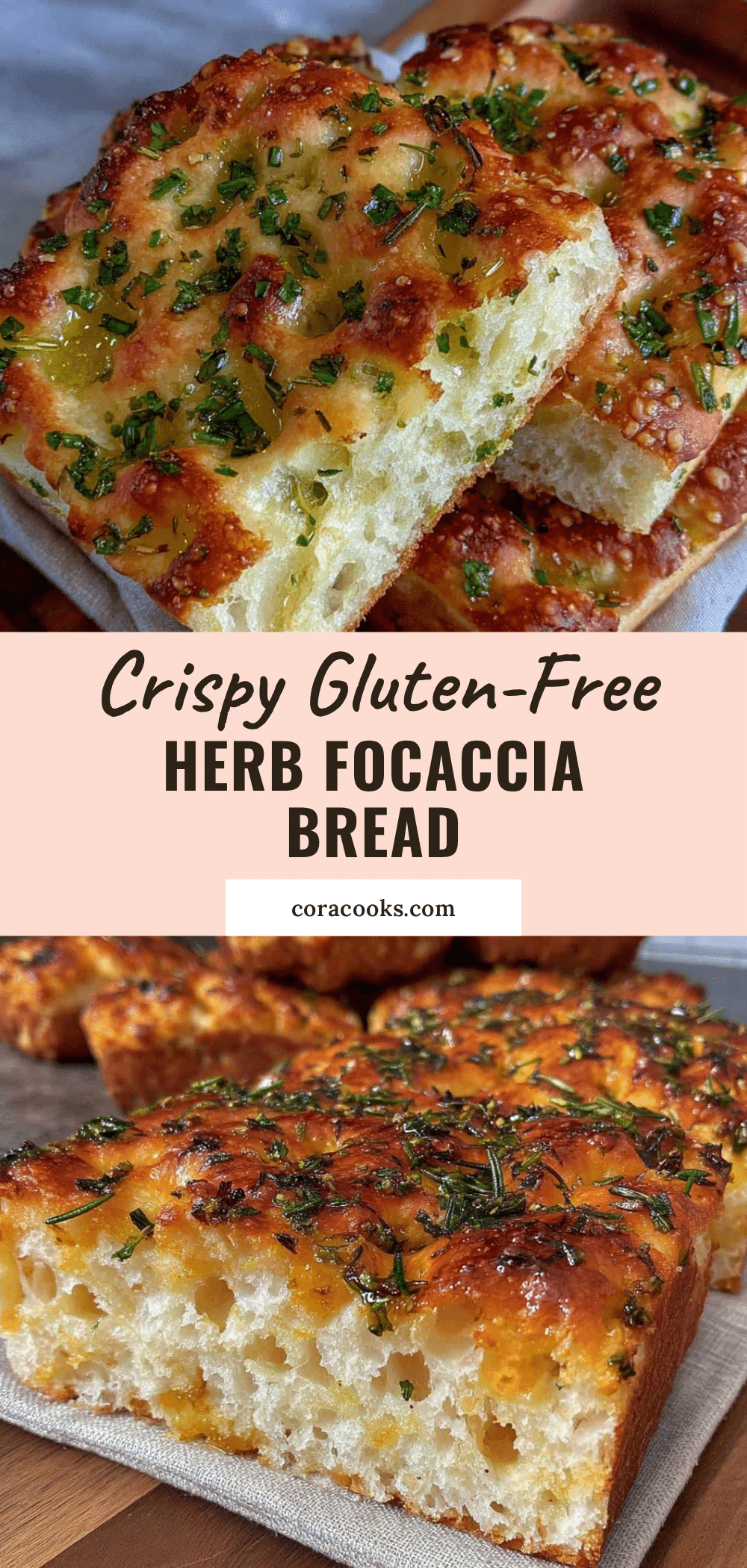
Crispy Gluten-Free Focaccia Bread Recipe Easy Homemade Herb Olive Oil Bread
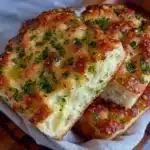
A crispy gluten-free focaccia bread with a golden crust, tender airy inside, and fresh herbal aroma. This easy homemade bread uses simple pantry staples and fresh herbs for a delicious, comforting Italian-style focaccia.
- Prep Time: 15 minutes
- Cook Time: 25 minutes
- Total Time: 1 hour 15 minutes
- Yield: 8 servings 1x
- Category: Bread
- Cuisine: Italian
Ingredients
- 1 1/2 cups (180g) gluten-free all-purpose flour blend (e.g., Bob’s Red Mill 1-to-1 Baking Flour)
- 1/2 cup (60g) tapioca starch
- 1 tsp xanthan gum
- 1 tsp instant yeast (gluten-free)
- 1 tsp sugar
- 3/4 tsp salt
- 1 cup (240ml) warm water (about 110°F/43°C)
- 1/4 cup (60ml) extra virgin olive oil, plus more for drizzling
- 2 tbsp fresh rosemary, chopped
- 1 tbsp fresh thyme leaves
- Flaky sea salt (e.g., Maldon salt) for sprinkling
Instructions
- Activate the yeast by combining 1 cup warm water, 1 tsp sugar, and 1 tsp instant yeast in a large mixing bowl. Stir gently and let sit for 5-7 minutes until foamy.
- Whisk together gluten-free flour, tapioca starch, xanthan gum, and salt in a separate bowl.
- Pour dry ingredients into the foamy yeast mixture. Add 1/4 cup olive oil and mix with a wooden spoon or silicone spatula until combined. Dough will be sticky.
- Cover the bowl with a kitchen towel or plastic wrap and let rise in a warm spot for 45-60 minutes until puffed.
- Drizzle olive oil generously over a 9×13 inch baking pan to coat bottom and sides.
- Transfer dough to the prepared pan and gently press/spread evenly with oiled hands.
- Cover and let rest for 15-20 minutes. Then dimple the dough all over with fingertips.
- Sprinkle chopped rosemary and thyme evenly over the dough. Drizzle 2 tablespoons olive oil and sprinkle flaky sea salt on top.
- Preheat oven to 425°F (220°C). Bake focaccia on center rack for 20-25 minutes until golden brown and crispy.
- Remove from oven and cool in pan for 10 minutes, then transfer to a wire rack to cool slightly before slicing. Serve warm or at room temperature.
Notes
Use warm water (about 110°F) to activate yeast without killing it. The dough will be sticky—do not add too much flour. Dimpling the dough is essential for classic focaccia texture. Drizzle olive oil generously to keep crust crispy and prevent sticking. Fresh herbs provide best aroma; dried herbs can be used sparingly. For longer storage, freeze slices and reheat in oven or toaster oven to maintain crispness. Avoid microwaving to prevent soggy crust.
Nutrition
- Serving Size: 1/8 of the focaccia
- Calories: 180
- Fat: 8
- Carbohydrates: 22
- Fiber: 1.5
- Protein: 3
Keywords: gluten-free focaccia, gluten-free bread, herb focaccia, olive oil bread, easy gluten-free bread, homemade focaccia, crispy focaccia, gluten-free baking