Love this? Save it for later!
Share the inspiration with your friends
My neighbor Janet wasn’t trying to impress anyone. I’d stopped by to borrow a ladder on a drizzly Tuesday afternoon, and this warm, slightly sweet smell hit me before she even opened the screen door. She was standing there in her worn-out slippers, holding a wooden spoon, looking mildly annoyed that I’d interrupted her afternoon. “It’s just soup,” she said when I asked what smelled so incredible. “Throw some squash and apples in the crockpot and forget about it.” I mean, honestly—forget about it? My brain was already taking notes. She let me peek into her kitchen, and there it was, this gorgeous golden-orange soup bubbling away like it was no big deal. The whole scene felt so wonderfully unpretentious. A dented slow cooker, a half-empty carton of broth on the counter, and a handwritten recipe card smudged with butter. That’s the kind of cooking I trust the most, you know? The kind that doesn’t try to be anything but exactly what it is. I stood there in her kitchen, the rain tapping against the window, and she handed me a mug of it without even asking if I wanted some. That first sip—creamy, a little tangy from the apple, with that deep roasted squash flavor—stopped me mid-sentence. I think I forgot what I was even talking about. Maybe you’ve been there, where a completely ordinary moment turns into a recipe you’ll make for years. I’ve tweaked it a bit since that afternoon, but the soul of it is still Janet’s Tuesday soup. And honestly? It’s become my go-to for chilly days when I need something that feels like a hug in a bowl.
Why You’ll Love This Recipe
Let me tell you, this isn’t just another butternut squash soup recipe floating around the internet. I’ve tested this one at least a dozen times, tweaking the apple-to-squash ratio, playing with the spices, and even burning a batch or two (we don’t talk about the one where I forgot to add liquid—the smell lingered for days). What I landed on is something genuinely special.
- Effortless Comfort : The slow cooker does all the heavy lifting. You chop a few things, toss them in, and walk away. It’s practically magic for busy weeknights or lazy Sundays.
- Simple Ingredients : No hunting down obscure items at specialty stores. You’ll find everything at your regular grocery store—probably already in your pantry or fridge.
- Perfect for Meal Prep : This soup actually tastes better the next day. Make a big batch on Sunday and enjoy it all week long.
- Naturally Good for You : Packed with vitamins from the squash and fiber from the apples, this soup feels indulgent but is secretly wholesome.
- Crowd-Pleasing Flavor : The sweetness of the apple balances the earthiness of the squash perfectly. Even picky eaters ask for seconds.
What makes this version different? It’s the caramelization. Most recipes just dump everything in raw, but I’ve found that giving the squash and apples a quick roast first—or even just sautéing the onions—adds a depth of flavor that’s hard to beat. Plus, the ratio is dialed in so the soup is creamy without needing heavy cream. It’s rich, velvety, and tastes like you spent hours fussing over it. You didn’t. That’s the beauty of it.
What Ingredients You Will Need
This recipe uses simple, wholesome ingredients that work together to create something truly comforting. Most of these are pantry staples, especially during fall and winter. Here’s what you’ll need:
For the Soup Base
- 1 medium butternut squash , peeled, seeded, and cubed into 1-inch pieces (about 4 cups) — look for one that feels heavy for its size, which means it’s fresher and more flavorful
- 2 medium Honeycrisp or Fuji apples , peeled, cored, and chopped — these hold their shape well and add natural sweetness without being overpowering
- 1 medium yellow onion , diced — adds a savory backbone to balance the sweetness
- 2 cloves garlic , minced — I use fresh here, not the jarred stuff, it really makes a difference
- 3 cups vegetable broth — I prefer Pacific Foods for its clean flavor, but any good-quality brand works
- 1 cup water — just enough to help everything cook evenly
- 1 teaspoon salt , plus more to taste
- ½ teaspoon black pepper
For the Warm Spices
- 1 teaspoon ground cinnamon — the star here, it ties the squash and apple together beautifully
- ½ teaspoon ground nutmeg — fresh grated if you have it, but pre-ground works fine
- ¼ teaspoon ground ginger — adds a gentle warmth without being spicy
- Pinch of cayenne pepper (optional) — just a tiny bit to wake up the flavors, not to make it hot
For the Creamy Finish
- ½ cup full-fat coconut milk — or heavy cream if you prefer, but coconut milk keeps it dairy-free and adds a subtle richness
- 1 tablespoon maple syrup (optional) — only if your apples aren’t sweet enough; taste first!
For Garnish (Optional but Recommended)
- Roasted pepitas (pumpkin seeds) — adds a nice crunch
- A swirl of coconut milk or cream
- A sprinkle of cinnamon
- Fresh thyme leaves — for a pop of color and freshness
Substitution Notes: If you don’t have butternut squash, you can use a small sugar pumpkin or even sweet potatoes. For the apples, avoid Granny Smith—they’re too tart and won’t soften the same way. Use almond milk instead of coconut milk if you prefer, but the soup won’t be as creamy. And if you’re gluten-free, this recipe already is—just double-check your broth label.
Equipment Needed
You don’t need a fancy kitchen for this one. Here’s what you’ll actually use:
- Slow cooker (4 to 6-quart) — any brand works; I’ve used a basic Crock-Pot for years and it’s never let me down
- Chef’s knife — a sharp one makes peeling and cubing the squash so much easier
- Vegetable peeler — or you can just cut the skin off with your knife if you’re comfortable doing that
- Cutting board
- Immersion blender — this is my favorite tool for soups, so much easier than transferring to a blender in batches
- Regular blender (if you don’t have an immersion blender) — just be careful with hot liquid; work in batches and don’t fill it more than halfway
- Measuring cups and spoons
- Wooden spoon for stirring
If you don’t have an immersion blender, no worries. A regular blender works perfectly—just let the soup cool for a few minutes first, and hold the lid down with a kitchen towel while blending. I learned that one the hard way after a soup explosion incident that I’m still cleaning up.
Preparation Method
Alright, let’s get cooking. This is the easy part—I promise.
- Prep the squash and apples. Peel the butternut squash using a vegetable peeler, then cut it in half lengthwise. Scoop out the seeds with a spoon (save them for roasting if you’re feeling ambitious). Cut the flesh into 1-inch cubes. Peel and core the apples, then chop them into similar-sized pieces. Don’t stress about perfect cubes—they’re going to get blended anyway.
- Sauté the aromatics (optional but worth it). If you have an extra 5 minutes, heat a skillet over medium heat with a tablespoon of olive oil. Cook the diced onion until it’s translucent and starting to brown at the edges, about 4 minutes. Add the minced garlic and cook for 30 seconds more until fragrant. This step adds a savory depth that really rounds out the sweetness. If you’re short on time, just toss the raw onion and garlic into the slow cooker—it’ll still be delicious.
- Layer everything in the slow cooker. Add the cubed squash, chopped apples, sautéed (or raw) onion and garlic, cinnamon, nutmeg, ginger, cayenne (if using), salt, and pepper. Pour in the vegetable broth and water. Give everything a good stir to combine. The liquid should just about cover the solids—if it doesn’t, add a little more broth or water.
- Cook low and slow. Cover the slow cooker and cook on LOW for 6 to 7 hours or on HIGH for 3 to 4 hours. You’ll know it’s done when the squash is fork-tender—it should easily fall apart when you poke it. The apples will be soft and almost melting into the broth. Your kitchen will smell like fall, and honestly, that’s half the joy.
- Blend until smooth. Turn off the slow cooker and let the soup cool for about 5 minutes. Using an immersion blender, blend the soup directly in the pot until it’s completely smooth and velvety. If you’re using a regular blender, work in batches—fill it no more than halfway, hold the lid down with a towel, and blend carefully. Pour each batch into a large bowl or pot as you go.
- Add the creamy finish. Stir in the coconut milk (or heavy cream) and maple syrup if using. Taste and adjust the seasoning—maybe a pinch more salt, a dash more cinnamon. The soup should be rich, slightly sweet, and deeply comforting.
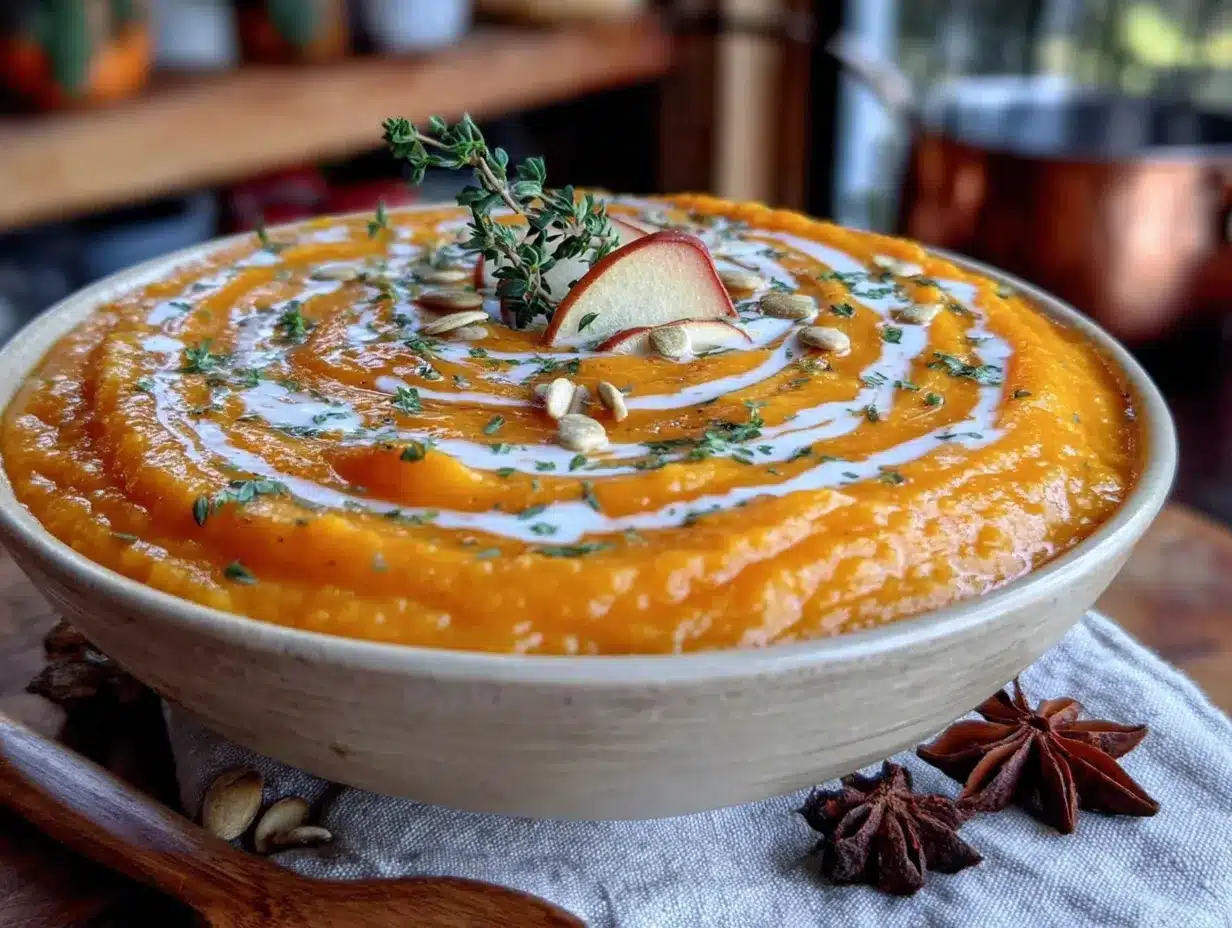
- Serve it up. Ladle the soup into bowls and add your favorite toppings. A swirl of coconut milk, a sprinkle of pepitas, a few fresh thyme leaves, or even a drizzle of maple syrup. Serve warm with crusty bread or a simple green salad on the side.
Sensory cues to watch for: When you first add the broth, the squash and apples should be mostly submerged. After cooking, the liquid will have reduced slightly and the squash will be so tender that a fork slides through it like butter. The color should be a deep, warm golden-orange. And the smell? It’s like autumn in a pot—sweet, spiced, and inviting.
Cooking Tips & Techniques
I’ve made this soup more times than I can count, and I’ve definitely learned a few things along the way. Here are the tips that actually matter:
Don’t skip the salt. I know it sounds basic, but salt is what brings out the natural sweetness of the squash and apples. Without enough salt, the soup can taste flat and one-dimensional. Season generously at the beginning, then adjust at the end.
Roast for extra depth. If you have 20 extra minutes, toss the cubed squash and apples with a little olive oil and salt, spread them on a baking sheet, and roast at 400°F for 15-20 minutes before adding them to the slow cooker. This caramelizes the natural sugars and adds a smoky, almost nutty flavor that’s incredible. I do this when I’m trying to impress someone, but honestly, the regular version is still fantastic.
Watch the liquid level. Slow cookers don’t let steam escape the way a stovetop pot does, so the soup can end up thinner than you’d like. If your soup seems too watery after blending, you have two options: let it cook uncovered on HIGH for another 30 minutes to reduce, or stir in an extra splash of coconut milk to thicken it up.
Blend safely. I cannot stress this enough—hot liquid in a blender is dangerous. The steam builds up pressure and can blow the lid off. Always let the soup cool for at least 5 minutes, and never fill the blender more than halfway. Hold the lid down with a folded kitchen towel for extra safety. Trust me, I’ve cleaned soup off my ceiling before. It’s not fun.
Taste as you go. This is the most important tip I can give you. Everyone’s squash and apples are different—some are sweeter, some are more watery. Taste the soup before you add the maple syrup. You might not need it at all. Adjust the spices to your preference. Maybe you want more cinnamon or a bigger pinch of cayenne. Make it yours.
Variations & Adaptations
This recipe is wonderfully flexible. Here are some ways to switch it up:
Vegan & Dairy-Free — This version is already vegan if you use coconut milk and skip the heavy cream. The coconut milk adds a lovely richness that pairs beautifully with the squash and apple.
Spicy Kick — Add a minced fresh jalapeño (seeds removed if you want less heat) along with the onions, or increase the cayenne to ¼ teaspoon. The warmth is really nice on a cold day.
Herb-Infused — Add a sprig of fresh rosemary or a couple of sage leaves to the slow cooker while it cooks. Remove them before blending. The herbal notes complement the sweetness perfectly.
Curried Version — Swap the cinnamon and nutmeg for 1 tablespoon of curry powder and ½ teaspoon of turmeric. It’s a completely different soup but equally delicious—earthy, warming, and vibrant.
Stovetop Method — If you don’t have a slow cooker, no problem. Follow the same steps but use a large pot. Sauté the onions and garlic in olive oil, add the squash, apples, broth, and spices, bring to a boil, then simmer covered for 25-30 minutes until tender. Blend and finish as directed.
Instant Pot Version — Use the sauté function to cook the onions and garlic, add everything else, and pressure cook on HIGH for 10 minutes. Let the pressure release naturally for 10 minutes, then blend. Dinner in under 30 minutes!
I once tried a version with roasted pears instead of apples when I ran out of fruit mid-recipe. It was incredible—slightly more floral and delicate. Don’t be afraid to experiment.
Serving & Storage Suggestions
This soup is best served warm, obviously, but the way you serve it can make it feel special even on a regular Tuesday.
Serving Temperature: Serve it hot, but not boiling. Let it cool for a few minutes after blending so the flavors have a chance to settle. A warm bowl makes a difference too—run your bowls under hot water before ladling in the soup.
Presentation Ideas: A simple swirl of coconut milk on top looks beautiful and adds a creamy finish. Sprinkle roasted pepitas for crunch, a few fresh thyme leaves for color, and a light dusting of cinnamon. If you’re feeling fancy, drizzle a little maple syrup in a pattern on top.
What to Serve With It: Crusty sourdough bread slathered with butter is my go-to. A simple arugula salad with lemon vinaigrette cuts through the richness nicely. Or serve it in small mugs as a starter for a fall dinner party—it’s elegant without being fussy.
Storage Instructions: Let the soup cool completely before storing. Transfer it to an airtight container and refrigerate for up to 5 days. The flavors actually deepen and meld together overnight, so it might taste even better the next day.
Freezing: This soup freezes beautifully. Portion it into freezer-safe bags or containers, leaving about an inch of headspace for expansion. It will keep for up to 3 months. Thaw overnight in the refrigerator before reheating.
Reheating: Warm the soup gently on the stovetop over medium-low heat, stirring occasionally. If it’s too thick after refrigeration, add a splash of broth or water to thin it out. You can also microwave individual portions in 30-second bursts, stirring between each. Avoid boiling, as it can cause the coconut milk to separate.
Nutritional Information & Benefits
This soup is as nourishing as it is delicious. Here’s what you’re getting in each serving (based on 6 servings):
| Nutrient | Amount Per Serving |
|---|---|
| Calories | 185 |
| Total Fat | 7g |
| Saturated Fat | 5g |
| Carbohydrates | 32g |
| Fiber | 6g |
| Sugar | 14g |
| Protein | 3g |
| Vitamin A | 210% DV |
| Vitamin C | 35% DV |
Health Highlights: Butternut squash is packed with vitamin A (over 200% of your daily needs per serving), which supports eye health and immune function. Apples add fiber and vitamin C, while cinnamon has anti-inflammatory properties. The coconut milk provides healthy fats that help your body absorb the fat-soluble vitamins. This soup is naturally gluten-free, dairy-free (if using coconut milk), and vegan-friendly.
Dietary Considerations: If you’re watching your sugar intake, the natural sugars from the squash and apples are balanced by the fiber and fat in the soup. Skip the maple syrup to keep added sugars at zero. For a lower-carb option, replace the apples with an extra cup of cauliflower florets—it’s surprisingly good.
FAQs
Can I use frozen butternut squash?
Absolutely. Frozen pre-cut butternut squash is a huge time-saver. Use about 4 cups (roughly one 16-ounce bag). No need to thaw it first—just add it directly to the slow cooker. You might need to add 30 minutes to the cooking time since frozen squash releases more water.
Why is my soup watery?
This usually happens if your squash and apples released a lot of water during cooking, or if you added too much broth. To fix it, let the soup cook uncovered on HIGH for 20-30 minutes to reduce the liquid. Alternatively, stir in an extra ¼ cup of coconut milk or a tablespoon of cornstarch slurry (cornstarch mixed with cold water) to thicken it.
Can I make this soup ahead of time?
Yes, and I actually recommend it. The flavors meld and deepen overnight, making the soup even more delicious the next day. Cook, blend, and cool the soup completely, then refrigerate it in an airtight container. Reheat gently on the stovetop or in the microwave when you’re ready to serve.
How do I peel butternut squash easily?
Microwave the whole squash for 2-3 minutes to soften the skin slightly, which makes peeling much easier. Alternatively, use a sharp Y-shaped vegetable peeler—it’s faster and safer than using a knife. If you’re really struggling, just cut the squash into large chunks and peel each piece individually.
Can I use a different type of apple?
Yes, but stick with sweeter varieties like Fuji, Honeycrisp, Gala, or Braeburn. Tart apples like Granny Smith won’t soften as well and can make the soup too tangy. If that’s all you have, add an extra tablespoon of maple syrup to balance the flavor.
Conclusion
This cozy slow cooker butternut squash apple soup is the kind of recipe that feels like a warm blanket on a cold day. It’s simple enough for a busy weeknight but impressive enough to serve at a fall gathering. The slow cooker does all the work, and you get to enjoy a kitchen that smells like autumn and a soup that tastes like comfort.
I love how forgiving this recipe is—you can tweak the spices, swap the apples, or add extra veggies, and it still turns out delicious. It’s become my go-to for meal prep, lazy Sundays, and those days when I just need something nourishing and soul-soothing. I hope it becomes one of yours too.
If you try this recipe, I’d love to hear how it went! Leave a comment below with your favorite variation or any questions you have. And if you’re looking for more cozy soup ideas, you might also enjoy this creamy roasted tomato basil soup or these easy homemade crusty bread rolls to serve alongside. Happy cooking, friends!
Pin This Recipe!

Cozy Slow Cooker Butternut Squash Apple Soup

A creamy, slightly sweet slow cooker soup made with butternut squash and apples, perfect for chilly days. This easy recipe delivers deep roasted flavor with minimal effort, thanks to a quick sauté and optional roasting step.
- Prep Time: 15 minutes
- Cook Time: 6 hours (LOW) or 3.5 hours (HIGH)
- Total Time: 6 hours 15 minutes (LOW) or 3 hours 45 minutes (HIGH)
- Yield: 6 servings 1x
- Category: Soup
- Cuisine: American
Ingredients
- 1 medium butternut squash, peeled, seeded, and cubed into 1-inch pieces (about 4 cups)
- 2 medium Honeycrisp or Fuji apples, peeled, cored, and chopped
- 1 medium yellow onion, diced
- 2 cloves garlic, minced
- 3 cups vegetable broth
- 1 cup water
- 1 teaspoon salt, plus more to taste
- ½ teaspoon black pepper
- 1 teaspoon ground cinnamon
- ½ teaspoon ground nutmeg
- ¼ teaspoon ground ginger
- Pinch of cayenne pepper (optional)
- ½ cup full-fat coconut milk (or heavy cream)
- 1 tablespoon maple syrup (optional)
- Roasted pepitas (pumpkin seeds) for garnish (optional)
- A swirl of coconut milk or cream for garnish (optional)
- A sprinkle of cinnamon for garnish (optional)
- Fresh thyme leaves for garnish (optional)
Instructions
- Prep the squash and apples: Peel the butternut squash using a vegetable peeler, then cut it in half lengthwise. Scoop out the seeds with a spoon. Cut the flesh into 1-inch cubes. Peel and core the apples, then chop them into similar-sized pieces.
- Sauté the aromatics (optional but worth it): If you have an extra 5 minutes, heat a skillet over medium heat with a tablespoon of olive oil. Cook the diced onion until translucent and starting to brown at the edges, about 4 minutes. Add the minced garlic and cook for 30 seconds more until fragrant. If short on time, just toss the raw onion and garlic into the slow cooker.
- Layer everything in the slow cooker: Add the cubed squash, chopped apples, sautéed (or raw) onion and garlic, cinnamon, nutmeg, ginger, cayenne (if using), salt, and pepper. Pour in the vegetable broth and water. Give everything a good stir to combine. The liquid should just about cover the solids—if it doesn’t, add a little more broth or water.
- Cook low and slow: Cover the slow cooker and cook on LOW for 6 to 7 hours or on HIGH for 3 to 4 hours. The soup is done when the squash is fork-tender and the apples are soft.
- Blend until smooth: Turn off the slow cooker and let the soup cool for about 5 minutes. Using an immersion blender, blend the soup directly in the pot until completely smooth and velvety. If using a regular blender, work in batches—fill no more than halfway, hold the lid down with a towel, and blend carefully.
- Add the creamy finish: Stir in the coconut milk (or heavy cream) and maple syrup if using. Taste and adjust the seasoning—add more salt, cinnamon, or other spices as desired.
- Serve it up: Ladle the soup into bowls and add your favorite toppings. A swirl of coconut milk, a sprinkle of pepitas, a few fresh thyme leaves, or even a drizzle of maple syrup. Serve warm with crusty bread or a simple green salad on the side.
Notes
For extra depth, roast the cubed squash and apples with olive oil and salt at 400°F for 15-20 minutes before adding to the slow cooker. If the soup is too watery after blending, cook uncovered on HIGH for 20-30 minutes to reduce. Always let hot soup cool before blending to avoid accidents. Taste before adding maple syrup—apples may be sweet enough.
Nutrition
- Serving Size: 1 serving (about 1.5
- Calories: 185
- Sugar: 14
- Sodium: 600
- Fat: 7
- Saturated Fat: 5
- Carbohydrates: 32
- Fiber: 6
- Protein: 3
Keywords: slow cooker butternut squash soup, apple soup, fall soup, creamy soup, vegan soup, gluten-free soup, easy soup recipe