Love this? Save it for later!
Share the inspiration with your friends
My neighbor Sarah wasn’t trying to impress anyone when I stopped by to borrow her extension cord last October. The smell hit me before I even got to her back door—something woodsy and warm, with this bright note of citrus cutting through it all. She was standing at her stove in sweatpants, stirring a pan of what looked like rice, completely nonchalant about the fact that her kitchen smelled like a Thanksgiving catalog come to life.
“Oh, that’s just my wild rice thing,” she said when I asked. “I make it every year when the leaves start turning.”
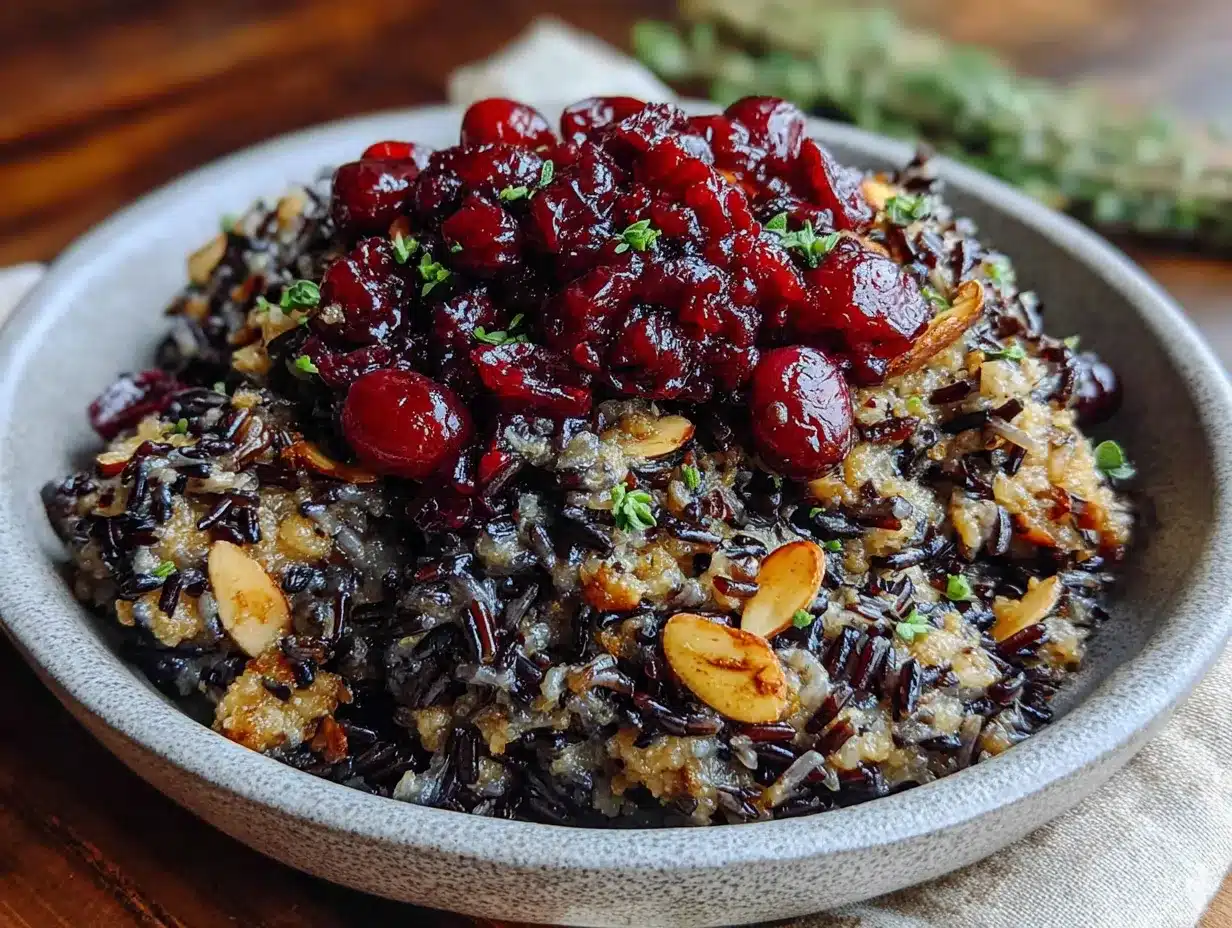
I stood there holding the extension cord, honestly not wanting to leave. The texture of the wild rice was catching the afternoon light, and those deep red cranberries were scattered through it like little jewels. She let me taste it straight from the pan—warm, a little nutty, with this pop of tartness that made me close my eyes without meaning to. She just shrugged and said it was nothing special, but I knew better. Some recipes have that quiet confidence, you know? The kind that doesn’t need to announce itself because the flavor does all the talking.
I asked for the recipe, and she scribbled it on the back of an old grocery list. That crumpled piece of paper has been in my kitchen drawer for three autumns now. This Autumn Herbed Wild Rice Stuffing with Cranberries & Almonds has become my own seasonal ritual—the dish I make when the air gets crisp and I can finally justify turning the oven on again. It’s the kind of best homemade autumn wild rice stuffing that makes you wonder why you ever bothered with the boxed stuff. Let me tell you, once you taste this, you’ll be making it long after the leaves have fallen.
Why You’ll Love This Recipe
I’ve tested this recipe more times than I care to count—through dry rices, overseasoned disasters, and one memorable attempt where I forgot the cranberries entirely. What I landed on is the version I’d serve to anyone, anytime. Here’s why this one sticks:
- Perfectly Balanced Flavors : The earthy wild rice pairs with tart cranberries, toasty almonds, and fresh autumn herbs in a way that feels both rustic and refined.
- Make-Ahead Friendly : This stuffing actually gets better after a day in the fridge. The flavors meld together beautifully, making it a lifesaver for holiday prep.
- Naturally Gluten-Free : No bread cubes here—just wholesome wild rice and vegetables. Everyone at the table can enjoy it without worry.
- Versatile for Any Occasion : It’s fancy enough for Thanksgiving but simple enough for a cozy Sunday dinner with roasted chicken.
- Texture That Delivers : The pop of the wild rice, the crunch of almonds, the softness of sautéed vegetables—every bite has something interesting happening.
- Seasonal and Satisfying : This dish captures autumn in a bowl. It’s the kind of comfort food that makes you want to light a candle and put on a sweater.
What sets this recipe apart is the technique. Instead of boiling the wild rice in plain water, I cook it in vegetable broth with a bay leaf and a strip of orange zest. That little step infuses the grains with flavor from the inside out. The herbs are added at two different points—some with the vegetables to build a savory base, and a fresh sprinkle at the end for brightness. It’s not complicated, but it’s intentional. And honestly, that’s what makes it taste like you spent hours when you really didn’t.
This isn’t just another side dish. It’s the one people ask for by name. The one that makes your kitchen smell like October. The one that proves simple ingredients, treated with care, can create something truly memorable.
What Ingredients You Will Need
This recipe uses straightforward ingredients that come together to create something far greater than the sum of their parts. Most of these are pantry staples during autumn, which makes this dish incredibly accessible.
For the Wild Rice Base
- 1 ½ cups wild rice (not a blend—look for 100% wild rice for the best texture and nutty flavor; I prefer the brand Lundberg Family Farms for consistent results)
- 4 cups vegetable broth (low-sodium preferred so you can control the salt; chicken broth works too if you’re not keeping it vegetarian)
- 1 strip orange zest (about 3 inches long, removed with a vegetable peeler—this adds a subtle brightness that doesn’t scream “orange,” trust me)
- 1 bay leaf (dried is fine, fresh is lovely if you have it)
For the Sautéed Vegetables & Aromatics
- 2 tablespoons olive oil (or butter if you want a richer flavor)
- 1 medium yellow onion, finely diced (about 1 ½ cups)
- 3 celery stalks, diced small (about 1 cup)
- 2 medium carrots, peeled and diced (about 1 cup)
- 3 cloves garlic, minced (fresh only—the jarred stuff won’t do this dish justice)
- 1 teaspoon fresh thyme leaves (or ½ teaspoon dried)
- 1 teaspoon fresh rosemary, finely chopped (or ½ teaspoon dried, crushed between your fingers)
- ½ teaspoon dried sage (rubbed sage is ideal, but powdered works)
- ½ teaspoon salt (plus more to taste)
- ¼ teaspoon black pepper (freshly cracked)
For the Add-Ins & Finish
- ¾ cup dried cranberries (look for unsweetened or lightly sweetened—the tartness is important for balance)
- ½ cup sliced almonds (toasted lightly in a dry pan for 2-3 minutes until golden and fragrant)
- 2 tablespoons fresh parsley, chopped (for that final pop of green and freshness)
- 1 tablespoon fresh lemon juice (about half a lemon—this wakes everything up)
- Optional: ¼ cup toasted pecans or walnuts for extra crunch and autumnal flavor
When selecting your wild rice, look for grains that are uniform in color—a deep, almost blackish-brown with a slight sheen. Avoid bags with lots of broken pieces, as those will cook unevenly. For the cranberries, I’ve found that Ocean Spray brand’s reduced-sugar variety works beautifully, but any brand will do. Just taste one first—if they’re overly sweet, the final dish might lean too sugary. The almonds should be raw and unsalted so you can control the seasoning yourself.
If you’re making substitutions, here are a few that work well: swap the vegetable broth for chicken broth if you’re not vegetarian, use dried tart cherries instead of cranberries for a different but equally lovely tartness, or replace almonds with pepitas (pumpkin seeds) for a nut-free version. The herbs are more flexible than you might think—if you don’t have fresh thyme, use an extra pinch of dried. Just remember that dried herbs are more concentrated, so use about one-third of the fresh amount.
Equipment Needed
You don’t need a fancy kitchen to pull this off. Here’s what I use every time I make this stuffing:
- Medium saucepan with lid (2-3 quart size works perfectly for cooking the wild rice—mine is a well-worn Cuisinart that’s seen better days but still gets the job done)
- Large skillet or sauté pan (12-inch is ideal for giving the vegetables room to brown instead of steam)
- Fine-mesh strainer (for rinsing the wild rice—you can use a colander, but the fine mesh catches the tiny grains)
- Chef’s knife and cutting board (a sharp knife makes dicing the vegetables much less tedious)
- Wooden spoon or silicone spatula (for stirring without scratching your pans)
- Measuring cups and spoons (I keep a set specifically for dry ingredients and another for liquids)
- Small dry skillet (for toasting the almonds—a 6-inch pan works great)
- Large mixing bowl (for combining everything at the end—you’ll want room to toss without spilling)
If you don’t have a fine-mesh strainer, line a regular colander with cheesecloth or a clean kitchen towel. For the skillet, any non-stick or stainless steel pan will work—just avoid cast iron for the vegetable sauté if you’re using acidic ingredients like lemon juice, as it can react. And honestly, if you don’t have a wooden spoon, a regular metal spoon will do. I’ve made this in borrowed kitchens with mismatched equipment, and it still turned out great. The recipe is forgiving that way.
Preparation Method
This recipe comes together in about an hour, with most of that time being hands-off while the rice cooks. Here’s the breakdown:
- Rinse the wild rice thoroughly under cold water in a fine-mesh strainer for about 30 seconds. This removes excess starch and any debris. You’ll see the water run from cloudy to clear—that’s your cue to stop.
- Cook the wild rice : In a medium saucepan, combine the rinsed rice, vegetable broth, orange zest strip, and bay leaf. Bring to a boil over high heat, then reduce to a simmer, cover, and cook for 45-55 minutes. The rice is done when the grains have split open and are tender but still have a pleasant chew—like al dente pasta. Drain any excess liquid (there shouldn’t be much if you measured carefully) and remove the orange zest and bay leaf. Fluff with a fork and set aside.
- While the rice cooks, prep your vegetables : Dice the onion, celery, and carrots into uniform pieces—about ¼-inch cubes. This ensures they cook evenly. Mince the garlic and chop the fresh herbs. Measure out your dried cranberries and almonds.
- Toast the almonds : In a small dry skillet over medium heat, add the sliced almonds. Stir constantly for 2-3 minutes until they’re golden and smell nutty. Watch them carefully—they go from perfect to burnt in seconds. Pour them into a small bowl to cool.
- Sauté the vegetables : In your large skillet, heat the olive oil over medium heat. Add the diced onion, celery, and carrots. Cook for 6-8 minutes, stirring occasionally, until the vegetables are softened and the onions are translucent. The carrots should be tender when pierced with a fork.
- Add the aromatics : Stir in the minced garlic, fresh thyme, fresh rosemary, dried sage, salt, and pepper. Cook for 1 minute until fragrant—your kitchen will smell incredible at this point. Be careful not to burn the garlic; if the pan seems dry, add a splash of broth or a drizzle more oil.
- Combine the base : Add the cooked wild rice to the skillet with the vegetables. Stir gently to combine, making sure the rice is evenly coated with the herb mixture. Cook for 2-3 minutes, letting the flavors meld together.
- Add the cranberries and almonds : Remove the skillet from heat. Stir in the dried cranberries and toasted almonds. The residual heat will warm them through without making the almonds soggy.
- Finish with freshness : Add the fresh parsley and lemon juice. Toss gently to combine. Taste and adjust seasoning—you might want another pinch of salt or a squeeze more lemon. The balance should be savory with a hint of sweetness and a bright finish.
- Rest before serving : Let the stuffing sit covered for 5 minutes before serving. This allows the flavors to settle and the rice to absorb any remaining moisture. Serve warm or at room temperature.
A few things I’ve learned the hard way: Don’t skip rinsing the rice—it really does make a difference in texture. And when you’re toasting the almonds, don’t walk away. I’ve burned more batches than I’d like to admit while checking my phone. Also, if the rice isn’t quite tender after 50 minutes, just add a few tablespoons of water and cook for another 5-10 minutes. Wild rice can be stubborn sometimes.
Cooking Tips & Techniques
After making this stuffing at least two dozen times, I’ve collected a few tricks that make the process smoother and the results more consistent.
Don’t rush the rice. Wild rice is not like white rice—it needs time to open up and become tender. If you’re in a hurry, you can soak the rice in cold water for 2-3 hours before cooking, which reduces the cooking time by about 15 minutes. But honestly, the slow simmer is where the flavor develops. Let it do its thing.
Toast your spices. When you add the dried sage to the hot pan with the vegetables, let it sizzle for a few seconds before stirring it in. This “blooms” the spice, releasing its essential oils and making it more aromatic. I learned this from a chef friend who said it’s the difference between “meh” and “memorable.” She was right.
Layer your herbs. Using both dried and fresh herbs in this recipe isn’t accidental. The dried herbs (sage) hold up during cooking and provide a steady background note. The fresh herbs (thyme, rosemary, parsley) are added at different stages to preserve their brightness. This layering creates depth without muddiness.
Watch your salt. Vegetable broths vary wildly in sodium content. I always use low-sodium broth and season at the end. You can always add more salt, but you can’t take it out. One time I used a full-sodium broth and added the full teaspoon of salt—the stuffing was practically brine. Learn from my mistakes.
Make it ahead without losing texture. If you’re prepping for a holiday, cook the rice and sauté the vegetables separately the day before. Store them in the fridge, then combine and reheat with a splash of broth before serving. This prevents the almonds from getting soft and the cranberries from bleeding their color everywhere.
One pan shortcut. If you’re short on dishes, cook the wild rice in the same pot you’ll use for the vegetables. Just remove the rice to a bowl, wipe out the pot, and proceed with the sauté. It saves a dish without sacrificing quality.
Variations & Adaptations
This recipe is a fantastic base for experimentation. Here are a few variations I’ve tried and loved:
Roasted Mushroom & Thyme Version : Add 8 ounces of cremini mushrooms, quartered and roasted at 400°F for 20 minutes, to the finished stuffing. The earthy mushrooms pair beautifully with the wild rice and herbs. I made this for a friend who doesn’t eat cranberries, and she asked for the recipe twice.
Spicy Sausage & Apple Twist : Brown ½ pound of spicy Italian sausage (casings removed) in the skillet before sautéing the vegetables. Add one diced Granny Smith apple along with the celery and carrots. The sweetness of the apple and the heat from the sausage create a whole different dish—perfect for a heartier main course.
Vegan & Nut-Free Adaptation : Use 100% pure maple syrup instead of honey if you’re avoiding honey, and replace the almonds with toasted pumpkin seeds (pepitas). The pepitas add a similar crunch without the nut allergen. I’ve served this at potlucks where no one even noticed the swap.
Citrus-Herb Variation : Add the zest of one whole orange (not just a strip) to the vegetables along with the garlic. Use fresh dill instead of parsley for a completely different herb profile. This version feels brighter and more spring-like, even though it’s still firmly autumnal.
Grains Blend : Replace half the wild rice with farro or barley for a different texture. Cook the farro separately since it has a different cooking time, then combine at the end. The chewy farro adds a wonderful contrast to the pop of the wild rice.
Slow Cooker Method : Sauté the vegetables on the stovetop, then transfer everything (except the almonds and fresh herbs) to a slow cooker. Cook on low for 3-4 hours. Stir in the almonds and parsley just before serving. This is my go-to for Thanksgiving when oven space is at a premium.
Serving & Storage Suggestions
This stuffing is incredibly versatile when it comes to serving. Here’s how I like to do it:
Serving Temperature : Serve warm, straight from the skillet or a serving bowl. It’s also delicious at room temperature, which makes it perfect for buffets and potlucks. I’ve even eaten it cold straight from the fridge the next morning—don’t judge me, it’s that good.
Presentation : Transfer to a wide, shallow serving bowl and garnish with a few extra toasted almonds and a sprinkle of fresh parsley. A drizzle of good olive oil right before serving adds a beautiful sheen and a touch of richness.
Pairings : This stuffing is a natural companion to roasted turkey or chicken, but it also shines alongside roast pork, grilled sausages, or even a simple roast chicken. For a vegetarian meal, serve it with a hearty lentil loaf or stuffed acorn squash. A crisp white wine like Sauvignon Blanc or a light Pinot Noir complements the herbal notes beautifully.
Storage : Store leftovers in an airtight container in the refrigerator for up to 5 days. The flavors actually deepen overnight as the herbs meld with the rice. If the stuffing seems dry when reheating, add a tablespoon of broth or water per serving and stir gently.
Freezing : This stuffing freezes beautifully for up to 3 months. Cool it completely, then transfer to a freezer-safe container or zip-top bag. To reheat, thaw in the refrigerator overnight, then warm in a skillet over medium heat with a splash of broth. The texture of the almonds will soften slightly, but the flavor remains excellent.
Reheating : For best results, reheat in a skillet over medium heat with a lid for about 5-7 minutes, stirring occasionally. You can also reheat in a 350°F oven for 15-20 minutes, covered with foil. The microwave works in a pinch, but the texture won’t be as nice.
Nutritional Information & Benefits
This stuffing isn’t just delicious—it’s also packed with nutritional goodness. Here’s an approximate breakdown per serving (based on 8 servings):
| Nutrient | Amount per Serving |
|---|---|
| Calories | 285 |
| Total Fat | 9g |
| Saturated Fat | 1g |
| Carbohydrates | 45g |
| Fiber | 6g |
| Sugar | 12g |
| Protein | 8g |
| Sodium | 420mg |
Wild rice is a nutritional powerhouse—it’s a whole grain that’s higher in protein than most other rices, and it’s packed with fiber, B vitamins, and minerals like magnesium and zinc. The almonds add healthy monounsaturated fats and vitamin E, while the cranberries provide antioxidants. The vegetables contribute vitamins A and C, plus additional fiber. This is comfort food that actually supports your health.
For those with dietary concerns: this recipe is naturally gluten-free, dairy-free, and vegan. It contains tree nuts (almonds), but these can be omitted or replaced. The sodium content can be reduced by using low-sodium broth and reducing added salt. If you’re watching your sugar intake, look for unsweetened dried cranberries.
Conclusion
This Autumn Herbed Wild Rice Stuffing with Cranberries & Almonds has become my seasonal anchor—the dish I look forward to making every year when the air turns crisp and the leaves start to fall. It’s the recipe I bring to Friendsgivings, the one that disappears first from the buffet table, the one people ask me to send them after they’ve tasted it.
What I love most about it is how unfussy it is. There’s no complicated technique, no obscure ingredients, no stress. It’s just good food made with care—the kind of dish that proves you don’t need to show off to impress anyone. The flavors speak for themselves.
I’d love to hear how this recipe turns out for you. Did you try one of the variations? Add your own twist? Leave a comment below and let me know—I read every single one. And if you share a photo on Pinterest or Instagram, tag me so I can see your beautiful creation. Happy cooking, friends. Here’s to cozy autumn meals and the people we share them with.
Frequently Asked Questions
Can I use a wild rice blend instead of 100% wild rice?
Yes, you can, but the texture and cooking time will vary. Wild rice blends often include brown rice, which cooks faster. Check the package instructions and adjust your cooking time accordingly. The final dish will still be delicious, just with a slightly different texture.
Can I make this stuffing ahead of time for Thanksgiving?
Absolutely! This is one of the best make-ahead side dishes. Cook the rice and sauté the vegetables up to two days in advance, store them separately in the fridge, then combine and reheat with a splash of broth before serving. Add the almonds and fresh herbs just before serving for the best texture.
How do I prevent the stuffing from being too dry?
If your stuffing seems dry after reheating, add a tablespoon of vegetable broth or water per serving and stir gently. The rice will absorb the liquid and become tender again. Also, make sure you’re not overcooking the rice initially—it should be tender but still have a slight chew.
Can I freeze this stuffing?
Yes, it freezes beautifully for up to 3 months. Cool completely, then transfer to a freezer-safe container. Thaw overnight in the refrigerator and reheat in a skillet or oven with a splash of broth. Note that the almonds will soften slightly after freezing, but the flavor remains excellent.
What can I substitute for the dried cranberries?
Dried tart cherries are an excellent substitute, offering a similar tart-sweet balance. You can also use dried currants or chopped dried apricots for a different flavor profile. If you want to reduce sugar, look for unsweetened dried fruit options.
Pin This Recipe!
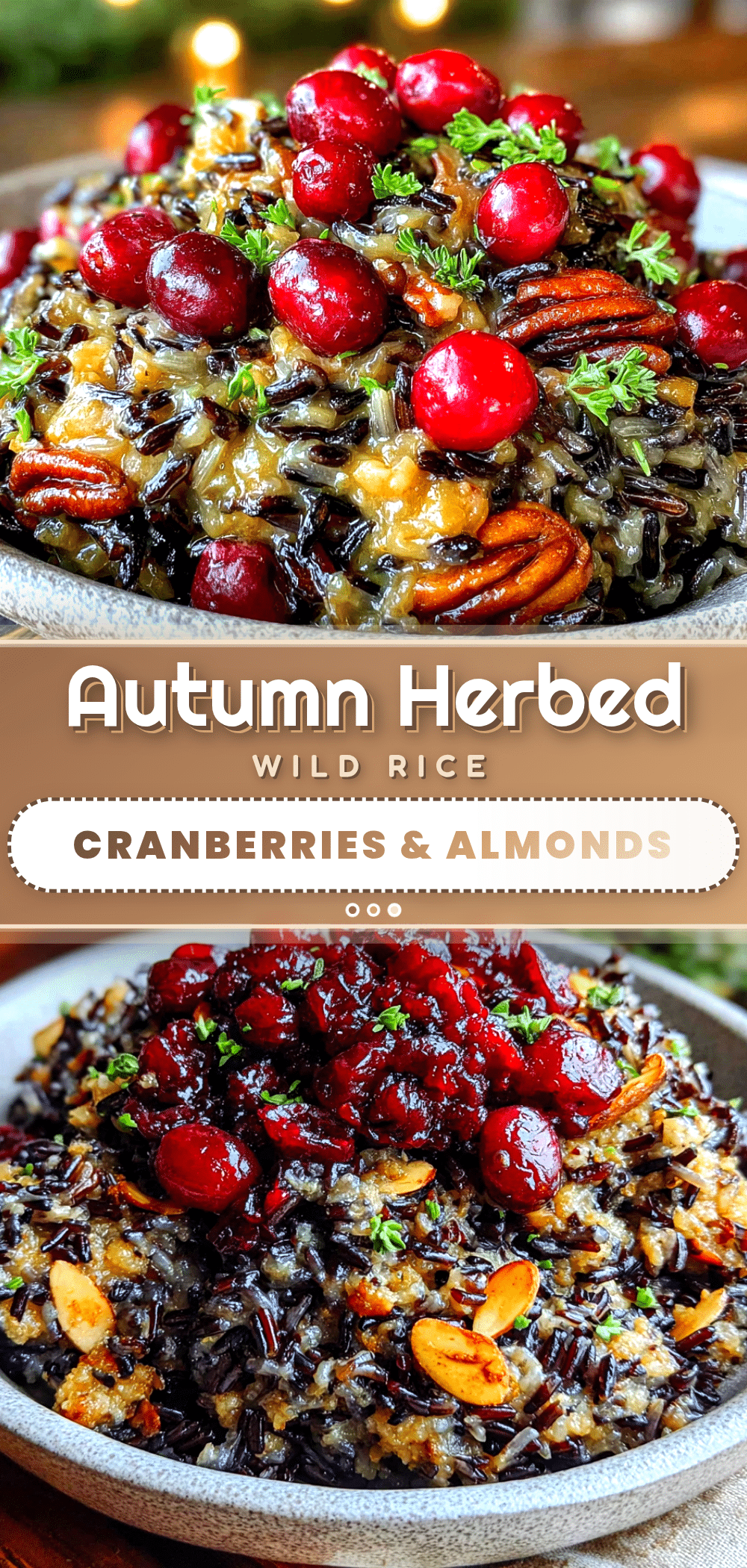
Best Homemade Autumn Wild Rice Stuffing with Cranberries
This Autumn Herbed Wild Rice Stuffing with Cranberries & Almonds is a seasonal favorite—earthy wild rice paired with tart cranberries, toasty almonds, and fresh autumn herbs. It’s naturally gluten-free, make-ahead friendly, and perfect for Thanksgiving or cozy fall dinners.
- Prep Time: 15 minutes
- Cook Time: 55 minutes
- Total Time: 1 hour 10 minutes
- Yield: 8 servings 1x
- Category: Side Dish
- Cuisine: American
Ingredients
- 1 ½ cups wild rice (100% wild rice, not a blend)
- 4 cups low-sodium vegetable broth
- 1 strip orange zest (about 3 inches long)
- 1 bay leaf
- 2 tablespoons olive oil
- 1 medium yellow onion, finely diced (about 1 ½ cups)
- 3 celery stalks, diced small (about 1 cup)
- 2 medium carrots, peeled and diced (about 1 cup)
- 3 cloves garlic, minced
- 1 teaspoon fresh thyme leaves (or ½ teaspoon dried)
- 1 teaspoon fresh rosemary, finely chopped (or ½ teaspoon dried)
- ½ teaspoon dried sage (rubbed sage preferred)
- ½ teaspoon salt (plus more to taste)
- ¼ teaspoon black pepper, freshly cracked
- ¾ cup dried cranberries (unsweetened or lightly sweetened)
- ½ cup sliced almonds, toasted
- 2 tablespoons fresh parsley, chopped
- 1 tablespoon fresh lemon juice (about half a lemon)
- Optional: ¼ cup toasted pecans or walnuts
Instructions
- Rinse the wild rice thoroughly under cold water in a fine-mesh strainer for about 30 seconds until the water runs clear.
- In a medium saucepan, combine the rinsed rice, vegetable broth, orange zest strip, and bay leaf. Bring to a boil over high heat, then reduce to a simmer, cover, and cook for 45-55 minutes until the grains have split open and are tender but still have a pleasant chew. Drain any excess liquid, remove the orange zest and bay leaf, and fluff with a fork. Set aside.
- While the rice cooks, dice the onion, celery, and carrots into uniform ¼-inch cubes. Mince the garlic and chop the fresh herbs. Measure out the dried cranberries and almonds.
- In a small dry skillet over medium heat, toast the sliced almonds for 2-3 minutes, stirring constantly, until golden and fragrant. Transfer to a small bowl to cool.
- In a large skillet, heat the olive oil over medium heat. Add the diced onion, celery, and carrots. Cook for 6-8 minutes, stirring occasionally, until softened and the onions are translucent.
- Stir in the minced garlic, fresh thyme, fresh rosemary, dried sage, salt, and pepper. Cook for 1 minute until fragrant.
- Add the cooked wild rice to the skillet with the vegetables. Stir gently to combine and cook for 2-3 minutes.
- Remove the skillet from heat. Stir in the dried cranberries and toasted almonds.
- Add the fresh parsley and lemon juice. Toss gently to combine. Taste and adjust seasoning as needed.
- Let the stuffing sit covered for 5 minutes before serving. Serve warm or at room temperature.
Notes
Don’t skip rinsing the rice—it improves texture. Toast almonds carefully as they burn quickly. For make-ahead, cook rice and sauté vegetables separately, then combine and reheat with broth. The stuffing freezes well for up to 3 months.
Nutrition
- Serving Size: 1 serving (about 1 c
- Calories: 285
- Sugar: 12
- Sodium: 420
- Fat: 9
- Saturated Fat: 1
- Carbohydrates: 45
- Fiber: 6
- Protein: 8
Keywords: wild rice stuffing, autumn stuffing, cranberry stuffing, gluten-free stuffing, Thanksgiving side dish, wild rice recipe, herbed rice