Love this? Save it for later!
Share the inspiration with your friends
It was 11:17 PM on a Wednesday, and I was hit with this absurd craving for prime rib—yeah, prime rib—in the middle of a regular workweek. I didn’t have the usual fancy herbs or the perfect cut that the recipe books always rave about, but I had a half-empty jar of garlic herb seasoning, a stubbornly large prime rib roast hanging out in the fridge, and this wild idea that maybe, just maybe, I could nail this reverse-sear garlic herb prime rib roast recipe for beginners without the usual fuss.
You know that feeling when the quiet of the night loosens the usual kitchen rules? Like, suddenly it’s okay to experiment, to toss in those “maybe it’ll work” spices, and to ignore the clock? Well, that night, I forgot to preheat the oven in my rush, ended up with a cracked bowl from a clumsy elbow nudge, and nearly gave up when the smoke alarm chimed—twice. But the smell wafting through the apartment was too good to ignore.
Honestly, this reverse-sear garlic herb prime rib roast became my late-night victory dish, the one I kept making because it worked for me—simple, forgiving, and incredibly satisfying. Maybe you’ve been there, staring at a big hunk of meat and wondering if you can pull off something that feels fancy but doesn’t cost a fortune or take forever. Let me tell you, this recipe is just that, and it’s perfect for feeding a family on a sensible budget without sacrificing flavor or the joy of sitting down to a hearty meal.
Why You’ll Love This Recipe
After testing this reverse-sear garlic herb prime rib roast countless times (including during some less-than-ideal kitchen chaos), I can honestly say it’s one of the smartest ways to get a tender, juicy roast that feels special but is surprisingly easy. Here’s why it’s a keeper:
- Quick & Easy: The reverse sear method means you cook the roast low and slow first, then finish with a high-heat sear for that perfect crust—all in under 3 hours for a 4-pound roast. Great for busy weeknights or last-minute family dinners.
- Simple Ingredients: No fancy herbs or impossible-to-find spices. Just garlic, herbs, salt, pepper, and your trusty prime rib. I usually use McCormick’s Garlic Herb Seasoning for reliable flavor without the hassle.
- Perfect for Family Dinners: This roast is a crowd-pleaser that even picky eaters tend to love. The crust is flavorful without being overwhelming, and the inside stays tender and juicy.
- Crowd-Pleaser: It’s got that “wow” factor without the stress. You won’t be stuck over the stove the whole time, so you can actually enjoy the evening too.
- Unbelievably Delicious: The reverse-sear technique locks in juices and creates a crust that’s crispy but not burnt—trust me, I learned this the hard way.
What sets this recipe apart is the way it balances simplicity with technique. The reverse sear isn’t just a cooking method; it’s a game-changer—especially if you’re new to big roasts. I remember the first time I tried this, I was skeptical about cooking the roast low and slow first, but that final sear? It’s magic. This isn’t just another prime rib recipe; it’s the one that made me believe I could pull off a “fancy” roast without losing my mind or breaking the bank.
What Ingredients You Will Need
This reverse-sear garlic herb prime rib roast recipe uses straightforward, budget-friendly ingredients that pack a punch of flavor without requiring a trip to specialty stores. Most are pantry staples or easy to swap based on what you have on hand.
- Prime Rib Roast – 4 to 5 pounds (about 1.8 to 2.3 kg), bone-in for extra flavor and juiciness. If you prefer boneless, that works too, but bone-in is classic.
- Garlic Herb Seasoning – 2 tablespoons (I recommend McCormick’s Garlic Herb Seasoning for consistency). This blend brings the savory garlic and herb notes without needing to mix a dozen spices yourself.
- Salt – 2 teaspoons kosher salt or sea salt, for seasoning and helping the crust develop.
- Freshly Ground Black Pepper – 1 teaspoon for a little spicy kick.
- Olive Oil – 2 tablespoons, to help the seasoning stick and promote browning during the sear.
- Fresh Rosemary – 2 sprigs, optional but adds a lovely aromatic touch.
- Fresh Thyme – 2 sprigs, optional, pairs beautifully with rosemary.
- Garlic Cloves – 3 cloves, minced or crushed, if you want an extra hit of real garlic (goes great with the seasoning).
- Butter – 3 tablespoons, softened, for the final sear and added richness (can swap with dairy-free butter if needed).
For a budget-friendly twist, you can find prime rib cuts on sale or ask your butcher for a smaller roast. If fresh herbs aren’t available, dried rosemary and thyme work perfectly fine—just use about a teaspoon each. And if you want to keep things simple, skip the fresh garlic and rely on the seasoning blend alone.
Equipment Needed
- Oven with reliable temperature control: Essential for the low-and-slow roasting phase.
- Cast iron skillet or heavy oven-safe pan: Perfect for the high-heat sear to develop that crust. A stainless steel skillet works too.
- Meat thermometer (preferably digital): This is your best friend here to avoid overcooking or undercooking—probe into the thickest part of the roast.
- Sharp carving knife: For slicing the roast evenly.
- Baking rack and roasting pan: To keep the roast elevated for even cooking.
- Kitchen tongs: Helpful for handling the roast during searing.
If you don’t have a cast iron skillet, a heavy-bottomed pan or even a grill pan can be a decent alternative. For those on a budget, a meat thermometer doesn’t have to be fancy—there are lots of affordable, reliable options on the market. I personally prefer this ThermoPro TP03A model because it’s quick and accurate.
Preparation Method
- Prepare the roast (10 minutes): Take your prime rib out of the fridge about 30 minutes before cooking to bring it to room temperature. This helps it cook evenly. Pat the roast dry with paper towels to ensure the seasoning sticks well.
- Season the roast (5 minutes): Rub the olive oil all over the roast. Mix the garlic herb seasoning, salt, pepper, minced garlic, rosemary, and thyme (if using) in a small bowl. Massage this seasoning blend into the meat, coating all sides thoroughly.
- Set up for roasting (5 minutes): Place the roast on a baking rack inside a roasting pan, fat side up. This positioning keeps the meat juicy and allows heat to circulate evenly.
- Low-temperature roasting (about 2 hours): Preheat your oven to 225°F (107°C). Insert the meat thermometer into the thickest part of the roast, avoiding bone. Roast until the internal temperature reaches about 120°F (49°C) for rare, 130°F (54°C) for medium-rare. This usually takes around 2 hours for a 4-pound roast but keep an eye on your thermometer.
- Rest the roast (15-20 minutes): Remove the roast from the oven and tent loosely with foil. Resting lets the juices redistribute, making the meat tender and juicy. Resist the urge to cut into it too soon!
- Preheat your pan for searing (5 minutes): While the roast rests, heat your cast iron skillet over high heat. Add the softened butter and let it melt, swirling to coat the pan.
- Sear the roast (3-5 minutes): Place the roast in the hot skillet and sear each side for 1 to 2 minutes until a deep golden-brown crust forms. The sizzle should be loud and steady—if it’s smoking too much, reduce heat slightly.
- Final rest and slice (5-10 minutes): After searing, let the roast rest another 10 minutes. Then slice against the grain into thick, juicy pieces and serve.
Pro tip: If you want a more pronounced herb crust, press the seasoning mixture onto the roast a second time just before searing. Also, keep an eye on your thermometer during the sear to avoid overshooting your desired doneness. The whole process might feel a bit slow, but trust me, it’s worth every minute.
Cooking Tips & Techniques
Mastering the reverse-sear garlic herb prime rib roast means understanding a few key techniques and avoiding common pitfalls.
- Don’t rush the low-temp roast: Cooking the roast gently lets the meat heat evenly and prevents that gray band of overcooked meat you see in traditional roasting. It’s a game changer for tenderness.
- Use a reliable thermometer: I once ruined a roast by eyeballing doneness—never again! Digital thermometers give you peace of mind.
- Patience with resting: Resting is where flavors settle and juices redistribute. Skipping this step means dry slices.
- Searing heat is crucial: You want a hot pan to create that crust fast without drying the interior. If your pan isn’t hot enough, the roast won’t get that satisfying crunch.
- Season generously: Don’t be shy with salt and herbs; the fat and meat absorb flavors beautifully during the slow roast.
- Multitasking tips: While the roast rests, clean up, prepare your sides, or set the table. This downtime is perfect to get everything ready without stress.
From personal experience, I learned that skipping the butter in the searing pan made the crust less flavorful and dry. So, butter is non-negotiable for me. Also, if your kitchen is small or your pan isn’t oven-safe, you can do the sear on the stovetop and finish under the broiler for a minute or two—but watch closely!
Variations & Adaptations
This recipe is flexible and can be adapted to suit dietary preferences, seasons, and even different cooking setups.
- Herb Variations: Swap rosemary and thyme for sage and oregano for a more Mediterranean twist. Dried herbs work fine if fresh aren’t available.
- Dietary Adjustments: For a dairy-free version, replace butter with coconut oil or a neutral vegetable oil during the sear.
- Seasonal Sides: Pair the roast with roasted root vegetables in winter or a fresh green salad in summer to keep the meal balanced and budget-friendly.
- Cooking Method Swap: If you don’t have an oven-safe pan, sear the roast in a skillet, then transfer to a preheated oven at 500°F (260°C) for 3-5 minutes to develop the crust.
- Personal Twist: I once added a splash of red wine to the pan right after searing to make a quick pan sauce—simple but impressive for dinner guests.
Serving & Storage Suggestions
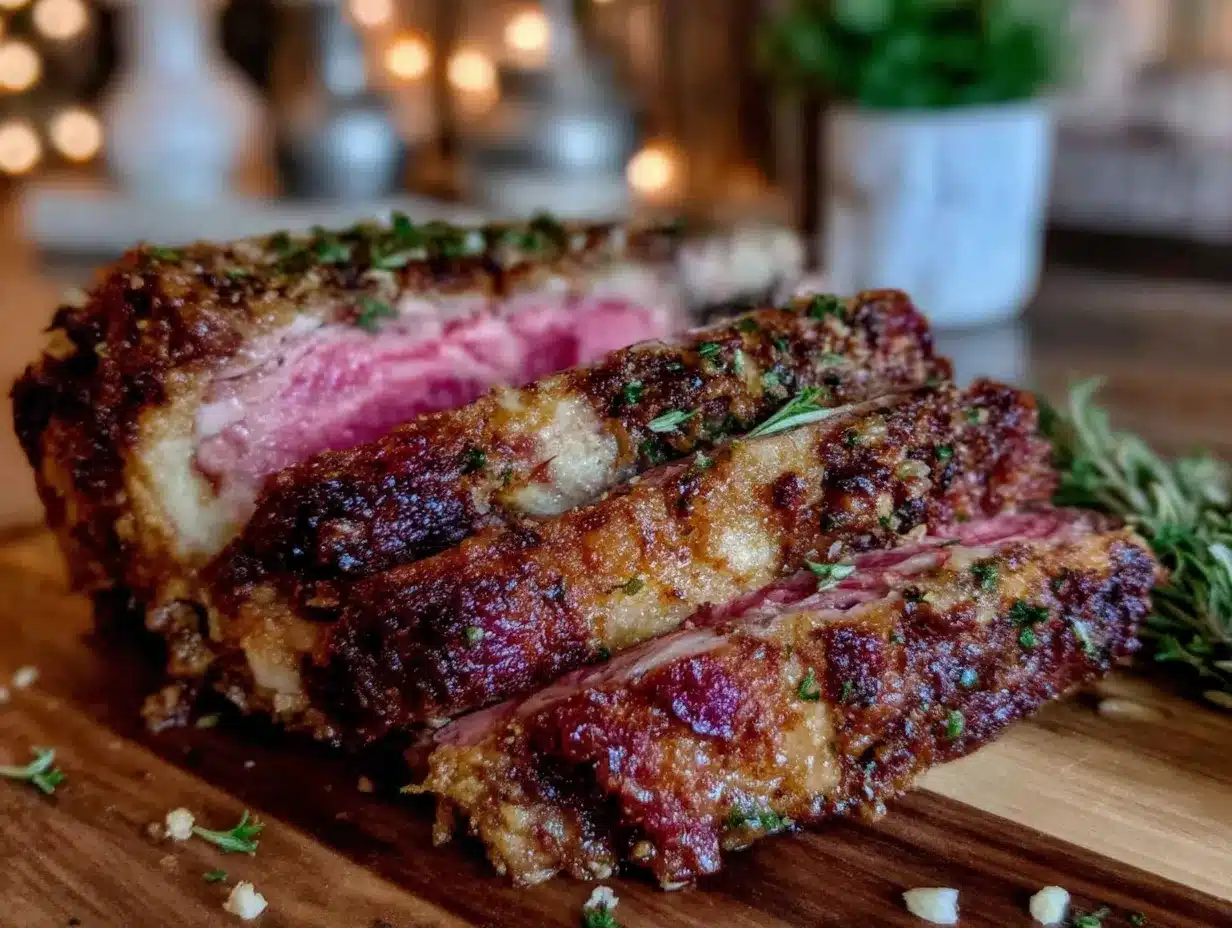
Serve your reverse-sear garlic herb prime rib roast warm, sliced thick to showcase that beautiful pink center and crusty exterior. It pairs wonderfully with creamy mashed potatoes, simple roasted veggies, or even a budget-friendly garlic bread to soak up the juices.
Leftovers? No problem. Wrap slices tightly in foil or an airtight container and refrigerate for up to 3 days. To reheat, gently warm in a low oven (about 250°F / 120°C) wrapped in foil to keep moist. Microwave reheating works but can dry the meat out if you’re not careful.
Over time, the flavors deepen, so leftover roast sandwiches with a smear of horseradish or mustard can be surprisingly delicious the next day. I like to add a few fresh arugula leaves for a peppery crunch.
Nutritional Information & Benefits
This prime rib roast is rich in protein and essential nutrients like iron and zinc, which are important for energy and immune function—great for busy families needing a hearty meal. The garlic and herbs add antioxidants without extra calories.
Approximate per serving (based on 6 servings): 550 calories, 45g protein, 40g fat, 2g carbohydrates. It fits well into a low-carb or keto lifestyle but is also flexible enough for other diets.
Note: Contains dairy if butter is used; can be adapted for dairy-free diets as mentioned. For gluten-free diets, all ingredients here are naturally gluten-free.
From my perspective, this recipe strikes a balance between indulgence and nutrition, making it a meal that satisfies both body and soul without breaking your sensible budget.
Conclusion
This perfect reverse-sear garlic herb prime rib roast recipe for beginners is proof that you don’t need to be a pro or spend hours to make something truly special. It’s a smart, practical recipe that fits right into busy family dinners while feeling like a treat.
Feel free to tweak the herbs, experiment with your favorite seasoning blends, or add your own quick pan sauces to make it your own. I keep coming back to this recipe because it delivers reliable results and that nostalgic, comforting flavor that reminds me why cooking for my family matters.
Give it a try tonight, share your thoughts, and don’t be shy about telling me how you made it your own. Here’s to smart cooking and happy tables!
FAQs
- What is the reverse sear method? It’s a cooking technique where you roast the meat slowly at low temperature first, then finish by searing it at high heat to create a crispy crust.
- How do I know when the prime rib is done? Use a meat thermometer; aim for 120°F (49°C) for rare, 130°F (54°C) for medium-rare before the sear. The temperature will rise slightly during searing and resting.
- Can I use this method for smaller roasts? Yes! Just adjust the cooking time based on weight, checking internal temperature frequently.
- Is bone-in better than boneless? Bone-in tends to be juicier and more flavorful, but boneless roasts work well too, especially for easier carving.
- How long can I store leftover prime rib? Store leftovers in an airtight container in the fridge for up to 3 days or freeze for up to 3 months.
Pin This Recipe!
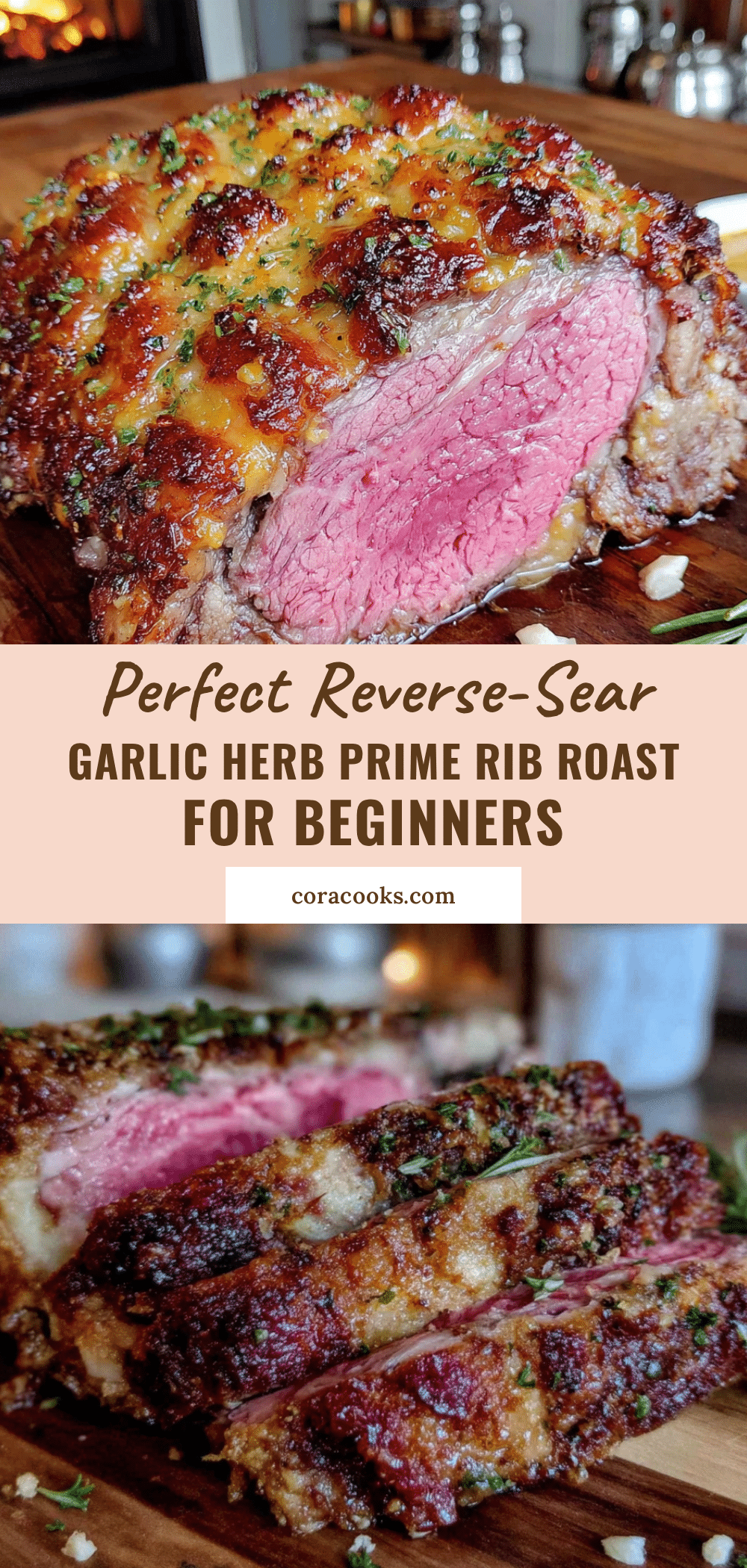
Perfect Reverse-Sear Garlic Herb Prime Rib Roast Recipe for Beginners Made Easy
A simple and forgiving reverse-sear garlic herb prime rib roast recipe that delivers a tender, juicy roast with a flavorful crust, perfect for family dinners and beginners.
- Prep Time: 15 minutes
- Cook Time: 2 hours 15 minutes
- Total Time: 2 hours 30 minutes
- Yield: 6 servings 1x
- Category: Main Course
- Cuisine: American
Ingredients
- 4 to 5 pounds bone-in prime rib roast
- 2 tablespoons garlic herb seasoning (e.g., McCormick’s Garlic Herb Seasoning)
- 2 teaspoons kosher salt or sea salt
- 1 teaspoon freshly ground black pepper
- 2 tablespoons olive oil
- 2 sprigs fresh rosemary (optional)
- 2 sprigs fresh thyme (optional)
- 3 garlic cloves, minced or crushed (optional)
- 3 tablespoons softened butter (can substitute dairy-free butter)
Instructions
- Take the prime rib out of the fridge about 30 minutes before cooking to bring it to room temperature. Pat dry with paper towels.
- Rub olive oil all over the roast. Mix garlic herb seasoning, salt, pepper, minced garlic, rosemary, and thyme (if using) in a small bowl. Massage the seasoning blend into the meat, coating all sides.
- Place the roast on a baking rack inside a roasting pan, fat side up.
- Preheat oven to 225°F (107°C). Insert a meat thermometer into the thickest part of the roast, avoiding bone. Roast until internal temperature reaches 120°F (49°C) for rare or 130°F (54°C) for medium-rare, about 2 hours for a 4-pound roast.
- Remove roast from oven and tent loosely with foil. Rest for 15-20 minutes.
- While resting, heat a cast iron skillet over high heat. Add softened butter and let it melt, swirling to coat the pan.
- Sear the roast in the hot skillet for 1 to 2 minutes per side until a deep golden-brown crust forms.
- Let the roast rest another 10 minutes after searing. Slice against the grain into thick pieces and serve.
Notes
Bring roast to room temperature before cooking for even cooking. Use a reliable digital thermometer to avoid over or undercooking. Resting the meat twice (after roasting and after searing) is crucial for juicy results. Butter in the searing pan adds richness and flavor. If no cast iron skillet is available, a heavy-bottomed pan or grill pan works. For dairy-free, substitute butter with coconut or neutral vegetable oil. Monitor thermometer during sear to avoid overshooting doneness.
Nutrition
- Serving Size: 1 slice (approx. 6 o
- Calories: 550
- Sodium: 600
- Fat: 40
- Saturated Fat: 15
- Carbohydrates: 2
- Protein: 45
Keywords: prime rib, reverse sear, garlic herb, roast, easy recipe, family dinner, beef roast, beginner friendly