Love this? Save it for later!
Share the inspiration with your friends
I was standing in line at the DMV—of all places—when the guy behind me started talking about prime rib. Not complaining about the wait or the forms, but describing, in almost poetic detail, a method for getting a perfect crust on a roast in under an hour. He was a retired butcher named Frank, and he had this no-nonsense way of talking about meat that made you want to take notes. I had a pen and an old receipt in my purse, and I ended up scribbling his method on the back of it right there between the fluorescent lights and the number 47 ticket in my hand.
Frank’s whole philosophy was about respecting the meat but not worshipping it. He said most people overthink prime rib, treating it like some sacred ritual that takes half a day. His version? Quick, hot, and absolutely foolproof. He told me the secret was all in the butter and the timing—two things that don’t require a culinary degree. I went home that night, tried his method with a smaller roast, and honestly, I haven’t cooked prime rib any other way since. Maybe you’ve been there—wanting something special but not having all day to babysit the oven.
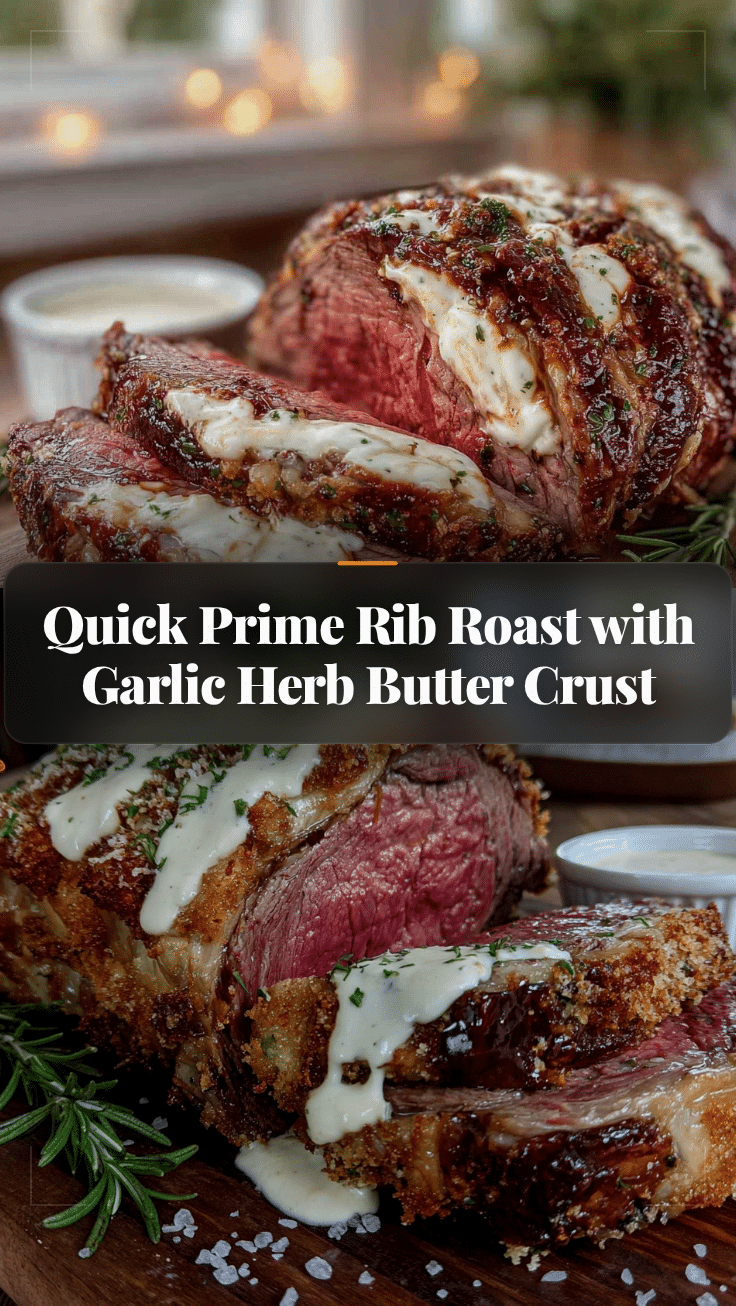
This quick prime rib roast with garlic herb butter crust is the kind of recipe that makes you look like a hero with way less effort than anyone expects. It’s got that gorgeous, peppery, herb-flecked crust on the outside and tender, juicy meat on the inside. And the whole thing comes together fast enough for a Tuesday night if you’re feeling ambitious. Frank would approve.
Why You’ll Love This Recipe
Let me tell you why this quick prime rib roast has become my go-to for both special occasions and random weeknights when I need a win. I’ve tested this method more times than I can count, and it delivers every single time.
- Quick & Easy: This roast is on the table in about 75 minutes, start to finish. For prime rib? That’s practically lightning speed. Perfect for when you want something impressive without spending your whole afternoon in the kitchen.
- Simple Ingredients: You need a handful of pantry staples—garlic, butter, herbs, salt, pepper—and a good cut of beef. No weird specialty items or trips to three different stores.
- Perfect for Weeknights or Holidays: It works for a quiet dinner or a big celebration. The recipe scales up easily if you’re feeding a crowd, and it feels fancy no matter what.
- Crowd-Pleaser: I’ve served this to picky eaters, steak snobs, and people who “don’t really like red meat.” Every single person asks for seconds. The garlic herb butter does something magical.
- Unbelievably Delicious: The crust is this incredible combination of savory, buttery, and herbaceous, while the inside stays perfectly pink and tender. It’s comfort food that feels special.
What makes this recipe different from all the other prime rib recipes out there? It’s the technique. Most recipes tell you to start low and slow, then blast the heat at the end. Frank’s method flips that—you sear first at high heat to lock in that crust, then let it finish gently. It saves time and gives you a better texture. Plus, the garlic herb butter isn’t just rubbed on; it’s actually slathered under the fat cap and all over the surface, so every bite is infused with flavor.
This isn’t just another prime rib recipe. It’s the one that makes you close your eyes after the first bite and forget about the long day you had. It’s the kind of meal that turns a regular Tuesday into something worth remembering.
What Ingredients You Will Need
This recipe uses simple, high-quality ingredients to create something truly special. Most of these are probably already in your kitchen, which makes this even easier for a busy weeknight.
- Prime Rib Roast (3-4 pounds, bone-in or boneless): A smaller roast cooks faster, which is the whole point here. Bone-in adds flavor, but boneless is easier to slice. I usually go with a boneless ribeye roast from Costco or my local butcher—look for good marbling throughout.
- Unsalted Butter (4 tablespoons, softened): The base of our magic crust. Use good quality butter here; it makes a difference. I like Kerrygold for the richness, but any unsalted butter works.
- Garlic (4-5 cloves, minced): Fresh garlic is non-negotiable. The jarred stuff won’t give you the same punch. You want that sharp, aromatic hit that mellows into sweetness as it roasts.
- Fresh Rosemary (2 tablespoons, finely chopped): Woody and fragrant, rosemary is the classic partner for beef. Strip the leaves off the stems and chop them fine.
- Fresh Thyme (1 tablespoon, leaves stripped): Earthy and slightly lemony, thyme adds depth. If you only have dried, use half the amount.
- Kosher Salt (1 tablespoon, plus more for seasoning): I use Diamond Crystal—it’s less salty by volume, so you can be generous. Don’t skimp here; salt is what brings out the beef’s flavor.
- Black Pepper (1 teaspoon, freshly cracked): Freshly ground pepper is spicier and more aromatic than pre-ground. Be generous—it forms part of that gorgeous crust.
- Olive Oil (1 tablespoon): Helps the sear and adds a little richness. Use a good extra-virgin if you have it.
Substitution Notes: If you don’t have fresh herbs, you can use 1 teaspoon each of dried rosemary and thyme. The texture won’t be quite as vibrant, but the flavor will still be lovely. For a dairy-free version, swap the butter for a high-quality vegan butter or even ghee (which is technically dairy but has the milk solids removed).
Ingredient Selection Tip: When choosing your roast, look for one that’s evenly shaped so it cooks uniformly. A 3-pound roast is perfect for 4 people with leftovers. If you’re feeding more, grab a 5-pounder and add about 10-15 minutes to the cooking time.
Equipment Needed
You don’t need a ton of fancy gear for this recipe, which is part of why I love it.
- Cast Iron Skillet or Heavy-Bottomed Oven-Safe Pan: This is key for getting that perfect sear and then transferring straight to the oven. I use a 12-inch Lodge cast iron skillet—it’s affordable and holds heat like a dream. If you don’t have one, any oven-safe stainless steel pan works.
- Instant-Read Meat Thermometer: Non-negotiable. Guessing doneness with prime rib is a recipe for disaster. I love my Thermapen—it reads in 2 seconds and is worth every penny. But any digital thermometer will do.
- Sharp Chef’s Knife: A good knife makes slicing the roast clean and easy. Dull knives tear the meat and make it look messy.
- Cutting Board with a Drip Trench: Prime rib releases juices when it rests. A board with a trench catches those juices so you can pour them back over the meat.
- Mixing Bowl and Spoon: For combining the butter and herbs.
- Paper Towels: For patting the roast dry—this is crucial for a good sear.
- Tongs: For flipping the roast without piercing it.
Budget Tip: If you don’t have a cast iron skillet, you can sear the roast in a regular pan, then transfer it to a baking sheet or roasting pan for the oven. It works fine—you just lose a little bit of the fond (those brown bits) that add flavor.
Preparation Method
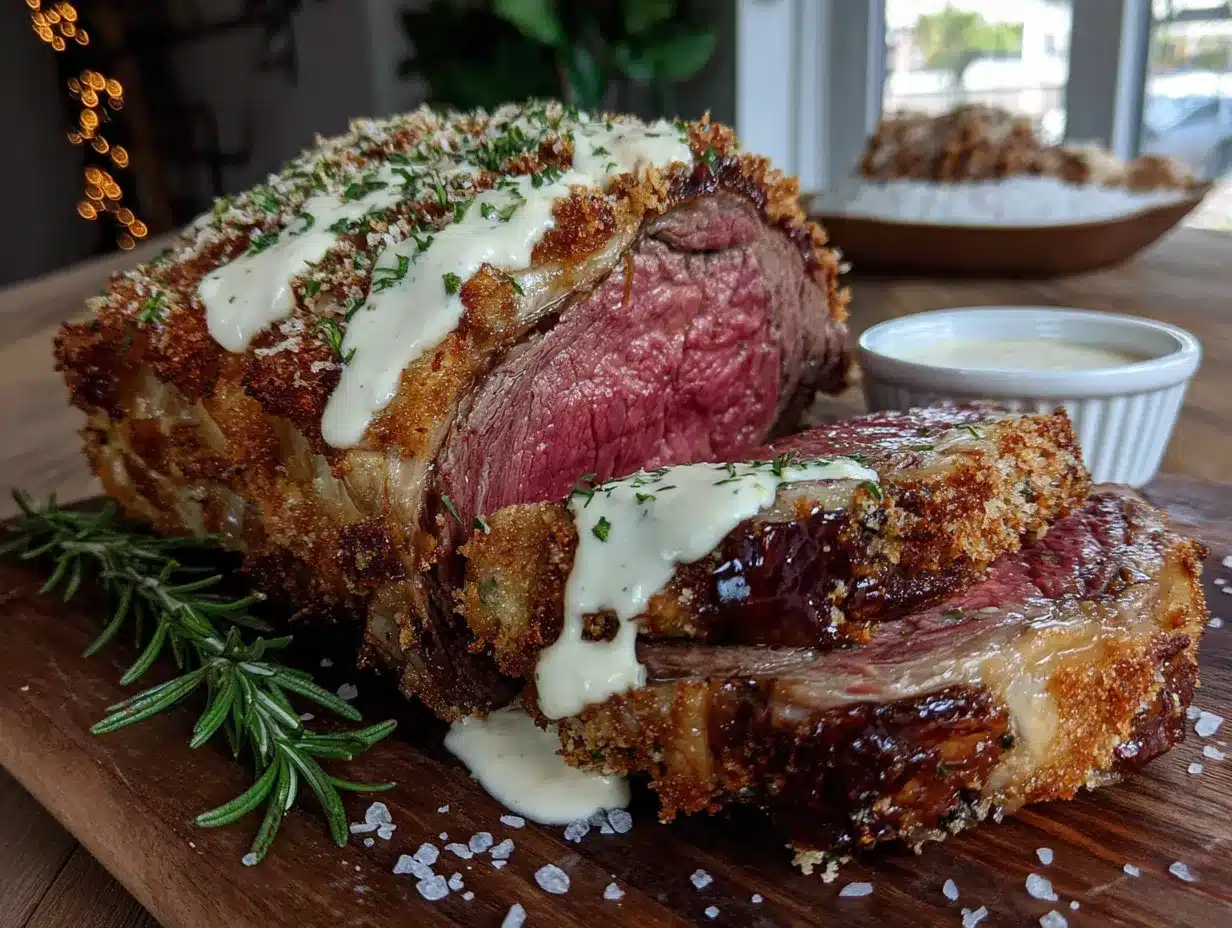
Alright, let’s get cooking. This method is simple, but each step matters. Follow along and you’ll have a gorgeous roast every time.
- Take the Chill Off (30 minutes before cooking): Pull your prime rib roast out of the fridge and let it sit on the counter for 30 minutes. This isn’t about bringing it to room temperature completely—that would take hours—but it takes the edge off the cold so it cooks more evenly. Pat it dry with paper towels. Moisture is the enemy of a good sear, so be thorough.
- Preheat Your Oven to 450°F (232°C): Get it screaming hot. We’re going to sear the roast on the stovetop first, then finish it in this hot oven. Position your oven rack in the middle.
- Make the Garlic Herb Butter: In a small bowl, combine 4 tablespoons of softened unsalted butter, 4-5 minced garlic cloves, 2 tablespoons of chopped fresh rosemary, and 1 tablespoon of fresh thyme leaves. Add 1 teaspoon of freshly cracked black pepper and a pinch of salt. Mash it all together with a fork until it’s a uniform, fragrant paste. Taste a tiny bit—it should be punchy and savory.
- Season the Roast: Sprinkle 1 tablespoon of kosher salt all over the roast. Don’t be shy—salt is what makes the crust sing. Rub it into every surface. Then, take your garlic herb butter and slather it all over the roast. Get it under the fat cap if you can, and make sure every inch is covered. The butter will melt and baste the meat as it cooks, creating that incredible crust.
- Sear the Roast: Place your cast iron skillet over high heat and add 1 tablespoon of olive oil. Wait until the oil is shimmering and just starting to smoke—this takes about 2 minutes. Carefully place the roast in the hot pan. It should sizzle loudly. Sear for 3-4 minutes per side, using tongs to turn it. You want a deep, golden-brown crust on all sides, including the ends. Don’t rush this step—it’s where the flavor builds.
- Into the Oven: Once the roast is beautifully seared, transfer the entire skillet to the preheated oven. Roast for 15 minutes at 450°F. This high-heat blast continues building that crust and starts cooking the interior.
- Lower the Heat: After 15 minutes, reduce the oven temperature to 325°F (163°C). Don’t open the door—just turn the dial. Continue roasting until the internal temperature reaches your desired doneness. For medium-rare (my favorite), pull it at 125°F (52°C). For medium, pull at 135°F (57°C). This usually takes about 25-35 minutes total for a 3-pound roast, but trust your thermometer, not the clock.
- Rest the Roast (15 minutes, crucial): Remove the skillet from the oven and transfer the roast to a cutting board. Tent it loosely with foil. Let it rest for at least 15 minutes. I know it’s tempting to slice right away, but this step is non-negotiable. The juices need to redistribute, or they’ll run all over your cutting board and leave you with dry meat. Use this time to make a quick pan sauce if you want (see tips below).
- Slice and Serve: After resting, slice the roast against the grain into thick, beautiful slices. Spoon any accumulated juices from the cutting board over the meat. Serve immediately.
Visual Cue: When you insert the thermometer, the meat should feel springy but not firm. The crust should be a deep mahogany brown, and the butter should have melted into a glossy sheen over the surface.
Cooking Tips & Techniques
I’ve made this quick prime rib roast more times than I can count, and I’ve learned a few things the hard way. Here’s what I wish someone had told me.
Don’t skip the pat-dry step. I once rushed through this and ended up with a pale, steamed crust instead of a beautiful sear. Water and hot oil don’t mix—they create steam, which prevents browning. Take the extra 30 seconds to really dry that roast.
Your thermometer is your best friend. I ruined my first prime rib by trusting the “15 minutes per pound” rule. It came out well-done and sad. A good instant-read thermometer costs less than $20 and saves you from expensive mistakes. Stick it into the thickest part of the meat, away from the bone.
The carryover cooking is real. When you pull the roast from the oven, the internal temperature will continue to rise by about 5-10°F as it rests. So if you want medium-rare at 130°F, pull it at 120-125°F. I learned this the hard way when my “perfect medium-rare” turned into medium-well after resting.
Make a quick pan sauce while the meat rests. After removing the roast, there will be browned bits (fond) and butter in the skillet. Place the skillet over medium heat, add 1/2 cup of beef broth or red wine, and scrape up those bits with a wooden spoon. Let it simmer for 2-3 minutes, then whisk in a tablespoon of cold butter. Pour this over your sliced roast—it’s liquid gold.
Multitasking tip: While the roast rests, you can quickly roast some vegetables or heat up your sides. The timing works out perfectly. I usually toss some asparagus or green beans in the oven while the roast is resting—they take about 10 minutes at 400°F.
Variations & Adaptations
One of the best things about this recipe is how easy it is to adapt. Here are a few variations I’ve tried and loved.
Herb Swap: Not a fan of rosemary? Use all thyme, or swap in 2 tablespoons of fresh oregano and 1 tablespoon of fresh sage. The butter base is flexible. I once made it with tarragon and chives, and it was incredible with a side of roasted potatoes.
Spicy Crust: Add 1 teaspoon of smoked paprika and 1/2 teaspoon of cayenne pepper to the butter mixture. It gives the crust a smoky, spicy kick that’s amazing if you like a little heat. My husband requests this version for game day dinners.
Garlic Lovers Version: Roast a whole head of garlic (cut the top off, drizzle with oil, wrap in foil, and bake at 400°F for 40 minutes). Squeeze the soft, roasted cloves into the butter instead of raw garlic. It’s sweeter and mellower—perfect if raw garlic is too sharp for you.
Different Cooking Method: If you don’t want to use the oven, you can finish the roast on the grill. Sear it on all sides over high heat, then move it to indirect heat and cover the grill. Cook at 350°F until it reaches your desired internal temperature. The smoky flavor is incredible.
Dietary Adaptation: For a lower-sodium version, reduce the salt to 2 teaspoons and use a salt-free herb blend. For a keto-friendly meal, this is already perfect—just skip any sugary sides.
Serving & Storage Suggestions
This quick prime rib roast is a star on its own, but the right sides and storage make it even better.
Serving Temperature: Serve the roast immediately after resting and slicing. It should be warm, not piping hot—that’s how the texture stays tender. I like to warm the plates in the oven (low heat, 5 minutes) so the meat stays at the perfect temperature longer.
What to Serve With It: The classic pairing is creamy horseradish sauce (just mix sour cream with prepared horseradish and a pinch of salt). Roasted potatoes, Yorkshire pudding, or a simple arugula salad with lemon vinaigrette all work beautifully. For a lighter option, I do roasted asparagus or green beans with garlic.
Storage: Leftover prime rib is a gift. Store it in an airtight container in the refrigerator for up to 4 days. The flavors actually meld and deepen overnight. I love slicing it thin for sandwiches the next day—pile it on crusty bread with some arugula and horseradish sauce.
Freezing: You can freeze cooked prime rib for up to 3 months. Slice it first, then wrap individual portions tightly in plastic wrap and foil. Thaw overnight in the fridge. The texture won’t be quite as perfect as fresh, but it’s still delicious in soups, stews, or hash.
Reheating: The key to reheating is gentle heat. Place slices in a skillet with a splash of beef broth, cover, and warm over low heat for 2-3 minutes. Don’t use the microwave—it will toughen the meat. If you’re making a sandwich, just pile the cold slices on bread and let them come to room temperature.
Flavor Development: Honestly, the leftovers might be even better the next day. The garlic and herb flavors have time to meld, and the meat becomes incredibly tender. I often make a double batch just for the leftovers.
Nutritional Information & Benefits
Here’s a rough estimate for a 6-ounce serving of this quick prime rib roast (without any added sauce).
| Nutrient | Amount |
|---|---|
| Calories | 450 |
| Protein | 45g |
| Fat | 30g |
| Saturated Fat | 12g |
| Carbohydrates | 1g |
| Fiber | 0g |
| Sugar | 0g |
| Sodium | 600mg |
Health Benefits: Prime rib is an excellent source of high-quality protein, which supports muscle health and keeps you full. It’s also rich in iron, zinc, and B vitamins—especially B12, which is crucial for energy and brain function. The garlic in the butter has anti-inflammatory properties, and fresh herbs like rosemary and thyme are packed with antioxidants.
Dietary Considerations: This recipe is naturally gluten-free, low-carb, and keto-friendly. It’s also whole30-compliant if you skip the butter and use ghee instead. The main allergen to note is dairy from the butter—swap for a dairy-free alternative if needed.
Personal Perspective: I love that this meal feels indulgent but is actually quite nutritious. It’s real food—no weird additives or processed ingredients. When I serve this, I know I’m giving my family something that tastes amazing and is good for them. That’s a win in my book.
Conclusion
This quick prime rib roast with garlic herb butter crust is the recipe I turn to when I want something that feels special without the stress. It’s proof that you don’t need hours in the kitchen or a long list of complicated steps to create a meal that stops people mid-bite. Frank, the retired butcher from the DMV line, was right—sometimes the best recipes come from the most unexpected places.
I hope you give this a try and make it your own. Maybe you’ll add a little extra garlic, or swap in your favorite herbs, or serve it with a side that your family loves. That’s the beauty of a good recipe—it’s a starting point, not a rulebook. I’d love to hear how it turns out for you. Drop a comment below and let me know if you tried it, what you served with it, or if you discovered your own little twist. And if you loved it, share it with someone who needs a weeknight win.
Happy cooking, friend. You’ve got this.
Frequently Asked Questions
Can I use a frozen prime rib roast for this recipe?
I don’t recommend it. A frozen roast will cook unevenly, and the exterior will likely overcook before the interior thaws. Always thaw your roast completely in the refrigerator (allow 24 hours per 5 pounds) before cooking.
How do I know when the prime rib is done without a thermometer?
Honestly, I really suggest using a thermometer—it’s the only reliable way. But if you’re in a pinch, you can use the “finger test”: press the center of the roast. If it feels soft and springy (like the fleshy part of your palm under your thumb when your hand is relaxed), it’s medium-rare. If it’s firmer, it’s more done.
Can I prepare the garlic herb butter ahead of time?
Absolutely! You can make the butter up to 3 days in advance. Wrap it tightly in plastic wrap and keep it in the fridge. Let it soften at room temperature for 15-20 minutes before slathering it on the roast.
What if I don’t have a cast iron skillet?
No problem at all. You can sear the roast in any heavy-bottomed oven-safe pan, like stainless steel. If your pan isn’t oven-safe, sear it, then transfer the roast to a baking sheet or roasting pan to finish in the oven. It works perfectly.
How do I get a good crust without burning the garlic?
This is a great question. The key is to not mince the garlic too finely—small chunks are better than a paste. Also, the butter acts as a buffer, so the garlic cooks gently. If you’re worried, you can add the garlic to the butter after you’ve seared the roast, just before it goes into the oven.
Pin This Recipe!
Perfect Quick Prime Rib Roast with Garlic Herb Crust
This quick prime rib roast with garlic herb butter crust is the kind of recipe that makes you look like a hero with way less effort than anyone expects. It’s got that gorgeous, peppery, herb-flecked crust on the outside and tender, juicy meat on the inside.
- Prep Time: 30 minutes
- Cook Time: 45 minutes
- Total Time: 75 minutes
- Yield: 4 servings
- Category: Main Course
- Cuisine: American
Ingredients
- Prime Rib Roast (3-4 pounds, bone-in or boneless)
- Unsalted Butter (4 tablespoons, softened)
- Garlic (4-5 cloves, minced)
- Fresh Rosemary (2 tablespoons, finely chopped)
- Fresh Thyme (1 tablespoon, leaves stripped)
- Kosher Salt (1 tablespoon, plus more for seasoning)
- Black Pepper (1 teaspoon, freshly cracked)
- Olive Oil (1 tablespoon)
Instructions
- Take the Chill Off (30 minutes before cooking): Pull your prime rib roast out of the fridge and let it sit on the counter for 30 minutes. Pat it dry with paper towels.
- Preheat Your Oven to 450°F (232°C). Position your oven rack in the middle.
- Make the Garlic Herb Butter: In a small bowl, combine 4 tablespoons of softened unsalted butter, 4-5 minced garlic cloves, 2 tablespoons of chopped fresh rosemary, and 1 tablespoon of fresh thyme leaves. Add 1 teaspoon of freshly cracked black pepper and a pinch of salt. Mash it all together with a fork until it’s a uniform, fragrant paste.
- Season the Roast: Sprinkle 1 tablespoon of kosher salt all over the roast. Rub it into every surface. Then, take your garlic herb butter and slather it all over the roast. Get it under the fat cap if you can, and make sure every inch is covered.
- Sear the Roast: Place your cast iron skillet over high heat and add 1 tablespoon of olive oil. Wait until the oil is shimmering and just starting to smoke. Carefully place the roast in the hot pan. Sear for 3-4 minutes per side, using tongs to turn it. You want a deep, golden-brown crust on all sides, including the ends.
- Into the Oven: Once the roast is beautifully seared, transfer the entire skillet to the preheated oven. Roast for 15 minutes at 450°F.
- Lower the Heat: After 15 minutes, reduce the oven temperature to 325°F (163°C). Continue roasting until the internal temperature reaches your desired doneness. For medium-rare, pull it at 125°F (52°C). For medium, pull at 135°F (57°C). This usually takes about 25-35 minutes total for a 3-pound roast.
- Rest the Roast (15 minutes, crucial): Remove the skillet from the oven and transfer the roast to a cutting board. Tent it loosely with foil. Let it rest for at least 15 minutes.
- Slice and Serve: After resting, slice the roast against the grain into thick, beautiful slices. Spoon any accumulated juices from the cutting board over the meat. Serve immediately.
Notes
Don’t skip the pat-dry step for a good sear. Use a meat thermometer for accuracy. Carryover cooking will raise internal temperature by 5-10°F during rest. Make a quick pan sauce while the meat rests by deglazing the skillet with beef broth or red wine.
Nutrition
- Serving Size: 6 ounces
- Calories: 450
- Sodium: 600
- Fat: 30
- Saturated Fat: 12
- Carbohydrates: 1
- Protein: 45
Keywords: prime rib, quick prime rib, garlic herb crust, roast beef, easy prime rib, weeknight dinner, holiday dinner