Love this? Save it for later!
Share the inspiration with your friends
I wasn’t expecting cooking advice from a plumber, but there I was, ankle-deep in a puddle under my kitchen sink, listening to Frank describe exactly how to make cranberry orange bread. The pipe had burst on a rainy Tuesday, and while he was elbow-deep in my cabinet, he started talking about his grandmother’s recipe. “She used fresh orange zest, not that juice from a carton,” he said, tightening a wrench. “And she’d tell you to fold the berries in last—don’t overmix, it makes the bread tough.” Honestly, I was more focused on the water dripping onto my floor than his baking advice. But something about the way he said it—with this quiet certainty—made me grab a notepad. I scribbled down his instructions on the back of an old grocery list. It was the last place I expected to find a holiday bread recipe, let me tell you. But three batches later, I understood why Frank’s grandmother was onto something. The bread came out golden, tender, and studded with tart berries that burst against a sweet, citrusy crumb. It wasn’t just good—it was the kind of bread you hide from your family so you can have the last slice. Maybe you’ve been there, hiding a piece of baked goods from your own hungry kids? That first bite had this unexpected zing from the orange, balanced by a soft, buttery texture that practically melted. I’ve tweaked it a little over the years—added a touch more vanilla, swapped in some whole wheat flour once when I ran out of white—but the heart of it is all Frank. Now, every Thanksgiving, I make two loaves. One for the table, and one to sneak into the freezer before anyone notices. This is that recipe.
Why You’ll Love This Recipe
I’ve tested this cranberry orange bread more times than I can count. I mean, I’ve made it for Thanksgiving brunch, for lazy Sunday mornings, and even as a hostess gift that got me invited back. It’s the kind of recipe that proves you don’t need a culinary degree to bake something that tastes like you spent all day in the kitchen. Let me break down why this one is different.
- Simple Ingredients: You probably have most of these in your pantry right now. No trips to a specialty store for fancy extracts or obscure flours. It’s just butter, sugar, eggs, flour, and the star players—fresh cranberries and a juicy orange.
- Budget-Friendly for Families: Cranberries are cheap, especially around the holidays. A bag costs a dollar or two, and one orange goes a long way. This bread feeds a crowd without wrecking your grocery budget, and leftovers reheat beautifully the next day.
- Picky Eater Approved: My youngest swears she doesn’t like “fruit in bread,” but she devours this. The tartness of the cranberries mellows as it bakes, and the orange flavor is bright but not overwhelming. It’s sweet enough to feel like a treat but not cloying.
- Crowd-Pleaser: I’ve brought this to potlucks, school bake sales, and holiday parties. It always disappears first. People go back for seconds, and they always ask for the recipe. It’s the kind of bread that makes you look like a rockstar baker.
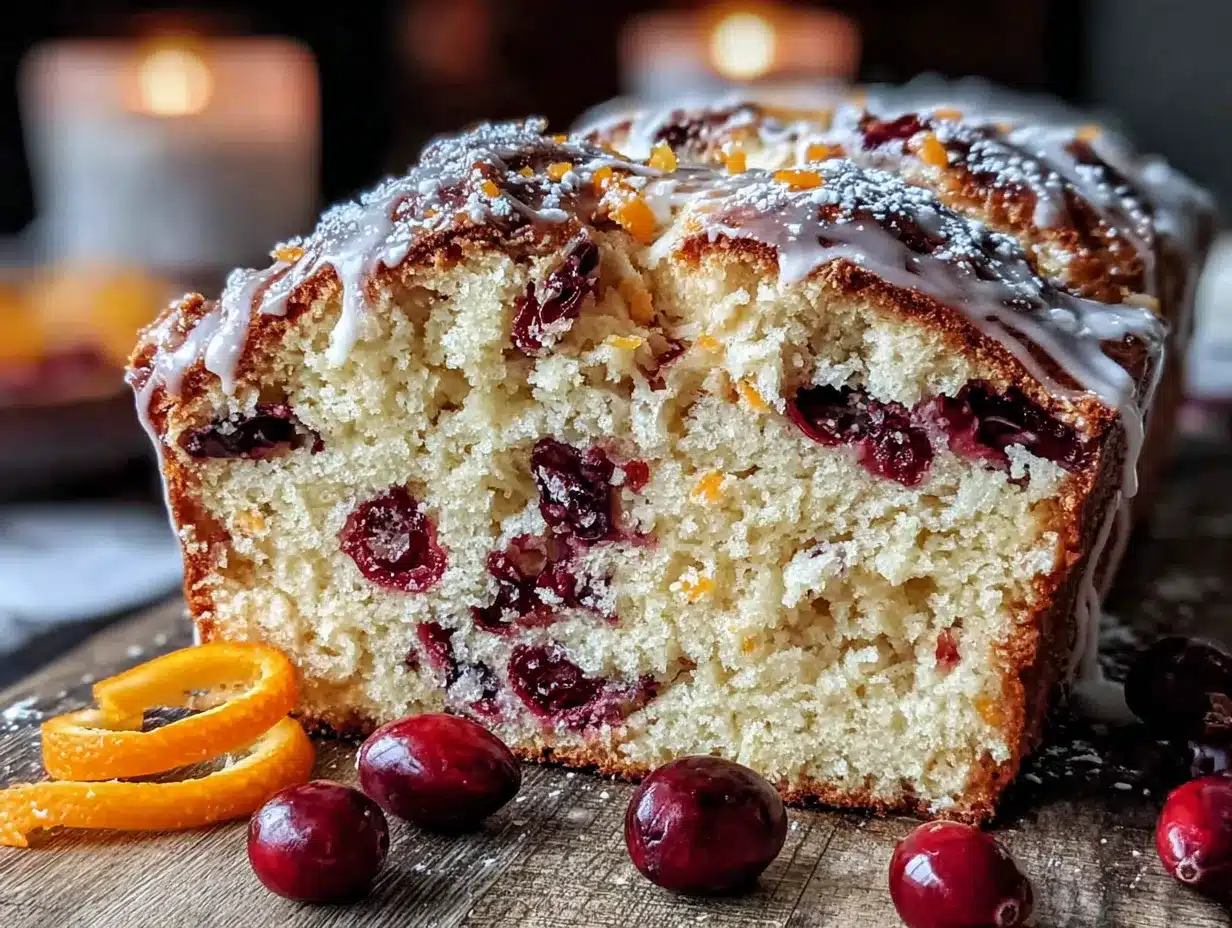
- Unbelievably Delicious: The texture is what gets me every time. The crumb is tender and moist, with a slight crunch from the sugar crust on top. The cranberries burst into little pockets of tartness, and the orange zest gives it this sunny, aromatic lift. It’s comfort food, but with a little zing.
This isn’t just another quick bread recipe. The trick is in how you handle the citrus. Most recipes just dump in juice and zest, but I’ve found that rubbing the zest into the sugar first releases the oils and gives you a much deeper orange flavor. It’s a small step, but it makes all the difference. It’s the kind of thing you learn after making a few mediocre loaves, you know? This is my best version, and I’m pretty proud of it.
What Ingredients You Will Need
This recipe uses simple, wholesome ingredients to deliver bold flavor and satisfying texture without the fuss. Most of these are pantry staples, especially during the holiday season. Here’s what you’ll need to grab:
For the Bread Batter
- 1 ½ cups (190g) all-purpose flour – Spoon and level it for the best texture. I’ve used King Arthur Flour for years and love the consistent results.
- 1 teaspoon baking powder – Make sure it’s fresh. Expired baking powder won’t give you that nice rise.
- ½ teaspoon baking soda – Helps the bread brown and rise evenly.
- ½ teaspoon salt – Fine sea salt works best. It balances the sweetness.
- 1 cup (200g) granulated sugar – Plus 1 tablespoon extra for sprinkling on top. That little crunch is everything.
- Zest of 1 large orange – About 2 tablespoons. Use a microplane if you have one. It gets the zest fine without the bitter white pith.
- ¼ cup (60ml) fresh orange juice – From that same orange. Don’t use bottled juice—it’s just not the same.
- ½ cup (113g) unsalted butter – Softened to room temperature. If you forget to take it out, cut it into small cubes and let it sit for 10 minutes.
- 2 large eggs – Room temperature is key. Cold eggs can seize the batter. Just set them in a bowl of warm water for 5 minutes.
- 1 teaspoon vanilla extract – Pure vanilla, not imitation. It adds a warm, cozy flavor.
- ½ cup (120ml) buttermilk – Or make your own by adding 1 ½ teaspoons of lemon juice to ½ cup of milk and letting it sit for 5 minutes. The acidity keeps the bread tender.
- 1 ½ cups (150g) fresh or frozen cranberries – If using frozen, don’t thaw them first. Toss them in a tablespoon of flour to keep them from sinking to the bottom of the loaf.
For the Orange Glaze (Optional but Recommended)
- ½ cup (60g) powdered sugar – Sifted to avoid lumps.
- 1-2 tablespoons fresh orange juice – Add slowly until you get a drizzle-able consistency.
- ½ teaspoon orange zest – For a little extra pop.
Substitution Notes: If you’re dairy-free, swap the butter for a plant-based stick butter and use almond milk with a splash of vinegar for the buttermilk. For a gluten-free version, I’ve had good luck with a 1:1 gluten-free baking flour blend. Just add an extra tablespoon of buttermilk to keep it moist.
Equipment Needed
You don’t need a fancy bakery setup for this bread. Here’s what I use every time:
- 9×5-inch loaf pan – A metal or glass pan works fine. If you use glass, reduce the oven temperature by 25°F to prevent over-browning.
- Parchment paper – Line the pan with a sling. It makes lifting the bread out so much easier. I’ve had too many loaves get stuck to the bottom of the pan.
- Two mixing bowls – One large, one medium. Nothing fancy, just something to whisk your dry and wet ingredients separately.
- Whisk and rubber spatula – The whisk for dry ingredients, the spatula for folding. A wooden spoon works too, but a spatula gives you more control.
- Microplane or fine grater – For zesting the orange. A box grater works in a pinch, but a microplane gives you that fluffy zest that melts right into the sugar.
- Cooling rack – Letting the bread cool completely before slicing is non-negotiable. Trust me on this one.
If you don’t have a loaf pan, you can use an 8×8-inch square pan and bake for about 35-40 minutes. Just keep an eye on it. I’ve also made these as muffins—bake for 18-22 minutes at 350°F. They’re perfect for freezing and pulling out for school lunches.
Preparation Method
Let’s get to the good part. I’ve broken this down step by step so you can follow along without any stress. Take your time, and remember—baking is supposed to be fun.
- Preheat and Prep: Preheat your oven to 350°F (175°C). Line your 9×5-inch loaf pan with parchment paper, leaving a little overhang on the long sides. Lightly grease the exposed ends with butter or non-stick spray. This is your insurance policy against a stuck loaf.
- Zest and Sugar: In a large mixing bowl, combine the 1 cup of granulated sugar with the orange zest. Use your fingertips to rub the zest into the sugar until it’s fragrant and slightly damp. This releases the essential oils and gives you that deep, natural orange flavor. It smells amazing—stop and enjoy it for a second.
- Cream the Butter and Sugar: Add the softened butter to the sugar-zest mixture. Beat with a hand mixer or stand mixer on medium speed for 2-3 minutes until it’s light and fluffy. Scrape down the sides of the bowl halfway through. If you don’t have a mixer, a wooden spoon and some elbow grease work fine—just cream it until it’s pale and smooth.
- Add the Eggs and Vanilla: Crack the eggs into a small bowl first (just in case of shell bits). Add them one at a time to the butter mixture, beating well after each addition. Stir in the vanilla extract. The batter might look a little curdled at this point—that’s totally normal. Don’t panic.
- Whisk the Dry Ingredients: In a separate medium bowl, whisk together the flour, baking powder, baking soda, and salt. This ensures everything is evenly distributed so you don’t get a pocket of baking powder in your final slice.
- Alternate the Dry and Wet: Add about a third of the flour mixture to the butter mixture, and mix on low speed until just combined. Pour in half of the buttermilk, and mix again. Repeat with another third of the flour, the rest of the buttermilk, and finally the last of the flour. Mix until just combined—stop as soon as you don’t see any more streaks of flour. Overmixing will make the bread tough.
- Fold in the Cranberries: If you’re using frozen cranberries, toss them in a tablespoon of flour first. This keeps them from sinking. Gently fold the cranberries into the batter with a rubber spatula. Use a light hand here—just a few folds until they’re evenly distributed. The batter will be thick and luscious.
- Pour and Sprinkle: Scrape the batter into your prepared loaf pan and spread it into an even layer. Sprinkle the top with the extra tablespoon of granulated sugar. This creates a lovely, crackly crust that contrasts with the soft interior. If you’re feeling fancy, add a few extra fresh cranberries on top for looks.
- Bake: Place the pan in the center of the oven and bake for 55-65 minutes. The bread is done when a toothpick inserted into the center comes out clean or with just a few moist crumbs. If the top is browning too quickly after 40 minutes, tent it loosely with aluminum foil.
- Cool: Let the bread cool in the pan on a wire rack for 15 minutes. Then use the parchment sling to lift it out and transfer it to the rack to cool completely. This is the hardest part—waiting. But if you slice it while it’s warm, it will crumble. Patience, my friend.
- Glaze (Optional): Whisk together the powdered sugar, orange juice, and zest until smooth. Drizzle over the cooled bread. Let it set for about 10 minutes before slicing.
Cooking Tips & Techniques
I’ve made this bread more times than I can count, and I’ve learned a few things the hard way. Here are my best tips to make sure yours turns out perfect every time.
Don’t Overmix the Batter: I know I said this already, but it’s worth repeating. Once you add the flour, mix just until it comes together. Overmixing develops the gluten and gives you a dense, tough loaf. You want it tender, like a soft cloud with cranberry jewels.
Room Temperature Ingredients Matter: Cold butter doesn’t cream properly, and cold eggs can make the batter seize up. Take everything out of the fridge 30 minutes before you start. If you’re in a rush, cut the butter into small cubes and let the eggs sit in a bowl of warm water for 5 minutes. It makes a real difference in the texture.
Check Your Oven Temperature: Ovens lie. I’ve had one that ran 25°F hot, and it burned the bottom of every loaf until I bought an oven thermometer. If your bread is browning too quickly on top but still raw in the middle, tent it with foil and lower the temp by 25°F.
Use Fresh Cranberries for Best Texture: Frozen work in a pinch, but fresh cranberries hold their shape better and have a brighter tartness. If you’re using frozen, don’t thaw them—add them straight to the batter. Thawed berries release too much liquid and can make the bread soggy.
Let It Cool Completely: I know it’s tempting to cut into that warm, fragrant loaf. I’ve done it, and I regretted it. The bread needs time to set, or it will fall apart. Give it at least an hour on the cooling rack. The glaze needs time to harden too, or it will just slide off.
Double the Recipe: Seriously. One loaf disappears fast. I always make two—one for now and one to freeze. It freezes beautifully for up to 3 months. Just wrap it tightly in plastic wrap and then foil.
Variations & Adaptations
This bread is a great base for experimenting. Here are a few ways I’ve changed it up depending on the season or what’s in my pantry.
Gluten-Free Version: I’ve made this with a 1:1 gluten-free baking flour blend (like Bob’s Red Mill) and it turned out great. Add an extra tablespoon of buttermilk to keep it from drying out. The texture is slightly more crumbly, but the flavor is all there.
Dairy-Free Adaptation: Swap the butter for a plant-based stick butter (not the spreadable kind in a tub). Use unsweetened almond milk mixed with a teaspoon of apple cider vinegar for the buttermilk. It works perfectly, and no one will know the difference.
Add Nuts for Crunch: Fold in ½ cup of chopped pecans or walnuts along with the cranberries. Toast them first for extra flavor. It adds a nice texture contrast to the soft bread and tart berries.
Swap the Citrus: If you don’t have an orange, use a lemon or even a lime. The tartness works differently but is just as bright. I’ve made a lemon-cranberry version for spring brunches, and it was a hit.
Make It a Loaf Cake: For a sweeter treat, add ½ cup of white chocolate chips to the batter. The sweetness of the chocolate balances the tart cranberries beautifully. It’s almost like a dessert bread.
Spice It Up: Add 1 teaspoon of cinnamon and ½ teaspoon of nutmeg to the dry ingredients. It gives the bread a warm, holiday-spiced flavor that pairs perfectly with the orange and cranberries.
Serving & Storage Suggestions
This bread is incredibly versatile. Here’s how I like to serve it and keep it fresh.
Serving Ideas: Slice it thick and serve it warm with a pat of butter. It’s perfect for Thanksgiving brunch alongside scrambled eggs and bacon. For dessert, drizzle it with the orange glaze and serve it with a scoop of vanilla ice cream. It’s also fantastic toasted the next day—the edges get slightly crispy, and the center stays soft.
Storage: Store the bread in an airtight container at room temperature for up to 4 days. If you’ve glazed it, let the glaze set completely before wrapping it. The bread actually gets better on the second day—the flavors meld together and the texture becomes even more moist.
Freezing Instructions: To freeze, wrap the cooled, unglazed loaf tightly in plastic wrap, then a layer of aluminum foil. It will keep for up to 3 months. To thaw, leave it on the counter overnight. You can glaze it after it’s thawed. I always keep a loaf in the freezer for unexpected guests or last-minute holiday cravings.
Reheating: Pop individual slices in the toaster or microwave for 10-15 seconds. For the whole loaf, warm it in a 300°F oven for 10 minutes. It brings back that fresh-baked aroma and soft texture.
Flavor Development: Honestly, this bread tastes even better the day after baking. The orange flavor deepens, and the cranberries soften into little jammy pockets. If you can wait a day, do it. It’s worth it.
Nutritional Information & Benefits
Here’s an approximate breakdown per slice (based on 12 slices, without glaze):
| Nutrient | Amount |
|---|---|
| Calories | 245 |
| Total Fat | 9g |
| Saturated Fat | 5g |
| Cholesterol | 55mg |
| Sodium | 210mg |
| Total Carbohydrates | 38g |
| Dietary Fiber | 2g |
| Sugars | 22g |
| Protein | 4g |
Health Benefits: Cranberries are packed with antioxidants and vitamin C, which support your immune system—especially handy during cold and flu season. Oranges are also a great source of vitamin C and fiber. This bread uses butter and sugar, so it’s a treat, not a health food, but it’s made with real ingredients you can feel good about. For a slightly lighter version, you can reduce the sugar to ¾ cup and swap half the butter for applesauce. It’s still delicious, just a little less indulgent.
Dietary Considerations: This recipe contains gluten, dairy, and eggs. For gluten-free or dairy-free options, see the variations section above. It’s not suitable for a vegan diet without significant substitutions.
Conclusion
This cranberry orange bread is more than just a recipe—it’s a little piece of my kitchen that I’m sharing with you. It came from an unlikely source, but it’s become a staple in my home. The tart berries, the bright citrus, the tender crumb—it all comes together in a loaf that feels special without being fussy. Whether you’re making it for Thanksgiving brunch, a cozy weekend breakfast, or just because you have a bag of cranberries to use up, I hope it brings you as much joy as it’s brought me.
I’d love to hear how it turns out for you. Did you add nuts? Swap the orange for lemon? Forget to set the butter out and panic? (Been there.) Drop a comment below and let me know. Share your photos, your tweaks, your happy accidents. This recipe is meant to be played with, so make it your own. Happy baking, friends!
Frequently Asked Questions
Can I use dried cranberries instead of fresh?
Yes, you can. Dried cranberries are sweeter and less tart than fresh, so the flavor will be different. Reduce the sugar in the recipe by 2 tablespoons to balance it out. Also, rehydrate the dried cranberries in warm water for 10 minutes and drain them before adding to the batter—otherwise they can be a little chewy.
Why did my bread sink in the middle?
This usually happens if the batter is overmixed or if the oven temperature is too low. Overmixing develops too much gluten, which can cause the bread to rise and then collapse. Make sure your oven is properly preheated to 350°F. Also, check that your baking powder and baking soda are fresh—expired leavening agents won’t give you a good rise.
Can I make this bread vegan?
You can, but it takes a few swaps. Use a flax egg (1 tablespoon ground flaxseed mixed with 3 tablespoons water, let sit for 5 minutes) for each egg. Substitute the butter with a plant-based stick butter, and use almond milk with a splash of vinegar for the buttermilk. The texture will be a bit denser, but it’s still tasty.
How do I keep the cranberries from sinking to the bottom?
Toss the cranberries in a tablespoon of flour before folding them into the batter. The flour helps suspend them in the batter so they stay evenly distributed. Also, don’t overmix after adding them—gentle folds are best.
Can I make this into muffins instead of a loaf?
Absolutely! Grease a 12-cup muffin tin or line it with paper liners. Divide the batter evenly among the cups (about ¾ full). Bake at 350°F for 18-22 minutes, or until a toothpick inserted in the center comes out clean. They’re perfect for grab-and-go breakfasts or lunchbox treats.
Pin This Recipe!
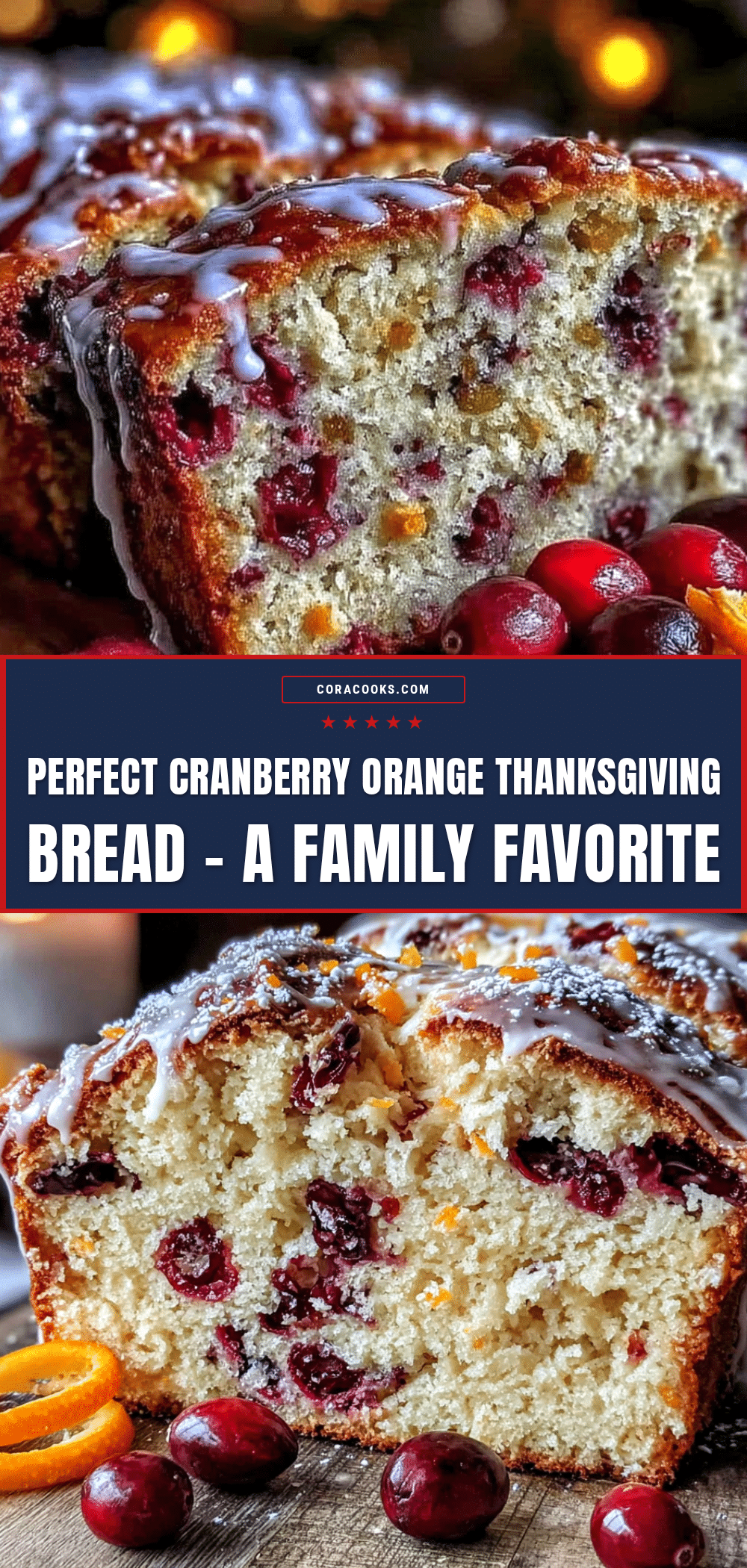
Perfect Cranberry Orange Thanksgiving Bread – Easy Holiday Favorite
This cranberry orange bread is tender, moist, and studded with tart berries that burst against a sweet, citrusy crumb. It’s the perfect holiday treat, easy to make with simple ingredients, and always a crowd-pleaser.
- Prep Time: 15 minutes
- Cook Time: 55-65 minutes
- Total Time: 1 hour 20 minutes
- Yield: 12 servings 1x
- Category: Bread
- Cuisine: American
Ingredients
- 1 ½ cups (190g) all-purpose flour
- 1 teaspoon baking powder
- ½ teaspoon baking soda
- ½ teaspoon fine sea salt
- 1 cup (200g) granulated sugar, plus 1 tablespoon for sprinkling
- Zest of 1 large orange (about 2 tablespoons)
- ¼ cup (60ml) fresh orange juice
- ½ cup (113g) unsalted butter, softened
- 2 large eggs, room temperature
- 1 teaspoon pure vanilla extract
- ½ cup (120ml) buttermilk
- 1 ½ cups (150g) fresh or frozen cranberries (if frozen, do not thaw)
- For the orange glaze (optional): ½ cup (60g) powdered sugar, sifted; 1-2 tablespoons fresh orange juice; ½ teaspoon orange zest
Instructions
- Preheat oven to 350°F (175°C). Line a 9×5-inch loaf pan with parchment paper, leaving overhang on the long sides. Lightly grease exposed ends with butter or non-stick spray.
- In a large bowl, combine 1 cup sugar with orange zest. Rub with fingertips until fragrant and slightly damp.
- Add softened butter to sugar-zest mixture. Beat with a hand mixer or stand mixer on medium speed for 2-3 minutes until light and fluffy. Scrape down sides.
- Add eggs one at a time, beating well after each. Stir in vanilla extract.
- In a separate medium bowl, whisk together flour, baking powder, baking soda, and salt.
- Add about one-third of the flour mixture to the butter mixture, mixing on low until just combined. Pour in half of the buttermilk, mix. Repeat with another third of flour, remaining buttermilk, and final third of flour. Mix until just combined; do not overmix.
- If using frozen cranberries, toss them in 1 tablespoon of flour. Gently fold cranberries into batter with a rubber spatula.
- Scrape batter into prepared pan and spread evenly. Sprinkle top with remaining 1 tablespoon sugar.
- Bake in center of oven for 55-65 minutes, until a toothpick inserted in center comes out clean or with a few moist crumbs. If top browns too quickly after 40 minutes, tent loosely with foil.
- Cool in pan on a wire rack for 15 minutes. Use parchment sling to lift bread out and transfer to rack to cool completely.
- For glaze: Whisk together powdered sugar, orange juice, and zest until smooth. Drizzle over cooled bread. Let set for 10 minutes before slicing.
Notes
For best results, use room temperature ingredients. Do not overmix the batter. Let the bread cool completely before slicing. The bread tastes even better the next day. To freeze, wrap cooled unglazed loaf tightly in plastic wrap and foil for up to 3 months.
Nutrition
- Serving Size: 1 slice (1/12 of loa
- Calories: 245
- Sugar: 22
- Sodium: 210
- Fat: 9
- Saturated Fat: 5
- Carbohydrates: 38
- Fiber: 2
- Protein: 4
Keywords: cranberry orange bread, Thanksgiving bread, holiday bread, quick bread, cranberry bread, orange bread, easy bread recipe