Love this? Save it for later!
Share the inspiration with your friends
This was supposed to be a classic lasagna. I had the ground beef thawing on the counter, a box of no-boil noodles in the pantry, and a plan for a big, heavy, Sunday-night kind of meal. But then I opened the fridge and saw the butternut squash I’d bought for a soup I never got around to making. It was just sitting there, looking a little sad. And honestly? I was just so tired. The idea of browning meat, simmering sauce for an hour, and layering all that heavy cheese felt like a chore. I wanted something that felt like a hug, but not one that would put me to sleep on the couch by 7 PM.
So, in a moment of what I can only call “lazy inspiration,” I grabbed the squash, a few sage leaves from the garden, and decided to just see what happened. I figured I’d make a white sauce, toss in the roasted squash, and hope for the best. The whole time I was layering it, I was half-convinced I was making a huge mistake. “This is going to be a watery, bland mess,” I told myself. I even had a backup pizza number ready on my phone. But when I pulled that pan out of the oven, golden and bubbly, and the smell of brown butter and sage filled the kitchen, I knew I had stumbled onto something. That first bite was pure, quiet vindication. It was everything I wanted—rich, comforting, and somehow, so much lighter than the version I had originally planned. It’s the recipe I keep coming back to, not because it’s fancy, but because it taught me that sometimes the best meals come from letting go of the plan.
Why You’ll Love This Recipe
Let me tell you, I’ve tested this one more times than I care to admit. I wanted to make sure that “lighter” didn’t mean “boring,” and that the butternut squash really shined. After a few trials (and one very soupy disaster), I landed on a method that just works. You get all the cozy, lasagna feels without the heavy, weighed-down feeling afterward. It’s the kind of recipe that makes you feel good about what you’re eating, but you’re not thinking about “healthy” when you’re taking that second helping.
- Deliciously Light: We swap out half the ricotta for roasted butternut squash, which adds a creamy, sweet richness without all the calories and fat. You honestly won’t miss the extra cheese.
- Simple Ingredients: No fancy grocery trips. You likely have pasta, cheese, and sage on hand. The butternut squash is the star, and it’s easy to find almost year-round.
- Perfect for a Cozy Dinner: This is your new go-to for a Sunday supper, a fall gathering, or a weeknight meal that feels special. It’s impressive enough for guests, but easy enough for a Tuesday.
- Crowd-Pleaser: I’ve served this to my picky family and to friends who swear by traditional lasagna. It gets rave reviews every single time. Even the kids go back for more.
- Unbelievably Satisfying: The combination of creamy squash, nutty brown butter, and savory sage is next-level comfort. It’s rich and decadent, but you’ll feel energized, not sluggish, after eating it.
What makes this different from other butternut squash lasagnas? It’s the brown butter, hands down. That simple step of browning the butter adds a deep, toasty, almost nutty flavor that perfectly complements the sweetness of the squash. It’s not just another white sauce; it’s a flavor experience. And the texture? By roasting the squash first, it becomes silky and smooth, blending perfectly into the ricotta mixture. It’s comfort food reimagined—healthier, faster (once the squash is roasted), but with the same soul-soothing satisfaction.
What Ingredients You Will Need
This recipe uses simple, wholesome ingredients to deliver big, bold flavor. Most of these are pantry staples, and the fresh ones are easy to find at any grocery store. I’ve tested this with different brands and substitutions, and I’ll share my favorites so you get the best result your first time.
- For the Butternut Squash Ricotta Mixture:
- 1 medium butternut squash (about 2 lbs), peeled, seeded, and cubed. (Look for one that feels heavy for its size. Pre-cut cubes work great to save time!)
- 1 tablespoon olive oil
- 1/2 teaspoon salt
- 1/4 teaspoon black pepper
- 15 oz part-skim ricotta cheese (I prefer Galbani or Polly-O for a creamy texture without being watery)
- 1 large egg, lightly beaten
- 1/2 cup grated Parmesan cheese, plus more for topping
- 1/4 cup chopped fresh sage (about 10-12 leaves)
- For the Sage Brown Butter Sauce:
- 4 tablespoons unsalted butter
- 10-12 fresh sage leaves
- 2 tablespoons all-purpose flour (or use a gluten-free 1-to-1 blend)
- 2 cups whole milk (2% works too, but whole milk makes it extra creamy)
- 1/2 teaspoon salt
- 1/4 teaspoon black pepper
- Pinch of nutmeg (freshly grated is best, but ground works)
- For Assembly:
- 9 no-boil lasagna noodles (I like Barilla for consistent results)
- 2 cups shredded low-moisture mozzarella cheese
- Extra fresh sage leaves and Parmesan for garnish
Ingredient Tips & Substitutions: If you’re short on time, you can use frozen butternut squash cubes. Just thaw them, pat them very dry, and roast as directed. For a dairy-free version, use a high-quality dairy-free butter (like Miyoko’s), unsweetened oat milk, and dairy-free ricotta and mozzarella. The flavor will be slightly different, but still delicious! If you don’t have fresh sage, you can use 1 teaspoon of dried rubbed sage in the ricotta mixture, but I strongly recommend using fresh for the brown butter—it’s where the magic happens.
Equipment Needed
You don’t need any fancy gadgets for this one, which I love. Here’s what you’ll need to get the job done:
- 9×13-inch baking dish (Glass or ceramic works best for even baking)
- Baking sheet (for roasting the squash)
- Large skillet or saucepan (for the brown butter sauce)
- Medium bowl (for mixing the ricotta filling)
- Chef’s knife and cutting board
- Measuring cups and spoons
- Whisk
- Aluminum foil (for covering while baking)
If you don’t have a 9×13, you can use a slightly smaller dish and just make fewer layers. A good, sharp chef’s knife makes peeling and cubing the squash a breeze—trust me on this one. I learned the hard way that a dull knife is a recipe for frustration (and potentially a band-aid).
Preparation Method
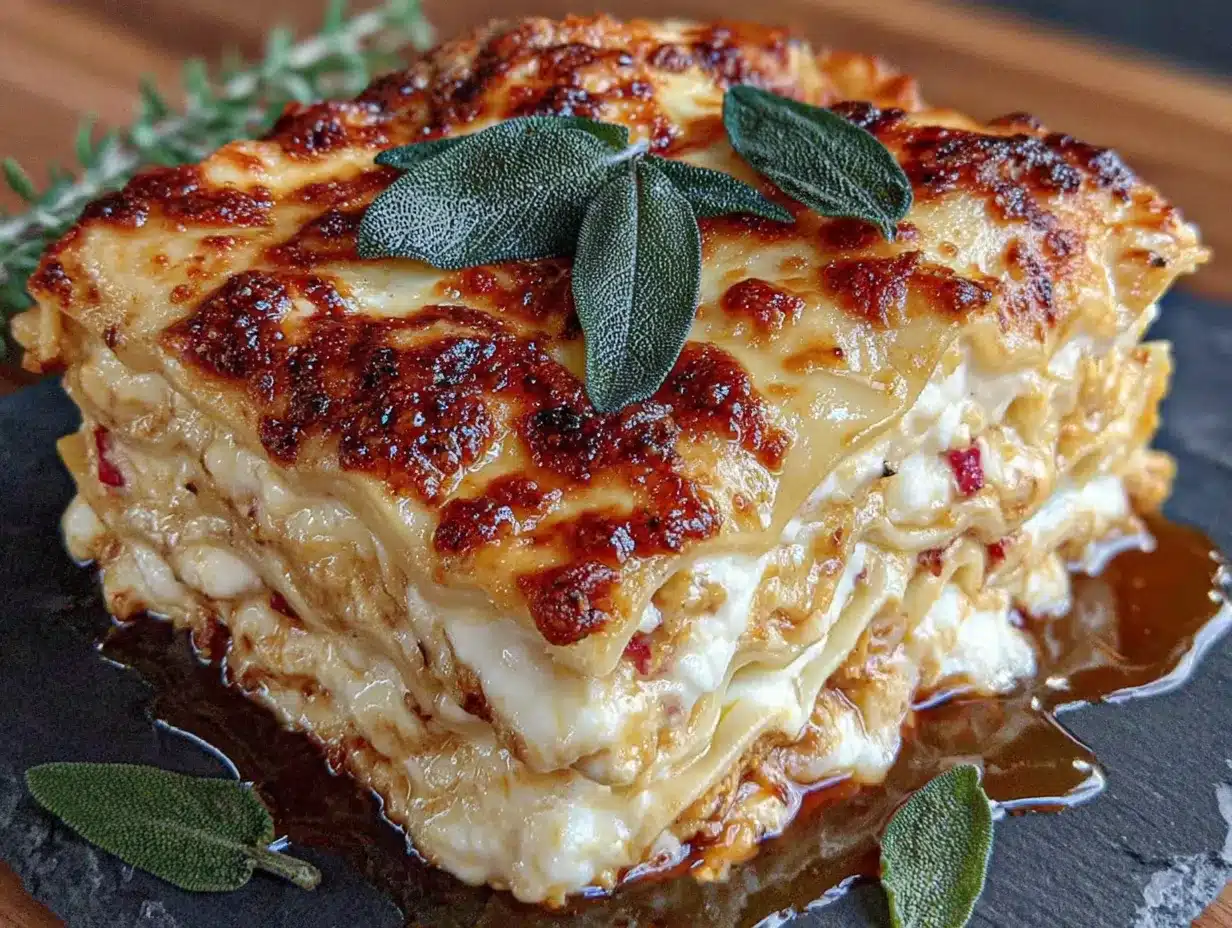
Let’s get cooking! This might look like a lot of steps, but I’ve broken it down so it’s super manageable. The whole thing comes together in about an hour of active time.
- Roast the Squash (30 minutes): Preheat your oven to 400°F (200°C). Toss the cubed butternut squash with olive oil, salt, and pepper on your baking sheet. Spread it in a single layer. Roast for 25-30 minutes, or until the squash is fork-tender and the edges are just starting to caramelize. Let it cool slightly. Pro tip: Don’t skip the caramelization—it adds so much natural sweetness!
- Make the Ricotta Mixture (5 minutes): In a medium bowl, mash the roasted squash with a fork or potato masher until it’s mostly smooth (a few chunks are fine for texture). Add the ricotta, beaten egg, Parmesan, and chopped sage. Stir until everything is well combined. Give it a taste and adjust salt and pepper if needed. Set aside.
- Make the Sage Brown Butter Sauce (10 minutes): In your large skillet, melt the butter over medium heat. Once melted, add the whole sage leaves. Cook, swirling the pan occasionally, until the butter turns a golden-brown color and smells nutty and toasty, about 3-4 minutes. It will foam up—that’s normal. Watch it carefully, as it can go from brown to burnt in seconds. This is the heart of the recipe, so don’t rush it!
- Finish the Sauce (5 minutes): Remove the pan from the heat. Using a slotted spoon, remove the sage leaves and set them aside for garnish. Return the pan to low heat and whisk in the flour. Cook for 1 minute, stirring constantly. Slowly pour in the milk while whisking to prevent lumps. Add the salt, pepper, and nutmeg. Continue whisking until the sauce thickens, about 2-3 minutes. It should coat the back of a spoon. Remove from heat.
- Assemble the Lasagna (10 minutes): Reduce your oven temperature to 375°F (190°C). Spread a thin layer of the brown butter sauce on the bottom of your 9×13 dish. Place 3 lasagna noodles on top. Spread half of the butternut ricotta mixture over the noodles. Drizzle with about 1/3 of the remaining sauce and sprinkle with 1/3 of the mozzarella. Repeat the layers: noodles, remaining ricotta mixture, another 1/3 of the sauce, and another 1/3 of the mozzarella. Top with the final 3 noodles, the remaining sauce, and the rest of the mozzarella. Sprinkle with a little extra Parmesan.
- Bake (35-40 minutes): Cover the dish with foil and bake for 25 minutes. Remove the foil and bake for another 10-15 minutes, or until the cheese is bubbly and golden brown. Let it rest for at least 10 minutes before slicing and serving. This is the hardest part—the wait! But it helps the lasagna set so you get clean slices.
- Garnish and Serve: Top with the reserved crispy sage leaves and a sprinkle of fresh Parmesan. Serve warm.
Cooking Tips & Techniques
I’ve made this lasagna enough times to have a few tricks up my sleeve. Here are the things I wish I’d known from the start:
- Don’t Overcook the Squash: You want it fork-tender, not mushy. Overcooked squash can make the filling watery. Roast it just until it’s soft enough to mash easily.
- The Brown Butter is Everything: This is the one step you can’t rush. Watch the butter like a hawk. It will go from pale yellow to golden to brown very quickly. When you see the milk solids turn a deep amber color and smell that amazing nutty aroma, pull it off the heat immediately. I’ve burned a batch or two, and it’s a sad, expensive mistake.
- Rest the Lasagna: I know it’s tempting to dig in right away, but letting it rest for 10-15 minutes is crucial. It allows the sauce to absorb into the noodles and the layers to set. If you cut into it too soon, you’ll end up with a soupy mess. Trust me on this one.
- Use a Sharp Knife for the Squash: A dull knife is dangerous when dealing with a hard squash. A sharp chef’s knife makes the job safe and easy. If you’re really struggling, you can microwave the whole squash for 2-3 minutes to soften the skin slightly.
- No-Boil Noodles are a Lifesaver: They work perfectly here because the sauce provides enough moisture to cook them. If you use regular lasagna noodles, you’ll need to boil them first according to package directions. But honestly, the no-boil kind saves a step and a dirty pot.
Variations & Adaptations
This recipe is a great base to play with. Here are a few ways I’ve changed it up depending on my mood or what’s in the fridge.
- Add Some Greens: I love adding a layer of sautéed spinach or kale. Just wilt a few handfuls in a pan with a little garlic, squeeze out the excess water, and layer it between the ricotta mixture and the noodles. It adds a beautiful color and an extra boost of nutrients.
- Make it a Mushroom Lasagna: Sauté 8 oz of sliced cremini or shiitake mushrooms with a little garlic and thyme until golden. Layer them with the squash ricotta. The earthy mushrooms are a fantastic match for the sage and brown butter.
- Go Gluten-Free: Use gluten-free no-boil lasagna noodles and a gluten-free 1-to-1 flour blend in the sauce. The rest of the ingredients are naturally gluten-free. It works like a charm!
- Add a Protein: For a heartier meal, you can add a layer of cooked, shredded chicken or Italian sausage. Just brown the sausage before you start, and layer it in with the ricotta mixture. It turns this into a real one-dish meal.
- Spice it Up: A pinch of red pepper flakes in the brown butter sauce adds a lovely, subtle warmth. It doesn’t make it spicy, just gives it a little complexity that I really enjoy.
Serving & Storage Suggestions
This lasagna is a star all on its own, but it plays well with others. Here’s how I like to serve and store it.
- Serving: Serve it warm, right after that crucial resting period. I love it with a simple side salad dressed with lemon and olive oil—the brightness cuts through the richness perfectly. A piece of crusty bread for sopping up any extra sauce is never a bad idea.
- Storage: Leftovers are a gift. Let the lasagna cool completely, then cover the dish tightly with foil or plastic wrap. It will keep in the refrigerator for up to 4 days. The flavors actually meld together even more overnight, so it tastes even better the next day.
- Reheating: The best way to reheat individual portions is in a 350°F oven for about 15 minutes, or until heated through. You can also use the microwave in a pinch, but the oven keeps the texture better. For a whole dish, reheat covered with foil at 350°F for 20-25 minutes.
- Freezing: This lasagna freezes beautifully. Assemble the whole thing in a disposable foil pan, but don’t bake it. Cover it tightly with a layer of plastic wrap and then foil. Freeze for up to 3 months. To bake from frozen, remove the plastic wrap, cover with foil, and bake at 375°F for 60-70 minutes, removing the foil for the last 15 minutes.
Nutritional Information & Benefits
This lasagna is a great example of how comfort food can be both delicious and nourishing. By swapping out some of the heavy dairy for roasted butternut squash, we’ve lightened things up without sacrificing an ounce of flavor.
- Estimated per serving (1/8th of recipe): Calories: 380, Fat: 18g, Saturated Fat: 10g, Cholesterol: 85mg, Sodium: 620mg, Carbohydrates: 38g, Fiber: 4g, Sugar: 8g, Protein: 18g.
- Health Benefits: Butternut squash is a powerhouse of Vitamin A (great for your eyes and immune system) and fiber (keeps you full and happy). The sage is not just for flavor; it’s packed with antioxidants. By using part-skim ricotta and low-moisture mozzarella, we keep the calcium and protein high while reducing the saturated fat.
- Dietary Considerations: This recipe is easily made gluten-free and can be adapted to be vegetarian (it already is!). For a lower-carb option, you can try using thin slices of zucchini or eggplant in place of the noodles, though the texture will be different.
It’s a meal that feels indulgent but aligns with a balanced, health-conscious lifestyle. You get the satisfaction of a rich, cheesy pasta dish, but you’re also getting a solid dose of vegetables and nutrients. It’s a win-win in my book.
Conclusion
This Lighter Butternut Squash Lasagna with Sage Brown Butter is more than just a recipe—it’s a reminder that you don’t have to choose between eating well and eating something that truly delights you. It’s proof that a happy accident in the kitchen can lead to something you’ll make on purpose for years to come. I hope you give it a try, and I hope you love it as much as I do. Don’t be afraid to make it your own—add a little extra sage, throw in some spinach, or use a different cheese. Cooking should be fun and flexible.
If you make this lasagna, I’d love to hear about it! Leave a comment below and let me know how it turned out or any fun twists you added. And if you’re looking for another cozy, veggie-packed dish, you might also enjoy this creamy tuscan chicken skillet for a quick weeknight dinner. Happy cooking, friends!
Frequently Asked Questions
Can I use pre-cut butternut squash to save time?
Absolutely! Pre-cut cubes are a huge time-saver. Just make sure they are cut into even, 1-inch pieces so they roast evenly. You might need to adjust the roasting time by a few minutes, depending on the size.
My brown butter sauce seems thin. What did I do wrong?
Don’t worry! It will thicken up as it bakes with the noodles. The no-boil noodles absorb a lot of moisture. If it’s very thin after you add the milk, you can let it simmer for another minute or two, but it’s usually fine as is.
Can I make this lasagna ahead of time?
Yes! You can assemble the entire lasagna (without baking) up to 24 hours in advance. Cover it and keep it in the fridge. When you’re ready to bake, add about 10-15 minutes to the covered baking time since it will be starting from cold.
Can I use dried sage instead of fresh?
You can use 1 teaspoon of dried rubbed sage in the ricotta mixture, but I really recommend fresh sage for the brown butter sauce. The fresh leaves become crispy and delicious, and they are a key part of the flavor and texture of the dish.
How do I get clean slices of lasagna?
The secret is patience! Let the lasagna rest for at least 10-15 minutes after it comes out of the oven. This allows the sauce to set and the layers to firm up. Use a sharp knife and cut cleanly, wiping the knife between slices for the best presentation.
Pin This Recipe!
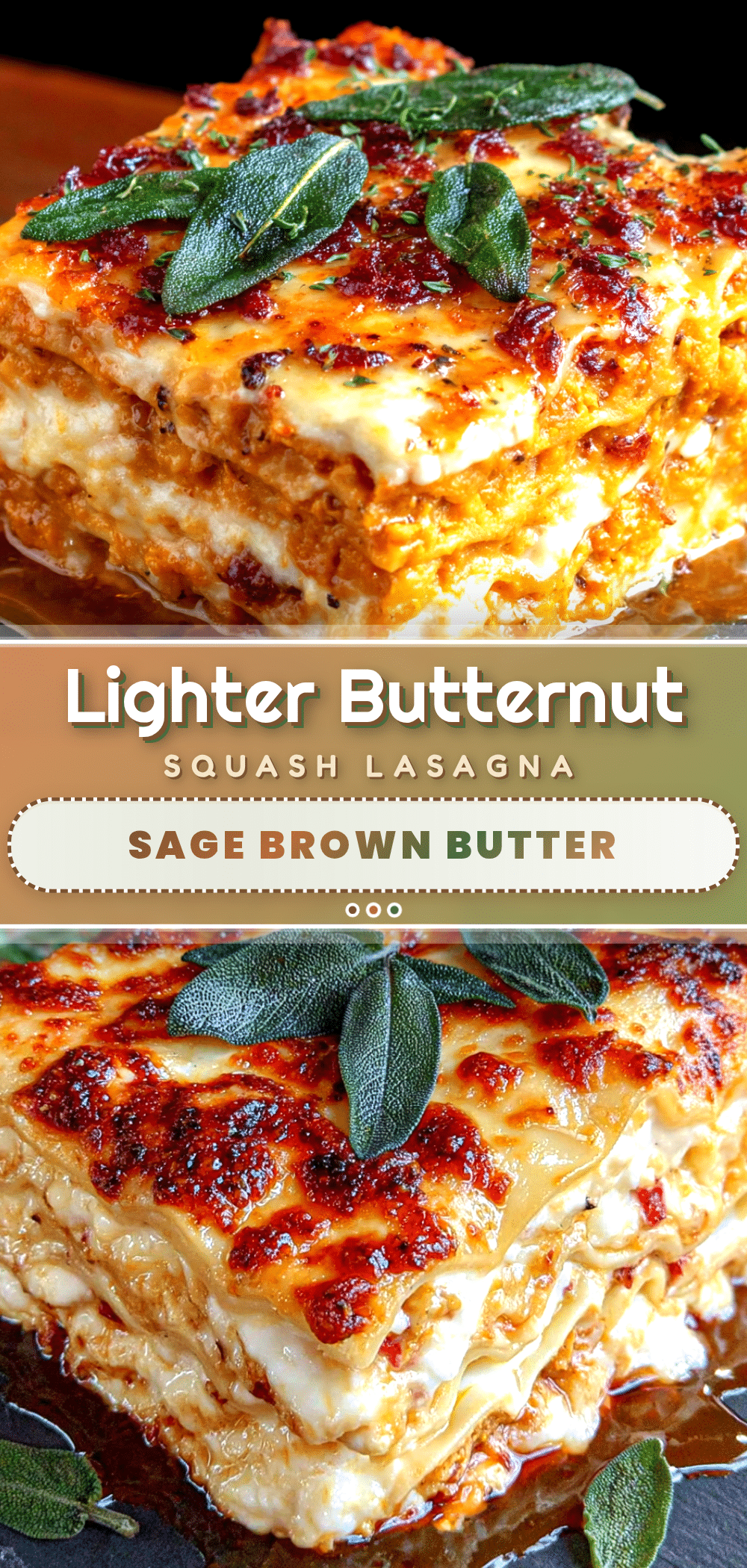
Lighter Butternut Squash Lasagna with Sage Brown Butter
A lighter, comforting lasagna that swaps half the ricotta for roasted butternut squash, finished with a nutty sage brown butter sauce. It’s rich, satisfying, and perfect for a cozy dinner without the heavy feeling.
- Prep Time: 15 minutes
- Cook Time: 45 minutes
- Total Time: 1 hour 10 minutes
- Yield: 8 servings 1x
- Category: Main Course
- Cuisine: Italian-American
Ingredients
- 1 medium butternut squash (about 2 lbs), peeled, seeded, and cubed
- 1 tablespoon olive oil
- 1/2 teaspoon salt
- 1/4 teaspoon black pepper
- 15 oz part-skim ricotta cheese
- 1 large egg, lightly beaten
- 1/2 cup grated Parmesan cheese, plus more for topping
- 1/4 cup chopped fresh sage (about 10–12 leaves)
- 4 tablespoons unsalted butter
- 10–12 fresh sage leaves
- 2 tablespoons all-purpose flour
- 2 cups whole milk
- 1/2 teaspoon salt
- 1/4 teaspoon black pepper
- Pinch of nutmeg
- 9 no-boil lasagna noodles
- 2 cups shredded low-moisture mozzarella cheese
- Extra fresh sage leaves and Parmesan for garnish
Instructions
- Preheat oven to 400°F (200°C). Toss cubed butternut squash with olive oil, salt, and pepper on a baking sheet. Roast for 25-30 minutes until fork-tender and edges caramelize. Let cool slightly.
- In a medium bowl, mash the roasted squash with a fork or potato masher until mostly smooth. Add ricotta, beaten egg, Parmesan, and chopped sage. Stir until well combined. Adjust salt and pepper to taste. Set aside.
- In a large skillet, melt butter over medium heat. Add whole sage leaves. Cook, swirling occasionally, until butter turns golden-brown and smells nutty, about 3-4 minutes. Remove from heat.
- Using a slotted spoon, remove sage leaves and set aside for garnish. Return pan to low heat and whisk in flour. Cook for 1 minute, stirring constantly. Slowly pour in milk while whisking. Add salt, pepper, and nutmeg. Continue whisking until sauce thickens, about 2-3 minutes. Remove from heat.
- Reduce oven temperature to 375°F (190°C). Spread a thin layer of brown butter sauce on the bottom of a 9×13-inch baking dish. Place 3 lasagna noodles on top. Spread half of the butternut ricotta mixture over noodles. Drizzle with about 1/3 of the remaining sauce and sprinkle with 1/3 of the mozzarella. Repeat layers: noodles, remaining ricotta mixture, another 1/3 of sauce, another 1/3 of mozzarella. Top with final 3 noodles, remaining sauce, and remaining mozzarella. Sprinkle with extra Parmesa…
- Cover dish with foil and bake for 25 minutes. Remove foil and bake for another 10-15 minutes until cheese is bubbly and golden brown. Let rest for at least 10 minutes before slicing.
- Garnish with reserved crispy sage leaves and fresh Parmesan. Serve warm.
Notes
Don’t skip the caramelization of the squash—it adds natural sweetness. Watch the brown butter carefully as it can burn quickly. Let the lasagna rest for at least 10 minutes before slicing to ensure clean slices. For a gluten-free version, use gluten-free no-boil noodles and a gluten-free flour blend.
Nutrition
- Serving Size: 1/8 of recipe
- Calories: 380
- Sugar: 8
- Sodium: 620
- Fat: 18
- Saturated Fat: 10
- Carbohydrates: 38
- Fiber: 4
- Protein: 18
Keywords: butternut squash lasagna, lighter lasagna, sage brown butter, vegetarian lasagna, fall recipe, comfort food