Love this? Save it for later!
Share the inspiration with your friends
My nine-year-old nephew looked up from the cutting board and asked, “Auntie, why can’t you just throw everything in the pot at the same time? It all ends up in the same bowl anyway.” I started to explain the science of browning meat, the magic of layering flavors, the importance of a proper sear. Then I stopped. He had a point, didn’t he? I mean, for a kid’s palate, does it really matter if the onions hit the pot before the carrots? Honestly, I was so used to the ritual of a Dutch oven—the patient browning, the careful deglazing—that I’d forgotten the ultimate goal: getting a hearty, comforting meal on the table that everyone would actually eat. So, I decided to try it his way. We chucked the beef, the potatoes, the carrots, the whole lot, into the pot with a glug of broth and a prayer. And you know what? It worked. The stew was tender, the vegetables were sweet, and the gravy was rich. It wasn’t the most technically perfect stew I’d ever made, but it was, without a doubt, the most kid-approved. My nephew polished off two bowls, and I learned a valuable lesson about loosening up in the kitchen. This is that stew—the one that proved sometimes the simple, slightly chaotic path is the best one. Maybe you’ve been there, overthinking a recipe when all your family wants is something warm and delicious.
Why You’ll Love This Recipe
This isn’t just another beef stew recipe. This is the one that gets requested on cold, rainy days and turns a regular Tuesday into a cozy family dinner. It’s the kind of meal that makes the whole house smell like comfort and makes everyone gather around the table without being called twice.
- Budget-Friendly & Filling: Uses affordable cuts of beef and humble root vegetables to create a hearty meal that stretches your grocery dollar. Leftovers are a gift—they taste even better the next day.
- Simple, Pantry Ingredients: No fancy shopping trips or hard-to-find spices. You likely have most of these ingredients in your kitchen right now, making it a perfect last-minute dinner solution.
- Truly Kid-Approved: The beef comes out melt-in-your-mouth tender, and the vegetables cook down until they’re sweet and soft. Even picky eaters ask for seconds.
- One-Pot Wonder: Everything cooks in a single Dutch oven, which means less cleanup and more time to relax with your family. It’s the ultimate weeknight win.
- Unbelievably Delicious: The slow braising creates a deeply savory, rich gravy that coats every single piece of beef and vegetable. It’s the kind of comfort food that makes you close your eyes after the first bite.
This recipe came from a place of necessity—a busy weeknight, a hungry family, and a fridge full of root vegetables. It’s been tested and tweaked to be the most forgiving, most delicious version possible. It’s not just good; it’s the stew that becomes a family legend.
What Ingredients You Will Need
This recipe relies on simple, wholesome ingredients that work together to create a deeply flavorful and satisfying stew. The beauty is in the simplicity—each ingredient has a job to do, and they all do it beautifully. Most of these are likely already in your pantry or fridge.
- For the Beef:
- 2 pounds beef chuck, cut into 1.5-inch cubes: This is the best cut for stewing. It has enough marbling to become incredibly tender during the long, slow cook. Don’t skip trimming off any large pieces of fat, but leave a little for flavor. I like to buy a whole chuck roast and cube it myself—it’s often cheaper than pre-cut stew meat.
- Salt and black pepper, to taste: A generous seasoning is the first step to building flavor. Don’t be shy here.
- 2 tablespoons olive oil: For browning the meat. You can also use avocado oil or vegetable oil.
- For the Aromatics:
- 1 large yellow onion, chopped: The foundation of the stew’s savory flavor. A sweet onion works great here too.
- 3 cloves garlic, minced: Adds a subtle punch. Fresh is always best, but jarred minced garlic works in a pinch.
- 2 tablespoons tomato paste: This is a secret weapon for adding depth and a rich color to the broth. It’s worth the extra step.
- For the Vegetables:
- 4 large carrots, peeled and cut into 1-inch chunks: They add natural sweetness and hold their shape beautifully. I recommend using regular carrots, not baby ones, for the best texture.
- 3 stalks celery, sliced: Adds a subtle savory note and a little texture.
- 1.5 pounds Yukon Gold potatoes, peeled and cut into 1.5-inch chunks: These are my top choice because they get creamy on the inside while holding their shape. Russet potatoes will break down more and thicken the stew, which isn’t a bad thing if you like a thicker gravy.
- 2 parsnips, peeled and cut into 1-inch chunks (optional): These add a wonderful, slightly sweet, and earthy flavor that kids often love without knowing what it is. You can also use turnips or leave them out entirely.
- For the Broth:
- 4 cups low-sodium beef broth: The base of the stew. Using low-sodium allows you to control the salt level. I’ve used both store-bought and homemade, and both work well.
- 1 cup dry red wine (like Cabernet Sauvignon or Merlot) or additional beef broth: The wine adds incredible depth and complexity. If you’re cooking for kids or prefer not to use alcohol, just use an extra cup of broth. The alcohol cooks off completely.
- 2 tablespoons Worcestershire sauce: This is my secret ingredient for a savory, umami kick. It’s not traditional, but it makes the stew taste like it’s been simmering all day.
- 2 bay leaves: For a subtle herbal note. Remember to remove them before serving.
- 1 teaspoon dried thyme: Earthy and aromatic, it pairs perfectly with the beef and root vegetables.
- For the Thickener (Optional):
- 2 tablespoons all-purpose flour: For a thicker stew, you can toss the beef cubes in flour before browning. This helps create a thicker gravy as it cooks.
Equipment Needed
You don’t need a lot of fancy gadgets for this recipe, which is part of its charm. A good, heavy pot is the star of the show.
- Dutch Oven (5-6 quarts): This is non-negotiable for the best results. A heavy-bottomed pot like a Le Creuset or a Lodge enameled cast iron pot distributes heat evenly and holds it well, which is crucial for a perfect stew. If you don’t have one, a large, heavy-bottomed stockpot will work, but you’ll need to be more careful about the heat to prevent sticking.
- Chef’s Knife: A sharp knife makes prepping the beef and vegetables safe and easy. A dull knife is more dangerous than a sharp one!
- Cutting Board: A large, sturdy cutting board is essential for all the chopping.
- Wooden Spoon: For stirring and scraping up all those delicious browned bits from the bottom of the pot.
- Measuring Cups and Spoons: For accurate measurements, especially for the broth and seasonings.
- Vegetable Peeler: For peeling the carrots, potatoes, and parsnips.
Preparation Method
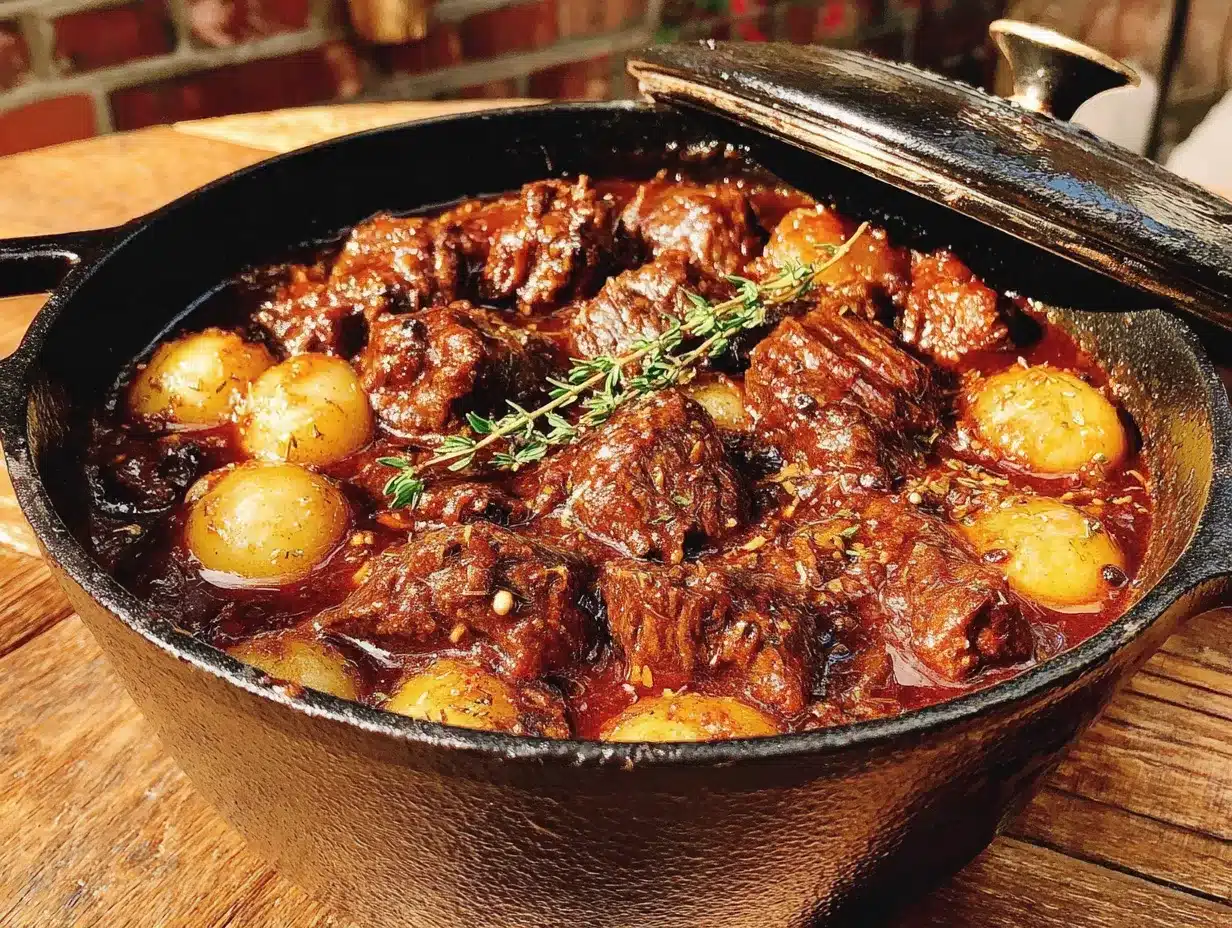
This recipe is forgiving, but following these steps will give you the most tender, flavorful stew. The key is patience—low and slow is the name of the game.
- Prep the Beef and Vegetables (10 minutes): First, pat the beef cubes dry with paper towels. This is a crucial step—dry meat browns much better than wet meat. Season them generously with salt and pepper. If you want a thicker stew, toss the beef cubes in a bowl with the 2 tablespoons of flour until they are lightly coated. Then, chop your onion, mince the garlic, and cut all the root vegetables into roughly 1-inch chunks. Try to keep them a similar size so they cook evenly.
- Brown the Beef (15 minutes): Place your Dutch oven over medium-high heat and add the olive oil. Once the oil is shimmering (hot but not smoking), add the beef cubes in a single layer. Don’t overcrowd the pot—you’ll need to do this in 2 or 3 batches. Crowding the pot steams the meat instead of browning it. Let the beef cook undisturbed for 3-4 minutes per side until a deep, brown crust forms. Use tongs to turn the pieces. Transfer the browned beef to a plate and set aside.
- Sauté the Aromatics (5 minutes): Reduce the heat to medium. Add the chopped onion to the pot with the remaining fat. Cook, stirring occasionally, for 4-5 minutes until the onion is softened and translucent. Add the minced garlic and cook for another 30 seconds until fragrant. Don’t let the garlic burn, or it will turn bitter.
- Add the Tomato Paste (2 minutes): Stir in the tomato paste and cook for 1-2 minutes, stirring constantly. This step deepens the flavor and removes any raw, acidic taste from the paste. You’ll notice it darkens slightly in color.
- Deglaze the Pot (2 minutes): Pour in the red wine (or extra broth), scraping the bottom of the pot with your wooden spoon. This is where all that incredible flavor is—those browned bits are pure gold. Let the liquid simmer for a minute or two, reducing slightly.
- Combine Everything (5 minutes): Return the browned beef and any accumulated juices to the pot. Add the beef broth, Worcestershire sauce, bay leaves, and dried thyme. Give everything a good stir. Bring the stew to a gentle simmer—you should see small bubbles breaking the surface, not a rolling boil.
- Add the Vegetables (1 minute): Gently stir in the carrots, celery, potatoes, and parsnips (if using). Make sure they are mostly submerged in the liquid.
- Simmer Low and Slow (1.5 to 2 hours): Cover the pot with a lid and reduce the heat to low so the stew is just barely simmering. Let it cook undisturbed for 1.5 hours. After that, check the beef—it should be fork-tender. If it’s not quite there, let it simmer for another 20-30 minutes. The vegetables should be tender but not mushy.
- Finish and Serve (5 minutes): Remove the bay leaves. Taste the stew and adjust the seasoning with more salt and pepper if needed. If you like a thicker gravy, you can mix 1 tablespoon of cornstarch with 2 tablespoons of cold water to make a slurry and stir it into the simmering stew. Let it cook for another 2-3 minutes to thicken.
Cooking Tips & Techniques
I’ve made this stew dozens of times, and I’ve learned a few things the hard way. Here are my best tips to ensure your stew is perfect every single time.
- Don’t Skip the Browning: I know it seems like an extra step, but browning the beef is non-negotiable for deep, rich flavor. The Maillard reaction creates hundreds of flavor compounds that you just can’t get from boiling meat. A good, dark sear is the secret to a stew that tastes like it’s been simmering all day.
- Low and Slow is the Law: A rapid boil will make your beef tough and your vegetables mushy. A gentle simmer is all you need. If you see big, aggressive bubbles, turn the heat down. The stew should be gently bubbling, like a quiet conversation, not a shouting match.
- Patience with Vegetables: I used to add all the vegetables at the beginning, but I found the potatoes would sometimes get too soft. Now, I add them at the same time as the beef, but I cut them into larger chunks (1.5 inches) so they hold up better. If you want them firmer, you can add them 45 minutes into the cooking time.
- The Wine Question: I once made this stew without wine because I thought it didn’t matter. I was wrong. The wine adds an acidity and complexity that balances the richness of the beef. If you’re avoiding alcohol, the broth works, but you might want to add a splash of balsamic vinegar at the end to brighten the flavors.
- Make it Ahead: This stew is one of those rare dishes that’s actually better the next day. The flavors meld and deepen overnight. If you have time, make it a day ahead, let it cool, and refrigerate it. Reheat it gently on the stovetop. The texture will be even more incredible.
Variations & Adaptations
This recipe is a fantastic base, and it’s easy to adapt to what you have on hand or to suit your family’s tastes. Here are a few of my favorite twists.
- Make it Gluten-Free: Simply omit the flour when browning the beef. The stew will still be delicious, though the broth will be thinner. To thicken it, you can use a cornstarch slurry (1 tablespoon cornstarch mixed with 2 tablespoons cold water) stirred in at the end, or you can add a couple of peeled and diced potatoes early on, which will break down and naturally thicken the stew.
- Add More Veggies: This is a great way to clean out the fridge. Frozen peas stirred in during the last 5 minutes of cooking add a pop of sweetness and color. You can also add chopped mushrooms, rutabaga, or even a handful of chopped kale in the last 10 minutes for extra nutrients.
- Switch Up the Herbs: Not a fan of thyme? Try a couple of sprigs of fresh rosemary or a teaspoon of dried oregano. A bundle of fresh parsley stems tied together with kitchen twine (a bouquet garni) adds a lovely, fresh flavor.
- Slow Cooker Version: This recipe adapts beautifully to a slow cooker. Brown the beef and sauté the aromatics on the stovetop first, then transfer everything to the slow cooker. Cook on low for 7-8 hours or on high for 4-5 hours. Add the potatoes and carrots during the last 2 hours of cooking so they don’t become too soft.
- Instant Pot Version: For a faster version, use the sauté function on your Instant Pot to brown the beef and sauté the aromatics. Add all the remaining ingredients, close the lid, and cook on high pressure for 35 minutes. Let the pressure release naturally for 10 minutes before manually releasing the rest. The results are surprisingly good.
Serving & Storage Suggestions
This stew is a complete meal in a bowl, but the way you serve it can make it feel extra special. And the leftovers? They’re a gift.
Serving: Ladle the stew into deep bowls. A sprinkle of fresh, chopped parsley on top adds a nice pop of color and freshness. For a truly satisfying meal, serve it with a hunk of crusty bread for dipping into the rich gravy. A simple green salad with a lemon vinaigrette on the side cuts through the richness beautifully. Sometimes, I’ll even serve it over a bed of egg noodles or mashed potatoes for an extra-hearty dinner.
Storage: This stew stores like a dream. Let it cool completely to room temperature (but don’t leave it out for more than 2 hours). Transfer it to an airtight container and refrigerate for up to 4 days. The flavors will actually meld and deepen, making it taste even better the next day.
Freezing: This stew freezes wonderfully. Portion it into freezer-safe bags or containers, leaving a little headroom for expansion. It will keep for up to 3 months. To thaw, place it in the refrigerator overnight. To reheat, gently warm it in a pot on the stovetop over low heat, adding a splash of broth or water if it’s too thick. You can also microwave individual portions.
Nutritional Information & Benefits
This stew is a nourishing, balanced meal that’s packed with goodness. While it’s a comfort food, it’s also surprisingly healthy.
Estimated Nutritional Values (per serving, based on 6 servings):
- Calories: ~450
- Protein: 35g
- Fat: 18g
- Carbohydrates: 35g
- Fiber: 6g
- Sugar: 8g
- Sodium: 600mg (varies based on broth and salt used)
Health Benefits:
- High in Protein: The beef provides a substantial amount of protein, which is essential for building and repairing tissues and keeping you feeling full and satisfied.
- Rich in Vitamins and Fiber: The variety of root vegetables—carrots, potatoes, parsnips—provides a great source of Vitamin A, Vitamin C, potassium, and dietary fiber, which supports digestive health.
- Good Source of Iron: Beef is a fantastic source of heme iron, which is easily absorbed by the body and crucial for healthy red blood cells.
- Low in Added Sugar: This recipe contains no added sugar; all the sweetness comes naturally from the caramelized vegetables.
Dietary Considerations: This recipe can be made gluten-free (see variations). It is not suitable for a vegetarian or vegan diet, but you can substitute the beef with hearty mushrooms and use a vegetable broth for a plant-based version.
Conclusion
This Kid-Approved Dutch Oven Beef Stew with Root Vegetables is more than just a recipe—it’s a solution for those busy weeknights when you need a guaranteed win. It’s the meal that brings everyone to the table, warms them from the inside out, and leaves them asking for more. It’s forgiving, flexible, and packed with flavor that tastes like you spent all day in the kitchen, even when you didn’t. I love this recipe because it reminds me that sometimes the best meals come from letting go of perfection and just cooking with love. I honestly hope you give it a try and make it your own. Add a little more garlic, swap in sweet potatoes, or throw in a handful of frozen peas—make it your family’s stew. When you do, I’d love to hear about it! Drop a comment below to tell me how it turned out, or share a photo of your steaming bowl. Happy cooking!
Frequently Asked Questions
Can I use a different cut of beef?
Absolutely. While beef chuck is the best choice for its marbling and tenderness after a long cook, you can also use bottom round, top round, or even brisket. Steer clear of lean cuts like sirloin, which will become tough and dry.
My stew turned out watery. What did I do wrong?
This usually happens if the heat was too high and the liquid boiled away too quickly, or if you didn’t brown the beef well enough to create a thick base. Next time, make sure you’re simmering, not boiling. You can also thicken a watery stew at the end with a cornstarch slurry or by mashing a few of the cooked potatoes directly into the broth.
Can I make this stew in a slow cooker?
Yes, and it works great! Follow the steps to brown the beef and sauté the aromatics on the stovetop first. Then, transfer everything to your slow cooker. Cook on low for 7-8 hours or on high for 4-5 hours. Add the potatoes and carrots during the last 2 hours of cooking so they don’t get too soft.
How can I make this stew dairy-free?
This recipe is naturally dairy-free, as written. There is no butter or milk in the ingredients list. Just be sure to check your beef broth and Worcestershire sauce labels to ensure they don’t contain any hidden dairy.
Can I leave out the wine?
Yes, you can. The wine adds a lovely depth of flavor, but it’s not essential for a delicious stew. Simply replace the 1 cup of wine with an extra cup of low-sodium beef broth. To mimic the acidity the wine provides, you can add a tablespoon of balsamic vinegar or a squeeze of lemon juice at the end of cooking.
Pin This Recipe!
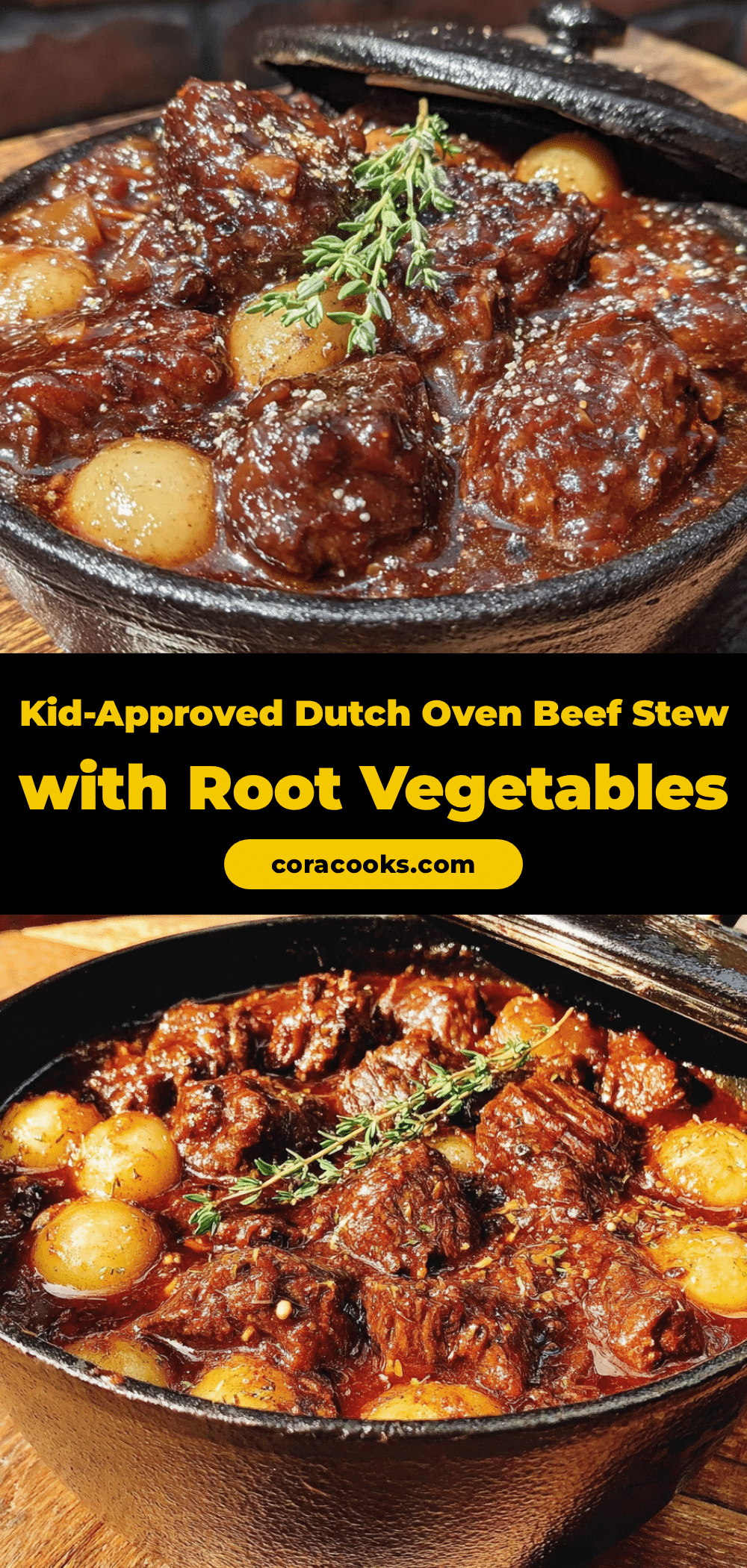
Kid-Approved Dutch Oven Beef Stew with Root Vegetables
A hearty, comforting beef stew made with affordable cuts of beef and humble root vegetables. This forgiving, one-pot meal is packed with flavor and guaranteed to be a family favorite, even for picky eaters.
- Prep Time: 15 minutes
- Cook Time: 1 hour 45 minutes
- Total Time: 2 hours
- Yield: 6 servings 1x
- Category: Main Course
- Cuisine: American
Ingredients
- 2 pounds beef chuck, cut into 1.5-inch cubes
- Salt and black pepper, to taste
- 2 tablespoons olive oil
- 1 large yellow onion, chopped
- 3 cloves garlic, minced
- 2 tablespoons tomato paste
- 4 large carrots, peeled and cut into 1-inch chunks
- 3 stalks celery, sliced
- 1.5 pounds Yukon Gold potatoes, peeled and cut into 1.5-inch chunks
- 2 parsnips, peeled and cut into 1-inch chunks (optional)
- 4 cups low-sodium beef broth
- 1 cup dry red wine (like Cabernet Sauvignon or Merlot) or additional beef broth
- 2 tablespoons Worcestershire sauce
- 2 bay leaves
- 1 teaspoon dried thyme
- 2 tablespoons all-purpose flour (optional, for thicker stew)
Instructions
- Prep the Beef and Vegetables: Pat the beef cubes dry with paper towels. Season generously with salt and pepper. If you want a thicker stew, toss the beef cubes in a bowl with the 2 tablespoons of flour until lightly coated. Chop the onion, mince the garlic, and cut all root vegetables into roughly 1-inch chunks.
- Brown the Beef: Place your Dutch oven over medium-high heat and add the olive oil. Once the oil is shimmering, add the beef cubes in a single layer (work in 2-3 batches to avoid overcrowding). Cook undisturbed for 3-4 minutes per side until a deep, brown crust forms. Transfer browned beef to a plate and set aside.
- Sauté the Aromatics: Reduce heat to medium. Add the chopped onion to the pot with the remaining fat. Cook, stirring occasionally, for 4-5 minutes until softened and translucent. Add the minced garlic and cook for another 30 seconds until fragrant.
- Add the Tomato Paste: Stir in the tomato paste and cook for 1-2 minutes, stirring constantly, until it darkens slightly.
- Deglaze the Pot: Pour in the red wine (or extra broth), scraping the bottom of the pot with a wooden spoon to release the browned bits. Let it simmer for 1-2 minutes, reducing slightly.
- Combine Everything: Return the browned beef and any accumulated juices to the pot. Add the beef broth, Worcestershire sauce, bay leaves, and dried thyme. Stir well and bring to a gentle simmer.
- Add the Vegetables: Gently stir in the carrots, celery, potatoes, and parsnips (if using). Ensure they are mostly submerged in the liquid.
- Simmer Low and Slow: Cover the pot with a lid and reduce the heat to low so the stew is just barely simmering. Cook undisturbed for 1.5 to 2 hours, until the beef is fork-tender and the vegetables are tender but not mushy.
- Finish and Serve: Remove the bay leaves. Taste and adjust seasoning with more salt and pepper if needed. For a thicker gravy, mix 1 tablespoon cornstarch with 2 tablespoons cold water to make a slurry and stir into the simmering stew. Cook for another 2-3 minutes to thicken.
Notes
For best results, don’t skip browning the beef—it creates deep flavor. Simmer low and slow; a rapid boil will make beef tough and vegetables mushy. This stew tastes even better the next day as flavors meld. To make gluten-free, omit the flour and use a cornstarch slurry to thicken at the end.
Nutrition
- Serving Size: 1 bowl (about 1.5 cu
- Calories: 450
- Sugar: 8
- Sodium: 600
- Fat: 18
- Saturated Fat: 6
- Carbohydrates: 35
- Fiber: 6
- Protein: 35
Keywords: beef stew, Dutch oven, root vegetables, kid-friendly, one-pot meal, comfort food, winter recipe, family dinner