Love this? Save it for later!
Share the inspiration with your friends
This was supposed to be a simple roasted chicken dinner. I had the bird, the veggies, the whole plan mapped out in my head. But somewhere between chopping the butternut squash and realizing I’d forgotten to defrost the chicken, the whole thing fell apart. I stood there, staring at a pile of cubed squash, a lone apple from the bottom of the fruit bowl, and a bunch of sage that was starting to look a little sad. The oven was already hot, the kids were hungry, and I was this close to ordering pizza. Honestly, I just started tossing things onto a sheet pan out of pure frustration. I roasted everything until it was soft and caramelized, threw it in a pot with some broth, and blended it on a whim. What came out of that blender was nothing like the plan—and so much better. That first spoonful was so unexpectedly good I actually laughed out loud. It was creamy without any cream, sweet from the apple but not sugary, and that sage gave it this earthy, cozy warmth that felt like a hug in a bowl. I’ve made it every fall since, and it’s become my go-to for those days when you just need something to go right. Maybe you’ve been there—standing in your kitchen, everything going wrong, wondering if you should just give up. Keep going. This soup is proof that the best things happen when you stop trying so hard.
Why You’ll Love This Recipe
Let’s be real—there are a lot of butternut squash soup recipes out there. But this one? It’s different. I’ve tested it more times than I care to admit, tweaking the roast time, the apple-to-squash ratio, even the brand of broth. This version is the one I keep coming back to, and here’s why you will too.
- Quick & Easy: From start to finish, this soup comes together in about 45 minutes. Most of that time is hands-off roasting, so you can prep a grilled cheese or just sit down for a minute.
- Simple Ingredients: No fancy grocery trips. You need a butternut squash, an apple, onion, garlic, sage, broth, and a few pantry staples. Chances are, you’ve got most of this already.
- Perfect for Cozy Season: This is the soup you want on a chilly October evening, after a crisp walk, or when you’re curled up with a blanket and a good book.
- Crowd-Pleaser: I’ve served this at Thanksgiving, at casual weeknight dinners, and even to my kids’ picky friends. It always gets the “can I have the recipe?” question.
- Unbelievably Delicious: The roasting does the heavy lifting here. It concentrates the natural sugars in the squash and apple, giving you a soup that’s rich, velvety, and deeply flavorful without a drop of cream.
What makes this recipe different from the rest? It’s the roasting, plain and simple. Most recipes boil the squash, which waters down the flavor. By roasting everything together, you get caramelization, depth, and a sweetness that’s all natural. Plus, the apple adds a subtle brightness that cuts through the richness of the squash. It’s not just another version of butternut squash soup—it’s the one you’ll actually want to make again.
This soup is the kind that makes you close your eyes after the first bite. It’s comfort food reimagined—healthier, faster, but with the same soul-soothing satisfaction. Perfect for impressing guests without stress, or turning a simple Tuesday dinner into something memorable.
What Ingredients You Will Need
This recipe uses simple, wholesome ingredients to deliver bold flavor and satisfying texture without the fuss. Most of these are pantry staples or easy to find at any grocery store, especially in the fall.
- For the Roasted Base:
- 1 medium butternut squash (about 2-3 pounds), peeled, seeded, and cubed into 1-inch pieces
- 1 large apple (I prefer Honeycrisp or Fuji for sweetness), cored and cut into 1-inch chunks (leave the peel on for extra fiber and color)
- 1 medium yellow onion, cut into large wedges
- 3 cloves garlic, skin on (they get sweet and soft when roasted)
- 2 tablespoons olive oil (a good quality one makes a difference here)
- 1 teaspoon salt
- ½ teaspoon black pepper
- For the Soup Base:
- 4 cups vegetable broth (I like homemade vegetable broth best, but store-bought low-sodium works great too)
- 10-12 fresh sage leaves, plus more for garnish
- 1 tablespoon maple syrup or honey (optional, depending on the sweetness of your apple)
- For the Finish:
- ½ cup canned coconut milk (full-fat for creaminess) or heavy cream (if you’re not dairy-free)
- Salt and pepper to taste
- Optional toppings: toasted pumpkin seeds, a drizzle of coconut milk, crispy sage leaves, a pinch of red pepper flakes
Ingredient Tips & Substitutions:
- Butternut Squash: Look for one that feels heavy for its size with a firm, tan skin. Pre-cut cubes from the store save time but can be drier. If you’re in a pinch, you can use frozen cubed squash—just thaw and pat dry before roasting.
- Apple: Honeycrisp, Fuji, or Gala are my go-tos. Granny Smith works too, but you might want to add a touch more maple syrup to balance the tartness.
- Sage: Fresh is non-negotiable here. Dried sage just doesn’t have the same aromatic punch. If you only have dried, use 1 teaspoon, but know the flavor will be different.
- Broth: Vegetable broth keeps this vegan-friendly, but chicken broth works beautifully too if you’re not worried about dietary restrictions.
- Coconut Milk: For a richer soup, use the full-fat canned stuff. Light coconut milk will work, but the texture won’t be as luscious. If you’re not dairy-free, heavy cream is a dream.
Equipment Needed
You don’t need a fancy kitchen to make this soup. Here’s what you’ll need:
- Large Baking Sheet: A rimmed sheet pan is best to catch any juices from the roasting veggies. I use my favorite half-sheet pan for everything.
- Chef’s Knife: A sharp one is crucial for cutting through a butternut squash. Trust me, a dull knife is a recipe for frustration (and potential injury).
- Vegetable Peeler: To strip that tough skin off the squash. A Y-shaped peeler makes the job faster.
- Large Soup Pot or Dutch Oven: For simmering the roasted veggies and broth together. A Dutch oven holds heat beautifully.
- Immersion Blender or Regular Blender: An immersion blender lets you blend right in the pot—less cleanup. A regular blender works too, just work in batches and don’t fill it more than halfway with hot liquid.
- Measuring Spoons and Cups: For accuracy, especially with the broth and oil.
Budget-Friendly Tip: No immersion blender? No problem. Let the soup cool slightly, then carefully transfer it to a regular blender in batches. Hold the lid down with a kitchen towel to avoid any hot soup explosions. I learned that one the hard way!
Preparation Method

- Preheat and Prep (5 minutes): Preheat your oven to 400°F (200°C). Line a large baking sheet with parchment paper for easy cleanup.
- Roast the Veggies (30-35 minutes): On the prepared baking sheet, toss the cubed butternut squash, apple chunks, onion wedges, and whole garlic cloves with the olive oil, salt, and pepper. Spread everything in a single, even layer—crowding the pan will steam them instead of roasting. Roast for 25 minutes, then toss in the fresh sage leaves. Roast for another 5-10 minutes, until the squash is fork-tender and the edges are starting to caramelize and turn golden brown. Your kitchen should smell incredible at this point.
- Simmer (10 minutes): Carefully transfer the roasted vegetables (including the sage) to a large soup pot or Dutch oven. Squeeze the roasted garlic cloves out of their skins and add them to the pot—they should be soft and buttery. Pour in the vegetable broth and bring to a simmer over medium heat. Let it bubble gently for 10 minutes, stirring occasionally. This allows all the roasted flavors to meld together.
- Blend (5 minutes): Remove the pot from the heat. Using an immersion blender, blend the soup until completely smooth and velvety. If using a regular blender, work in batches, filling the blender only halfway each time. Be careful—hot liquid expands! Blend until silky, then return the soup to the pot.
- Finish and Season (3 minutes): Stir in the coconut milk (or heavy cream) and maple syrup, if using. Taste and adjust the seasoning with more salt and pepper. You want it to be well-seasoned—don’t be shy with the salt. If the soup is too thick, add a splash more broth or water until it reaches your desired consistency.
- Serve (2 minutes): Ladle the soup into bowls. Garnish with a drizzle of coconut milk, a few toasted pumpkin seeds, and a crispy sage leaf if you’re feeling fancy. Serve hot.
Sensory Cues: When you pull the baking sheet out of the oven, the squash should be soft enough that a fork slides in easily. The apple chunks will be tender and slightly wrinkled. The garlic cloves will feel soft when squeezed. The sage leaves will be crisp and fragrant. The finished soup should be a deep, golden-orange color, smooth as silk, with a rich, earthy aroma.
Cooking Tips & Techniques
I’ve made this soup probably twenty times now, and I’ve learned a few things along the way. Here are the tips that make the biggest difference.
Don’t skip the roasting. I know it’s tempting to just boil everything to save time, but roasting is what gives this soup its deep, almost nutty flavor. The caramelization is non-negotiable. Trust the process.
Cut your squash into uniform pieces. I learned this after one batch where half the squash was mushy and the other half was still crunchy. Aim for 1-inch cubes so everything cooks evenly.
Watch the sage. Sage leaves can burn quickly in the oven. Add them in the last 5-10 minutes of roasting, not at the beginning. You want them crisp and fragrant, not black and bitter.
Season in layers. I season the veggies before roasting, then again after blending. This builds flavor from the ground up. Under-seasoned soup is one of the saddest things in the world.
Blend hot, but safely. Hot soup in a blender can be dangerous. If using a regular blender, let the soup cool for 5 minutes first, and always vent the lid slightly to let steam escape. I may or may not have had a soup explosion on my ceiling once. Learn from my mistakes.
Make it ahead. This soup actually gets better after a day in the fridge. The flavors meld and deepen. Make it a day ahead if you’re serving it for a special meal.
Variations & Adaptations
One of the best things about this soup is how adaptable it is. Here are a few ways to make it your own.
Vegan & Dairy-Free: This version is already vegan if you use vegetable broth and coconut milk. The coconut milk adds a lovely richness without any dairy. It’s my go-to for plant-based dinners.
Spicy Kick: Add a pinch of red pepper flakes or a small, seeded jalapeño to the roasting pan. The heat cuts through the sweetness beautifully. I tried this on a whim one night and now I can’t go back.
Herb Swaps: Not a sage fan? Swap it for fresh thyme or rosemary. Both pair wonderfully with butternut squash and apple. Use about 4-5 sprigs of thyme or 2 sprigs of rosemary.
Roasted Carrot Addition: Toss in 2-3 peeled and chopped carrots with the squash. They add natural sweetness and a beautiful color. This is my favorite way to use up leftover carrots from the crisper drawer.
Curried Version: Stir in 1 teaspoon of curry powder and ½ teaspoon of ground cumin after blending. It adds warmth and a whole new dimension of flavor. Serve with a dollop of yogurt for a complete meal.
Serving & Storage Suggestions
Serving: Serve this soup hot, not boiling. I like to ladle it into warmed bowls—just run them under hot water and dry them before serving. It keeps the soup hot longer. A drizzle of coconut milk or cream on top, a few toasted pumpkin seeds for crunch, and a crispy sage leaf for garnish make it look restaurant-worthy.
What to Serve With It: This soup is a meal on its own, but it pairs beautifully with a crusty sourdough bread, a simple green salad with a tangy vinaigrette, or a classic grilled cheese sandwich for dipping. I love serving it alongside a warm, flaky biscuit for a cozy fall lunch.
Storage: Leftover soup keeps well in an airtight container in the refrigerator for up to 5 days. The flavors actually get better as they meld. To reheat, warm it gently on the stovetop over medium-low heat, stirring occasionally. You can also microwave individual portions in 30-second bursts, stirring between each.
Freezing: This soup freezes beautifully. Let it cool completely, then transfer to freezer-safe containers or zip-top bags. It will keep for up to 3 months. Thaw overnight in the refrigerator before reheating. I like to freeze it in individual portions for quick lunches.
Nutritional Information & Benefits
This soup is as good for you as it is delicious. Here’s a rough estimate per serving (based on 6 servings):
- Calories: ~180
- Fat: 8g (mostly healthy fats from olive oil and coconut milk)
- Carbohydrates: 28g
- Fiber: 6g
- Protein: 3g
- Vitamin A: Over 200% of your daily needs (hello, beta-carotene from the squash)
- Vitamin C: 35% of your daily needs
Health Benefits: Butternut squash is packed with antioxidants, fiber, and vitamins that support eye health and immunity. Apples add more fiber and vitamin C, while sage is known for its anti-inflammatory properties. This soup is naturally gluten-free, dairy-free (if using coconut milk), and vegan. It’s a great way to get a big dose of vegetables in a form that feels indulgent.
Dietary Considerations: This recipe is naturally gluten-free and can be made nut-free by using sunflower seeds instead of pumpkin seeds for garnish. Always check your broth label if you have specific dietary needs.
Conclusion
This cozy roasted butternut squash soup with apple and sage is proof that the best recipes often come from happy accidents. It’s simple enough for a busy weeknight, elegant enough for a holiday table, and so satisfying that you’ll find yourself craving it all fall long. The roasting does all the heavy lifting, giving you a soup that’s creamy, deeply flavored, and completely plant-based without even trying.
I love this recipe because it reminds me that it’s okay when things don’t go according to plan. Sometimes, the detour is the destination. I hope you make this soup on a chilly day, when you need something warm and comforting, and I hope it brings you as much joy as it’s brought me.
If you try this recipe, I’d love to hear about it! Leave a comment below, tag me in your photos, or share your own twist on this soup. Did you add extra spice? Swap the apple for a pear? I want to know. Happy cooking, friends.
Frequently Asked Questions
Can I use frozen butternut squash for this recipe?
Yes, you can! Thaw the frozen squash first and pat it very dry with paper towels. Frozen squash has more moisture, so it won’t caramelize as well as fresh, but it still works in a pinch. Roast it a little longer to help evaporate some of that extra liquid.
How do I peel and cut a butternut squash safely?
First, microwave the whole squash for 2-3 minutes to soften the skin slightly. Then, use a sharp Y-shaped peeler to remove the skin. Cut off the top and bottom, slice the squash in half where the narrow neck meets the bulb, and cut each piece in half lengthwise. Scoop out the seeds with a spoon, then cube the flesh. A sharp chef’s knife is your best friend here.
Can I make this soup in a slow cooker or Instant Pot?
Absolutely! For a slow cooker, roast the squash, apple, and onion as directed, then transfer everything to the slow cooker with the broth. Cook on low for 4-6 hours or high for 2-3 hours, then blend. For an Instant Pot, use the sauté function to cook the onion and garlic first, then add the raw cubed squash, apple, and broth. Pressure cook on high for 8 minutes, then do a quick release and blend.
How can I make this soup thicker or thinner?
For a thicker soup, use less broth—start with 3 cups instead of 4. You can also add a peeled, diced potato to the roasting pan; it will break down and add body. For a thinner soup, simply stir in more broth or water until it reaches your desired consistency.
Can I leave out the apple?
You can, but the soup will lose some of its natural sweetness and brightness. If you don’t have an apple, try a ripe pear or even a small sweet potato. Both will add a similar sweetness and creamy texture. The apple really does make this soup special, though!
Pin This Recipe!
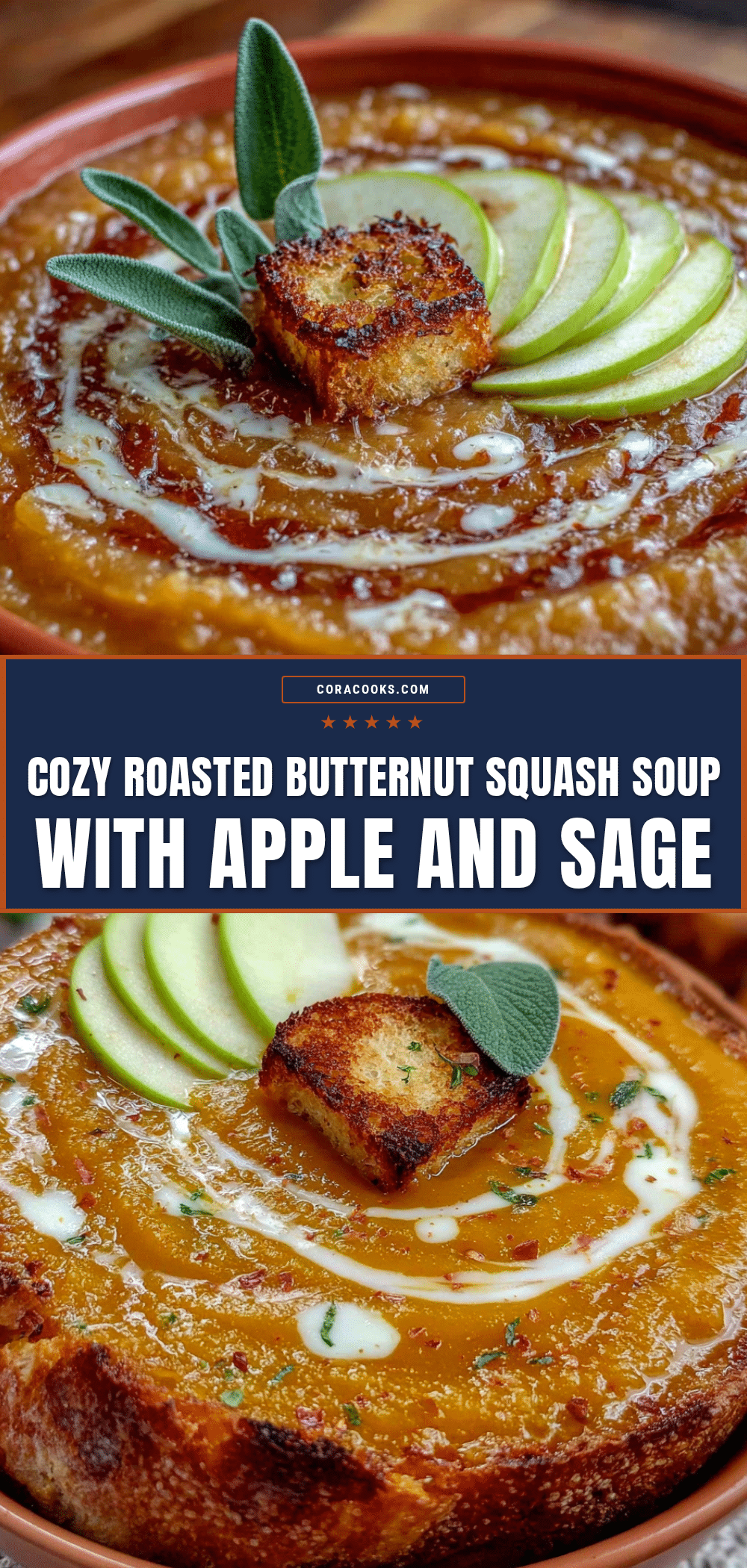
Easy Cozy Roasted Butternut Squash Soup with Apple and Sage

This creamy, dairy-free butternut squash soup gets its deep flavor from roasting the squash, apple, and sage together. It’s a quick and easy fall comfort food that’s perfect for weeknights or holiday gatherings.
- Prep Time: 15 minutes
- Cook Time: 30 minutes
- Total Time: 45 minutes
- Yield: 6 servings 1x
- Category: Soup
- Cuisine: American
Ingredients
- 1 medium butternut squash (about 2–3 pounds), peeled, seeded, and cubed into 1-inch pieces
- 1 large apple (Honeycrisp or Fuji), cored and cut into 1-inch chunks (peel on)
- 1 medium yellow onion, cut into large wedges
- 3 cloves garlic, skin on
- 2 tablespoons olive oil
- 1 teaspoon salt
- ½ teaspoon black pepper
- 4 cups vegetable broth
- 10–12 fresh sage leaves, plus more for garnish
- 1 tablespoon maple syrup or honey (optional)
- ½ cup canned full-fat coconut milk or heavy cream
- Salt and pepper to taste
- Optional toppings: toasted pumpkin seeds, drizzle of coconut milk, crispy sage leaves, pinch of red pepper flakes
Instructions
- Preheat oven to 400°F (200°C). Line a large baking sheet with parchment paper.
- On the prepared baking sheet, toss cubed butternut squash, apple chunks, onion wedges, and whole garlic cloves with olive oil, salt, and pepper. Spread in a single layer.
- Roast for 25 minutes, then add fresh sage leaves. Roast another 5-10 minutes until squash is fork-tender and edges are caramelized.
- Transfer roasted vegetables and sage to a large soup pot. Squeeze roasted garlic cloves out of their skins and add to pot.
- Pour in vegetable broth and bring to a simmer over medium heat. Cook for 10 minutes, stirring occasionally.
- Remove from heat. Use an immersion blender to blend until smooth. (If using a regular blender, work in batches, filling only halfway.)
- Stir in coconut milk (or heavy cream) and maple syrup, if using. Season with additional salt and pepper to taste.
- Serve hot, garnished with desired toppings.
Notes
For best flavor, don’t skip the roasting step. Add sage leaves in the last 5-10 minutes to prevent burning. Season in layers—before roasting and after blending. Soup can be made ahead and actually tastes better the next day. Freezes well for up to 3 months.
Nutrition
- Serving Size: 1 serving
- Calories: 180
- Sugar: 12
- Sodium: 600
- Fat: 8
- Saturated Fat: 3
- Carbohydrates: 28
- Fiber: 6
- Protein: 3
Keywords: butternut squash soup, roasted butternut squash soup, apple sage soup, fall soup, vegan soup, gluten-free soup, dairy-free soup