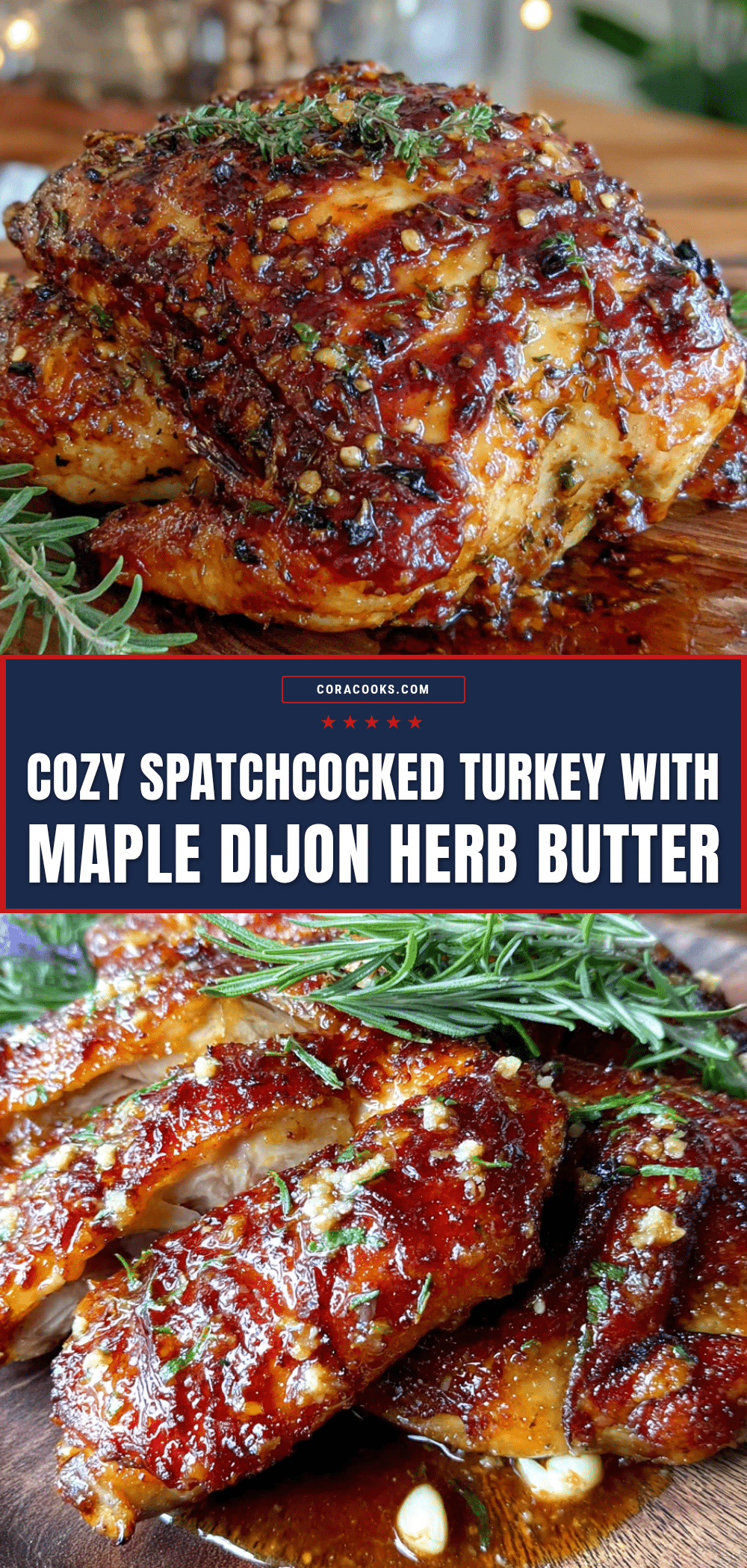
Love this? Save it for later!
Share the inspiration with your friends
My neighbor Dave asked why I couldn’t just rub the butter under the skin instead of going through the whole spatchcocking thing. I started to explain why that wouldn’t work — then stopped. I mean, I had been preaching the gospel of spatchcocking for years, telling everyone it was the only way to get crispy skin and juicy meat. But Dave just shrugged and said, “Seems like extra work when you could do the same thing with a good butter rub.”
Honestly, I almost laughed. Here was a guy who once asked me if “spatchcock” was a type of dance, trying to school me on turkey technique. But something made me pause. Maybe it was the way he was holding his coffee mug, completely unbothered by my culinary credentials. So I did something I rarely do — I shut my mouth and tried it his way first, just to prove him wrong.
Let me tell you, eating crow never tasted so good. Dave was right, and I was wrong. The spatchcocking wasn’t the secret — it was the butter. That maple dijon herb butter, when you really work it under the skin and all over the bird, does the heavy lifting. The spatchcocking just makes it cook faster and more evenly. You know that feeling when you’ve been doing something the hard way for years and someone casually shows you a better path? That was this recipe for me.
Three Thanksgivings later, I still make this cozy spatchcocked turkey with maple dijon herb butter, and I still think about Dave every time. The butter gets all melty and infuses the meat with this sweet-savory magic that makes your whole kitchen smell like a warm hug. It’s the kind of turkey that makes people close their eyes after the first bite. And honestly? It’s the recipe that taught me to listen more and lecture less — even in the kitchen.
Why You’ll Love This Recipe
This cozy spatchcocked turkey with maple dijon herb butter isn’t just another holiday bird. It’s the one that’ll make you the hero of your dinner table without spending all day in the kitchen. I’ve tested this recipe at least a dozen times across different ovens, turkey sizes, and even altitude levels — and it delivers every single time.
- Incredibly Juicy Meat: The butter gets massaged under the skin and into every nook and cranny, so the meat stays moist and flavorful. No dry white meat here!
- Cooks in Half the Time: Spatchcocking flattens the bird, so it roasts evenly and quickly. A 12-pound turkey is ready in about 75 minutes. That leaves your oven free for sides.
- Simple, Pantry-Friendly Ingredients: Maple syrup, dijon mustard, butter, and fresh herbs — you probably already have most of these in your fridge. No weird specialty items required.
- Crispy, Golden Skin: The butter and maple combo creates this caramelized, crackly skin that’s honestly the best part. I always fight my brother for the wings.
- Stress-Free for Hosts: Because it cooks faster and more evenly, you don’t have to babysit it. No tenting with foil, no basting every 20 minutes. Just pop it in and relax.
- Perfect for Cozy Gatherings: This isn’t just a Thanksgiving turkey — it’s perfect for a Sunday dinner, a holiday party, or even a special weeknight meal when you need some comfort food magic.
What makes this recipe different is the balance of flavors. The maple isn’t too sweet, the dijon isn’t too sharp, and the herbs — thyme, rosemary, and sage — feel like they were made for each other. It’s comfort food reimagined: faster, easier, but with the same soul-soothing satisfaction that makes you want to curl up on the couch afterward.
What Ingredients You Will Need
This recipe uses simple, wholesome ingredients to deliver big flavor without the fuss. Most of these are pantry staples or easy to find at any grocery store. I’ve tested a few different brands and combinations, and these are the ones that work best for that cozy, nostalgic flavor we’re after.
For the Maple Dijon Herb Butter
- Unsalted butter, 1 cup (2 sticks), softened — I prefer Kerrygold for its rich, creamy texture, but any good-quality unsalted butter works. Softening it to room temperature is key so it spreads easily under the skin.
- Pure maple syrup, 3 tablespoons — Not pancake syrup! Use the real stuff. Grade A dark amber has a deeper flavor that stands up to the herbs. I’ve tried Grade B and it’s even more intense if you can find it.
- Dijon mustard, 2 tablespoons — Grey Poupon is my go-to for its smooth, tangy kick. Avoid whole-grain mustard here; the smooth dijon blends better into the butter.
- Fresh thyme, 2 tablespoons, chopped — The leaves should be stripped from the stems and minced fine. Dried thyme won’t give you the same bright, aromatic punch.
- Fresh rosemary, 1 tablespoon, chopped — Go easy here; rosemary can be overpowering. Chop it very fine so you don’t get a mouthful of pine needles.
- Fresh sage, 1 tablespoon, chopped — This is the heart of the cozy flavor. Sage and turkey are a classic pairing for a reason — it’s earthy and slightly peppery.
- Garlic, 4 cloves, minced — Fresh garlic only. The jarred stuff has a metallic taste that’ll ruin the butter. I use a microplane to get it super fine so it melts into the butter.
- Salt, 1 teaspoon — Fine sea salt is best for even distribution. I use Diamond Crystal because it’s less salty by volume, so you can season generously.
- Black pepper, 1/2 teaspoon, freshly ground — Pre-ground pepper is fine in a pinch, but fresh cracks make a difference in the final flavor.
For the Turkey
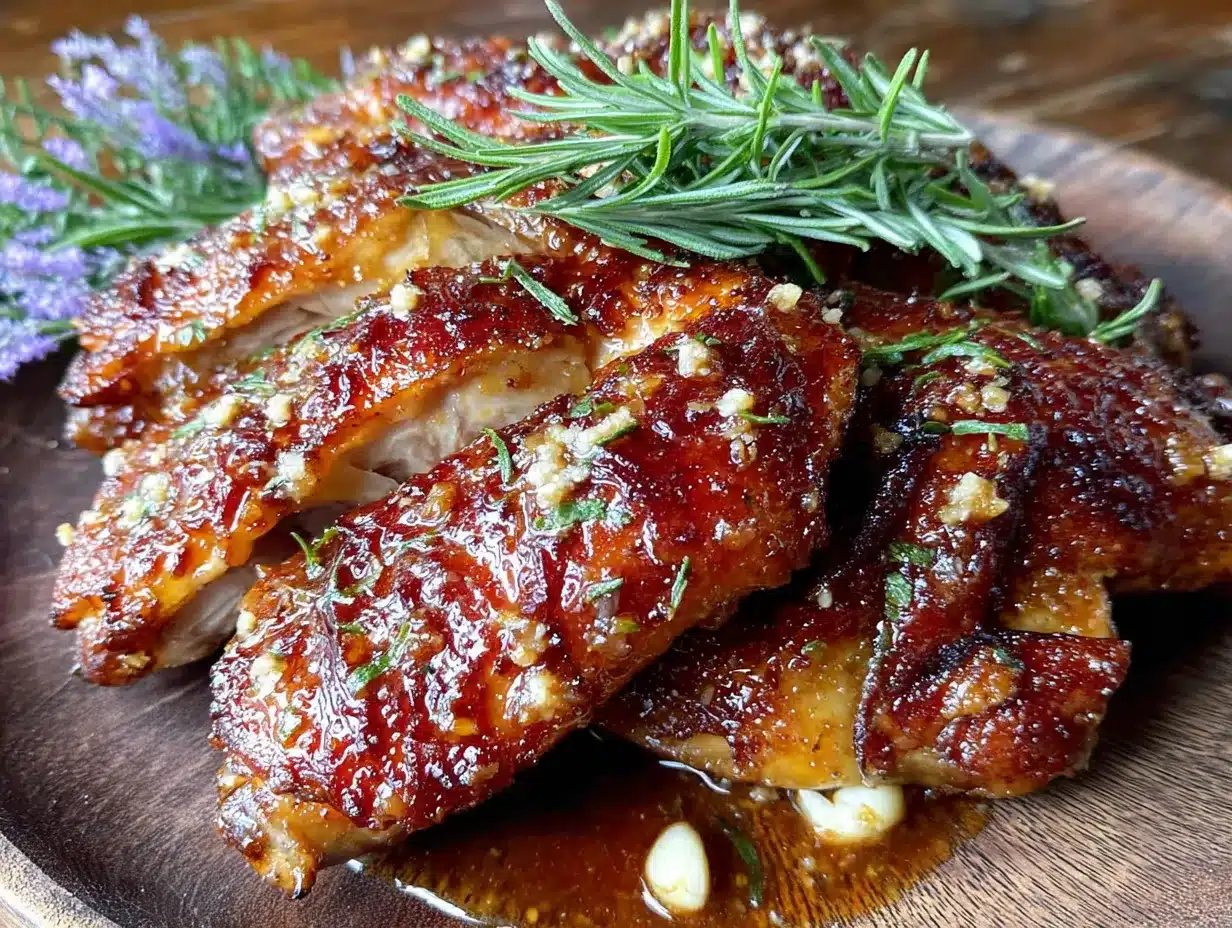
- 1 whole turkey, 10-14 pounds, thawed — I recommend a fresh turkey if possible, but frozen works beautifully too. Just make sure it’s fully thawed in the fridge for 3-4 days before cooking. I’ve used both Butterball and organic free-range turkeys, and both turn out great with this method.
- Salt, 2 teaspoons, for seasoning the cavity and skin — Don’t skip seasoning the inside of the bird. It adds flavor from the inside out.
- Black pepper, 1 teaspoon, freshly ground — A generous crack over the whole bird after buttering.
- Optional: 1 onion, quartered, and 2 celery stalks, cut into chunks — These go in the cavity for extra aroma. They’re not necessary, but they add a nice background flavor to the pan drippings.
Substitution Notes
If you’re dairy-free, you can substitute the butter with a high-quality vegan butter stick (like Miyoko’s) — just make sure it’s unsalted. For a lower-sugar option, reduce the maple syrup to 2 tablespoons; the dijon and herbs will still carry the flavor. Fresh herbs are non-negotiable here; dried herbs will burn and taste dusty.
Equipment Needed
You don’t need a ton of fancy equipment for this cozy spatchcocked turkey with maple dijon herb butter, but a few key tools make the job much easier. Here’s what I use:
- Sharp kitchen shears or poultry shears — This is the most important tool. You’ll be cutting through the backbone, so you need something sturdy. I use OXO Good Grips shears and they’ve lasted me years. If you don’t have shears, a sharp chef’s knife can work, but it’s trickier.
- Large rimmed baking sheet or roasting pan — A half-sheet pan (18×13 inches) is perfect. The rim catches any juices. I prefer a light-colored pan for even browning; dark pans can over-brown the bottom.
- Wire rack that fits inside the baking sheet — This lifts the turkey off the pan so air circulates underneath, making the skin crispy all over. I use a simple cooling rack that’s oven-safe.
- Instant-read thermometer — Don’t guess! A good thermometer takes the stress out of cooking turkey. I love my Thermapen, but any digital instant-read works. The breast should hit 155°F and the thigh 170°F before resting.
- Small bowl and fork — For mixing the butter. Nothing fancy needed.
- Kitchen twine (optional) — You can tie the legs together for a more traditional look, but it’s not necessary for spatchcocked turkey. I skip it most of the time.
- Paper towels — For drying the turkey skin thoroughly. This is crucial for crispy skin, so don’t skip it.
If you don’t have a wire rack, you can use crumpled foil strips to lift the turkey off the pan. It’s not as stable, but it works in a pinch. And if you’re buying shears for the first time, don’t go too cheap — a $10 pair will struggle with the backbone and make the job frustrating.
Preparation Method
This method might look long, but I promise it’s straightforward. I’ve broken it down into clear steps so you can follow along without any confusion. Let’s get that cozy spatchcocked turkey with maple dijon herb butter into the oven!
Step 1: Prep the Turkey (10 minutes)
Take your turkey out of the fridge about 30 minutes before you start. This takes the chill off and helps it cook more evenly. Remove the giblets and neck from the cavity — save them for stock if you’re making gravy later. Pat the turkey completely dry with paper towels, inside and out. This is the most important step for crispy skin, so really get in there. Don’t skip drying the cavity too.
Step 2: Spatchcock the Turkey (5 minutes)
Place the turkey breast-side down on your cutting board. Using your sharp shears, cut along one side of the backbone, from the tail end to the neck. Then cut along the other side to remove the backbone completely. Save it for stock! Flip the turkey over and press down firmly on the breastbone with the heels of your hands until you hear a crack. The turkey should lie flat. If it doesn’t press down easily, use more force — you won’t break anything important.
Step 3: Make the Maple Dijon Herb Butter (5 minutes)
In a small bowl, combine the softened butter, maple syrup, dijon mustard, chopped thyme, rosemary, sage, minced garlic, salt, and pepper. Mix with a fork until everything is well combined. Taste a tiny bit — it should be savory with a hint of sweetness. If it tastes flat, add another pinch of salt. This butter is the heart of the recipe, so don’t rush it.
Step 4: Apply the Butter (10 minutes)
Using your fingers, gently loosen the skin from the breast meat. Work your hand between the skin and meat, being careful not to tear the skin. You want to create a pocket. Take about half the butter and spread it directly onto the breast meat under the skin. Then rub the remaining butter all over the outside of the turkey — legs, thighs, wings, everything. Don’t forget the underside! Season the whole bird with the additional salt and pepper.
Step 5: Position the Turkey (2 minutes)
Place the wire rack on your baking sheet. Set the spatchcocked turkey on the rack, breast-side up, and tuck the wing tips under the shoulders to prevent burning. If you’re using the onion and celery, stuff them into the cavity now. They won’t flavor the meat much, but they’ll perfume the pan drippings.
Step 6: Roast the Turkey (60-90 minutes)
Preheat your oven to 425°F. Roast the turkey for about 12-14 minutes per pound. For a 12-pound turkey, that’s roughly 75 minutes. Start checking the temperature at the 60-minute mark. Insert your thermometer into the thickest part of the breast — it should read 155°F. For the thigh, aim for 170°F. The skin should be deep golden brown and crispy. If it’s browning too fast, tent loosely with foil for the last 15 minutes.
Step 7: Rest and Serve (20 minutes)
Remove the turkey from the oven and let it rest on the rack for at least 20 minutes before carving. This is non-negotiable — the juices need time to redistribute. Don’t cover it with foil or the skin will get soggy. The temperature will continue to rise about 5-10°F during resting, so your breast will hit 165°F perfectly. Carve and serve with the pan drippings spooned over the top.
Pro tip from my first failed attempt: I once forgot to dry the skin properly and ended up with pale, rubbery skin. It was edible but sad. Now I pat it dry twice — once after rinsing and once right before buttering. Makes all the difference.
Cooking Tips & Techniques
I’ve made this cozy spatchcocked turkey with maple dijon herb butter enough times to know where things can go wrong. Here are the lessons I learned the hard way, so you don’t have to.
The Biggest Mistake: Not Drying the Skin
I cannot stress this enough. Wet skin steams instead of roasts, and you’ll never get that golden crackle. Pat it dry with paper towels, then let it sit uncovered in the fridge for an hour if you have time. That extra drying time is a game-changer.
Butter Temperature Matters
Your butter needs to be truly softened — not melted, but squishy. If it’s too cold, it won’t spread under the skin evenly. If it’s melted, it’ll just run off. Leave it on the counter for an hour before you start. I’ve microwaved it in a pinch (5 seconds at a time), but it’s not the same.
Don’t Overcrowd the Pan
Use a big enough baking sheet. The turkey needs space around it for hot air to circulate. If it’s hanging off the edges or touching the sides of the pan, those spots won’t brown. I use a 18×13 inch sheet and it’s perfect for a 12-pounder.
Use a Thermometer, Not a Timer
Ovens vary wildly. My old oven ran 25°F hot, and I ruined two turkeys before I figured it out. An instant-read thermometer takes the guesswork out. Start checking early and trust the numbers, not the clock.
Let It Rest — Seriously
I know you’re hungry. I know everyone is hovering. But if you carve too soon, all those beautiful juices run out onto the cutting board instead of staying in the meat. Set a timer for 20 minutes and walk away. Your patience will be rewarded.
My Biggest Failure
The first time I made this, I was so excited that I forgot to take the butter out of the fridge. I ended up trying to spread cold butter under the skin and it just ripped everything. The skin tore in three places, and the butter sat in clumps instead of melting evenly. It still tasted okay, but it looked like a crime scene. Now I always set a reminder to soften the butter first thing in the morning.
Variations & Adaptations
This cozy spatchcocked turkey with maple dijon herb butter is pretty perfect as-is, but I’ve played around with a few variations over the years. Here are some of my favorites, depending on your mood or dietary needs.
Maple Bourbon Herb Butter
Swap 1 tablespoon of the maple syrup for 1 tablespoon of bourbon. The alcohol cooks off, but it leaves this warm, smoky depth that’s incredible with the herbs. I tried this one Christmas when I ran out of maple syrup and had a bottle of Maker’s Mark sitting nearby. It was a happy accident.
Spicy Chipotle Variation
Add 1 minced chipotle pepper in adobo sauce to the butter. The smoky heat cuts through the sweetness and adds a whole new layer of flavor. My brother-in-law, who claims turkey is boring, asked for thirds when I made this version. Just go easy — one chipotle is plenty for most palates.
Dairy-Free Version
Use 1 cup of vegan butter (I like Miyoko’s) and make sure your dijon mustard is dairy-free. The texture is slightly less rich, but the flavor is still fantastic. I’ve served this to dairy-sensitive guests and they couldn’t tell the difference. Just don’t skimp on the herbs.
Herb Substitutions
If you don’t have fresh sage, use 1 teaspoon of dried rubbed sage. If you’re out of fresh thyme, 1 teaspoon of dried thyme works. But honestly, fresh herbs make such a difference here that I’d rather you make a quick trip to the store than use dried. The rosemary is the one herb I wouldn’t substitute — dried rosemary is like chewing on twigs.
Grilling Method
You can absolutely cook this turkey on a grill! Set up your grill for indirect heat at 375°F. Place the spatchcocked turkey on the cooler side and cook with the lid closed for about the same time as oven roasting. You’ll get a subtle smokiness that pairs beautifully with the maple and dijon. I’ve done this for summer gatherings and it’s always a hit.
Serving & Storage Suggestions
This cozy spatchcocked turkey with maple dijon herb butter is the star of the show, but it plays well with others. Here’s how I like to serve and store it.
Serving Temperature and Presentation
Serve the turkey warm, not piping hot. Let it rest for the full 20 minutes, then carve and arrange on a platter. Spoon a little of the pan juices over the top for extra moisture and shine. I like to garnish with fresh sprigs of thyme and rosemary for that rustic, cozy look. A sprinkle of flaky sea salt right before serving adds a nice crunch.
What to Serve With It
This turkey pairs beautifully with classic sides. Mashed potatoes are a must — the pan drippings make an incredible gravy. Roasted Brussels sprouts with balsamic glaze cut through the richness. A simple green salad with a lemon vinaigrette adds brightness. For bread, a warm crusty sourdough is perfect for sopping up juices. And don’t forget a glass of dry Riesling or a crisp apple cider — both complement the maple flavor beautifully.
Storage Instructions
Leftover turkey should be cooled completely (within 2 hours of cooking) and stored in an airtight container in the refrigerator. It keeps for 3-4 days. For longer storage, slice or shred the meat and freeze it in freezer-safe bags for up to 3 months. Pro tip: portion it out so you can grab exactly what you need for sandwiches or soups.
Reheating Methods
The best way to reheat turkey without drying it out is in a low oven. Place slices in a baking dish, add a splash of chicken broth or turkey stock, cover with foil, and warm at 300°F for about 15 minutes. For individual portions, the microwave works in a pinch — just cover with a damp paper towel to add moisture. Avoid high heat, which turns the meat tough and rubbery.
Flavor Development Over Time
Honestly, leftover turkey often tastes better the next day. The herbs and maple flavor have more time to meld, and the meat seems even more tender. I love making turkey salad sandwiches with the leftovers — just mix shredded turkey with a little mayo, diced celery, and a splash of the leftover pan juices. It’s almost better than the main event.
Nutritional Information & Benefits
This cozy spatchcocked turkey with maple dijon herb butter is a celebration dish, but it’s not as indulgent as you might think. Here’s a rough breakdown per serving (based on a 12-pound turkey serving 10 people, with skin).
| Nutrient | Amount Per Serving |
|---|---|
| Calories | 485 |
| Protein | 52g |
| Fat | 26g |
| Saturated Fat | 12g |
| Carbohydrates | 8g |
| Fiber | 0g |
| Sugar | 6g |
| Sodium | 620mg |
Health Benefits of Key Ingredients
Turkey is an excellent source of lean protein, which supports muscle health and keeps you full. It’s also rich in B vitamins, particularly B6 and B12, which help with energy metabolism. The fresh herbs in this recipe — thyme, rosemary, and sage — are packed with antioxidants and have anti-inflammatory properties. Maple syrup, while still sugar, contains trace minerals like zinc and manganese. And garlic is known for its immune-boosting properties. So while this isn’t a health food, it’s certainly not junk either.
Dietary Considerations
This recipe is naturally gluten-free and nut-free. For a lower-carb option, reduce the maple syrup to 1 tablespoon. For a lower-sodium version, use unsalted butter and skip the extra salt on the skin — the herbs and dijon provide plenty of flavor. As written, this recipe contains dairy (butter) and possible sulfites (in the dijon mustard).
Conclusion
This cozy spatchcocked turkey with maple dijon herb butter has become a staple in my kitchen, and I think it deserves a spot in yours too. It’s the recipe that taught me to question my own assumptions and to listen when someone suggests a different path. The flavors are warm and nostalgic — like a hug in food form — but the technique is modern and efficient. It’s the best of both worlds.
I love that this recipe brings people together. Whether it’s for Thanksgiving, a holiday dinner, or just a Sunday when you need something special, this turkey delivers. The crispy skin, the juicy meat, the way the maple and dijon play off each other — it’s pure comfort. And honestly, it’s not that hard. If I can do it, you can do it.
So here’s my challenge to you: try this recipe. Make it your own. Swap in your favorite herbs, adjust the sweetness, or throw it on the grill. And then come back and tell me how it went. I’d love to hear about your kitchen victories — and your failures too. We all learn from each other, after all. Happy cooking, friends!
Frequently Asked Questions
Can I use a frozen turkey for this recipe?
Yes, but it must be fully thawed before cooking. Thaw it in the refrigerator for 3-4 days (about 24 hours per 4-5 pounds). Never thaw a turkey on the counter — that’s a food safety risk. Once thawed, pat it dry and proceed with the recipe as written.
Do I have to spatchcock the turkey? Can I leave it whole?
You can leave it whole, but you’ll need to adjust the cooking time significantly. A whole turkey at 425°F will take about 13-15 minutes per pound, and the dark meat may be done before the breast. Spatchcocking ensures even cooking and crispy skin. If you skip it, I recommend lowering the oven to 375°F and cooking longer.
How do I make gravy from the pan drippings?
After the turkey rests, pour the pan drippings into a fat separator or a glass measuring cup. Let the fat rise to the top, then skim it off. In a saucepan, melt 3 tablespoons of butter and whisk in 3 tablespoons of flour. Cook for 1 minute, then slowly whisk in the defatted drippings plus enough chicken broth to make 2 cups total. Simmer until thickened, about 5 minutes. Season with salt and pepper.
Can I prepare the herb butter ahead of time?
Absolutely! The maple dijon herb butter can be made up to 3 days in advance. Store it covered in the refrigerator, but let it come to room temperature for about 30 minutes before using so it spreads easily. You can also freeze the butter for up to 3 months — just thaw it in the fridge overnight.
What size turkey should I buy for this recipe?
I recommend a turkey between 10 and 14 pounds for spatchcocking. Anything smaller than 10 pounds might not be worth the effort, and anything over 14 pounds can be tricky to fit on a standard baking sheet and may cook unevenly. For larger gatherings, I’d rather make two smaller turkeys than one giant one.
Pin This Recipe!