Love this? Save it for later!
Share the inspiration with your friends
This was supposed to be a light fish stew—something brothy and bright, the kind of thing you eat when you’re pretending winter isn’t coming. I had the cod thawing on the counter, a lemon waiting to be squeezed, and a vague plan that felt virtuous and sensible. But then Tuesday happened. The kind of Tuesday where the wind rattles the windows, the radiator makes that clanking sound that means it’s giving up, and all I wanted was something that felt like a hug in a bowl. I grabbed the wrong carton from the fridge—heavy cream instead of the light cream I’d meant to use—and by the time I noticed, it was too late to start over. I just stood there, staring at the mistake, already annoyed at myself.
Honestly, I almost poured it down the sink. But the cod was already in the pot, the potatoes were softening, and I figured, well, let’s see what happens. What happened was this thick, velvety, ridiculously comforting chowder that made me forget all about the virtuous fish stew I’d planned. The cream turned everything silky, the potatoes broke down just enough to thicken the broth, and the clams—I’d thrown in a couple of cans at the last minute because why not—gave it this briny, savory depth that felt like the coast in winter. I stood at the stove, tasting it, and honestly, I couldn’t believe it came out of my kitchen.
That’s the thing about this cozy homemade New England clam chowder. It started as a mistake—a distracted moment, a wrong ingredient, a Tuesday that got the better of me. But now it’s the recipe I turn to when I need something that feels like coming home. Maybe you’ve been there, standing in your kitchen, convinced you’ve ruined dinner, only to discover you’ve accidentally made something better. That’s this chowder. It’s the happy accident that stuck around.
Why You’ll Love This Recipe
Let me tell you why this chowder has earned a permanent spot in my winter rotation. I’ve tested this recipe more times than I care to admit—tweaking the cream-to-broth ratio, experimenting with different potato varieties, even trying it with fresh clams (spoiler: canned works beautifully and saves so much time). What I landed on is the version that delivers maximum comfort with minimum fuss.
- Quick & Easy : Comes together in about 45 minutes, start to finish. Perfect for those nights when you need something cozy but don’t have hours to spend in the kitchen.
- Simple Ingredients : No fancy seafood markets required. Canned clams, bacon or salt pork, potatoes, onions, cream—all pantry staples you can grab on a regular grocery run.
- Perfect for Cozy Nights : This is the chowder you want when the weather turns cold, the wind is howling, and all you want is something warm and satisfying. It’s pure comfort in a bowl.
- Crowd-Pleaser : I’ve served this at family gatherings, casual dinner parties, and even a Super Bowl party. It disappears every single time. Kids love it, adults love it, seafood skeptics convert.
- Unbelievably Delicious : The texture is everything—creamy but not heavy, rich but not greasy, with those tender chunks of potato and briny clams in every spoonful. It’s the kind of chowder that makes you close your eyes after the first bite.
What makes this chowder different from the dozens of other recipes out there? It’s the technique. I cook the bacon until it’s just crispy, then use that rendered fat to sauté the aromatics—it builds a flavor foundation that you just can’t get any other way. And that “mistake” with the heavy cream? It’s now intentional. The higher fat content gives the chowder a luxurious mouthfeel that lighter versions just can’t match. This isn’t just another clam chowder recipe—it’s the one you’ll come back to again and again.
What Ingredients You Will Need
This cozy homemade New England clam chowder uses simple, honest ingredients that work together to create something truly special. Most of these are pantry staples, and the few fresh items are easy to find at any grocery store. Here’s what you’ll need:
For the Chowder Base
- 6 slices bacon or 4 ounces salt pork, diced (the bacon adds a smoky depth that salt pork doesn’t quite match, but either works beautifully)
- 1 medium yellow onion, diced (about 1 cup) (sweet onions work too, but yellow onions give the best savory backbone)
- 2 celery ribs, diced (about ½ cup) (don’t skip this—celery adds that subtle freshness that balances the richness)
- 3 cloves garlic, minced (fresh garlic only, please—the jarred stuff just doesn’t have the same punch)
- ¼ cup all-purpose flour (this thickens the chowder without making it pasty; for gluten-free, use a 1:1 gluten-free flour blend)
For the Broth & Cream
- 3 cups clam juice (I recommend Bar Harbor or King Oscar brands—they have the best briny flavor without being too salty)
- 2 cups heavy cream (yes, heavy cream—this is what makes the chowder so luxuriously thick and velvety)
- 1 cup whole milk (helps thin the cream slightly without sacrificing richness; you can use 2% if that’s what you have)
For the Clams & Vegetables
- 4 medium Yukon Gold potatoes, peeled and diced into ½-inch cubes (about 3 cups) (Yukon Golds hold their shape better than Russets and have a naturally buttery flavor)
- 3 cans (6.5 ounces each) chopped clams, drained with juice reserved (look for clams packed in their own juice, not water—more flavor that way)
- 1 bay leaf (remove before serving—it adds an earthy depth that you don’t notice until it’s missing)
- 1 teaspoon fresh thyme leaves (or ½ teaspoon dried thyme) (fresh is better here, but dried works in a pinch)
- Salt and freshly ground black pepper to taste (go easy on the salt—the bacon and clam juice are already salty)
For Garnish
- Fresh parsley, chopped (for color and a fresh finish)
- Oyster crackers or crusty bread (for serving; I’m partial to a good sourdough for dipping)
Substitution Guidance: If you want to make this dairy-free, you can substitute the heavy cream with full-fat coconut cream and the milk with unsweetened almond milk. The flavor will be slightly different—more tropical—but still delicious. For a lighter version, use half-and-half instead of heavy cream, though the chowder won’t be quite as thick. And if you can’t find clam juice, you can use bottled clam juice from the seafood section or even fish stock in a pinch.
Equipment Needed
You don’t need a fancy kitchen to make this chowder. Here’s what you’ll need:
- Large heavy-bottomed pot or Dutch oven (5-6 quart capacity is ideal—I use my Le Creuset, but any heavy pot works; the key is even heat distribution to prevent scorching)
- Sharp chef’s knife (for dicing the bacon, onion, celery, and potatoes—a dull knife makes everything harder and more dangerous)
- Cutting board (preferably a large wooden or plastic one)
- Wooden spoon or silicone spatula (for stirring; metal can scratch your pot)
- Measuring cups and spoons (for accurate measurements, especially the flour and cream)
- Colander (for draining the canned clams and rinsing the potatoes)
- Ladle (for serving; a 4-ounce ladle is perfect for portioning)
- Mixing bowl (small, for holding the drained clams)
Budget-Friendly Options: If you don’t have a Dutch oven, a large stainless steel stockpot works just fine—just keep the heat on medium-low to avoid burning the bottom. And if you don’t have a ladle, a large measuring cup with a spout works surprisingly well for serving.
Preparation Method
Making this cozy homemade New England clam chowder is straightforward, but a few key steps make all the difference. Follow these carefully, and you’ll have a pot of chowder that rivals any New England seafood shack.
- Cook the bacon. Place the diced bacon in your cold Dutch oven and set it over medium heat. Cook, stirring occasionally, until the bacon is crispy and the fat is rendered, about 6-8 minutes. Use a slotted spoon to transfer the bacon to a paper towel-lined plate, leaving the rendered fat in the pot. (Don’t drain the fat—this is where all the flavor lives.)
- Sauté the aromatics. Add the diced onion and celery to the pot with the bacon fat. Cook over medium heat, stirring occasionally, until the vegetables are softened and translucent, about 5 minutes. The onions should be fragrant but not browned. Add the minced garlic and cook for another 30 seconds until fragrant. (Watch the garlic carefully—it burns quickly and turns bitter.)
- Make the roux. Sprinkle the flour over the sautéed vegetables and stir constantly with a wooden spoon for 1-2 minutes. This cooks the raw flour taste out and helps thicken the chowder. The mixture should look like a thick paste clinging to the vegetables. (If it looks dry, that’s okay—the liquid will fix it.)
- Add the liquids gradually. Slowly pour in the clam juice while stirring constantly. The mixture will thicken immediately—keep stirring to prevent lumps. Once the clam juice is fully incorporated, add the heavy cream and milk, continuing to stir. The base should be smooth and slightly thick at this point.
- Add the potatoes and seasonings. Stir in the diced potatoes, bay leaf, and fresh thyme. Bring the chowder to a gentle simmer—not a rolling boil, just a few lazy bubbles breaking the surface. Reduce the heat to medium-low and let it cook, uncovered, for 15-20 minutes, stirring occasionally. The potatoes should be tender when pierced with a fork but not falling apart. (Check them at 15 minutes—cooking time varies based on potato size.)
- Add the clams. Once the potatoes are tender, stir in the drained chopped clams. Let them heat through for 2-3 minutes—they’re already cooked, so you’re just warming them up. Overcooking clams makes them rubbery, so don’t let them simmer for more than a few minutes.
- Season and finish. Remove the bay leaf and discard it. Taste the chowder and season with salt and pepper. Remember that the bacon and clam juice are already salty, so start with a small pinch of salt and add more if needed. The chowder should be creamy, savory, and well-balanced.
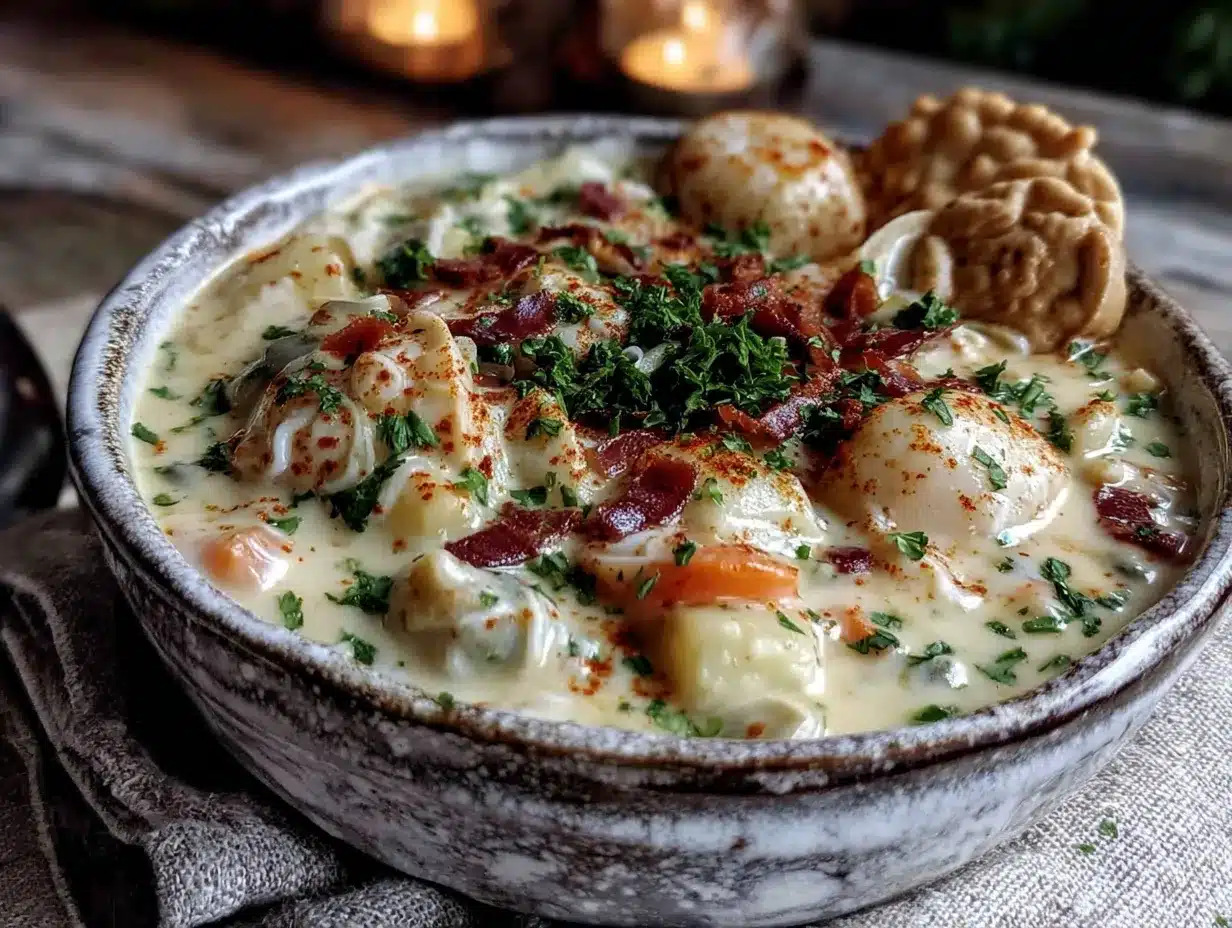
- Rest and serve. Let the chowder sit off the heat for 5-10 minutes before serving. This allows the flavors to meld and the texture to settle. Ladle into bowls, garnish with the reserved crispy bacon and fresh parsley, and serve with oyster crackers or crusty bread.
Pro Tip: The chowder will thicken as it sits. If you’re making it ahead of time, add a splash of milk or clam juice when reheating to bring it back to the right consistency.
Cooking Tips & Techniques
Over the years, I’ve learned a few things about making clam chowder—mostly through trial and error. Here are the tips that saved me from disaster more than once.
Don’t rush the roux. I know it’s tempting to just dump the flour in and add liquid immediately, but cooking the flour for a full minute or two is crucial. It removes that raw, pasty taste and ensures your chowder is smooth, not lumpy. I learned this the hard way when my first batch tasted like wallpaper paste.
Keep the heat gentle. Clam chowder is not a soup you can boil aggressively. High heat can cause the dairy to curdle and the potatoes to break apart into mush. Keep the chowder at a gentle simmer—just a few bubbles breaking the surface—and stir occasionally to prevent the bottom from scorching.
Add the clams at the very end. This is non-negotiable. Canned clams are already cooked, so they only need a few minutes to heat through. If you add them too early, they’ll become tough and rubbery. I’ve made this mistake more times than I care to admit, and the result is always disappointing.
Season strategically. Bacon, clam juice, and canned clams all contain salt. It’s easy to over-salt your chowder if you’re not careful. Season lightly at the beginning and save the final adjustment for the end, after all the ingredients have had a chance to contribute their natural saltiness.
Let it rest before serving. I know it’s hard to wait when the chowder smells this good, but letting it sit off the heat for 5-10 minutes makes a real difference. The flavors meld together, the texture settles, and the chowder becomes more cohesive. It’s worth the wait, I promise.
Variations & Adaptations
One of the best things about this chowder is how adaptable it is. Here are a few ways I’ve tweaked it over the years:
Seafood Lover’s Chowder: Add ½ pound of raw shrimp (peeled and deveined) and ½ pound of cod or haddock, cut into bite-sized chunks, along with the clams. Cook just until the seafood is opaque and cooked through, about 3-4 minutes. It turns a simple chowder into a luxurious seafood feast.
Smoky Bacon Variation: Use thick-cut, applewood-smoked bacon instead of regular bacon. The smokiness infuses the entire chowder and adds a deeper, more complex flavor. I tried this on a whim one rainy Sunday and haven’t gone back since.
Lighter Version: Substitute the heavy cream with half-and-half and the whole milk with 2% milk. The chowder will be thinner and less rich, but still satisfying. You can also add an extra tablespoon of flour to help thicken it slightly.
Herb Garden Twist: Add a tablespoon of fresh dill or tarragon along with the thyme. Dill pairs beautifully with seafood, and tarragon adds a subtle anise-like flavor that’s surprisingly good in chowder. I discovered this combo when I had leftover herbs from another recipe.
Slow Cooker Method: Cook the bacon and sauté the aromatics on the stovetop first, then transfer everything except the clams and cream to a slow cooker. Cook on low for 4-6 hours or high for 2-3 hours. Stir in the cream and clams in the last 15 minutes. It’s perfect for busy days when you want dinner ready when you walk in the door.
Serving & Storage Suggestions
This chowder is at its best served piping hot in deep bowls, garnished with crispy bacon and fresh parsley. I like to serve it with a side of crusty sourdough bread for dipping—the tangy bread is a perfect counterpoint to the rich, creamy chowder. Oyster crackers are the classic choice, and they add a nice salty crunch.
For a complete meal, pair this chowder with a simple green salad dressed with a light vinaigrette. The acidity of the dressing cuts through the richness of the chowder beautifully. A crisp white wine like Sauvignon Blanc or a light lager beer also makes an excellent accompaniment.
Storage: Leftover chowder keeps well in an airtight container in the refrigerator for up to 3 days. The flavors actually deepen and meld overnight, making it even better the next day. However, the chowder will thicken significantly as it sits, so don’t be alarmed.
Reheating: Reheat the chowder gently over medium-low heat, stirring frequently. Add a splash of milk, cream, or clam juice to thin it to your desired consistency. Avoid boiling, which can cause the dairy to separate. If you’re in a hurry, you can reheat individual portions in the microwave, but stovetop reheating gives better results.
Freezing: I don’t recommend freezing this chowder. The dairy can separate and become grainy when thawed, and the potatoes develop an unpleasant texture. If you must freeze it, do so before adding the cream and clams, then add those fresh when reheating.
Nutritional Information & Benefits
While this chowder is undeniably indulgent, it does offer some nutritional benefits. Here’s an approximate breakdown per serving (based on 6 servings):
| Nutrient | Amount per Serving |
|---|---|
| Calories | 420 |
| Total Fat | 28g |
| Saturated Fat | 15g |
| Cholesterol | 95mg |
| Sodium | 780mg |
| Total Carbohydrates | 28g |
| Dietary Fiber | 3g |
| Sugars | 4g |
| Protein | 16g |
Clams are an excellent source of lean protein, iron, and vitamin B12. They’re also rich in omega-3 fatty acids, which support heart and brain health. Potatoes provide potassium and vitamin C, while the dairy offers calcium and vitamin D. The bacon adds flavor and a small amount of protein, though it’s also the primary source of saturated fat and sodium in this dish.
Dietary Considerations: This recipe contains dairy and gluten. For a gluten-free version, use a 1:1 gluten-free flour blend. For a dairy-free version, substitute full-fat coconut cream and unsweetened almond milk, though the flavor profile will change. This chowder is not suitable for low-fat or low-sodium diets without significant modifications.
Conclusion
This cozy homemade New England clam chowder started as a mistake—a wrong carton of cream on a cold Tuesday that turned into something I now make on purpose. It’s the recipe I turn to when I need comfort, when the weather turns gray, when I want to fill my kitchen with something that smells like home. The creamy broth, the tender potatoes, the briny clams, the smoky bacon—every spoonful is a reminder that sometimes the best things come from happy accidents.
I hope you’ll make this chowder your own. Add extra clams if you love them, swap in different herbs, or experiment with the variations I’ve shared. The beauty of this recipe is how forgiving it is—it wants to be delicious, and it will be, no matter how you tweak it. I’d love to hear how it turns out for you. Drop a comment below and let me know if this chowder made your Tuesday a little cozier.
Now go grab that heavy cream—you know what to do with it.
Frequently Asked Questions
Can I use fresh clams instead of canned?
Absolutely! Steam 2-3 pounds of fresh littleneck or cherrystone clams in a cup of water or white wine until they open, about 5-7 minutes. Strain the steaming liquid through a fine-mesh sieve and use it as part of your clam juice. Chop the clam meat and add it at the end, just like the canned version. The flavor is even better, but it does require more prep work.
Why did my chowder turn out thin?
Several things could cause thin chowder. The most common culprit is not cooking the roux long enough—the flour needs a full minute to cook and activate its thickening power. Another possibility is that the chowder wasn’t simmered long enough for the potatoes to release their starch. Let it simmer gently for the full 20 minutes, and it should thicken nicely.
Can I make this chowder in advance for a party?
Yes, and it actually tastes better the next day! Make the chowder completely, let it cool, and refrigerate it in an airtight container. When you’re ready to serve, reheat it gently over medium-low heat, adding a splash of milk or clam juice to thin it to the right consistency. The flavors will have melded beautifully overnight.
How can I make this chowder thicker?
If you prefer an extra-thick chowder, mash some of the cooked potatoes against the side of the pot with a wooden spoon before adding the clams. This releases their starch and naturally thickens the broth. You can also mix 1 tablespoon of cornstarch with 2 tablespoons of cold water and stir it in at the end, letting it simmer for a minute to activate.
Is this chowder gluten-free?
As written, no—it uses all-purpose flour as a thickener. However, you can easily make it gluten-free by substituting the flour with a 1:1 gluten-free all-purpose flour blend or using 2 tablespoons of cornstarch mixed with 2 tablespoons of cold water (slurry) added at the end. Make sure your clam juice and bacon are also certified gluten-free if needed.
Pin This Recipe!
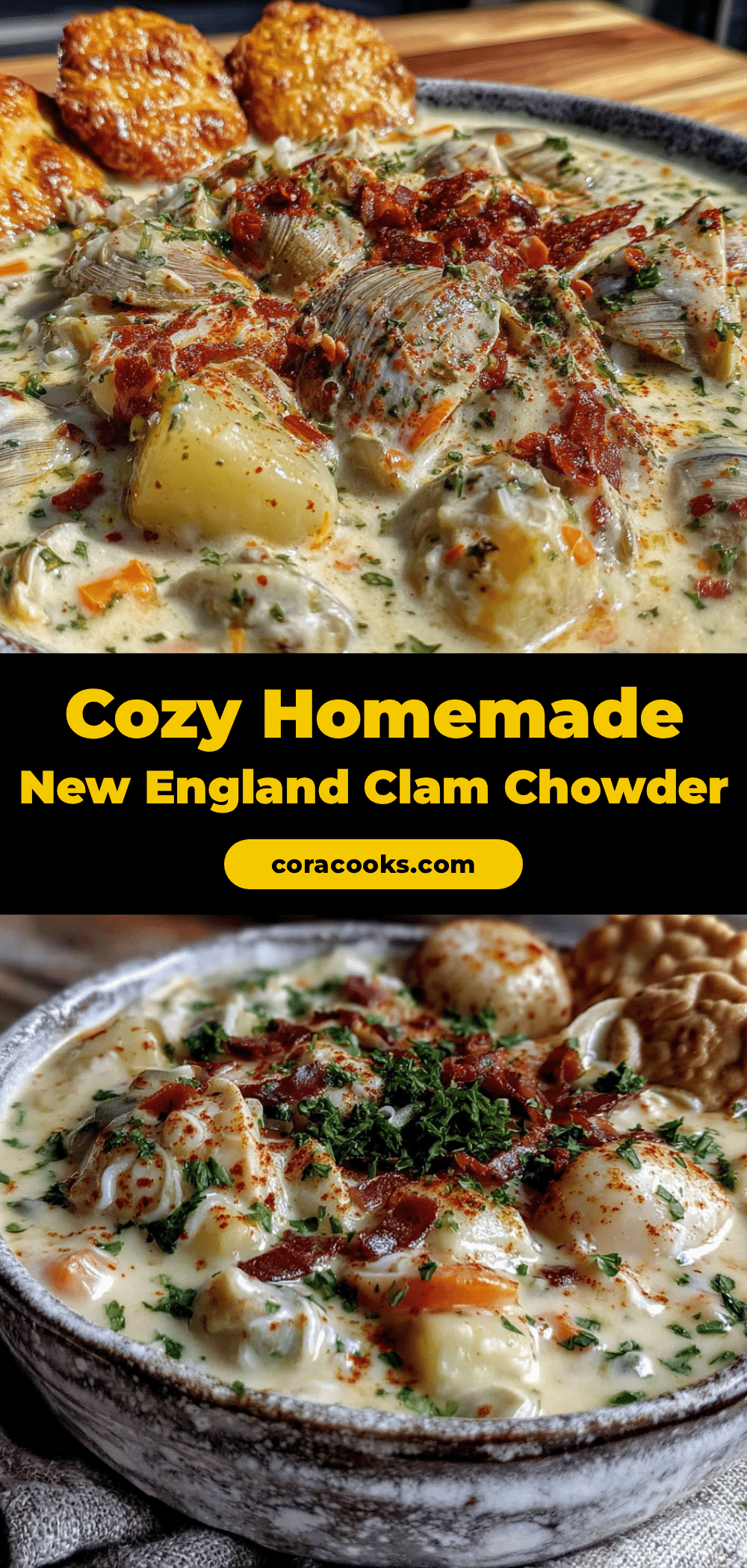
Cozy Homemade New England Clam Chowder (Best Comfort Food)

This creamy, velvety New England clam chowder started as a happy accident and became the ultimate comfort food. Made with simple ingredients like canned clams, bacon, potatoes, and heavy cream, it comes together in about 45 minutes for a cozy, crowd-pleasing meal.
- Prep Time: 15 minutes
- Cook Time: 30 minutes
- Total Time: 45 minutes
- Yield: 6 servings 1x
- Category: Main Course
- Cuisine: American
Ingredients
- 6 slices bacon or 4 ounces salt pork, diced
- 1 medium yellow onion, diced (about 1 cup)
- 2 celery ribs, diced (about ½ cup)
- 3 cloves garlic, minced
- ¼ cup all-purpose flour
- 3 cups clam juice
- 2 cups heavy cream
- 1 cup whole milk
- 4 medium Yukon Gold potatoes, peeled and diced into ½-inch cubes (about 3 cups)
- 3 cans (6.5 ounces each) chopped clams, drained with juice reserved
- 1 bay leaf
- 1 teaspoon fresh thyme leaves (or ½ teaspoon dried thyme)
- Salt and freshly ground black pepper to taste
- Fresh parsley, chopped (for garnish)
- Oyster crackers or crusty bread (for serving)
Instructions
- Cook the bacon. Place the diced bacon in your cold Dutch oven and set it over medium heat. Cook, stirring occasionally, until the bacon is crispy and the fat is rendered, about 6-8 minutes. Use a slotted spoon to transfer the bacon to a paper towel-lined plate, leaving the rendered fat in the pot.
- Sauté the aromatics. Add the diced onion and celery to the pot with the bacon fat. Cook over medium heat, stirring occasionally, until the vegetables are softened and translucent, about 5 minutes. Add the minced garlic and cook for another 30 seconds until fragrant.
- Make the roux. Sprinkle the flour over the sautéed vegetables and stir constantly with a wooden spoon for 1-2 minutes. The mixture should look like a thick paste clinging to the vegetables.
- Add the liquids gradually. Slowly pour in the clam juice while stirring constantly. Once the clam juice is fully incorporated, add the heavy cream and milk, continuing to stir. The base should be smooth and slightly thick.
- Add the potatoes and seasonings. Stir in the diced potatoes, bay leaf, and fresh thyme. Bring the chowder to a gentle simmer. Reduce the heat to medium-low and let it cook, uncovered, for 15-20 minutes, stirring occasionally, until the potatoes are tender.
- Add the clams. Once the potatoes are tender, stir in the drained chopped clams. Let them heat through for 2-3 minutes.
- Season and finish. Remove the bay leaf and discard it. Taste the chowder and season with salt and pepper.
- Rest and serve. Let the chowder sit off the heat for 5-10 minutes before serving. Ladle into bowls, garnish with the reserved crispy bacon and fresh parsley, and serve with oyster crackers or crusty bread.
Notes
The chowder will thicken as it sits. If making ahead, add a splash of milk or clam juice when reheating. For a gluten-free version, use a 1:1 gluten-free flour blend. For a dairy-free version, substitute full-fat coconut cream and unsweetened almond milk. Do not freeze this chowder as the dairy can separate.
Nutrition
- Serving Size: 1 bowl (about 1.5 cu
- Calories: 420
- Sugar: 4
- Sodium: 780
- Fat: 28
- Saturated Fat: 15
- Carbohydrates: 28
- Fiber: 3
- Protein: 16
Keywords: New England clam chowder, clam chowder, chowder, comfort food, seafood soup, creamy soup, winter soup, bacon, potatoes, clams