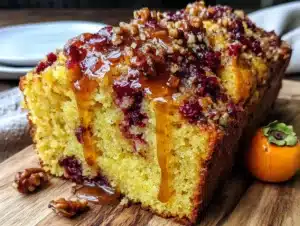
Love this? Save it for later!
Share the inspiration with your friends
It was the third Tuesday of November, and I was staring at a box of Hachiya persimmons that my neighbor, Mrs. Chen, had left on my porch with a sticky note that just said, “You’ll figure it out.” I had no idea what to do with them. They were soft, almost jelly-like, and I was terrified of that mouth-puckering astringency you get if you bite into one too early. I mean, I’d seen them at the market, but I always walked past them, choosing the safety of apples or bananas. But there they were, a gift I couldn’t ignore.
I spent the next few days just looking at them, honestly. They sat on my counter, getting softer, and I felt this weird pressure to not mess this up. You know that feeling when someone gives you something from their garden, and you want to do it justice? I tried a few recipes, but everything felt too complicated or too fussy. Then, on a rainy Thursday afternoon, I remembered a conversation I had with Mrs. Chen months ago about her grandmother’s persimmon cookies. She didn’t give me a recipe—she just described the smell. “Like honey and cinnamon,” she said, “but warmer.” That was it. I wanted that warmth. So, I stopped trying to be fancy and just started baking. This persimmon bread with maple walnut glaze was the result of that afternoon. It was the first time I felt like I had actually listened to the fruit instead of just using it.
The first loaf came out of the oven, and the whole house smelled like autumn in a way I can’t quite describe. It wasn’t just the spices; it was the persimmon pulp doing something magical. I brought a slice over to Mrs. Chen the next morning, and she just nodded with a small smile. That was all the approval I needed. Now, this is the bread I make for every fall gathering. It’s the one that gets the quiet compliments, the one people ask for the recipe for before they’ve even finished their slice. And honestly, that maple walnut glaze? It’s the kind of thing that makes you close your eyes after the first bite.
Why You’ll Love This Recipe
This isn’t just another quick bread recipe. This is the one you’ll turn to when you want to impress without the stress. I’ve tested this version more times than I can count, tweaking the moisture level and the spice balance until it was just right. It’s got that perfect texture—dense but tender, with a crumb that holds together beautifully.
- Quick & Easy: From start to finish, this bread comes together in about an hour and fifteen minutes. Most of that is hands-off baking time, which is perfect for busy weekend mornings or prepping for a dinner party.
- Simple Ingredients: You don’t need a special trip to a gourmet store. If you have persimmons (or can get them), you probably already have everything else in your pantry. It’s a real “what’s in the cupboard” kind of recipe.
- Perfect for Hosting: This is the bread that steals the show at a brunch or a cozy fall get-together. It looks impressive with that glossy glaze and a sprinkle of walnuts, but it’s deceptively simple to make.
- Crowd-Pleaser: I’ve served this to kids, grandparents, and foodie friends, and it gets rave reviews every single time. The flavor is familiar but special, like the best version of a classic pumpkin bread.
- Unbelievably Delicious: The persimmon gives it a natural sweetness and a moistness that you just can’t get from other fruits. And that maple walnut glaze? It’s not too sweet, with a little bit of texture from the toasted nuts. It’s pure comfort.
What makes this recipe different from all the others is the technique. Instead of just mashing the persimmons, I push the pulp through a sieve. It removes the fibers and any tough bits, leaving behind a silky, almost custard-like puree that blends seamlessly into the batter. This one step makes the texture incredibly luxurious. It’s a small trick I learned after a few gummy loaves, and it makes all the difference.
This recipe is for the host who wants to serve something memorable. It’s for the person who loves the idea of a show-stopping dessert but doesn’t want to spend all day in the kitchen. It’s comfort food, reimagined for the fall table—healthier than a coffee cake, but with the same soul-soothing satisfaction.
What Ingredients You Will Need
This recipe uses simple, wholesome ingredients that work together to create a deeply flavorful and moist loaf. The persimmon is the star, but the supporting cast is just as important. Here’s what you’ll need to gather.
- For the Persimmon Bread:
- 2 cups (about 3-4 very ripe) Hachiya persimmon pulp (Make sure they are incredibly soft, almost like a water balloon. Fuyu persimmons won’t work here as they aren’t soft enough. The pulp needs to be pureed and then pushed through a sieve for the best texture.)
- 1 ¾ cups (220g) all-purpose flour (I prefer unbleached all-purpose flour for the best structure. You can substitute a good quality gluten-free 1:1 blend if needed.)
- 1 teaspoon baking soda (Make sure it’s fresh for the best rise.)
- ½ teaspoon baking powder (This helps with a lighter crumb.)
- 1 teaspoon ground cinnamon (I recommend Saigon cinnamon for a warmer, spicier flavor.)
- ½ teaspoon ground ginger (Adds a little warmth without being overpowering.)
- ¼ teaspoon ground nutmeg (Freshly grated is best, but pre-ground works fine.)
- ½ teaspoon salt (Kosher salt is my go-to for baking.)
- ½ cup (1 stick, 113g) unsalted butter, softened (For the best flavor, use a high-quality European-style butter like Plugrá. It adds a richness that’s hard to beat.)
- 1 cup (200g) granulated sugar (Regular white sugar is perfect. It helps create a tender crumb.)
- ½ cup (100g) packed light brown sugar (Adds moisture and a hint of molasses flavor.)
- 2 large eggs, at room temperature (This is important for a smooth emulsion. If you forget to take them out, place them in a bowl of warm water for 5 minutes.)
- 1 teaspoon vanilla extract (Pure vanilla extract, not imitation, makes a real difference.)
- ½ cup (120ml) buttermilk, at room temperature (You can make a quick substitute by adding 1 ½ teaspoons of lemon juice or white vinegar to ½ cup of milk and letting it sit for 5 minutes.)
- 1 cup (100g) chopped walnuts or pecans, toasted (Toasting them brings out their nutty flavor. Just spread them on a baking sheet and bake at 350°F for 5-7 minutes.)
- For the Maple Walnut Glaze:
- 1 ½ cups (180g) powdered sugar, sifted (Sifting prevents lumps in the glaze.)
- 3 tablespoons pure maple syrup (Not pancake syrup! Use the real stuff, Grade A or B. It’s the key to the flavor.)
- 2-3 tablespoons milk or heavy cream (Heavy cream makes a richer, thicker glaze. Milk will be a bit thinner.)
- ¼ teaspoon vanilla extract (Optional, but it rounds out the flavors.)
- ¼ cup (25g) finely chopped walnuts, toasted, for garnish (Adds a lovely crunch on top.)
Ingredient Selection Tips: For the persimmons, look for Hachiya persimmons that are extremely soft to the touch—almost squishy. The skin might look a little wrinkled. That’s perfect. They should feel heavy for their size. If they’re still firm, let them ripen on the counter at room temperature for a few days. You can speed up the process by placing them in a paper bag with a banana. For the walnuts, I like to buy them raw and toast them myself. It’s cheaper and you can control the level of toasting.
Substitution Guidance: If you don’t have buttermilk, the milk and lemon juice trick works like a charm. For a dairy-free option, use a plant-based butter stick (like Miyoko’s) and substitute the buttermilk with a dairy-free milk mixed with a teaspoon of apple cider vinegar. The glaze can be made with a dairy-free milk as well, though it might be a touch thinner.
Equipment Needed
You don’t need a lot of fancy tools for this recipe, which is part of its charm. Here’s what you’ll need to get the job done.
- 9×5-inch Loaf Pan: This is the standard size for this recipe. A metal or glass pan works well. If you use a dark non-stick pan, you might need to reduce the oven temperature by 25°F to prevent over-browning.
- Fine-Mesh Sieve or Food Mill: This is the secret weapon for the silky persimmon pulp. A simple sieve and a spatula work perfectly. Don’t skip this step.
- Two Large Mixing Bowls: One for the dry ingredients and one for the wet ingredients.
- Electric Hand Mixer or Stand Mixer: A hand mixer is perfect here. A stand mixer with the paddle attachment works great too. You can do it by hand with a whisk, but it takes a bit of elbow grease.
- Rubber Spatula: For folding the batter and scraping the bowl. A high-heat silicone spatula is my favorite tool in the kitchen.
- Whisk: For combining the dry ingredients.
- Parchment Paper: Lining the loaf pan makes it so much easier to lift the bread out. I always leave a little overhang on the sides as “handles.”
- Cooling Rack: Essential for letting the bread cool completely before glazing. If you glaze it while it’s warm, the glaze will just melt right off.
- Small Whisk or Fork: For making the glaze.
Budget-Friendly Options: If you don’t have a fine-mesh sieve, you can use a potato ricer or even a clean, thin kitchen towel to squeeze the pulp through. For a loaf pan, a thrift store is a great place to find one for a dollar or two. I’ve been using a $3 pan from a garage sale for years, and it works perfectly.
Preparation Method
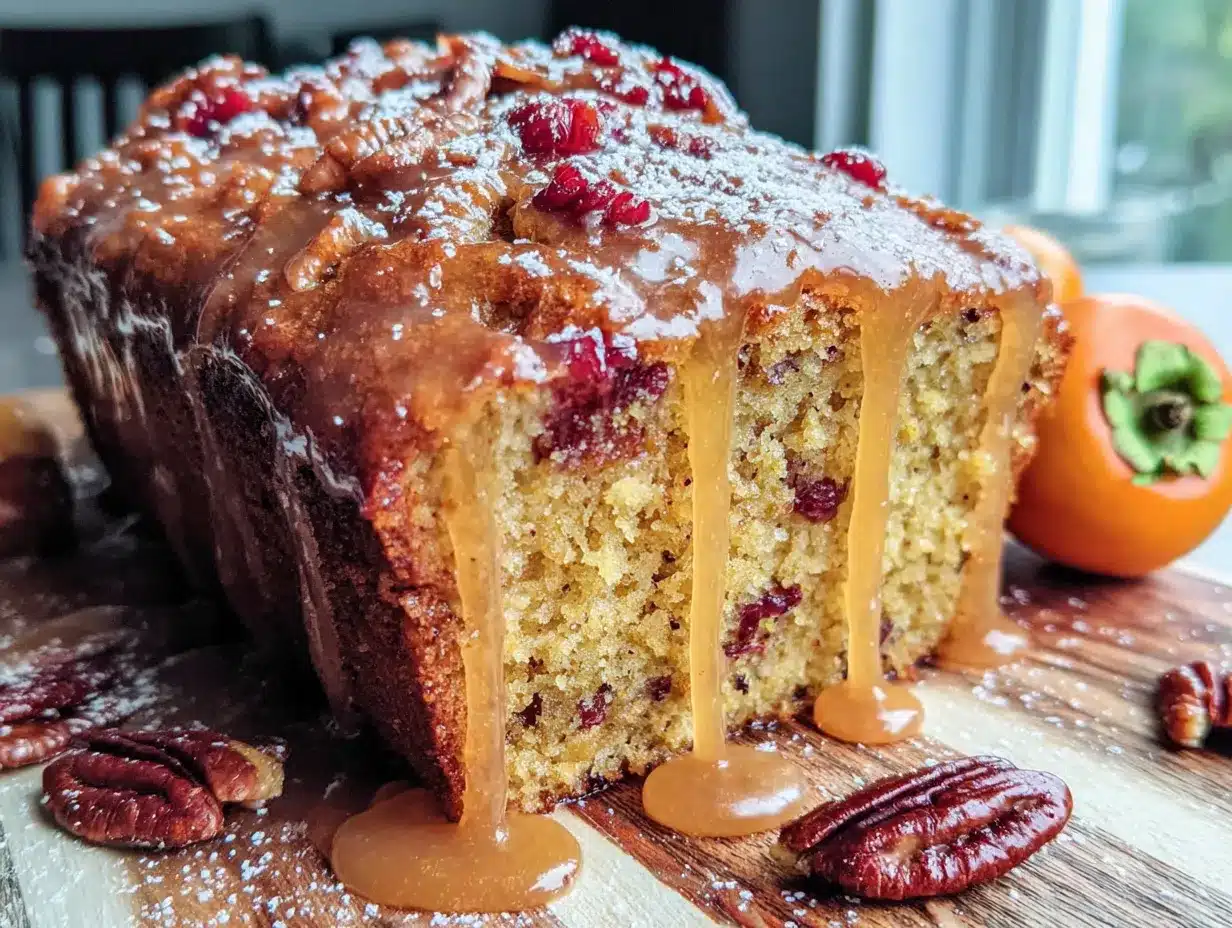
Let’s get to the fun part. This recipe is straightforward, but I’ll walk you through each step with a few tips I’ve picked up along the way. Trust me, following these little details will make your bread turn out perfect.
- Prep the Persimmons: Start by washing your persimmons. Cut off the green leafy top and cut the fruit into quarters. The skin is edible, so don’t peel it. Place the pieces in a blender or food processor and blend until you have a smooth puree. Pour this puree into a fine-mesh sieve set over a bowl. Use a spatula to press the puree through the sieve, leaving behind the fibers and any tough bits. You should end up with about 2 cups of smooth, silky pulp. This step is non-negotiable for the best texture! Set the pulp aside.
- Preheat and Prep the Pan: Preheat your oven to 350°F (175°C). Grease a 9×5-inch loaf pan with butter or non-stick spray. Cut a piece of parchment paper long enough to hang over the two long sides of the pan. Press it into the pan. This will be your “sling” to lift the bread out later.
- Toast the Walnuts: Spread the 1 cup of chopped walnuts on a baking sheet and toast them in the preheated oven for 5-7 minutes, until they are fragrant and lightly golden. Keep a close eye on them—they can burn quickly! Set them aside to cool. For the glaze garnish, you’ll want to chop the extra ¼ cup of walnuts a little finer after toasting.
- Mix the Dry Ingredients: In a medium bowl, whisk together the all-purpose flour, baking soda, baking powder, ground cinnamon, ground ginger, ground nutmeg, and salt. Whisking ensures everything is evenly distributed. Set this bowl aside.
- Cream the Butter and Sugars: In a large mixing bowl, use your hand mixer or stand mixer to beat the softened butter, granulated sugar, and packed light brown sugar together on medium speed. Beat for about 3-4 minutes, until the mixture is light, fluffy, and pale in color. Scrape down the sides of the bowl with a rubber spatula halfway through. This step is crucial for a tender crumb.
- Add the Eggs and Vanilla: Add the eggs one at a time, beating well after each addition until fully incorporated. Then, beat in the vanilla extract. The mixture might look a little curdled at this point, which is totally normal. Don’t panic!
- Add the Persimmon Pulp: Add the prepared persimmon pulp to the butter mixture and beat on low speed until just combined. The batter will look a little loose, and that’s exactly what we want. The persimmon adds so much moisture.
- Alternate Adding Dry Ingredients and Buttermilk: With the mixer on low speed, add about one-third of the dry ingredients to the wet mixture, mixing until just a few streaks of flour remain. Then, add half of the buttermilk, mixing until combined. Repeat with another third of the dry ingredients, the remaining buttermilk, and finally the last of the dry ingredients. Mix until just combined. Do not overmix! Overmixing will develop the gluten and make your bread tough. It’s okay if there are a few small lumps.
- Fold in the Walnuts: Use your rubber spatula to gently fold the toasted walnuts into the batter. Fold just until they are evenly distributed. The batter will be thick and luscious.
- Bake the Bread: Pour the batter into your prepared loaf pan and spread it into an even layer. Bake for 55-65 minutes, or until a wooden skewer or toothpick inserted into the center comes out clean or with a few moist crumbs. If the top is browning too quickly (after about 45 minutes), loosely tent the pan with aluminum foil.
- Cool the Bread: Let the bread cool in the pan on a wire rack for about 15-20 minutes. Then, use the parchment paper sling to lift the bread out of the pan and transfer it to the wire rack to cool completely. This is very important—if you glaze it while it’s even slightly warm, the glaze will be a runny mess. Patience is key here!
- Make the Glaze: While the bread is cooling, make the glaze. In a small bowl, whisk together the sifted powdered sugar, pure maple syrup, and 2 tablespoons of milk or heavy cream. Whisk until smooth. If it’s too thick, add the extra tablespoon of milk, one teaspoon at a time, until you reach a pourable consistency. You want it to be thick enough to coat the back of a spoon but still drizzle nicely.
- Glaze and Garnish: Once the bread is completely cool, place it on a serving plate or a wire rack set over a baking sheet (to catch drips). Pour the glaze over the top of the loaf, letting it drip down the sides. Use a spatula to gently spread it if needed. Immediately sprinkle the finely chopped toasted walnuts over the wet glaze so they stick.
- Set and Serve: Let the glaze set for about 10-15 minutes before slicing. This gives you those clean, beautiful slices that look amazing on a platter.
Cooking Tips & Techniques
I’ve made this bread more times than I can count, and I’ve definitely had my share of failures. Here are the lessons I learned so you don’t have to make the same mistakes.
The Persimmon Trap: My biggest failure was using Fuyu persimmons. They are the squat, tomato-shaped ones. They’re great for eating raw, but they don’t have the right texture for baking. They’re too firm and not sweet enough. You absolutely need the acorn-shaped Hachiya persimmons, and they must be very soft. If they’re not, your bread will be dry and astringent. I once tried to speed-ripen them in the microwave, and it was a disaster. Just give them time on the counter.
The Sieve is Your Friend: I know it’s an extra step, but pushing the pulp through a sieve is what makes this bread special. The first time I made it, I just blended the persimmons and added the puree directly. The bread was good, but it had these little stringy bits that were a bit off-putting. The sieve removes all of that, leaving you with a puree that’s almost like a fruit custard. It makes the texture of the final bread incredibly smooth and velvety.
Don’t Overmix the Batter: This is the golden rule of quick breads. Once you add the flour, mix only until it’s combined. Overmixing develops the gluten, which will make your bread tough and dense instead of tender. I used to be so worried about having a perfectly smooth batter that I would mix and mix. The result was a brick. Now, I leave a few streaks of flour and fold the last bits in by hand. The difference is night and day.
Timing and Multitasking: This recipe is great for a busy host. You can make the persimmon pulp a day or two ahead and store it in the fridge. You can also toast the walnuts ahead of time. On the day of your gathering, you can have the bread baked and cooled in the morning, then just glaze it an hour before your guests arrive. It saves so much stress.
Consistency is Key: For the glaze, the consistency is everything. If it’s too thick, it won’t drip down the sides nicely. If it’s too thin, it will just run off the bread and pool on the plate. Start with the smaller amount of liquid and add more a teaspoon at a time. You’re looking for a consistency similar to honey—it should fall off the whisk in a thick ribbon.
Variations & Adaptations
This recipe is a fantastic base to play with. Here are a few variations I’ve tried and loved, depending on the occasion or who I’m cooking for.
- Spiced Orange Persimmon Bread: Add the zest of one large orange to the butter and sugar mixture when you’re creaming them. The citrus oils will infuse the batter with a bright, floral note that pairs beautifully with the persimmon. Swap the walnuts in the bread for dried cranberries or golden raisins. It’s a fantastic holiday twist.
- Chocolate Chip Persimmon Bread: For the kid in all of us, fold in ¾ cup of dark or semi-sweet chocolate chips along with the walnuts. The bitterness of the dark chocolate is a wonderful contrast to the sweet persimmon and maple glaze. I made this for a potluck once, and it was the first thing to disappear.
- Vegan and Dairy-Free Adaptation: This version works surprisingly well. Replace the butter with a high-quality vegan butter stick (like Miyoko’s). Use a flax egg (1 tablespoon ground flaxseed mixed with 3 tablespoons water, let sit for 5 minutes) in place of each egg. Use a dairy-free milk (like oat milk) mixed with a teaspoon of apple cider vinegar for the buttermilk. For the glaze, use a dairy-free milk. The texture will be slightly denser but still incredibly moist and delicious.
- Gluten-Free Option: Substitute the all-purpose flour with a good quality 1:1 gluten-free baking flour blend that contains xanthan gum. I’ve had great results with King Arthur Flour Measure for Measure. Don’t overmix the batter, and let the bread cool completely in the pan before slicing, as gluten-free breads are more fragile when warm.
- Spiced Rum Glaze: For an adult twist, substitute the milk in the glaze with 2 tablespoons of dark spiced rum and 1 tablespoon of milk. The rum adds a warm, caramel-like depth that’s absolutely incredible with the walnuts and maple. My neighbor, Mrs. Chen, gave me a knowing look when I brought her a slice with this glaze. She approved.
Serving & Storage Suggestions
This bread is a showstopper, and how you serve it can make it even more special, especially when you’re hosting.
Serving Temperature and Presentation: This bread is best served at room temperature. The glaze will be set, and the crumb will be perfectly tender. For a dinner party, I like to slice it with a serrated knife into thick, 1-inch slices and arrange them on a beautiful wooden board. A dusting of extra cinnamon or a few fresh cranberries on the plate adds a nice pop of color. It’s fantastic on its own, but if you want to go all out, serve it with a dollop of lightly sweetened whipped cream or a scoop of vanilla bean ice cream.
Complementary Dishes or Beverages: This bread is a natural fit for a fall or winter brunch. Serve it alongside a savory sausage and sage stuffing for a sweet-savory contrast. It also pairs beautifully with a hot cup of chai tea, a spiced apple cider, or a strong cup of black coffee. For a more decadent dessert, a drizzle of warm caramel sauce over the slice is divine.
Storage Instructions: This bread keeps remarkably well. Store it in an airtight container at room temperature for up to 3 days. The moisture from the persimmons keeps it from drying out. In fact, the flavors often meld together even more beautifully on the second day. If you live in a very humid climate, you might want to store it in the refrigerator to prevent mold, but let it come to room temperature before serving.
Freezer Instructions: This bread freezes like a dream. You can freeze the whole loaf or individual slices. To freeze the whole loaf, let it cool completely, wrap it tightly in a layer of plastic wrap, then a layer of aluminum foil, and place it in a freezer-safe bag. It will keep for up to 3 months. I recommend freezing it without the glaze. When you’re ready to serve, thaw it overnight in the refrigerator, bring it to room temperature, and then make the fresh glaze. For individual slices, wrap each slice in plastic wrap and place them in a freezer bag. You can grab a slice for a quick breakfast or an afternoon treat.
Reheating Tips: To bring back that fresh-from-the-oven feeling, you can reheat individual slices in a toaster oven or a 300°F oven for about 5-7 minutes. If you’ve already glazed the bread, be careful not to overheat it, as the glaze can melt. A 10-second zap in the microwave works in a pinch, but it’s not my favorite method as it can make the bread a bit gummy.
How Flavors Develop: Honestly, this bread is even better the day after you bake it. The persimmon flavor seems to deepen, and the spices mellow into a warm, cohesive taste. This makes it a perfect make-ahead recipe for a party. You can bake it two days in advance, wrap it well, and just glaze it the morning of your event.
Nutritional Information & Benefits
While this is a treat, it’s made with some genuinely good-for-you ingredients. Here’s a rough estimate of what you’re looking at per slice (assuming 12 slices).
| Nutrient | Amount per Slice |
|---|---|
| Calories | ~380-420 kcal |
| Fat | ~20g |
| Carbohydrates | ~50g |
| Fiber | ~4g |
| Sugar | ~32g |
| Protein | ~6g |
Health Benefits of Key Ingredients: Persimmons are a powerhouse of nutrition. They’re packed with Vitamin A, which is great for your eyes and immune system, and they’re a fantastic source of fiber, which helps with digestion. Walnuts are full of omega-3 fatty acids, which are great for brain health. Even the maple syrup in the glaze contains antioxidants and minerals like zinc and manganese. So while you’re enjoying a slice of this delicious bread, you’re also getting a little nutritional boost.
Dietary Considerations: This recipe as written contains gluten, dairy, eggs, and tree nuts (walnuts). For a gluten-free version, use the flour substitution mentioned above. For a dairy-free version, use the vegan adaptation. It is naturally vegetarian. I wouldn’t call this a “health food,” but it’s a real-food treat that makes you feel good about what you’re eating. It’s the kind of thing you can serve to your family without any guilt.
Potential Allergens: This recipe contains wheat (gluten), dairy (butter, buttermilk), eggs, and tree nuts (walnuts). Please be sure to check your specific ingredients if you have allergies.
Conclusion
So, there you have it. My guest-favorite persimmon bread with that dreamy maple walnut glaze. It started with a box of mysterious fruit on my porch and a neighbor’s quiet confidence that I’d figure it out. And you know what? I did. And now, I can’t imagine a fall gathering without it. It’s more than just a recipe; it’s a little piece of that November afternoon, a taste of a conversation shared, and a way to bring a little warmth to the people you care about.
This bread is worth trying because it’s forgiving, it’s impressive, and it tastes like pure comfort. Don’t be afraid to make it your own. Throw in some chocolate chips, add a little orange zest, or change up the nuts. The base is so solid that you can play around without any fear. I honestly love this recipe because it taught me to trust the process and to listen to the ingredients.
I’d love to hear how it turns out for you! Did you try a variation? Did your guests go silent for a moment after their first bite? Drop a comment below and let me know. Share your photos, your adaptations, your stories. Happy baking, my friend. I hope this bread brings as much joy to your table as it has to mine.
Frequently Asked Questions (FAQs)
Can I use Fuyu persimmons instead of Hachiya?
No, I really wouldn’t recommend it. Fuyu persimmons are firm and meant to be eaten like an apple. They won’t break down into the silky pulp you need for this bread. Hachiya persimmons are the ones that get incredibly soft and jelly-like when ripe, which is exactly what we want. Using Fuyus will result in a dry, less flavorful bread.
My persimmons aren’t ripe yet. Can I speed up the process?
Absolutely! Place your firm Hachiya persimmons in a paper bag with a ripe banana or an apple. The ethylene gas released by the fruit will help them ripen in a day or two. Keep the bag at room temperature and check on them daily. They’re ready when they feel soft and squishy, almost like a water balloon.
Can I make this bread without a mixer?
Yes, you can definitely make this by hand. You’ll need a good whisk and a bit of elbow grease. Creaming the butter and sugars by hand will take a bit longer (about 5-6 minutes of vigorous whisking), but it’s totally doable. For the rest of the steps, just use a wooden spoon or a rubber spatula to mix everything together. It’s a great arm workout!
Why did my bread sink in the middle?
A sunken middle is usually a sign of a few things. First, your oven might not be hot enough. Make sure your oven is fully preheated to 350°F. Second, you might have overmixed the batter, which can cause it to rise too quickly and then collapse. Finally, make sure your baking soda and baking powder are fresh. If they’re old, they won’t provide enough lift, and the bread can sink as it cools.
Can I skip the glaze?
You can, but I think the glaze is what makes this bread truly special. The maple and walnut flavors are a perfect match for the persimmon. If you want a less sweet option, you could just dust the top of the cooled bread with powdered sugar, or skip it entirely and serve it with a pat of butter. It’s still delicious, just a little less showy.
Pin This Recipe!
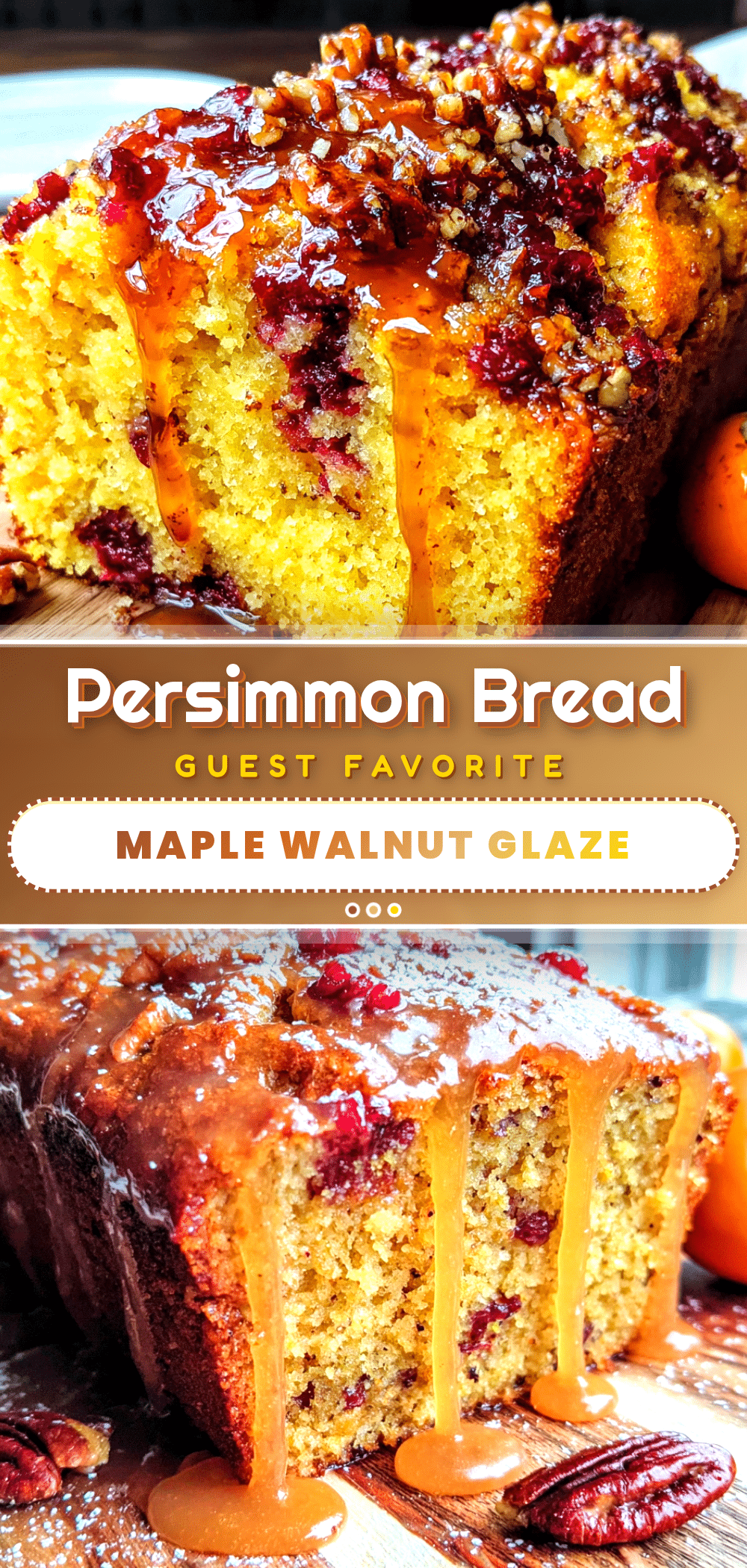
Best Easy Persimmon Bread with Maple Walnut Glaze
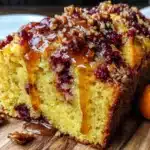
This moist and tender persimmon bread is made with silky Hachiya persimmon pulp, warm spices, and toasted walnuts, then topped with a luscious maple walnut glaze. It’s the perfect fall treat that’s quick to make and sure to impress.
- Prep Time: 20 minutes
- Cook Time: 55-65 minutes
- Total Time: 1 hour 15 minutes
- Yield: 12 servings 1x
- Category: Dessert
- Cuisine: American
Ingredients
- 2 cups (about 3–4 very ripe) Hachiya persimmon pulp
- 1 ¾ cups (220g) all-purpose flour
- 1 teaspoon baking soda
- ½ teaspoon baking powder
- 1 teaspoon ground cinnamon (preferably Saigon cinnamon)
- ½ teaspoon ground ginger
- ¼ teaspoon ground nutmeg
- ½ teaspoon salt (kosher preferred)
- ½ cup (1 stick, 113g) unsalted butter, softened
- 1 cup (200g) granulated sugar
- ½ cup (100g) packed light brown sugar
- 2 large eggs, at room temperature
- 1 teaspoon vanilla extract
- ½ cup (120ml) buttermilk, at room temperature
- 1 cup (100g) chopped walnuts or pecans, toasted
- 1 ½ cups (180g) powdered sugar, sifted
- 3 tablespoons pure maple syrup
- 2–3 tablespoons milk or heavy cream
- ¼ teaspoon vanilla extract (optional)
- ¼ cup (25g) finely chopped walnuts, toasted (for garnish)
Instructions
- Prep the Persimmons: Wash persimmons, cut off the green leafy top, and quarter them. Blend in a blender or food processor until smooth. Push the puree through a fine-mesh sieve into a bowl, discarding fibers. Set aside 2 cups of smooth pulp.
- Preheat and Prep the Pan: Preheat oven to 350°F (175°C). Grease a 9×5-inch loaf pan and line with parchment paper, leaving overhang on the long sides.
- Toast the Walnuts: Spread 1 cup chopped walnuts on a baking sheet and toast for 5-7 minutes until fragrant. Set aside to cool. Finely chop the extra ¼ cup for garnish.
- Mix the Dry Ingredients: In a medium bowl, whisk together flour, baking soda, baking powder, cinnamon, ginger, nutmeg, and salt.
- Cream the Butter and Sugars: In a large bowl, beat softened butter, granulated sugar, and brown sugar with an electric mixer on medium speed for 3-4 minutes until light and fluffy. Scrape down the bowl.
- Add the Eggs and Vanilla: Add eggs one at a time, beating well after each. Beat in vanilla extract.
- Add the Persimmon Pulp: Add the persimmon pulp and beat on low speed until just combined.
- Alternate Adding Dry Ingredients and Buttermilk: With mixer on low, add one-third of the dry ingredients, mixing until just combined. Add half the buttermilk, mixing until combined. Repeat with another third of dry ingredients, remaining buttermilk, and final third of dry ingredients. Mix until just combined; do not overmix.
- Fold in the Walnuts: Gently fold the toasted walnuts into the batter with a rubber spatula.
- Bake the Bread: Pour batter into prepared pan and spread evenly. Bake for 55-65 minutes, until a toothpick inserted in the center comes out clean. Tent with foil after 45 minutes if browning too quickly.
- Cool the Bread: Let cool in the pan on a wire rack for 15-20 minutes. Use parchment sling to lift bread out and transfer to rack to cool completely.
- Make the Glaze: In a small bowl, whisk together sifted powdered sugar, maple syrup, and 2 tablespoons milk or cream until smooth. Add more liquid if needed to reach a pourable consistency.
- Glaze and Garnish: Once bread is completely cool, pour glaze over the top, letting it drip down the sides. Immediately sprinkle with finely chopped toasted walnuts.
- Set and Serve: Let glaze set for 10-15 minutes before slicing.
Notes
Use very ripe Hachiya persimmons (soft like a water balloon). Push pulp through a sieve for silky texture. Do not overmix the batter. Cool completely before glazing. Bread can be frozen without glaze for up to 3 months.
Nutrition
- Serving Size: 1 slice
- Calories: 380420
- Sugar: 32
- Sodium: 280
- Fat: 20
- Saturated Fat: 8
- Carbohydrates: 50
- Fiber: 4
- Protein: 6
Keywords: persimmon bread, maple walnut glaze, fall baking, quick bread, Hachiya persimmon, easy recipe