Love this? Save it for later!
Share the inspiration with your friends
I was standing in line at the hardware store last November, holding a new showerhead and trying to remember if I needed plumber’s tape, when the woman behind me started talking about apple cider donuts. Not to me, exactly—she was on the phone, describing in vivid detail the batch she’d just pulled from the oven. “The secret,” she said, loud enough for half the aisle to hear, “is reducing the cider first. Makes it taste like autumn in a pan.” I stood there, showerhead forgotten, mentally taking notes. She was a retired schoolteacher named Carol, and by the time I reached the register, I had essentially stolen her recipe through sheer eavesdropping.
I went home that afternoon, bought a gallon of apple cider, and spent the evening reducing it on the stove while my kitchen smelled like a cider mill had exploded. Honestly, I burned the first batch—got distracted by that showerhead installation—but the second attempt? That was the moment I knew I had something special. I tweaked Carol’s original idea, swapped the donut pan for a Bundt pan (because who wants to fry a dozen tiny rings when you can bake one glorious cake?), and added a generous cinnamon sugar coating that makes the edges shatter when you cut into it. This Easy Apple Cider Donut Bundt Cake with Cinnamon Sugar is the result of that accidental eavesdropping session, a little bit of trial and error, and a whole lot of apple cider reduction.
Maybe you’ve been there—standing in an unexpected place, overhearing a recipe that sounds too good to be true. Well, this one delivers. It’s the cake I bring to every fall gathering now, the one people ask for by name, the one that makes my kitchen smell like October even in the middle of July. Let me tell you, it’s worth every minute of reducing that cider.
Why You’ll Love This Recipe
I’ve tested this cake more times than I care to admit—twice with regular cider, once with sparkling cider (don’t do it), three times with different flour blends, and once at 6 AM because I couldn’t sleep and needed to know if it worked with whole wheat pastry flour. Spoiler: it does. This recipe has been through the wringer, and it came out better every single time. Here’s why it’s earned a permanent spot in my fall baking rotation:
- Quick & Easy: From start to finish, this cake comes together in about an hour and a half—most of that is baking time. The actual hands-on work is maybe 20 minutes. Perfect for those “I need a dessert for tonight” moments.
- Simple Ingredients: No fancy grocery store runs. You probably have everything except the apple cider and buttermilk. And honestly, you can make your own buttermilk with milk and lemon juice—I do it all the time.
- Perfect for Fall Gatherings: This cake screams autumn. It’s ideal for Thanksgiving dessert tables, Halloween parties, or just a cozy Sunday afternoon with a cup of coffee.
- Crowd-Pleaser: I’ve served this to kids, adults, picky eaters, and self-proclaimed “not cake people.” Every single person has gone back for seconds. The cinnamon sugar crust is basically irresistible.
- Unbelievably Delicious: The secret is the reduced apple cider. It concentrates all that apple flavor into something intense and almost caramel-like. Combined with the tender crumb and that crunchy cinnamon sugar coating, it’s next-level comfort food.
What makes this different from every other apple cider cake out there? It’s the reduction technique. Most recipes just dump in regular cider, which gives you a mild apple flavor at best. By reducing the cider down to a syrup, you get this deep, concentrated apple taste that permeates every single bite. Plus, that cinnamon sugar coating isn’t just for looks—it creates a crackly, sugary crust that contrasts perfectly with the soft, moist interior. This isn’t just another fall cake. It’s the one I’d choose if I could only bake one dessert for the rest of autumn.
I mean it when I say this cake makes you close your eyes after the first bite. There’s something about that combination of tender apple cake and crunchy cinnamon sugar that hits a primal comfort-food spot. It’s the kind of dessert that makes you slow down and actually taste what you’re eating. And honestly, in our busy world, that’s a gift.
What Ingredients You Will Need
This recipe uses simple, wholesome ingredients to deliver that classic apple cider donut flavor in cake form. Most of these are pantry staples, so you’re probably already halfway there. Let me walk you through what you need and why each ingredient matters.
- Apple Cider (2 cups / 480 ml): Not apple juice, not apple-flavored drink—real, unfiltered apple cider. You’ll reduce this down to about 1/2 cup, which concentrates the flavor. I prefer local farm cider when it’s in season, but any good quality cider works. The reduction is where the magic happens.
- Unsalted Butter (1/2 cup / 113 g), softened: I always use unsalted so I can control the salt level. Let it come to room temperature naturally—microwaving can make it too soft and affect the texture.
- Granulated Sugar (1 cup / 200 g): Regular white sugar gives the cake structure and sweetness. Don’t substitute brown sugar here—it changes the texture too much.
- Light Brown Sugar (1/2 cup / 100 g), packed: This adds moisture and a hint of molasses flavor that complements the apple cider beautifully. Make sure it’s packed firmly into the measuring cup.
- Large Eggs (2), room temperature: Room temperature eggs incorporate better into the batter, creating a lighter texture. If you forgot to take them out, place them in a bowl of warm water for 5 minutes.
- Vanilla Extract (2 teaspoons / 10 ml): Pure vanilla extract, not imitation. It rounds out the flavors and makes everything taste more “baked.” I’m partial to Nielsen-Massey, but any good brand works.
- All-Purpose Flour (2 1/2 cups / 312 g): Spoon and level your flour—don’t scoop directly from the bag. Scooping compacts the flour and you’ll end up with a dry cake. I’ve tested this with King Arthur Flour and Gold Medal, both work great.
- Baking Powder (1 1/2 teaspoons): Make sure it’s fresh. Test it by dropping a bit in hot water—if it fizzes, it’s good. Expired baking powder is the #1 reason cakes don’t rise.
- Baking Soda (1/2 teaspoon): This reacts with the buttermilk to help the cake rise and tenderize the crumb.
- Salt (1/2 teaspoon): Don’t skip this. Salt enhances all the other flavors and balances the sweetness. I use fine sea salt.
- Ground Cinnamon (1 teaspoon): This goes into the cake batter itself, adding warmth and spice. Use fresh cinnamon—it should smell strong and fragrant when you open the jar.
- Ground Nutmeg (1/4 teaspoon): Just a touch. Nutmeg can overpower if you use too much, but a little bit adds that classic “apple spice” flavor.
- Buttermilk (3/4 cup / 180 ml), room temperature: Buttermilk makes the cake tender and adds a slight tang that balances the sweetness. If you don’t have buttermilk, add 1 tablespoon of lemon juice or white vinegar to regular milk and let it sit for 5 minutes.
- Reduced Apple Cider (1/2 cup / 120 ml): This is what you get after simmering 2 cups of cider down. It should be syrupy and intensely apple-flavored. Let it cool completely before using.
For the Cinnamon Sugar Coating:
- Granulated Sugar (1/2 cup / 100 g): This creates the crunchy coating.
- Ground Cinnamon (2 teaspoons): Don’t be shy with the cinnamon here—it’s the star of the coating.
- Melted Butter (1/4 cup / 57 g): You’ll brush this onto the warm cake so the cinnamon sugar sticks. Use salted or unsalted, whichever you prefer.
Substitution Notes: For a dairy-free version, use plant-based butter and substitute the buttermilk with 3/4 cup of almond milk mixed with 1 tablespoon of apple cider vinegar. For a gluten-free option, use a 1:1 gluten-free flour blend—I’ve had good results with Bob’s Red Mill. The texture will be slightly denser but still delicious.
Equipment Needed
You don’t need a professional bakery setup for this cake. Here’s what you’ll need:
- 10-cup Bundt Pan: This is non-negotiable. A standard Bundt pan holds about 10-12 cups. If yours is smaller, fill it only 2/3 full and bake the extra batter as cupcakes (about 15-18 minutes). I use a classic Nordic Ware pan—it’s worth the investment for even baking and easy release.
- Saucepan (medium): For reducing the apple cider. A wider pan works faster since more surface area means quicker evaporation.
- Mixing Bowls (large and medium): You need one for dry ingredients and one for wet. I prefer glass or stainless steel—plastic bowls can retain odors.
- Whisk: For combining dry ingredients and smoothing out the batter.
- Electric Mixer (hand or stand): A hand mixer works perfectly. You just need to cream the butter and sugars until light and fluffy. A stand mixer with the paddle attachment is faster but not necessary.
- Rubber Spatula: For scraping down the bowl and folding in the dry ingredients. Get a good heat-resistant one.
- Cooling Rack: Essential for letting the cake cool evenly. If you don’t have one, you can use the inverted Bundt pan—just be careful.
- Pastry Brush: For brushing the melted butter onto the warm cake. A silicone brush works best—it doesn’t shed bristles.
- Measuring Cups and Spoons: Accurate measurements matter in baking. I use dry measuring cups for flour and sugar, and a liquid measuring cup for the cider and buttermilk.
Budget-Friendly Tip: If you don’t have a Bundt pan, you can bake this in two 9-inch loaf pans or a 9×13-inch sheet pan. Adjust the baking time—loaf pans take about 45-55 minutes, and a sheet pan takes about 25-30 minutes. The cinnamon sugar coating works on any shape!
Preparation Method
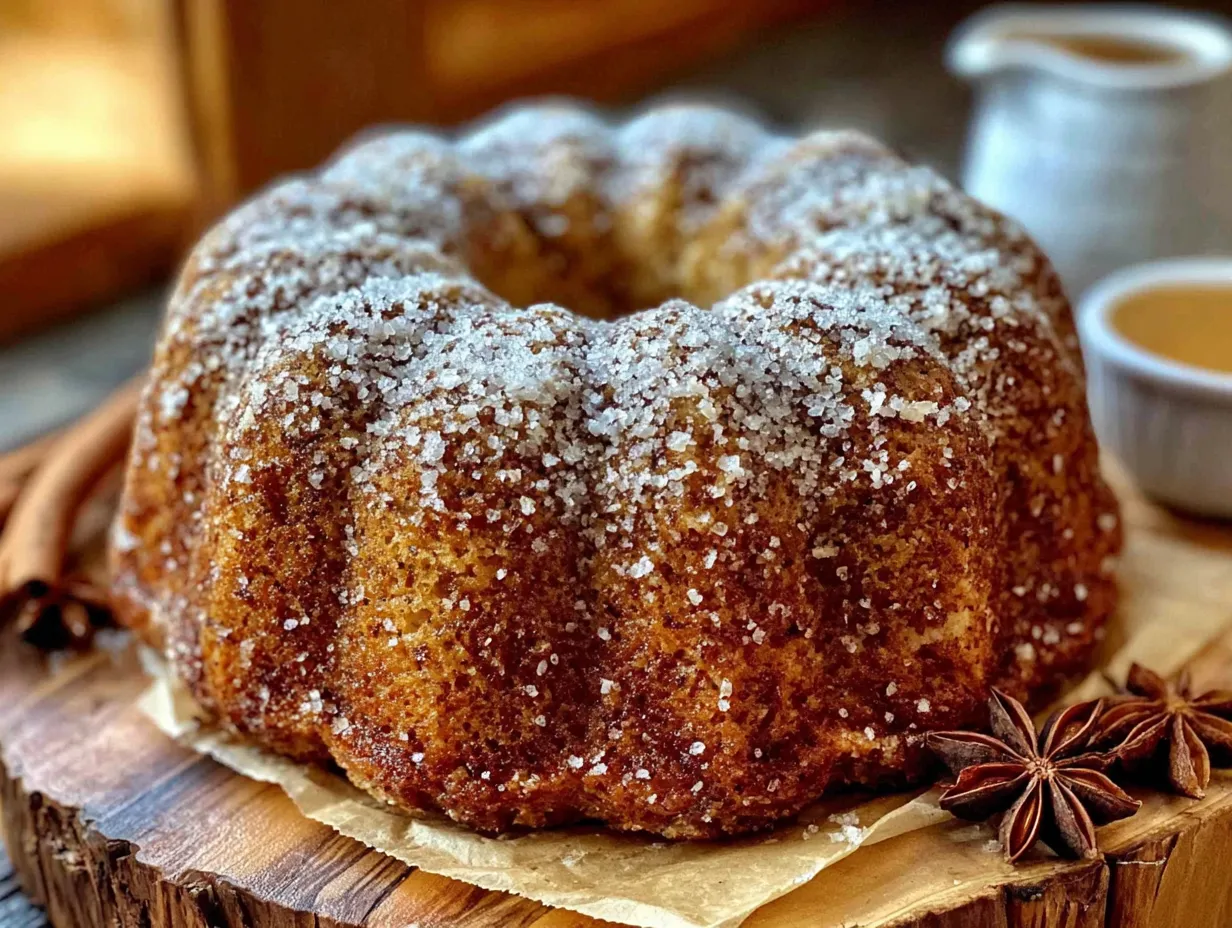
Let’s get baking! Here’s how to make this Easy Apple Cider Donut Bundt Cake with Cinnamon Sugar, step by step. I’ve included all the little details that make the difference between a good cake and a great one.
- Reduce the apple cider. Pour 2 cups of apple cider into a medium saucepan. Bring it to a boil over medium-high heat, then reduce the heat to medium-low and let it simmer. Stir occasionally. You’re looking for it to reduce down to about 1/2 cup—this takes about 20-25 minutes. It should be syrupy and smell intensely of apples. Watch it carefully toward the end—it can go from perfect to burnt quickly. Remove from heat and let it cool completely. I usually do this step first so it’s cool by the time I need it.
- Preheat your oven to 350°F (175°C). Position the rack in the center of the oven. While it’s heating, generously grease your Bundt pan. I use butter or non-stick baking spray with flour—regular cooking spray can leave sticky spots. Make sure you get into all the crevices of the pan. This is the most important step for a clean release!
- Whisk the dry ingredients. In a medium bowl, whisk together 2 1/2 cups all-purpose flour, 1 1/2 teaspoons baking powder, 1/2 teaspoon baking soda, 1/2 teaspoon salt, 1 teaspoon cinnamon, and 1/4 teaspoon nutmeg. Set this aside. Whisking aerates the flour and distributes the leavening agents evenly.
- Cream the butter and sugars. In a large bowl, beat 1/2 cup softened unsalted butter, 1 cup granulated sugar, and 1/2 cup packed light brown sugar together until light and fluffy. This takes about 3-4 minutes with a hand mixer on medium speed. You want it to look pale and airy. Scrape down the sides and bottom of the bowl halfway through.
- Add the eggs and vanilla. Add the 2 room temperature eggs one at a time, beating well after each addition. Then beat in the 2 teaspoons of vanilla extract. The mixture should look smooth and glossy. If it looks curdled, don’t panic—it will come together when you add the dry ingredients.
- Alternate adding dry ingredients and buttermilk. With the mixer on low speed, add about one-third of the dry ingredients, then half of the 3/4 cup buttermilk. Repeat, ending with the dry ingredients. Mix just until combined—overmixing develops gluten and makes the cake tough. I usually stop mixing when there are still a few streaks of flour, then finish folding by hand with a rubber spatula.
- Fold in the reduced apple cider. Gently fold in the 1/2 cup of cooled, reduced apple cider. The batter will be thick and fragrant. Don’t overmix here—just fold until the cider is incorporated. The batter should look smooth and slightly shiny.
- Pour the batter into the prepared pan. Use your rubber spatula to scrape every last bit into the Bundt pan. Spread it evenly—I like to tap the pan on the counter a few times to release any air bubbles. The pan should be about 2/3 full.
- Bake for 45-55 minutes. Place the pan on the center rack and bake until a toothpick inserted into the center comes out clean or with a few moist crumbs. The top should be golden brown and spring back when lightly touched. Start checking at 45 minutes—oven temperatures vary, and you don’t want to overbake. My oven runs hot, so I usually check at 42 minutes.
- Cool in the pan for 10 minutes. Set the pan on a cooling rack and let it rest for exactly 10 minutes. This allows the cake to set and pull away from the sides of the pan slightly. Don’t skip this step—cooling too long makes the cake stick, and not cooling long enough makes it fall apart.
- Invert the cake onto the cooling rack. Place the cooling rack upside down on top of the pan. Holding both together firmly, flip them over. Lift the pan off gently. If the cake sticks, don’t force it—let it sit for a few more minutes and try again. If any pieces stick, just patch them back on with a little melted butter—no one will know.
- Brush with melted butter and coat with cinnamon sugar. While the cake is still warm (but not hot), brush the entire surface with the 1/4 cup of melted butter. Then generously sprinkle or roll the cake in the cinnamon sugar mixture (1/2 cup granulated sugar mixed with 2 teaspoons cinnamon). I like to place the cake on a sheet pan and spoon the cinnamon sugar over it, pressing gently to make it stick. Don’t be shy—the coating is the best part!
- Let the cake cool completely before slicing. I know it’s tempting to cut into it right away, but the cake needs time to set. Let it cool completely on the rack—about 1-2 hours. The cinnamon sugar will form a beautiful crackly crust as it cools.
Sensory Cues: When you fold in the reduced cider, the batter should smell intensely of baked apples and cinnamon. The cake is done when the kitchen smells like a cider donut shop and the top is a deep golden brown. When you tap the top, it should feel firm but springy. And that first slice? The cinnamon sugar should shatter slightly as you cut through it.
Cooking Tips & Techniques
I’ve made this cake more times than I can count, and I’ve learned a few things the hard way. Here are my best tips for getting it perfect every time.
Don’t rush the cider reduction. This is the most important step. Reducing the cider concentrates the flavor, but it also concentrates the natural pectin, which helps keep the cake moist. If you try to speed it up with high heat, you’ll end up with burnt cider and a bitter cake. Low and slow is the way to go. I usually put the cider on the stove before I start anything else, so it has time to reduce and cool while I prepare the other ingredients.
Room temperature ingredients matter. I can’t stress this enough. Cold eggs and cold buttermilk will seize the butter, creating a dense, heavy cake. Take everything out of the fridge at least 30 minutes before you start. If you forget, place the eggs in a bowl of warm water for 5 minutes and microwave the buttermilk for 15 seconds—just don’t let it get hot.
Grease the pan properly. I learned this lesson the hard way when my first Bundt cake came out in pieces. Use a pastry brush to apply melted butter or shortening to every nook and cranny of the pan, then dust with flour. Or use a baking spray that contains flour—I like Baker’s Joy. Don’t use regular non-stick spray; it can leave a gummy residue that makes the cake stick.
Check for doneness early. Ovens lie. Every oven runs at a slightly different temperature, so start checking your cake at 45 minutes. Insert a toothpick into the thickest part—it should come out clean or with a few moist crumbs. If it’s wet with batter, give it 5 more minutes and check again. If the top is browning too quickly, tent it loosely with aluminum foil.
Don’t overmix the batter. I used to be the kind of baker who mixed until the batter was perfectly smooth. Then I learned that overmixing develops gluten, which makes cakes tough and dense. Mix just until the flour disappears into the batter. A few lumps are fine—they’ll bake out. Trust me on this one.
Apply the cinnamon sugar while the cake is warm. This is crucial for that crackly crust. If the cake is too hot, the butter will melt and run off. If it’s too cold, the sugar won’t stick. Aim for “warm to the touch”—about 10-15 minutes after you invert it. Brush the butter on generously, then pile on the cinnamon sugar. I like to use my hands to press it gently into the sides and crevices.
Let it cool completely before slicing. I know, I know—it smells incredible and you want a piece right now. But slicing a warm Bundt cake is a recipe for crumbs. The cake needs time to set and the cinnamon sugar needs to harden into that perfect crust. Give it at least an hour. Use a serrated knife for clean slices.
Variations & Adaptations
One of the best things about this recipe is how adaptable it is. Here are some variations I’ve tried and loved.
Gluten-Free Version: Substitute the all-purpose flour with a 1:1 gluten-free baking flour blend. I’ve had great results with Bob’s Red Mill 1-to-1 Baking Flour. Add 1/4 teaspoon of xanthan gum if your blend doesn’t include it. The texture will be slightly more tender, but the flavor is spot-on. Bake time may be 5-10 minutes longer.
Dairy-Free Version: Use plant-based butter (I like Miyoko’s or Earth Balance) and substitute the buttermilk with 3/4 cup of unsweetened almond milk mixed with 1 tablespoon of apple cider vinegar. Let it sit for 5 minutes before using. The cake will be slightly less tender but still delicious. For the coating, use melted coconut oil instead of butter.
Spiced Apple Version: Add 1 cup of finely diced fresh apple (peeled) to the batter along with the reduced cider. I prefer Honeycrisp or Granny Smith—they hold their shape during baking. Fold them in gently at the end. This adds little pockets of soft apple throughout the cake. You might need to add 5-10 minutes to the baking time.
Maple Glaze Variation: Instead of the cinnamon sugar coating, make a simple maple glaze. Whisk together 1 cup of powdered sugar, 2 tablespoons of maple syrup, and 1-2 tablespoons of milk until smooth. Drizzle over the cooled cake. This gives it more of a coffee cake vibe and is perfect for brunch.
Mini Bundt Cakes: Use a mini Bundt pan (6-cavity) and reduce the baking time to 20-25 minutes. These are perfect for gifting or portion control. The cinnamon sugar coating works the same way—just brush and coat each mini cake individually.
Apple Cider Donut Holes: Scoop the batter into a greased mini muffin tin (fill each cup about 2/3 full) and bake for 12-15 minutes. While warm, toss them in melted butter and then in the cinnamon sugar. They’re bite-sized and dangerously addictive.
Serving & Storage Suggestions
This cake is wonderful served warm or at room temperature. The cinnamon sugar coating stays crunchy for about a day, so if you want that perfect crackly texture, serve it the same day you bake it.
Serving Temperature: Room temperature is ideal. If you’ve refrigerated the cake, let it sit out for 30 minutes before serving. You can also warm individual slices in the microwave for 15 seconds—just be aware that the coating will soften slightly.
Presentation Ideas: Place the cake on a beautiful cake stand and dust with a little extra cinnamon sugar just before serving. For a fall-themed presentation, arrange apple slices, cinnamon sticks, and small pumpkins around the base. It makes a stunning centerpiece for Thanksgiving or Halloween gatherings.
Complementary Dishes: This cake pairs beautifully with a hot cup of coffee, spiced chai latte, or a glass of cold milk. For a dessert spread, serve it alongside vanilla ice cream, warm caramel sauce, or a dollop of whipped cream. It also works wonderfully on a brunch table next to crispy garlic chicken—wait, that’s a dinner dish. Let me rephrase: it’s perfect on a fall brunch table alongside pumpkin muffins and a warm apple cider drink.
Storage Instructions: Store the cake in an airtight container at room temperature for up to 3 days. The cinnamon sugar coating will soften over time, but the cake itself stays moist. If you live in a humid climate, the coating may become sticky—that’s normal and still delicious.
Freezing Instructions: This cake freezes beautifully. Wrap the completely cooled cake (without the cinnamon sugar coating) tightly in plastic wrap, then in aluminum foil. Freeze for up to 3 months. When you’re ready to serve, thaw it overnight in the refrigerator, then warm it in a 300°F oven for 10-15 minutes. Brush with melted butter and coat with cinnamon sugar just before serving. The coating is best fresh, so don’t apply it before freezing.
Flavor Development: Honestly, this cake tastes even better on day two. The flavors meld together and the apple cider flavor becomes more pronounced. If you can resist eating it all on day one, you’re in for a treat on day two. Just keep it tightly covered so it doesn’t dry out.
Nutritional Information & Benefits
Let’s be real—this is a treat, not a health food. But that doesn’t mean it can’t have some redeeming qualities. Here’s the estimated nutritional breakdown per slice (based on 12 servings):
- Calories: Approximately 380-420 per slice
- Fat: 16-18g (mostly from butter)
- Carbohydrates: 55-60g
- Sugar: 35-40g (includes added sugars and natural sugars from apple cider)
- Protein: 4-5g
- Fiber: 1-2g
Health Benefits of Key Ingredients: Apple cider contains antioxidants called polyphenols, which may help reduce inflammation and support heart health. Cinnamon is known for its anti-inflammatory properties and may help regulate blood sugar levels. While this cake isn’t a health food by any stretch, it does use real, whole ingredients—no artificial flavors or preservatives here.
Dietary Considerations: This recipe contains gluten, dairy, and eggs. For gluten-free and dairy-free alternatives, see the Variations section above. The cake is nut-free as written, making it safe for school functions and gatherings where nut allergies are a concern.
My Personal Take: I believe in balance. This cake is a celebration of fall flavors, meant to be enjoyed with family and friends. One slice won’t derail your health goals, and the joy of sharing homemade food with loved ones has benefits that go beyond nutrition. So go ahead, have that second slice—just maybe don’t make it a daily habit!
Conclusion
This Easy Apple Cider Donut Bundt Cake with Cinnamon Sugar is more than just a recipe—it’s a little piece of autumn you can bake any time of year. It started with an overheard conversation in a hardware store and turned into the cake I’m most proud to share. The reduced apple cider gives it an intensity you just can’t get from regular cider, and that cinnamon sugar coating? Pure magic.
I love this recipe because it’s forgiving. It doesn’t require fancy techniques or special equipment. It’s the kind of cake you can make on a whim, the kind that fills your kitchen with the smell of fall and makes everyone who walks through the door ask, “What’s baking?” It’s comfort food at its finest—simple, honest, and absolutely delicious.
I’d love to hear how yours turns out! Did you try any of the variations? Did you add your own twist? Drop a comment below and let me know. And if you share a photo on social media, tag me—I love seeing your baking adventures. Happy baking, friends. May your kitchen smell like apples and cinnamon, and may your cake release perfectly from the pan!
Frequently Asked Questions
Can I use apple juice instead of apple cider?
Technically yes, but I wouldn’t recommend it. Apple juice is thinner and less flavorful than cider. The reduction won’t be as concentrated, and your cake will lack that deep, authentic apple flavor. If you’re in a pinch, use apple cider from a farm stand or farmers market—it’s worth seeking out.
Why did my cake stick to the Bundt pan?
This happens to the best of us. The most common reason is insufficient greasing. Make sure you use a generous amount of butter or baking spray with flour, and get into all the nooks and crannies. Also, don’t skip the 10-minute cooling time in the pan—this allows the cake to shrink slightly and release from the sides. If it still sticks, let it cool a few more minutes and try again gently.
Can I make this cake ahead of time?
Absolutely! Bake the cake a day ahead and store it tightly wrapped at room temperature. Wait to apply the cinnamon sugar coating until just before serving—it stays crunchiest that way. If you’re making it more than a day ahead, freeze it without the coating (see storage instructions above).
How do I know when the apple cider is reduced enough?
You’re looking for the cider to reduce from 2 cups to about 1/2 cup. It should be syrupy and coat the back of a spoon. It will also smell intensely of apples—almost like apple butter. If you’re unsure, measure it: pour the reduced cider into a liquid measuring cup. If it’s more than 1/2 cup, keep simmering. If it’s less, you’ve gone too far—but don’t worry, it will still work, just with a slightly stronger flavor.
Can I use a different pan size?
Yes! This batter works in two 9-inch loaf pans (bake for 45-55 minutes), a 9×13-inch sheet pan (bake for 25-30 minutes), or a 12-cup muffin tin (bake for 18-22 minutes). Adjust the baking time accordingly and check for doneness with a toothpick. The cinnamon sugar coating works on any shape—just brush and coat while warm.
Pin This Recipe!
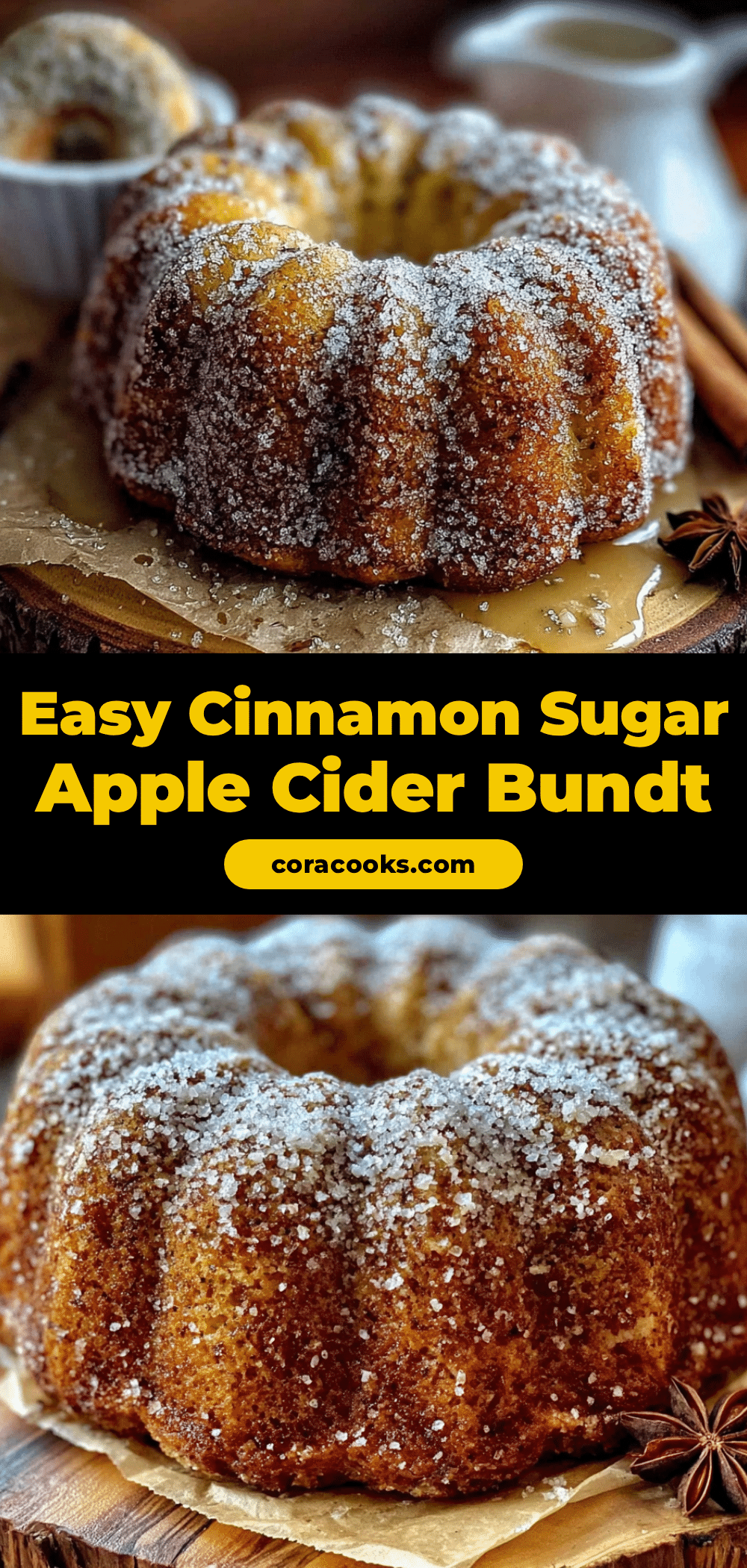
Easy Apple Cider Donut Bundt Cake: Best Cinnamon Sugar Recipe
This Easy Apple Cider Donut Bundt Cake with Cinnamon Sugar is a moist, tender cake infused with concentrated apple cider flavor and coated in a crackly cinnamon sugar crust. Perfect for fall gatherings, it delivers the taste of apple cider donuts in an easy-to-make Bundt cake form.
- Prep Time: 20 minutes
- Cook Time: 50 minutes
- Total Time: 1 hour 10 minutes
- Yield: 12 servings 1x
- Category: Dessert
- Cuisine: American
Ingredients
- 2 cups (480 ml) apple cider
- 1/2 cup (113 g) unsalted butter, softened
- 1 cup (200 g) granulated sugar
- 1/2 cup (100 g) light brown sugar, packed
- 2 large eggs, room temperature
- 2 teaspoons (10 ml) vanilla extract
- 2 1/2 cups (312 g) all-purpose flour
- 1 1/2 teaspoons baking powder
- 1/2 teaspoon baking soda
- 1/2 teaspoon salt
- 1 teaspoon ground cinnamon
- 1/4 teaspoon ground nutmeg
- 3/4 cup (180 ml) buttermilk, room temperature
- 1/2 cup (120 ml) reduced apple cider (from 2 cups cider)
- For the Cinnamon Sugar Coating:
- 1/2 cup (100 g) granulated sugar
- 2 teaspoons ground cinnamon
- 1/4 cup (57 g) melted butter
Instructions
- Reduce the apple cider: Pour 2 cups of apple cider into a medium saucepan. Bring to a boil over medium-high heat, then reduce heat to medium-low and simmer until reduced to about 1/2 cup, about 20-25 minutes. Stir occasionally. Remove from heat and let cool completely.
- Preheat oven to 350°F (175°C). Generously grease a 10-cup Bundt pan with butter or baking spray with flour.
- In a medium bowl, whisk together flour, baking powder, baking soda, salt, cinnamon, and nutmeg. Set aside.
- In a large bowl, beat softened butter, granulated sugar, and brown sugar together until light and fluffy, about 3-4 minutes with a hand mixer on medium speed.
- Add eggs one at a time, beating well after each addition. Beat in vanilla extract until smooth.
- With mixer on low speed, add dry ingredients in three additions, alternating with buttermilk, beginning and ending with dry ingredients. Mix just until combined; do not overmix.
- Gently fold in the cooled reduced apple cider until just incorporated.
- Pour batter into prepared Bundt pan and spread evenly. Tap pan on counter to release air bubbles.
- Bake for 45-55 minutes, or until a toothpick inserted into the center comes out clean or with a few moist crumbs. Cool in pan for 10 minutes.
- Invert cake onto a cooling rack and let cool slightly.
- While cake is still warm, brush entire surface with melted butter. Generously sprinkle or roll cake in cinnamon sugar mixture (1/2 cup sugar mixed with 2 teaspoons cinnamon).
- Let cake cool completely before slicing, about 1-2 hours.
Notes
For best results, use real apple cider (not apple juice) and reduce it slowly to concentrate flavor. Room temperature ingredients ensure a tender crumb. Grease the Bundt pan thoroughly to prevent sticking. Apply cinnamon sugar coating while cake is warm for best adhesion. Cake can be stored at room temperature for up to 3 days or frozen for up to 3 months (without coating).
Nutrition
- Serving Size: 1 slice
- Calories: 400
- Sugar: 38
- Sodium: 280
- Fat: 17
- Saturated Fat: 10
- Carbohydrates: 58
- Fiber: 1
- Protein: 5
Keywords: apple cider donut cake, Bundt cake, cinnamon sugar, fall dessert, apple cake, easy cake recipe