Love this? Save it for later!
Share the inspiration with your friends
There used to be a tiny French bistro tucked between a laundromat and a vintage shop in my neighborhood that made a honey salmon dish that I still dream about. When they closed suddenly two years ago—boarded up with a handwritten note taped to the door—I honestly felt a little lost. That salmon was my go-to after long workdays, my celebration dinner, my “I don’t want to cook but I deserve something amazing” meal. After maybe twelve tries—some burnt, some too sweet, one that I swear smoked out my entire apartment—I finally cracked the code. And the best part? This version adds asparagus to the pan, making it a complete meal in under thirty minutes.
You know that feeling when you find a recipe that looks fancy but secretly takes almost no effort? That’s this one. The honey garlic glaze caramelizes into this sticky, glossy coating that clings to every flake of salmon, while the asparagus roasts right alongside it, soaking up all those sweet and savory drippings. I mean, I’ve served this to dinner guests who thought I slaved for hours, and I’ve also eaten it straight from the pan on a Tuesday night in my sweatpants. No judgment here.
What I love most about this dish is how forgiving it is. The salmon stays tender and moist, the asparagus gets those perfect charred edges, and the whole kitchen smells like the best restaurant you’ve ever walked into. If you’ve been hunting for a weeknight dinner that feels special without the stress, let me tell you—you’re going to want to bookmark this one.
Why You’ll Love This Recipe
Let me be real with you—I’ve tested this recipe more times than I care to admit. Burnt garlic, soggy asparagus, salmon that fell apart before I could plate it. But after all those trials, this version is the one I keep coming back to. Here’s why it works:
- Quick & Easy : From start to table in under 30 minutes, this is your answer to busy weeknights when takeout is tempting but your wallet says no.
- Simple Ingredients : You probably have honey, garlic, and soy sauce in your kitchen right now. The fresh salmon and asparagus are the only things you might need to grab.
- Perfect for Entertaining : This looks restaurant-quality on a plate but requires almost zero cleanup. One pan, minimal dishes, maximum flavor.
- Crowd-Pleaser : I’ve made this for picky eaters, seafood skeptics, and even my cousin who “doesn’t like cooked fish.” Every single person cleaned their plate.
- Unbelievably Delicious : The honey garlic glaze caramelizes into something magical—sweet, savory, with just a hint of garlicky bite. The asparagus gets perfectly tender-crisp with those gorgeous char marks.
What makes this recipe different from the dozens of other honey garlic salmon recipes out there? It’s the balance. Most versions either drown the fish in sauce or leave it dry and flavorless. I spent weeks tweaking the honey-to-soy-sauce ratio, the garlic amount, and the cooking time until everything worked together perfectly. The salmon stays buttery and moist, the asparagus roasts without getting mushy, and the glaze reduces into this concentrated flavor bomb that coats every bite.
Honestly, this is the kind of recipe that makes you close your eyes after the first bite. It’s comfort food that happens to be healthy—packed with protein, healthy fats, and green vegetables, but with the same soul-soothing satisfaction as your favorite takeout. Perfect for impressing guests without breaking a sweat, or turning a regular Tuesday into something worth looking forward to.
What Ingredients You Will Need
This recipe uses simple, wholesome ingredients that work together to create something truly special. Most of these are pantry staples, which makes this dish perfect for those nights when you want something amazing but don’t want to make a grocery store run.
For the Salmon and Asparagus:
- 4 salmon fillets (6 ounces each, skin-on or skinless—I prefer skin-on for extra crispiness)
- 1 bunch asparagus (about 1 pound, woody ends trimmed—snap one off naturally and cut the rest to match)
- 2 tablespoons olive oil (divided—use a good quality one for drizzling)
- Salt and black pepper (to taste—I use kosher salt for better seasoning control)
- 1 tablespoon butter (unsalted, for richness—trust me on this one)
For the Honey Garlic Glaze:
- 1/4 cup honey (use a runny, natural honey for best consistency—I like local wildflower honey)
- 4 cloves garlic (minced finely—fresh garlic is non-negotiable here, please don’t use the jarred stuff)
- 3 tablespoons soy sauce (low-sodium preferred so you can control the saltiness; tamari works for gluten-free)
- 1 tablespoon rice vinegar (adds brightness and cuts through the sweetness—unseasoned is best)
- 1 teaspoon sesame oil (optional but highly recommended for that subtle nutty flavor)
- 1/2 teaspoon red pepper flakes (optional—adds a gentle warmth without making it spicy)
- 1 tablespoon fresh lemon juice (from about half a lemon—brightens everything up at the end)
For Garnish (optional but recommended):
- 2 tablespoons fresh parsley (chopped—adds color and freshness)
- 1 tablespoon sesame seeds (toasted white or black—for that pretty finishing touch)
- Lemon wedges (for squeezing over the top at the table)
Ingredient Tips: For the salmon, look for fillets that are similar in thickness so they cook evenly. Wild-caught salmon has a firmer texture and richer flavor, but farm-raised works beautifully too—just adjust cooking time slightly if your fillets are thicker. I personally prefer wild-caught sockeye or coho for their vibrant color and clean taste. For the asparagus, thicker spears hold up better to roasting and won’t get mushy. If you’re using thin asparagus, reduce the cooking time by a couple of minutes.
Substitution Guidance: No asparagus? Swap in broccoli florets, green beans, or even zucchini slices—just adjust cooking time accordingly. Need it gluten-free? Use tamari or coconut aminos instead of soy sauce. Want it less sweet? Reduce honey to 3 tablespoons and add an extra tablespoon of soy sauce. For a dairy-free version, skip the butter and use an extra tablespoon of olive oil.
Equipment Needed
One of the best things about this recipe is how little equipment it requires. Seriously, you probably already own everything you need.
- Large oven-safe skillet (12-inch cast iron or stainless steel works best—cast iron gives you that gorgeous sear and even heat distribution)
- Sharp knife (for trimming asparagus and mincing garlic—a dull knife makes everything harder)
- Cutting board (I prefer wood or bamboo, but any sturdy board works)
- Small bowl (for whisking together the glaze ingredients)
- Whisk or fork (for mixing the glaze until smooth)
- Tongs (for flipping the salmon and moving asparagus around the pan)
- Measuring spoons (for accurate ingredient portions—eyeballing honey can lead to sticky disasters)
- Pastry brush (optional but helpful for basting the glaze onto the salmon)
Budget-Friendly Options: If you don’t have an oven-safe skillet, you can sear the salmon in a regular pan and transfer everything to a baking dish before finishing in the oven. A stainless steel pan works great if you don’t own cast iron—just make sure it’s well-oiled to prevent sticking. No pastry brush? No problem—just spoon the glaze over the salmon with a regular spoon.
Personal Note: I’ve made this recipe in a beat-up nonstick pan that cost me twelve dollars, and it turned out just as good as when I use my fancy cast iron skillet. Don’t let equipment hold you back—this recipe is forgiving enough to work with whatever you’ve got.
Preparation Method
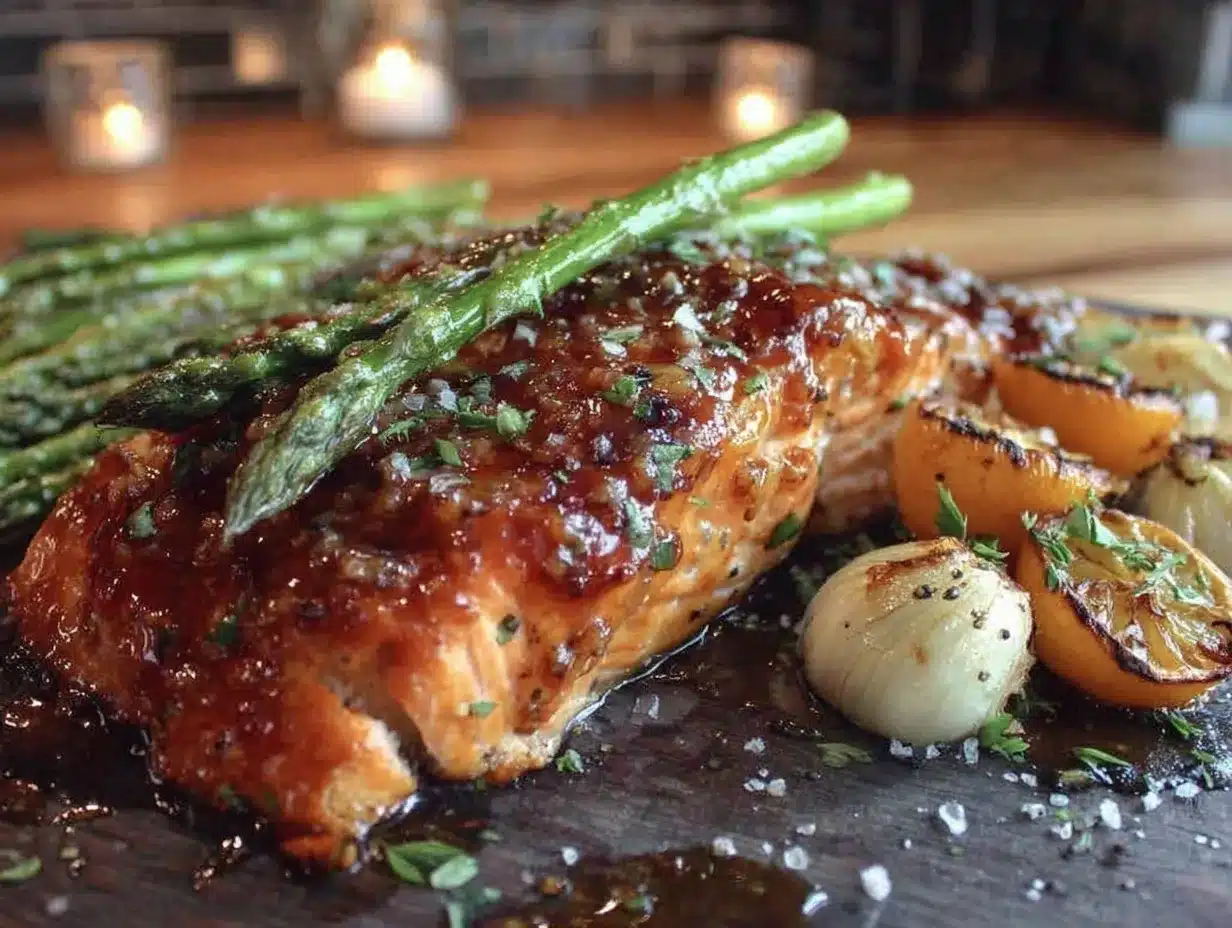
Alright, let’s get cooking. This comes together fast, so I recommend reading through the whole method once before you start. Trust me, I’ve learned the hard way that scrambling for ingredients mid-step is no fun.
- Preheat your oven to 400°F (200°C). Position the rack in the upper third of the oven so the salmon gets nice caramelization on top. While it’s heating, take your salmon out of the fridge and let it sit at room temperature for about 10 minutes—this helps it cook more evenly.
- Prepare the asparagus. Rinse the bunch and pat it dry. Snap off the woody ends of each spear—they’ll naturally break where the tough part ends. You can also line up all the spears and cut about 2 inches off the bottoms. Place the trimmed asparagus in a bowl, drizzle with 1 tablespoon of olive oil, and season with a pinch of salt and pepper. Toss gently to coat, then set aside.
- Make the honey garlic glaze. In a small bowl, whisk together the honey, minced garlic, soy sauce, rice vinegar, sesame oil (if using), and red pepper flakes. Give it a taste—it should be sweet, savory, and just a little tangy. Adjust the honey or soy sauce to your preference. Set aside about 2 tablespoons of the glaze for basting later—this prevents cross-contamination from raw fish.
- Season the salmon. Pat the salmon fillets dry with paper towels—this is crucial for getting a good sear. Season both sides generously with salt and pepper. Don’t be shy with the salt; it brings out the salmon’s natural flavor.
- Heat the skillet. Place your oven-safe skillet over medium-high heat and add the remaining 1 tablespoon of olive oil. Wait until the oil shimmers and moves easily around the pan—about 2 minutes. If you’re using cast iron, give it a little extra time to heat evenly.
- Sear the salmon. Carefully place the salmon fillets skin-side down (if using skin-on) into the hot skillet. Listen for that satisfying sizzle—if it doesn’t sizzle loudly, your pan isn’t hot enough. Cook without moving for 3-4 minutes, until the skin is golden brown and crispy. Use a spatula to gently lift a corner and check the color.
- Flip and glaze. Using tongs and a spatula, carefully flip each fillet. Immediately brush or spoon about half of the reserved glaze over the cooked side of each fillet. Let them cook for another 1-2 minutes—the glaze will start to caramelize and get sticky.
- Add the asparagus and butter. Scatter the seasoned asparagus around the salmon fillets in a single layer. Dot the butter in small pieces over the asparagus and around the pan. Drizzle the remaining glaze over the salmon and asparagus—save that reserved 2 tablespoons for later.
- Transfer to the oven. Carefully move the skillet to the preheated oven. Roast for 8-12 minutes, depending on the thickness of your salmon and how well-done you like it. For medium-rare (still slightly translucent in the center), aim for 8 minutes. For medium (flaky but still moist), go for 10-12 minutes. The asparagus should be tender-crisp with slightly charred tips.
- Finish with lemon and garnish. Remove the skillet from the oven (use oven mitts—that handle is hot!). Immediately squeeze fresh lemon juice over everything. Sprinkle with chopped parsley and sesame seeds if using. Drizzle that reserved 2 tablespoons of glaze over the top for an extra glossy finish.
- Rest before serving. Let the salmon rest in the pan for 2-3 minutes. This allows the juices to redistribute and the glaze to set. Serve directly from the skillet for that gorgeous one-pan presentation, or transfer to a platter.
Sensory Cues: At step 6, the salmon should release easily from the pan when it’s ready to flip—if it sticks, give it another 30 seconds. The glaze at step 7 should bubble gently and smell intensely sweet and garlicky. When you pull the pan from the oven at step 9, the asparagus tips should be browned in spots, and the glaze should be thick and sticky, coating everything like a beautiful amber blanket.
Cooking Tips & Techniques
After making this recipe more times than I can count, I’ve picked up a few tricks that make a real difference. Let me share what I’ve learned—including some mistakes I hope you don’t repeat.
Pat your salmon dry. This is the number one tip I wish someone had told me years ago. Moisture is the enemy of a good sear. If your salmon is wet, it’ll steam instead of sear, and you’ll end up with pale, sad fish instead of that gorgeous golden crust. Use paper towels and really get in there.
Don’t overcrowd the pan. If your skillet is too small and the fillets are touching, they’ll steam each other. Leave at least an inch of space between each fillet. If you’re cooking for a crowd, use two skillets or work in batches—it’s worth the extra few minutes.
Watch the garlic closely. Garlic burns fast, especially in a hot pan with honey. That’s why we add the glaze after flipping the salmon and only cook it briefly before going into the oven. If you add the garlic too early, it’ll turn bitter and ruin the whole dish. I learned this the hard way—twice.
Use a meat thermometer if you’re unsure. Salmon is perfectly cooked at 125°F (52°C) for medium, 130°F (54°C) for medium-well. Insert the thermometer into the thickest part of the fillet. This takes the guesswork out and guarantees consistent results every time.
Let the pan do the work. When you add the asparagus to the pan, don’t stir it around constantly. Let it sit and develop those beautiful char marks. You want some browning, not just pale green stalks. Give it a gentle toss halfway through roasting if you want even cooking.
Timing is everything. While the salmon sears, prep your garnish and get your lemon ready. Once that pan goes in the oven, you have about 10 minutes to set the table, pour a drink, or just breathe. Use that time wisely—this dish comes together fast.
My biggest failure? I once forgot to reserve some glaze for basting and ended up brushing raw salmon juices back onto the cooked fish. Not my finest moment. Now I always set aside those 2 tablespoons before anything touches the raw fish. Learn from my mistake, please.
Variations & Adaptations
One of the reasons I love this recipe is how adaptable it is. Here are some of my favorite variations—I’ve tried most of them myself, and they all deliver.
Spicy Honey Garlic Salmon: If you like heat, double the red pepper flakes and add a minced Thai chili or serrano pepper to the glaze. I made this version for a friend who loves spicy food, and she said it was “the perfect amount of burn.” The honey balances the heat beautifully.
Low-Carb/Keto Version: Replace the honey with sugar-free honey substitute or use a monk fruit sweetener. Swap the asparagus for roasted broccoli or cauliflower florets—they’re lower in carbs and hold up well to roasting. I’ve tested this with a monk fruit honey alternative, and honestly, the texture was almost identical.
Sheet Pan Version: If you’re feeding a crowd or want even less cleanup, spread everything on a lined baking sheet. Arrange the salmon and asparagus in a single layer, drizzle with the glaze, and roast at 400°F for 12-15 minutes. No searing needed—just toss it all in the oven. This is my go-to for busy weeknights when I really don’t want to wash dishes.
Citrus Twist: Add the zest of one orange to the glaze along with the lemon juice. The orange adds a bright, floral note that pairs beautifully with the honey. I tried this on a whim one Sunday and it’s become my summer version of the recipe.
Allergen-Friendly Options: For a nut-free version, skip the sesame oil and seeds—simple as that. For a soy-free version, use coconut aminos instead of soy sauce (it’s slightly sweeter, so you might want to reduce the honey by a tablespoon). For a dairy-free version, use olive oil instead of butter—the salmon will still be moist and delicious.
Serving & Storage Suggestions
This dish is beautiful enough for company but simple enough for a Tuesday night. Here’s how to make the most of it.
Serving Temperature: Serve the salmon warm, straight from the oven. The glaze is at its best when it’s still glossy and slightly sticky. If you let it sit too long, the glaze will firm up—still delicious, but not as pretty. I usually serve it within 5 minutes of coming out of the oven.
Presentation Ideas: For a casual dinner, serve directly from the skillet—it looks rustic and impressive. For a more polished presentation, transfer the salmon and asparagus to a white platter, drizzle any remaining pan juices over the top, and garnish with lemon wedges and fresh herbs. The contrast of the deep amber glaze against the bright green asparagus is stunning.
What to Serve With It: This dish pairs beautifully with steamed jasmine rice or fluffy quinoa to soak up all that honey garlic sauce. A simple side of crusty bread is also perfect for wiping the pan clean. For a low-carb option, serve with cauliflower rice or a fresh green salad. I personally love it with garlic butter noodles—the extra carbs are worth it.
Storage Instructions: Store leftover salmon and asparagus in an airtight container in the refrigerator for up to 3 days. The salmon will lose some of its crispy texture, but the flavor actually gets better as it sits. I don’t recommend freezing this dish—the asparagus gets mushy and the glaze can separate.
Reheating Tips: The best way to reheat is in a skillet over medium-low heat with a splash of water or chicken broth. Cover the pan and cook for 3-4 minutes until warmed through. The microwave works in a pinch, but it’ll make the salmon dry and the asparagus limp. If you’re using the microwave, cover the plate with a damp paper towel to add moisture.
Flavor Development: Here’s something interesting—the flavors actually meld and deepen overnight. Cold leftover salmon straight from the fridge is surprisingly delicious. I’ve been known to flake it over a salad for lunch the next day. The glaze sets into a kind of savory-sweet jelly that coats every bite. Don’t judge me until you try it.
Nutritional Information & Benefits
This recipe isn’t just delicious—it’s packed with nutrients that make you feel good about eating it. Here’s the breakdown per serving (based on 4 servings, using the recipe as written):
| Nutrient | Amount Per Serving |
|---|---|
| Calories | 385 |
| Protein | 35g |
| Fat | 18g |
| Saturated Fat | 4g |
| Carbohydrates | 22g |
| Fiber | 3g |
| Sugar | 18g |
| Sodium | 620mg |
Health Benefits: Salmon is one of the best sources of omega-3 fatty acids, which support heart health and brain function. It’s also packed with high-quality protein and vitamin D. Asparagus is rich in fiber, folate, and vitamins A, C, and K—it’s a nutritional powerhouse that supports digestion and immune health. The garlic in this recipe isn’t just for flavor; it contains allicin, a compound with anti-inflammatory properties.
Dietary Considerations: This recipe is naturally gluten-free if you use tamari instead of soy sauce. It’s also dairy-free if you skip the butter. For a low-carb version, reduce the honey to 2 tablespoons and use a sugar substitute. The recipe is not suitable for vegans, but you could substitute the salmon with firm tofu or portobello mushrooms for a plant-based version.
Potential Allergens: This recipe contains fish, soy, and sesame (if using sesame oil and seeds). If you have allergies, adjust accordingly. I’ve made this for friends with various dietary needs, and the substitutions always work beautifully.
Conclusion
This honey garlic salmon with asparagus is the kind of recipe that makes you feel like you’ve discovered a secret. It’s fancy enough for date night but easy enough for a Wednesday when you’re exhausted and just want something good. The honey garlic glaze is that perfect balance of sweet and savory, the salmon stays tender and flaky, and the asparagus roasts to tender-crisp perfection—all in one pan with minimal cleanup.
I’ve made this for dinner parties where everyone asked for the recipe, and I’ve made it for myself on nights when I needed a little comfort. It never disappoints. The best part? You can tweak it to make it your own—spicier, sweeter, with different vegetables or different sides. That’s the beauty of a simple, well-crafted recipe.
So go ahead—give it a try. Maybe you’ll serve it with rice, maybe you’ll eat it straight from the skillet like I sometimes do. Either way, I’d love to hear how it turns out. Drop a comment below and let me know if you added your own twist, or tag me in your photos if you share them online. Happy cooking, friend!
Frequently Asked Questions
Can I use frozen salmon for this recipe?
Yes, but I recommend thawing it completely in the refrigerator overnight first. Pat it very dry before cooking—frozen salmon holds more moisture, which can prevent a good sear. If you’re in a hurry, you can thaw it in cold water for about 30 minutes, but make sure it’s fully thawed before cooking.
How do I know when the salmon is done?
The easiest way is to use a meat thermometer—125°F for medium, 130°F for medium-well. If you don’t have one, look for these signs: the salmon flakes easily with a fork, the flesh is opaque all the way through, and the internal color has changed from translucent to a uniform pink. The cooking time in the recipe is a good starting point, but thickness varies.
Can I make this recipe without an oven-safe skillet?
Absolutely. Sear the salmon in a regular skillet, then transfer everything to a baking dish or sheet pan before finishing in the oven. Alternatively, you can cook the salmon entirely on the stovetop—just reduce the heat to medium after flipping and cover the pan. Cook for about 5-7 minutes more, depending on thickness.
What can I use instead of asparagus?
This recipe is very flexible. Broccoli florets, green beans, snap peas, zucchini slices, or even bell pepper strips all work beautifully. Just adjust the roasting time—thinner vegetables like green beans will cook faster, while thicker vegetables like broccoli might need an extra 2-3 minutes in the oven.
Can I double this recipe for a crowd?
Yes, but use two skillets or a large sheet pan instead of overcrowding one pan. If using a sheet pan, skip the stovetop searing and roast everything at 400°F for 12-15 minutes. The glaze will caramelize beautifully in the oven, and you won’t have to worry about overcrowding. Just make sure the salmon and asparagus are in a single layer.
Pin This Recipe!
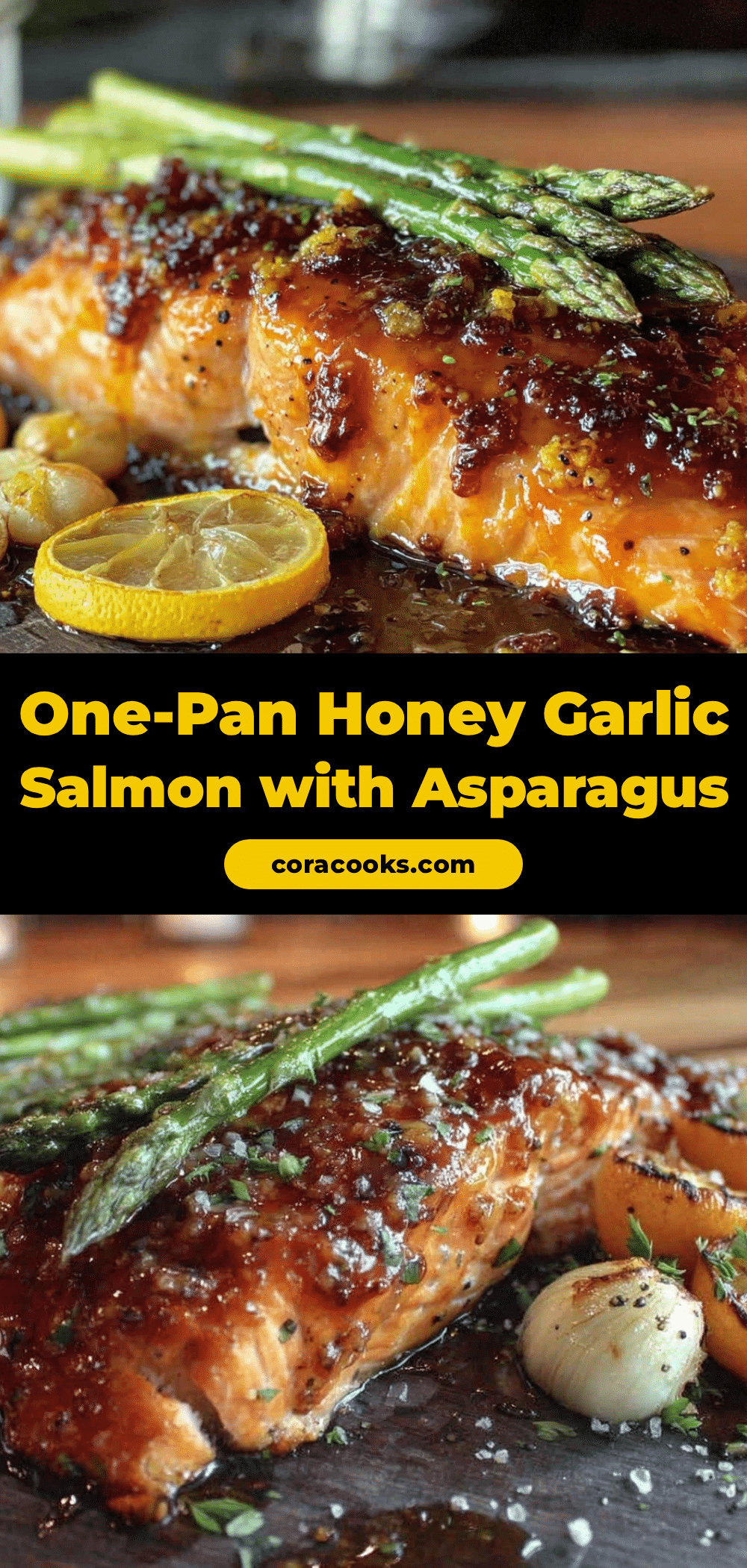
Easy One-Pan Honey Garlic Salmon with Asparagus
A quick and easy one-pan meal featuring honey garlic glazed salmon and roasted asparagus, ready in under 30 minutes. Perfect for busy weeknights or impressing guests with minimal effort.
- Prep Time: 10 minutes
- Cook Time: 18 minutes
- Total Time: 28 minutes
- Yield: 4 servings 1x
- Category: Main Course
- Cuisine: American
Ingredients
- 4 salmon fillets (6 ounces each, skin-on or skinless)
- 1 bunch asparagus (about 1 pound, woody ends trimmed)
- 2 tablespoons olive oil (divided)
- Salt and black pepper (to taste)
- 1 tablespoon unsalted butter
- 1/4 cup honey
- 4 cloves garlic (minced)
- 3 tablespoons low-sodium soy sauce
- 1 tablespoon rice vinegar (unseasoned)
- 1 teaspoon sesame oil (optional)
- 1/2 teaspoon red pepper flakes (optional)
- 1 tablespoon fresh lemon juice
- 2 tablespoons fresh parsley (chopped, for garnish)
- 1 tablespoon sesame seeds (toasted, for garnish)
- Lemon wedges (for serving)
Instructions
- Preheat your oven to 400°F (200°C). Position the rack in the upper third of the oven. Take salmon out of the fridge and let it sit at room temperature for about 10 minutes.
- Prepare the asparagus: rinse, pat dry, snap off woody ends. Toss with 1 tablespoon olive oil, salt, and pepper. Set aside.
- Make the honey garlic glaze: in a small bowl, whisk together honey, minced garlic, soy sauce, rice vinegar, sesame oil (if using), and red pepper flakes. Set aside 2 tablespoons for basting later.
- Pat salmon fillets dry with paper towels. Season both sides generously with salt and pepper.
- Heat an oven-safe skillet over medium-high heat with remaining 1 tablespoon olive oil until shimmering.
- Place salmon fillets skin-side down in the hot skillet. Cook without moving for 3-4 minutes until skin is golden brown and crispy.
- Flip each fillet. Immediately brush or spoon about half of the reserved glaze over the cooked side. Cook for another 1-2 minutes.
- Scatter seasoned asparagus around the salmon in a single layer. Dot butter over asparagus and around the pan. Drizzle remaining glaze over salmon and asparagus (save the reserved 2 tablespoons).
- Transfer skillet to the preheated oven. Roast for 8-12 minutes, depending on thickness and desired doneness.
- Remove from oven. Squeeze fresh lemon juice over everything. Sprinkle with chopped parsley and sesame seeds. Drizzle reserved 2 tablespoons of glaze over the top.
- Let rest in the pan for 2-3 minutes before serving.
Notes
Pat salmon dry for best sear. Don’t overcrowd the pan. Watch garlic closely to avoid burning. Use a meat thermometer for perfect doneness (125°F for medium). Let pan do the work for charred asparagus. Reserve glaze before brushing raw fish to avoid cross-contamination.
Nutrition
- Serving Size: 1 salmon fillet with
- Calories: 385
- Sugar: 18
- Sodium: 620
- Fat: 18
- Saturated Fat: 4
- Carbohydrates: 22
- Fiber: 3
- Protein: 35
Keywords: honey garlic salmon, one-pan salmon, salmon with asparagus, quick salmon recipe, healthy dinner, weeknight dinner, gluten-free option