Love this? Save it for later!
Share the inspiration with your friends
I was at the town dump last fall—honestly, one of those Saturdays where you’re just trying to get rid of yard waste—when the guy sorting scrap metal started talking about salad dressing. He was wearing a flannel shirt with a hole in the elbow and had this no-nonsense way of explaining things, like he’d been making vinaigrette longer than I’d been cooking. “You’re overthinking it,” he said, wiping grease off his hands. “Toss it all in a blender. Done in five minutes. That’s the secret.” I almost laughed. But he was so matter-of-fact about it that I scribbled his ratios on the back of a receipt I found in my pocket. And you know what? He was completely right. That chance encounter at the dump changed how I make balsamic vinaigrette forever. I’ve tweaked it over time, added a little Dijon, swapped oils when I ran out, but the core idea—that easy, fast, dump-and-blend method—stayed exactly the same. Maybe you’ve been buying overpriced bottles at the store, or whisking by hand until your arm hurts. I get it. I used to do that too. But let me tell you, this easy 5-minute blender balsamic vinaigrette is about to simplify your life in the best possible way. It’s the kind of recipe you’ll make on a Tuesday afternoon, pour over a simple salad, and wonder why you ever bothered with anything else.
Why You’ll Love This Recipe
This isn’t just another salad dressing recipe. After testing this easy 5-minute blender balsamic vinaigrette at least a dozen times—once accidentally using too much garlic, another time forgetting the sweetener entirely—I can say with confidence that this version is foolproof. It’s the one I bring to potlucks, the one I gift in little mason jars, and the one my picky-eating nephew actually asks for by name.
- Quick & Easy: Five minutes from start to finish. No whisking, no chopping, no stress. Just dump, blend, and pour.
- Simple Ingredients: You probably have everything in your pantry and fridge right now. Balsamic vinegar, olive oil, Dijon mustard, garlic, honey or maple syrup, salt, and pepper. That’s it.
- Perfect for Meal Prep: Make a batch on Sunday and use it all week. It stays emulsified in the fridge for up to two weeks.
- Crowd-Pleaser: It’s balanced—tangy but not sharp, sweet but not cloying. I’ve served it to kids, grandparents, and foodie friends, and nobody complains.
- Unbelievably Delicious: The blender creates a creamy, thick emulsion that coats every leaf of lettuce. It’s restaurant-quality without the restaurant price tag.
What makes this recipe different? It’s the technique. Blending creates a stable emulsion that won’t separate in the fridge, and the Dijon mustard acts as a natural binder. You get a dressing that’s silky, flavorful, and consistent every single time. Honestly, it’s the kind of recipe that makes you close your eyes after the first bite. Comfort food reimagined—faster, easier, but with the same soul-soothing satisfaction.
What Ingredients You Will Need
This easy 5-minute blender balsamic vinaigrette uses simple, pantry-friendly ingredients to deliver bold flavor and a silky texture. No fancy trips to specialty stores required.
- Balsamic vinegar (½ cup) – Use a good-quality balsamic for the best flavor. I prefer Colavita or Lucini for their balanced sweetness and acidity. Avoid the super cheap stuff—it can be harsh.
- Extra-virgin olive oil (¾ cup) – A medium-bodied olive oil works best. I like California Olive Ranch for everyday cooking. Don’t use the expensive finishing oil here; save that for drizzling.
- Dijon mustard (1 tablespoon) – This acts as the emulsifier, keeping your dressing creamy and stable. Grey Poupon is my go-to, but any smooth Dijon works. Avoid whole-grain mustard here—it won’t blend as smoothly.
- Garlic (1 small clove, minced) – Fresh garlic gives a punchy kick. If you’re sensitive to raw garlic, roast the clove first for a milder flavor, or use ¼ teaspoon garlic powder.
- Honey or maple syrup (1 tablespoon) – Balances the acidity of the vinegar. Honey adds floral notes; maple syrup gives a warmer, earthier sweetness. Both are delicious.
- Salt (½ teaspoon, or to taste) – Use fine sea salt for even distribution. Kosher salt works too, but you may need a bit more.
- Black pepper (¼ teaspoon, freshly ground) – Freshly ground pepper makes a difference here. Pre-ground pepper just doesn’t have the same pop.
Substitution guidance: For a vegan version, swap honey for maple syrup or agave. If you’re avoiding oil, try using ½ cup water and ¼ cup avocado oil for a lighter dressing—it won’t be as creamy, but it’ll still taste great. For a gluten-free option, just double-check your Dijon mustard label (most are gluten-free, but some brands add wheat-based thickeners).
Equipment Needed
You don’t need much for this easy 5-minute blender balsamic vinaigrette, which is part of the beauty. Here’s what you’ll want on hand:
- Blender – A standard countertop blender works perfectly. I use a Ninja and it emulsifies beautifully in about 30 seconds. An immersion blender with a cup attachment also works if you’re short on counter space.
- Measuring cups and spoons – Accurate measurements help balance the flavors. I keep a set of stainless steel ones for oil and vinegar to avoid staining plastic.
- Garlic press or knife – A press saves time, but mincing by hand with a chef’s knife works just as well. I actually prefer the knife—it gives me more control over the size of the pieces.
- Glass jar or bottle for storage – A 16-ounce mason jar with a tight-fitting lid is ideal. I’ve also repurposed old salad dressing bottles—just wash them thoroughly first.
- Small spatula – To scrape every last drop out of the blender. Trust me, you don’t want to waste this stuff.
Budget-friendly tip: If you don’t own a blender, you can whisk this by hand—it just takes a few minutes longer and won’t be as creamy. Use a fork or a small whisk and drizzle the oil in slowly while whisking vigorously. I’ve done this in a pinch, and it still tastes fantastic.
Preparation Method
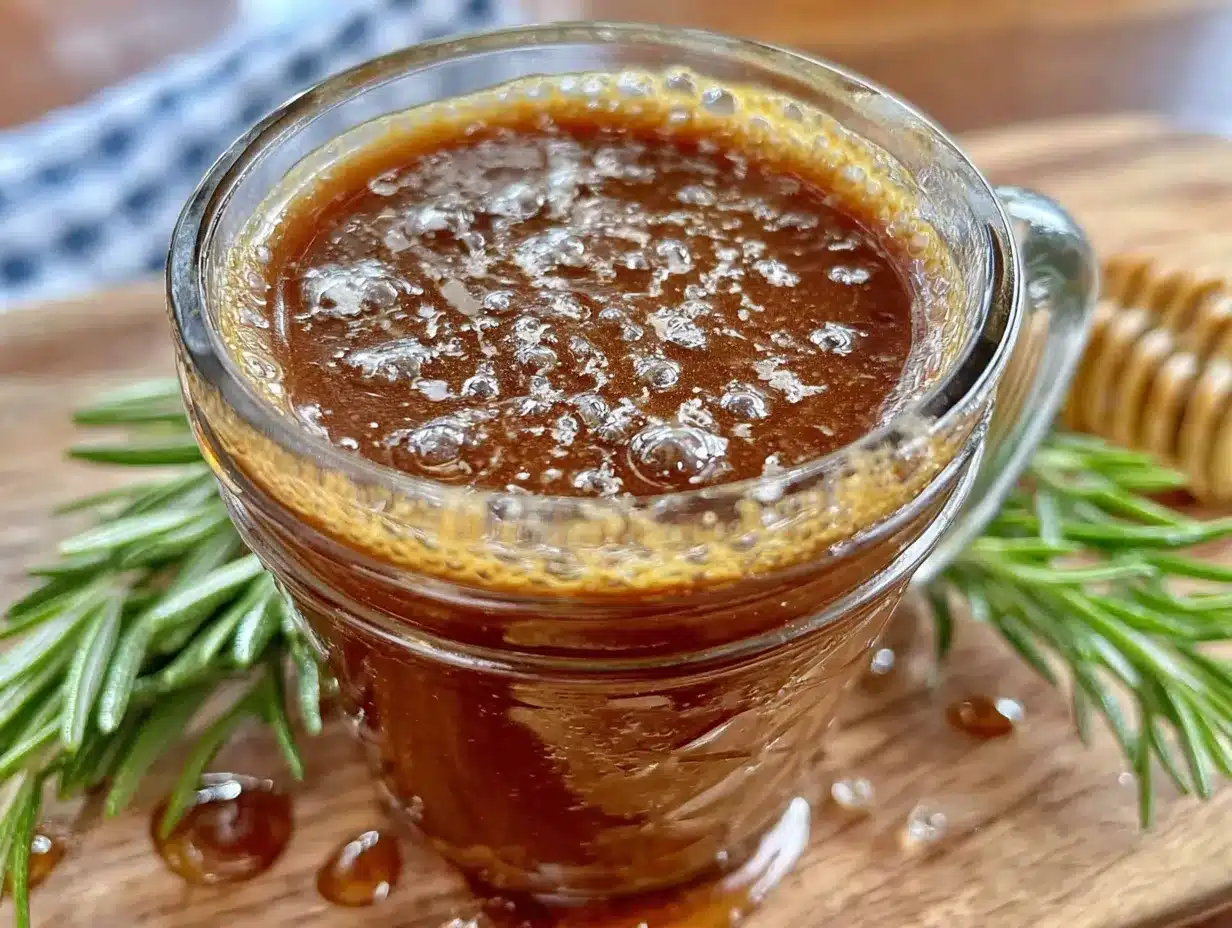
Making this easy 5-minute blender balsamic vinaigrette is almost embarrassingly simple. But I’ll walk you through each step so you get it perfect every time.
- Prep your ingredients. Measure out the balsamic vinegar (½ cup), olive oil (¾ cup), Dijon mustard (1 tablespoon), honey or maple syrup (1 tablespoon), salt (½ teaspoon), and pepper (¼ teaspoon). Peel the garlic clove and mince it or press it. I like to press it directly into the blender jar to save a dish.
- Add ingredients to the blender. Pour in the balsamic vinegar first—it helps prevent the oil from sticking to the bottom. Then add the Dijon mustard, honey or maple syrup, minced garlic, salt, and pepper. Don’t add the oil yet. I learned this the hard way after a few splattery messes.
- Blend the base. Pulse the blender a few times to combine the vinegar, mustard, sweetener, and seasonings. This takes about 5 seconds. You’ll see the mixture turn slightly thicker as the mustard incorporates.
- Add the oil slowly. With the blender running on low speed, remove the small cap from the blender lid and drizzle in the olive oil in a steady, thin stream. If your blender doesn’t have a removable cap, add the oil in three batches, pulsing between each addition. This slow addition is what creates the creamy emulsion. I once dumped all the oil in at once—big mistake. It separated and looked like a science experiment gone wrong.
- Blend until smooth. Once all the oil is in, increase the speed to medium and blend for 15–20 seconds. The dressing should look thick, creamy, and pale brown. If it looks thin or watery, blend for another 10 seconds. Taste it here and adjust—add a pinch more salt if it needs it, or another drizzle of honey if it’s too tangy.
- Transfer and store. Pour the dressing into your glass jar or bottle. Use the spatula to scrape every bit out of the blender. Seal the jar tightly and refrigerate for at least 30 minutes before serving—this lets the flavors meld together beautifully.
Sensory cues to watch for: The dressing should smell tangy and sweet, with a hint of garlic. When you dip a spoon in, it should coat the back of the spoon evenly without looking greasy or watery. The color should be a uniform caramel-brown, not separated into dark and light layers.
Troubleshooting tip: If your dressing separates after sitting in the fridge, don’t panic. Just let it come to room temperature for 10 minutes, then shake the jar vigorously or give it a quick blitz in the blender. Emulsions naturally break when cold, but this one comes back together easily.
Cooking Tips & Techniques
Over the years, I’ve made this easy 5-minute blender balsamic vinaigrette more times than I can count—and I’ve definitely made some mistakes along the way. Here’s what I’ve learned so you don’t have to repeat my blunders:
- Room temperature ingredients matter. Cold ingredients don’t emulsify as well. Let your vinegar and oil sit out for 10–15 minutes before blending. I forgot this once in winter, and my dressing came out thin and separated within an hour.
- Don’t skip the Dijon mustard. It’s not just for flavor—it’s the emulsifier that keeps everything together. If you’re out of Dijon, you can use ½ teaspoon of mayonnaise as a substitute, but the flavor will change slightly.
- Taste and adjust. Everyone’s palate is different. Some people like their vinaigrette tangier, some sweeter. I always taste mine before bottling and add a tiny pinch of salt or a splash more vinegar if needed. It’s your dressing—make it yours.
- Let it rest. The flavors really develop after sitting in the fridge for a few hours. If you taste it right after blending, it might seem sharp. Give it time. I promise it gets better.
- Multitask strategically. While the dressing blends, wash your measuring cups or prep your salad greens. It only takes 30 seconds of active blending, so use that time wisely.
Common mistake to avoid: Adding too much garlic. One small clove is plenty—any more and the garlic will overpower everything else. I learned this when I accidentally used a giant clove and ended up with dressing that tasted more like garlic dip than vinaigrette. Still edible, but not what I was going for.
Variations & Adaptations
This easy 5-minute blender balsamic vinaigrette is incredibly versatile. Here are some ways I’ve adapted it over the years for different meals and moods:
- Herb-infused version: Add 2 tablespoons of fresh basil leaves, 1 tablespoon of fresh oregano, or a handful of fresh parsley to the blender before blending. The herbs get finely chopped by the blades and infuse the dressing with garden-fresh flavor. I love this version in summer with ripe tomatoes and fresh mozzarella.
- Spicy balsamic vinaigrette: Add ¼ teaspoon of red pepper flakes or a small pinch of cayenne pepper along with the other ingredients. It gives a gentle warmth without being overwhelming. I make this when I want a little kick on my arugula salad with shaved Parmesan.
- Creamy balsamic dressing: Add 2 tablespoons of Greek yogurt or sour cream to the blender. This creates a thicker, creamier dressing that’s perfect for drizzling over grain bowls or using as a dip for roasted vegetables. My sister-in-law swears by this version.
- Roasted garlic variation: Instead of raw garlic, use 1–2 cloves of roasted garlic. Roast a whole head of garlic at 400°F for 40 minutes, then squeeze out the soft cloves. This gives a mellow, sweet garlic flavor that’s less pungent. It’s my go-to for dinner parties when I want something a little more sophisticated.
- Citrus twist: Replace 2 tablespoons of the balsamic vinegar with fresh orange juice or lemon juice. The citrus brightens the dressing and pairs beautifully with salads that include fruit, like sliced strawberries or mandarin oranges. I tried this on a whim and it’s now a spring favorite.
Dietary adaptations: For a low-FODMAP version, omit the garlic and use garlic-infused olive oil instead. For a nut-free version (it already is, but double-check your mustard), you’re good to go. For a sugar-free version, use a sugar-free maple syrup substitute or stevia to taste.
Serving & Storage Suggestions
This easy 5-minute blender balsamic vinaigrette is incredibly versatile, and I’ve found it works beautifully in so many ways beyond just salad.
Serving temperature: Serve the dressing chilled or at room temperature. If it’s been in the fridge, let it sit on the counter for 10–15 minutes before using, then shake or stir well. Cold dressing can dull the flavors, so a little warming goes a long way.
What to pair it with: This vinaigrette is a natural match for simple green salads—think mixed greens, arugula, or spinach. But don’t stop there. Drizzle it over roasted vegetables like asparagus, Brussels sprouts, or sweet potatoes. Use it as a marinade for chicken or tofu before grilling. Spoon it over a grain bowl with quinoa, roasted chickpeas, and feta. I’ve even used it as a dipping sauce for crusty bread—it’s that good.
Storage instructions: Store the dressing in an airtight glass jar in the refrigerator for up to 2 weeks. The flavor actually improves after a day or two as the ingredients meld. I always make a double batch so I have some on hand for the week.
Reheating (if needed): This dressing is typically served cold, but if you want to use it as a warm drizzle over roasted vegetables, gently warm it in a small saucepan over low heat for 1–2 minutes. Don’t boil it, or the emulsion may break. Alternatively, microwave it in 10-second bursts, stirring between each.
Flavor development note: The garlic flavor will intensify over time. If you’re making this for meal prep and prefer a milder garlic taste, use just half a clove. I’ve found that by day three, the garlic really comes through, which I personally love, but it’s worth knowing.
Nutritional Information & Benefits
This easy 5-minute blender balsamic vinaigrette is not only delicious but also offers some solid nutritional perks. Here’s the approximate breakdown per 2-tablespoon serving:
| Nutrient | Amount per serving |
|---|---|
| Calories | 120 |
| Total Fat | 12g |
| Saturated Fat | 1.5g |
| Carbohydrates | 4g |
| Sugar | 3g |
| Sodium | 150mg |
Health benefits of key ingredients: Extra-virgin olive oil is rich in heart-healthy monounsaturated fats and antioxidants. Balsamic vinegar contains acetic acid, which may help with blood sugar regulation. Garlic offers immune-supporting compounds, and Dijon mustard provides a small amount of selenium. This dressing is naturally gluten-free, dairy-free, and vegetarian. For a vegan option, use maple syrup instead of honey.
Potential allergens: This recipe is free of the top eight allergens (milk, eggs, fish, shellfish, tree nuts, peanuts, wheat, and soy) when made with standard ingredients. Always check your Dijon mustard label if you have specific concerns.
My personal perspective: I love that this dressing lets me enjoy a flavorful, homemade option without any of the preservatives or additives found in store-bought versions. It’s a small change that makes a big difference in how I feel about what I’m eating.
Conclusion
This easy 5-minute blender balsamic vinaigrette has become a staple in my kitchen, and I honestly can’t imagine going back to store-bought dressing. It’s quick, simple, and endlessly adaptable—everything a good recipe should be. Whether you’re drizzling it over a weeknight salad, marinating chicken for a weekend cookout, or gifting it to a friend in a pretty jar, this dressing delivers every single time.
I love that it came from such an unexpected place—a conversation at the dump with a stranger who just happened to know his way around a vinaigrette. It reminds me that good recipes can come from anywhere, and that sometimes the simplest methods are the best. So go ahead, give it a try. Customize it to your taste, make a double batch, and pour it over everything. I promise you won’t regret it.
I’d love to hear how yours turns out! Drop a comment below and let me know what variations you tried, or tag me in your photos if you share them online. Happy blending, friend!
Frequently Asked Questions
Can I make this balsamic vinaigrette without a blender?
Absolutely! You can whisk it by hand using a bowl and a fork or small whisk. Just be sure to drizzle the oil in very slowly while whisking constantly. It won’t be quite as creamy, but it will still taste delicious.
How long does homemade balsamic vinaigrette last in the fridge?
This dressing stays fresh for up to 2 weeks when stored in an airtight glass jar in the refrigerator. The flavor actually improves after a day or two as the ingredients meld together.
Why did my vinaigrette separate in the fridge?
Separation is normal, especially when the dressing is cold. Emulsions naturally break as they chill. Just let the dressing sit at room temperature for 10 minutes, then shake it vigorously or give it a quick blitz in the blender to bring it back together.
Can I use white balsamic vinegar instead of dark?
Yes, you can! White balsamic vinegar has a milder, slightly sweeter flavor and won’t darken light-colored salads or vegetables. It’s a great option if you’re serving something like a caprese salad and want to keep the colors bright.
Is this dressing keto-friendly?
With honey or maple syrup, this dressing has about 3g of sugar per serving, which may not fit strict keto macros. For a low-carb version, substitute the sweetener with a keto-friendly option like monk fruit sweetener or stevia, and use a sugar-free maple syrup alternative.
Pin This Recipe!
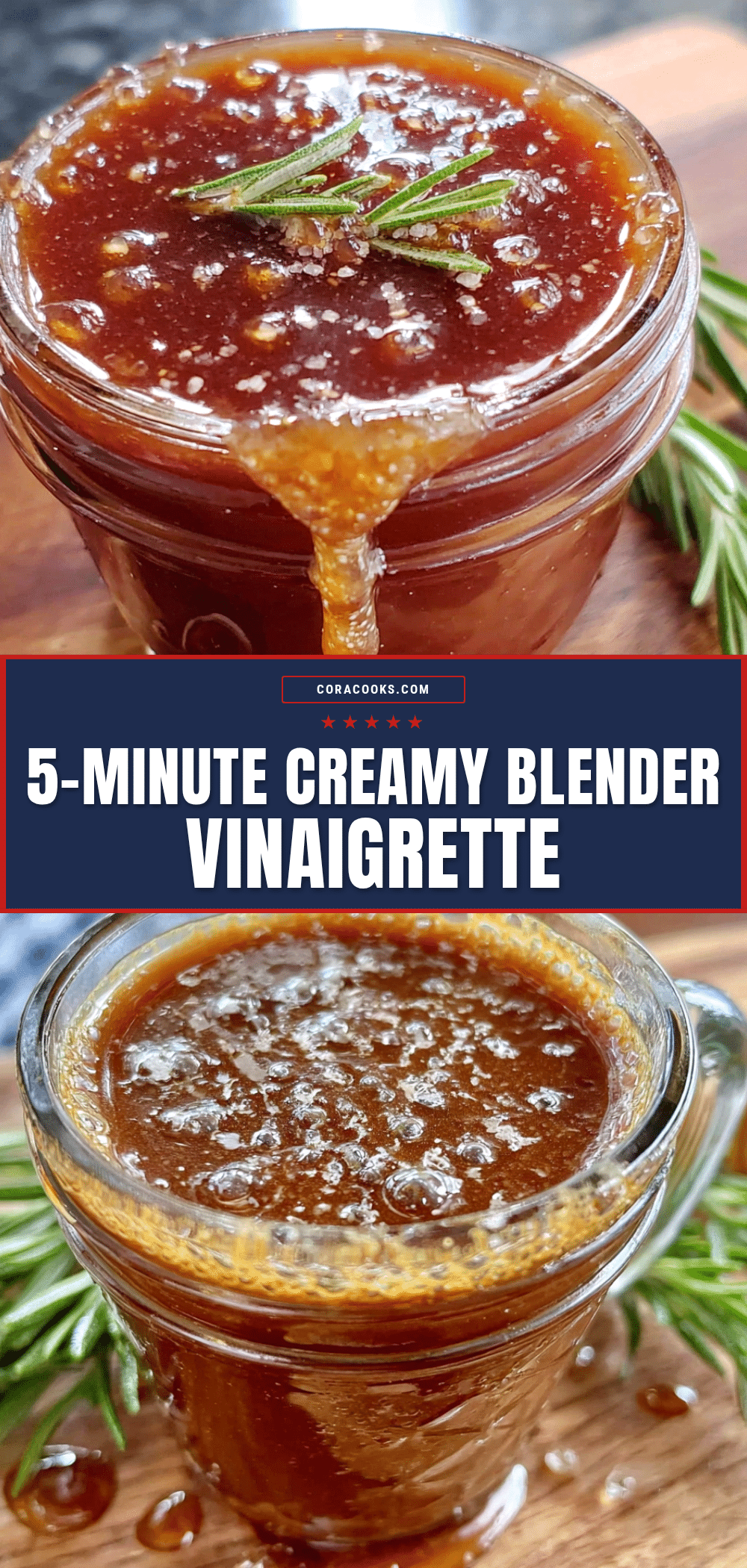
Easy 5-Minute Blender Balsamic Vinaigrette Recipe
This easy 5-minute blender balsamic vinaigrette is a quick, foolproof dressing made with simple pantry ingredients. It’s creamy, tangy-sweet, and perfect for salads, marinades, or dipping.
- Prep Time: 5 minutes
- Cook Time: 0 minutes
- Total Time: 5 minutes
- Yield: 8 servings 1x
- Category: Condiment
- Cuisine: Italian
Ingredients
- ½ cup balsamic vinegar
- ¾ cup extra-virgin olive oil
- 1 tablespoon Dijon mustard
- 1 small clove garlic, minced
- 1 tablespoon honey or maple syrup
- ½ teaspoon fine sea salt
- ¼ teaspoon freshly ground black pepper
Instructions
- Prep your ingredients: Measure out the balsamic vinegar, olive oil, Dijon mustard, honey or maple syrup, salt, and pepper. Peel and mince the garlic clove.
- Add ingredients to the blender: Pour in the balsamic vinegar first, then add the Dijon mustard, honey or maple syrup, minced garlic, salt, and pepper. Do not add the oil yet.
- Blend the base: Pulse the blender a few times to combine the vinegar, mustard, sweetener, and seasonings (about 5 seconds).
- Add the oil slowly: With the blender running on low speed, remove the small cap from the blender lid and drizzle in the olive oil in a steady, thin stream. If your blender doesn’t have a removable cap, add the oil in three batches, pulsing between each addition.
- Blend until smooth: Once all the oil is in, increase the speed to medium and blend for 15–20 seconds until the dressing is thick, creamy, and pale brown. Taste and adjust seasoning if needed.
- Transfer and store: Pour the dressing into a glass jar or bottle, using a spatula to scrape every bit out of the blender. Seal tightly and refrigerate for at least 30 minutes before serving to let the flavors meld.
Notes
For a vegan version, swap honey for maple syrup or agave. If you’re avoiding oil, use ½ cup water and ¼ cup avocado oil for a lighter dressing. For a low-FODMAP version, omit the garlic and use garlic-infused olive oil. The dressing stays fresh in the refrigerator for up to 2 weeks. If it separates after chilling, let it come to room temperature for 10 minutes, then shake vigorously or blend again.
Nutrition
- Serving Size: 2 tablespoons
- Calories: 120
- Sugar: 3
- Sodium: 150
- Fat: 12
- Saturated Fat: 1.5
- Carbohydrates: 4
Keywords: balsamic vinaigrette, homemade salad dressing, blender dressing, easy vinaigrette, quick dressing, balsamic dressing, 5-minute recipe