Love this? Save it for later!
Share the inspiration with your friends
“I’ve never been one to rush into herbal remedies,” I admit, watching my roommate stash jars of elderberry syrup in the fridge like they were precious potions. For years, she insisted elderberry was the secret weapon to fend off colds and flu, while I stayed skeptical, sticking to my usual vitamin C and chicken soup ritual. Then one rainy Thursday evening, after forgetting to take my usual supplements and feeling the unmistakable tickle of a sore throat, I found myself raiding her stash—mostly to prove it was overrated.
Well, surprise surprise, the next morning I caught her in the act of topping her oatmeal with a generous drizzle of that very same syrup, eyes closed in what I can only describe as a moment of bliss. I had to admit, this version of healthy homemade elderberry syrup with cinnamon and cloves was something else. Not just the sharp, fruity tang of elderberries, but the warm, comforting spice notes that made each spoonful feel like a hug in a bottle.
Honestly, I never thought I’d be the one championing a syrup made from berries and spices, but here I am, quietly proud to have flipped the script on my own stubborn taste buds. Maybe you’ve been there—doubting a health fad until you accidentally stumble on a recipe that just clicks. This elderberry syrup stayed with me because it’s simple, natural, and actually delicious. Plus, it packs a punch when it comes to boosting immunity during those rough seasons. Let me tell you, once you try making it yourself, you might just find yourself reaching for that jar more often than you’d expect.
Why You’ll Love This Recipe
This healthy homemade elderberry syrup with cinnamon and cloves isn’t just a pantry staple—it’s a game changer for anyone wanting to keep things natural without sacrificing flavor. From my time experimenting in the kitchen and testing batches, here’s why this recipe stands out:
- Quick & Easy: Made from scratch in about 30 minutes, it’s perfect for busy days when you want a health boost without fuss.
- Simple Ingredients: You probably already have most of these spices and elderberries on hand or can easily find them at your local market.
- Perfect for Immune Support: The combination of elderberries, cinnamon, and cloves isn’t just tasty—it’s packed with antioxidants and anti-inflammatory properties.
- Crowd-Pleaser: The warm spice blend adds a cozy sweetness kids and adults both tend to enjoy, making it a family-friendly remedy.
- Unbelievably Delicious: The syrup balances tartness and spice so well, it’s more like a treat than medicine.
- Unique Take: Unlike many commercial syrups, this recipe uses whole spices simmered gently to release their full flavor, creating a depth that’s hard to match.
To me, this isn’t just syrup; it’s a ritual. The way it smells while simmering—like autumn in a pot—is enough to make you pause and appreciate the simple things. It’s that kind of recipe I’m proud to share because it actually works, tastes good, and feels like self-care in a bottle.
What Ingredients You Will Need
This recipe keeps things straightforward, focusing on wholesome, natural ingredients that come together to deliver bold flavor and immune-boosting benefits without any complicated additives.
- Fresh or dried elderberries: 1 cup fresh (~150g) or ½ cup dried (look for organic if possible) — the star ingredient, rich in antioxidants.
- Water: 4 cups (950 ml) — to simmer the berries and extract their goodness.
- Cinnamon sticks: 2 sticks (about 3 inches each) — adds warmth and a hint of sweetness.
- Whole cloves: 6-8 cloves — pungent and aromatic, enhancing the syrup’s immune properties.
- Raw honey: ½ to ¾ cup (120-180 ml) — natural sweetener, added after cooking to preserve its benefits. Use local honey if you want an extra touch of earthiness.
- Fresh ginger: 1-inch piece, peeled and sliced (optional) — for a gentle spicy kick and digestive aid.
- Vanilla extract: 1 teaspoon (optional) — smooths out the flavors and adds a subtle depth.
If you’re using dried elderberries, make sure they’re intact and not powdered for best flavor and efficacy. I usually pick up elderberries from trusted online suppliers or health food stores; brands like Gaia Herbs offer reliable dried elderberries. For a seasonal twist, swap the ginger for a splash of fresh lemon juice after cooking—it brightens the syrup beautifully.
Equipment Needed
- Medium saucepan: A non-reactive pot (stainless steel or enameled) to gently simmer the syrup without imparting metallic flavors.
- Fine mesh strainer or cheesecloth: Essential for straining out berry skins, seeds, and spice bits to get a smooth syrup.
- Mixing bowl or heatproof jug: To catch the strained liquid.
- Measuring cups and spoons: For precise ingredient amounts—accuracy helps balance flavors.
- Glass jars or bottles: For storing the syrup. I prefer sterilized mason jars with airtight lids to keep it fresh up to a month in the fridge.
If you don’t have cheesecloth, a clean cotton kitchen towel works in a pinch. A wooden spoon for stirring is a nice touch, too—something about stirring the simmering syrup by hand feels oddly satisfying. For budget-friendly options, basic stainless steel saucepans and reusable glass jars from local shops do the job perfectly.
Preparation Method
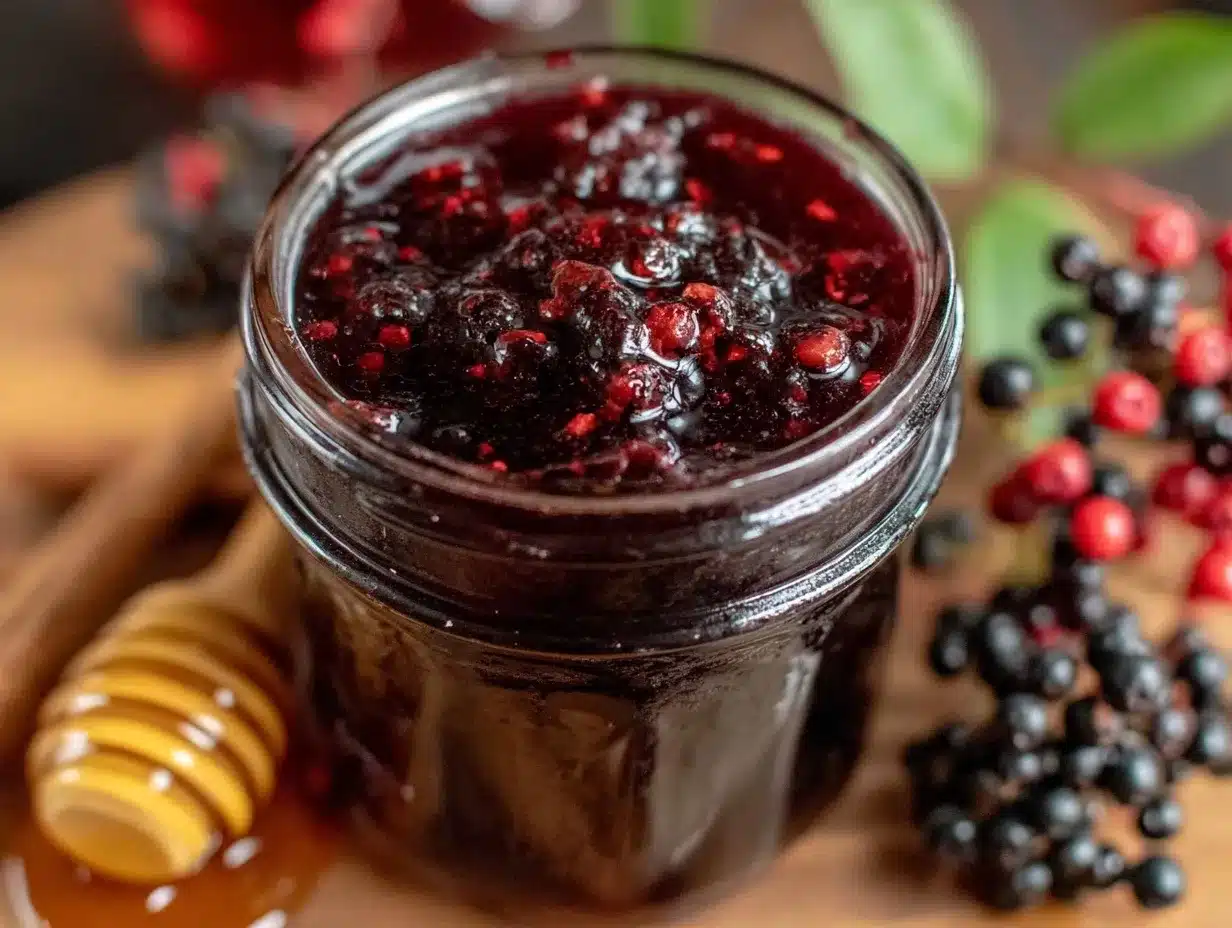
- Combine elderberries and water: In your medium saucepan, add 1 cup fresh or ½ cup dried elderberries with 4 cups (950 ml) water. Bring to a gentle boil over medium-high heat—this should take about 5-7 minutes.
- Add spices: Toss in 2 cinnamon sticks, 6-8 whole cloves, and if using, 1-inch sliced fresh ginger. Reduce heat to low and let it simmer gently for 30-40 minutes. You’re aiming for the liquid to reduce by about half while the berries burst and release their flavor.
- Strain the mixture: Once simmering is done, remove from heat. Place a fine mesh strainer or cheesecloth over a bowl or jug, pour the mixture through, and press the solids gently to extract as much liquid as possible. Discard the solids.
- Sweeten the syrup: While the liquid is still warm but not boiling, stir in ½ to ¾ cup (120-180 ml) raw honey. Adjust sweetness to your taste—remember, honey also helps preserve the syrup.
- Add vanilla (optional): Stir in 1 teaspoon vanilla extract for a mellow finish.
- Bottle and cool: Pour the syrup into sterilized glass jars or bottles. Let it cool completely at room temperature before sealing and refrigerating.
Some quick tips: keep the heat low to avoid burning the honey when you add it. If your syrup ends up too thick after cooling, stir in a little warm water to loosen it up. The smell while simmering is a good clue—if your kitchen smells like cozy spice market, you’re on the right track. I usually make a double batch because this syrup disappears fast around here!
Cooking Tips & Techniques
Making elderberry syrup might seem straightforward, but a few tricks can make a world of difference:
- Slow and steady simmer: Avoid boiling vigorously; it can break down the delicate nutrients and alter flavor. A gentle simmer lets the elderberries and spices infuse optimally.
- Straining carefully: Press the berry pulp gently—too hard, and you’ll get bitter notes from seeds or stems.
- Adding honey off heat: This is crucial. High heat can degrade honey’s beneficial enzymes, so wait until the syrup cools slightly before stirring it in.
- Use fresh spices: Ground spices release quickly but can muddy the flavor. Whole cinnamon sticks and cloves give a cleaner, richer taste.
- Batch size: I recommend making at least a cup at a time. Smaller batches can evaporate too quickly, and larger ones take longer to cool and strain.
Learning from my early attempts, I once added honey too soon, ending with a syrup that tasted flat and overly sweet. After adjusting that step, the flavor brightened right up. Also, timing your simmer is key—too short, and the syrup is weak; too long, and it’s overly concentrated. I find 30-40 minutes hits the sweet spot.
Variations & Adaptations
You can easily customize this healthy homemade elderberry syrup with cinnamon and cloves to suit your taste or dietary needs:
- Alcohol-infused version: Add a splash of brandy or vodka after straining for a longer shelf life and a warming twist.
- Vegan alternative: Replace honey with maple syrup or agave nectar. The flavor profile shifts slightly but stays delicious.
- Spice swap: Try star anise or cardamom pods instead of cloves for a different aromatic character.
- Boost with citrus: Add fresh lemon or orange zest during simmering for a zesty lift and extra vitamin C.
- Sugar-free: Skip sweeteners altogether and enjoy as a potent tonic, though it will be much tarter.
Personally, I once stirred in a teaspoon of turmeric powder for its anti-inflammatory benefits, which added an earthy note but kept the syrup’s warmth intact. Also, if you’re after a soothing herbal tea, a spoonful stirred into hot water is magic on a cold day.
Serving & Storage Suggestions
This elderberry syrup is best enjoyed as a daily immune booster or at the first sign of a cold. Take it by the spoonful straight, or mix into warm water, tea, or even sparkling water for a refreshing tonic.
- Serving temperature: Room temperature or slightly warmed works nicely—too hot and you risk breaking down the honey.
- Pairings: Goes well with ginger tea, lemon water, or a simple hot toddy when you want a cozy evening drink.
- Storage: Keep refrigerated in airtight glass containers for up to 4 weeks. Freezing in ice cube trays is a handy way to portion doses.
- Reheating: Warm gently in a small pot or microwave before use; avoid boiling.
- Flavor development: Like many syrups, it mellows and deepens after a few days in the fridge, so patience pays off.
One time, I forgot a jar on the counter overnight (oops) and found it still perfectly fine—though I don’t recommend skipping refrigeration regularly. If you’re interested in more natural remedies, you might also enjoy my take on homemade garlic syrup for immune health.
Nutritional Information & Benefits
Each tablespoon (15 ml) of this elderberry syrup roughly contains:
| Nutrient | Amount |
|---|---|
| Calories | 50-60 kcal |
| Carbohydrates | 14 g |
| Sugars | 12 g (from honey) |
| Vitamin C | 12% Daily Value |
Elderberries are rich in antioxidants, particularly flavonoids, which may help reduce inflammation and bolster immune response. Cinnamon and cloves bring antimicrobial and anti-inflammatory compounds to the mix, making this syrup a natural ally during cold and flu season. If you’re watching sugar intake, consider reducing honey or switching to a sugar-free option, but remember it also acts as a preservative here.
From my wellness perspective, having this syrup on hand feels like a small daily act of self-care—something natural and comforting that supports health without fuss.
Conclusion
So, why should you give this healthy homemade elderberry syrup with cinnamon and cloves a shot? Because it’s more than just a remedy—it’s a simple, tasty way to support your immune system using ingredients you can trust and enjoy. Whether you’re a seasoned herbalist or just curious about natural health, this syrup offers comfort, flavor, and a subtle ritual that sticks.
Feel free to tweak the spices or sweeteners to match your taste—that’s the beauty of making it yourself. I love this recipe because it turned me from a skeptic into a fan without any fanfare, just a quiet realization that sometimes the old ways, done right, really do work.
If you try it out, I’d love to hear how it goes—drop a comment below, share your twist on the recipe, or tell me your favorite way to enjoy elderberry syrup. Here’s to feeling good, naturally!
Frequently Asked Questions
Can I use frozen elderberries for this syrup?
Yes, frozen elderberries work well. Use the same quantity as fresh, and thaw them slightly before simmering.
How long does homemade elderberry syrup last?
Stored in the fridge in a sealed container, it lasts about 3-4 weeks. Freezing can extend this to several months.
Is elderberry syrup safe for children?
Generally, yes, but always consult with a pediatrician before giving any supplement to young children or if there are allergies.
Can I make this syrup without honey?
Absolutely. Use maple syrup, agave, or simply omit sweeteners, though honey adds flavor and preservation benefits.
What’s the best way to take elderberry syrup?
Many take 1 tablespoon daily during cold season or 1 tablespoon 3-4 times a day at the first sign of illness, diluted in water or straight.
Pin This Recipe!
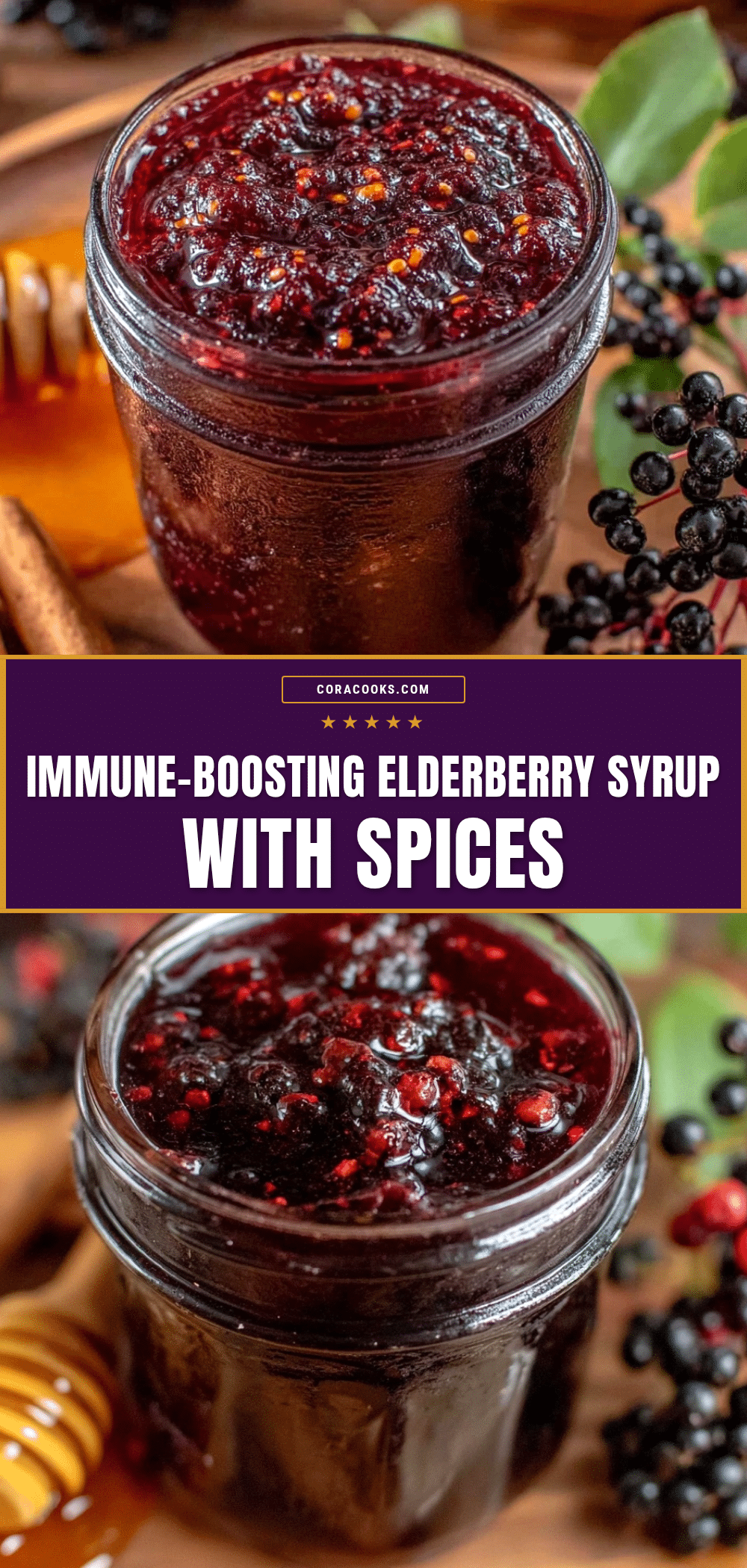
Healthy Homemade Elderberry Syrup Recipe with Cinnamon and Cloves for Immunity Boost
A simple, natural, and delicious elderberry syrup infused with cinnamon and cloves, perfect for boosting immunity and enjoyed as a cozy treat.
- Prep Time: 10 minutes
- Cook Time: 40 minutes
- Total Time: 50 minutes
- Yield: About 1 to 1¼ cups syrup 1x
- Category: Health Remedy
- Cuisine: American
Ingredients
- 1 cup fresh elderberries (~150g) or ½ cup dried elderberries
- 4 cups water (950 ml)
- 2 cinnamon sticks (about 3 inches each)
- 6–8 whole cloves
- ½ to ¾ cup raw honey (120–180 ml)
- 1-inch piece fresh ginger, peeled and sliced (optional)
- 1 teaspoon vanilla extract (optional)
Instructions
- Combine elderberries and water in a medium saucepan. Bring to a gentle boil over medium-high heat, about 5-7 minutes.
- Add cinnamon sticks, whole cloves, and fresh ginger if using. Reduce heat to low and simmer gently for 30-40 minutes until liquid reduces by about half and berries burst.
- Remove from heat and strain mixture through a fine mesh strainer or cheesecloth into a bowl or jug, pressing solids gently to extract liquid. Discard solids.
- While liquid is warm but not boiling, stir in raw honey (½ to ¾ cup) to taste.
- Add vanilla extract if desired and stir to combine.
- Pour syrup into sterilized glass jars or bottles. Let cool completely at room temperature before sealing and refrigerating.
Notes
Use whole spices for better flavor. Add honey off heat to preserve enzymes. Store refrigerated up to 4 weeks. For vegan option, replace honey with maple syrup or agave nectar. Avoid boiling vigorously to preserve nutrients.
Nutrition
- Serving Size: 1 tablespoon (15 ml)
- Calories: 5060
- Sugar: 12
- Carbohydrates: 14
Keywords: elderberry syrup, immunity boost, homemade syrup, cinnamon, cloves, natural remedy, elderberries, herbal syrup