Love this? Save it for later!
Share the inspiration with your friends
My neighbor Jenny wasn’t trying to impress anyone. I’d stopped by to borrow a ladder—our gutters were overflowing after a surprise spring storm—and the smell hit me before I even made it past her front door. Something warm and sweet and unmistakably lemony, like sunshine had somehow taken physical form and decided to live in her kitchen.
Jenny waved me in with a flour-dusted hand. “Oh, those? Just some cookies I’m testing,” she said, like it was nothing. Like she hadn’t just created something that made me forget why I was even there. She slid a cooling rack toward me, and I grabbed one without asking. Honestly, I didn’t even care if it burned my fingers. The first bite? Soft, tender, with that bright lemon flavor that cuts through the richness. And the vanilla glaze on top? Let me tell you, I almost asked if I could just stand in her kitchen and watch her bake forever.
She was completely nonchalant about the whole thing. “It’s just ricotta,” she shrugged. “Makes them moist.” Just ricotta. As if she hadn’t just handed me the softest, most perfectly balanced lemon cookie I’d ever had. I ended up staying for an hour, ladder forgotten, watching her pull tray after tray from the oven. She finally wrote the recipe on a scrap of paper towel and shoved it at me. “Here. Now go fix your gutters.”
I’ve made these cookies at least a dozen times since that afternoon. They’ve become my go-to for everything—rainy Sundays, book club meetings, that moment when you just need something cozy and bright at the same time. Maybe you’ve been there, standing in someone else’s kitchen, discovering a recipe that feels like it was waiting for you. That’s exactly what these are.
Why You’ll Love This Recipe
These lemon ricotta cookies aren’t just another cookie recipe. They’re the kind of cookie that makes people close their eyes after the first bite. I’ve tested this version more times than I can count, tweaking the ratios until every single cookie comes out perfectly tender. Here’s why they’re worth your time:
- Quick & Easy: From start to finish, you’re looking at about 30 minutes. No chilling time, no complicated techniques. Just mix, scoop, and bake.
- Simple Ingredients: You probably have most of these in your kitchen right now. Ricotta is the star, and it does all the heavy lifting for moisture and texture.
- Perfect for Cozy Evenings: These cookies are made for slow afternoons, cold weather, or days when you need a little comfort. They pair perfectly with tea or coffee.
- Crowd-Pleaser: I’ve brought these to potlucks, family dinners, and casual get-togethers. They disappear fast. Kids love them. Adults love them. Everyone loves them.
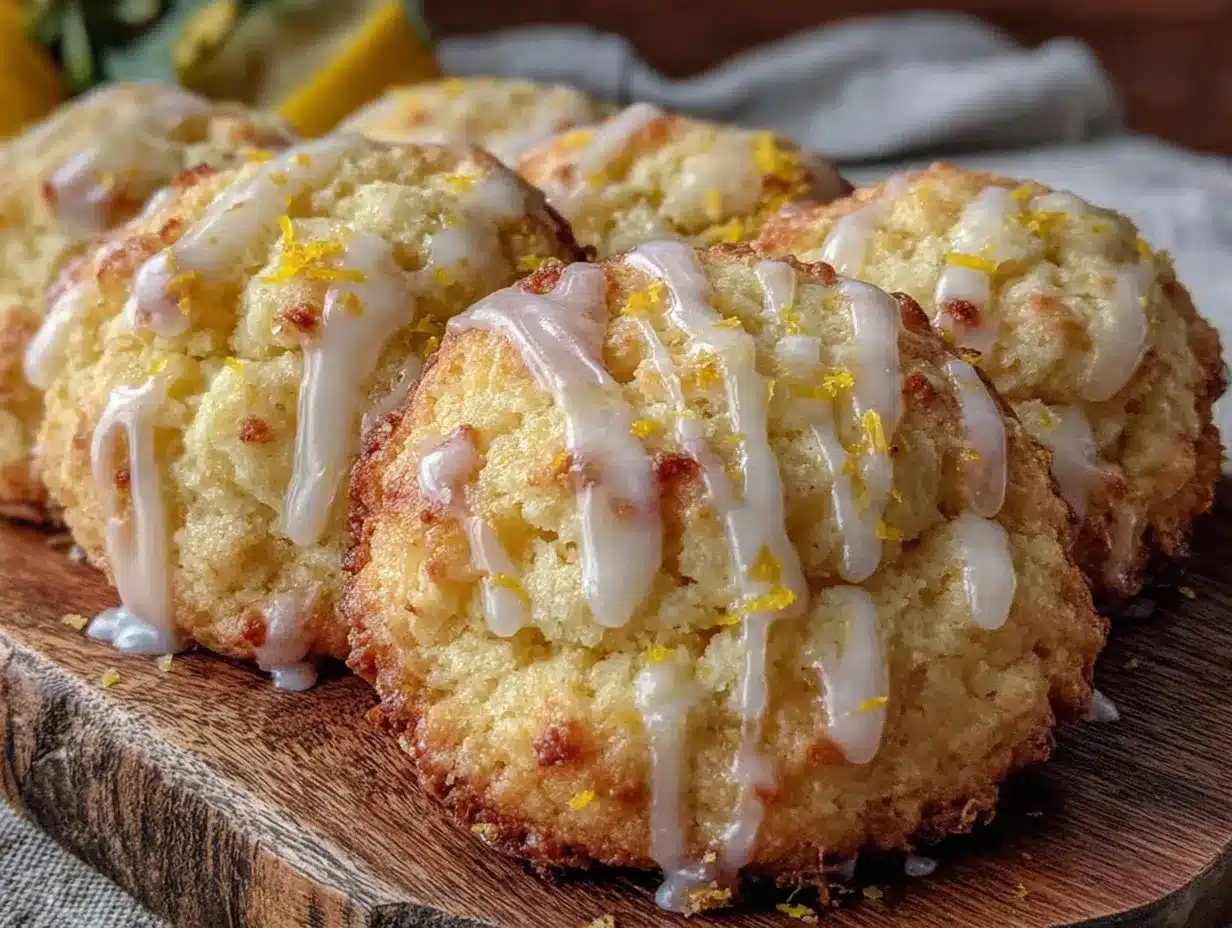
- Unbelievably Delicious: The texture is what sets these apart. Ricotta makes them incredibly soft and almost cake-like, while the lemon keeps things bright and fresh. The vanilla glaze adds just the right amount of sweetness.
What makes this recipe different from all the other lemon cookie recipes out there? It’s the ricotta. I’ve tried versions with yogurt, sour cream, even cream cheese, and nothing gives you that same tender, melt-in-your-mouth texture. Plus, the balance of lemon and vanilla is spot-on—not too tart, not too sweet. This isn’t just another version. It’s the version I keep coming back to, and I think you will too.
These cookies are comfort food in the best way. They’re the kind of thing you bake when you want to fill your kitchen with a warm, inviting smell. The kind of cookie you reach for when you’ve had a rough day and just need something good. Trust me on this one.
What Ingredients You Will Need
This recipe uses simple, wholesome ingredients to deliver bold flavor and satisfying texture without the fuss. Most of these are pantry staples, and the ricotta does something magical here that you just can’t replicate with anything else.
For the Cookies
- All-purpose flour, 2 cups (250g) – Spoon and level it for accuracy. Too much flour makes cookies dense.
- Baking powder, 2 teaspoons – Helps the cookies rise and stay light.
- Salt, ½ teaspoon – Balances sweetness and enhances the lemon flavor.
- Unsalted butter, ½ cup (1 stick, 113g), softened – Make sure it’s truly soft, not melted. Room temperature matters here.
- Granulated sugar, 1 cup (200g) – Adds sweetness and helps with browning.
- Large eggs, 2, room temperature – Cold eggs can seize the batter. Let them sit out for 20 minutes.
- Whole milk ricotta cheese, 1 cup (250g) – This is non-negotiable for the texture. I recommend Galbani or Whole Foods 365 brand for best results. Full-fat is key—low-fat ricotta has too much water and makes cookies flat.
- Fresh lemon zest, 2 tablespoons (from about 2 large lemons) – Only the yellow part. The white pith is bitter.
- Fresh lemon juice, 2 tablespoons – Bottled juice won’t give you the same brightness. Trust me, I’ve tried.
- Vanilla extract, 1 teaspoon – Use pure vanilla extract, not imitation. It makes a difference in the glaze.
For the Vanilla Glaze
- Powdered sugar, 1½ cups (180g), sifted – Sifting prevents lumps. I learned this the hard way after making lumpy glaze one too many times.
- Unsalted butter, 2 tablespoons, melted – Adds richness and helps the glaze set.
- Vanilla extract, 1½ teaspoons – I like Nielsen-Massey for its smooth, floral flavor.
- Milk, 2–3 tablespoons – Start with 2 tablespoons and add more if needed. Whole milk gives the creamiest glaze, but 2% works fine.
Substitution Guidance: If you need a dairy-free option, you can use a high-quality dairy-free ricotta (Kite Hill makes a decent one) and substitute the butter with vegan butter. For a gluten-free version, use a 1:1 gluten-free flour blend like King Arthur Measure for Measure. The texture will be slightly different, but still delicious. In summer, you can swap the lemon for lime or orange zest for a fun twist.
Equipment Needed
You don’t need a fancy kitchen to make these cookies. Here’s what you’ll need:
- Mixing bowls – One medium, one large. I use glass or stainless steel.
- Electric hand mixer or stand mixer – A hand mixer works perfectly. I’ve made these with a whisk in a pinch, but your arm will get tired.
- Zester or microplane – For getting that fine lemon zest without the bitter pith.
- Citrus juicer – Optional, but helpful for getting every drop of juice.
- Baking sheets – Two standard half-sheet pans work well. Line them with parchment paper for easy cleanup.
- Cookie scoop – A 1.5-tablespoon scoop gives you consistent cookies. I use a OXO Good Grips scoop and it’s worth every penny.
- Cooling rack – Essential for letting the cookies cool properly before glazing. No rack? Let them cool on the baking sheet for 5 minutes, then transfer carefully.
- Whisk – For the glaze. A small one works best.
Budget-friendly tip: If you don’t have a cookie scoop, use two spoons to portion the dough. It’s not as uniform, but the cookies will still taste amazing. And parchment paper is cheaper than non-stick baking mats, so stock up.
Preparation Method
Let’s get to the good part. Here’s how to make these cookies step by step. Take your time, and don’t rush—the results are worth it.
- Preheat your oven to 350°F (175°C). Line two baking sheets with parchment paper. This ensures the cookies don’t stick and makes cleanup a breeze.
- Whisk the dry ingredients together. In a medium bowl, combine 2 cups (250g) all-purpose flour, 2 teaspoons baking powder, and ½ teaspoon salt. Whisk until evenly distributed. Set aside.
- Cream the butter and sugar. In a large bowl, beat ½ cup (113g) softened unsalted butter with 1 cup (200g) granulated sugar using a hand mixer on medium speed. Beat for 2-3 minutes until light and fluffy. Scrape down the sides of the bowl with a spatula. I always forget to do this and end up with butter chunks in my batter. Don’t be like me.
- Add the wet ingredients. Beat in 2 room-temperature eggs, one at a time, mixing well after each addition. Then add 1 cup (250g) whole milk ricotta, 2 tablespoons fresh lemon zest, 2 tablespoons fresh lemon juice, and 1 teaspoon vanilla extract. Mix on low speed until just combined. The batter will look a little lumpy—that’s okay. Overmixing at this stage makes tough cookies.
- Fold in the dry ingredients. Gradually add the flour mixture to the wet ingredients, mixing on low speed or folding with a spatula. Mix just until no streaks of flour remain. Stop as soon as it comes together. Seriously, stop. A few streaks are better than overmixed dough.
- Scoop the cookies. Using a 1.5-tablespoon cookie scoop, drop rounded tablespoons of dough onto the prepared baking sheets, spacing them about 2 inches apart. The dough will be soft and slightly sticky—that’s normal. Don’t try to roll them into balls; just leave them as scoops. They spread slightly during baking.
- Bake. Bake one sheet at a time for 12-14 minutes, or until the edges are lightly golden and the tops are set. The centers should look slightly underdone—they’ll continue cooking on the hot baking sheet. Rotate the pan halfway through for even browning. My oven runs hot, so I check at 11 minutes. Know your oven.
- Cool. Let the cookies cool on the baking sheet for 5 minutes. This allows them to set without breaking apart. Then transfer them to a wire cooling rack to cool completely. Don’t skip this step. Glazing warm cookies is a mess you don’t want to deal with.
- Make the glaze. While the cookies cool, make the vanilla glaze. In a small bowl, whisk together 1½ cups (180g) sifted powdered sugar, 2 tablespoons melted unsalted butter, and 1½ teaspoons vanilla extract. Add 2 tablespoons milk and whisk until smooth. The glaze should be thick but pourable—if it’s too thick, add another tablespoon of milk. If it’s too thin, add a little more powdered sugar.
- Glaze the cookies. Once the cookies are completely cool, dip the tops into the glaze or drizzle it over them with a spoon. Let the excess drip off before placing them back on the cooling rack. Allow the glaze to set for about 20 minutes before serving. If you’re impatient like me, you can speed this up by putting them in the fridge for 10 minutes.
Sensory cues: When the cookies are done, your kitchen should smell like a lemon grove met a vanilla bean farm. The edges will be just barely golden, and the tops will look soft and slightly puffed. If you press one gently, it should spring back. The glaze should be glossy and smooth, setting into a matte finish as it dries.
Cooking Tips & Techniques
I’ve made these cookies more times than I can count, and I’ve learned a few things along the way. Here’s what I wish someone had told me:
Room temperature ingredients matter. I know, I know—it sounds fussy. But cold eggs and cold ricotta will make your batter seize up, and you’ll end up with dense cookies. Take everything out of the fridge 30 minutes before you start. Set a timer if you need to. I’ve forgotten this step and regretted it every single time.
Don’t overmix the dough. This is the number one mistake people make. Once you add the flour, mix just until it disappears. Overmixing develops gluten, and gluten makes cookies tough. You want these to be tender and soft, like little lemon clouds. I once overmixed out of distraction (hello, phone call) and ended up with cookies that were more like hockey pucks. Learn from my failure.
Use fresh lemon juice. Bottled lemon juice has a flat, almost metallic taste. Fresh lemons give you that bright, zingy flavor that makes these cookies special. Zest the lemons before you juice them—it’s much easier that way. And roll the lemons on the counter before cutting them to get more juice out.
Check your ricotta. If your ricotta looks watery, drain it through a fine-mesh strainer for 15 minutes before using. Too much liquid in the ricotta will make the cookies spread too much. I learned this after a particularly soupy batch that turned into one giant cookie pancake. Delicious, but not what I was going for.
Bake one sheet at a time. I know it’s tempting to put both sheets in the oven at once, but the heat won’t circulate evenly. One sheet bakes more consistently. If you’re in a hurry, you can put one sheet on the top rack and one on the bottom, then swap them halfway through. But honestly, the single-sheet method is better.
Let the glaze set completely. I know you want to eat them immediately. I do too. But the glaze needs time to set, or it’ll smear everywhere. If you’re really impatient, pop the glazed cookies in the fridge for 10 minutes. That usually does the trick.
Variations & Adaptations
One of the best things about this recipe is how easy it is to adapt. Here are some variations I’ve tried and loved:
Lemon Blueberry Ricotta Cookies: Fold ½ cup fresh or frozen blueberries into the batter right after adding the flour. Toss them in a little flour first to prevent them from sinking to the bottom. The burst of blueberry with the lemon is heavenly. I made these for a summer picnic and they were gone in minutes.
Gluten-Free Version: Substitute the all-purpose flour with a 1:1 gluten-free flour blend that contains xanthan gum. I’ve used King Arthur Measure for Measure with great results. The cookies are slightly more delicate, so handle them gently. The flavor is just as good.
Dairy-Free Version: Use dairy-free ricotta (Kite Hill is my go-to) and substitute the butter with vegan butter. For the glaze, use a plant-based milk like oat or almond milk. The texture is a little less tender, but still delicious. My dairy-free friend devoured an entire batch, so I consider it a win.
Lime or Orange Variation: Swap the lemon zest and juice for lime or orange. Lime gives a more tropical, tart flavor, while orange is sweeter and milder. I made an orange version for Christmas and added a touch of cinnamon to the glaze—it was a hit.
Add a Touch of Almond: Add ½ teaspoon almond extract to the batter along with the vanilla. It adds a subtle nuttiness that complements the lemon beautifully. Just don’t overdo it—almond extract is powerful stuff.
Make Them Mini: Use a smaller cookie scoop (about 1 teaspoon) and bake for 8-10 minutes. Mini cookies are perfect for parties or portion control. Or, you know, for eating five of them without guilt.
Serving & Storage Suggestions
These cookies are best served at room temperature, with the glaze fully set. The texture is soft and tender, almost like a little lemon cake. They’re perfect with a cup of tea, coffee, or a glass of cold milk. I love serving them on a pretty plate with a few fresh berries on the side—it makes them look extra special without any extra work.
For a cozy presentation, arrange them on a wooden board with some lemon slices and fresh mint. It’s simple but elegant. These cookies also make wonderful gifts—pack them in a tin lined with parchment paper, and they’ll stay fresh for days.
Storage: Store the cookies in an airtight container at room temperature for up to 5 days. Layer them between sheets of parchment paper to prevent the glaze from sticking. Don’t refrigerate them—the fridge dries them out and makes the texture less tender.
Freezing: You can freeze the unbaked cookie dough for up to 3 months. Scoop the dough onto a baking sheet, freeze until solid, then transfer to a freezer bag. Bake from frozen, adding 2-3 minutes to the baking time. You can also freeze the baked cookies (without glaze) for up to 3 months. Thaw at room temperature, then glaze and serve. The glaze doesn’t freeze well, so add it fresh.
Reheating: These cookies are best at room temperature, but if you want a warm cookie, pop one in the microwave for 8-10 seconds. It softens the glaze slightly and makes the cookie feel fresh from the oven. Just don’t overdo it, or the glaze will melt into a puddle.
Flavor development: These cookies actually taste even better the next day. The lemon flavor mellows and melds with the vanilla, and the texture becomes even softer. I’ve been known to hide a few just so I can enjoy them on day two.
Nutritional Information & Benefits
Here’s the estimated nutritional information for one cookie (based on 24 cookies):
| Nutrient | Amount Per Cookie |
|---|---|
| Calories | 145 |
| Total Fat | 6g |
| Saturated Fat | 3.5g |
| Cholesterol | 30mg |
| Sodium | 85mg |
| Total Carbohydrates | 21g |
| Dietary Fiber | 0g |
| Sugars | 14g |
| Protein | 3g |
While these are definitely a treat, they do have some redeeming qualities. Ricotta is a good source of protein and calcium, and lemons are packed with vitamin C. The butter and eggs add richness, but they also contribute to the satisfying texture that makes one cookie feel like enough. Well, maybe two.
Dietary considerations: These cookies contain gluten, dairy, and eggs. For gluten-free and dairy-free options, see the variations section above. They are nut-free as written, making them a good option for school events or parties.
I believe in balance—enjoying treats like these as part of a varied diet. Life’s too short to skip cookies. And honestly, the joy of baking and sharing them is good for the soul, too.
Conclusion
These cozy lemon ricotta cookies with vanilla glaze are the kind of recipe that becomes a staple. They’re simple enough for a weekday baking project, but special enough for holidays and gatherings. The ricotta makes them impossibly soft, the lemon keeps them bright, and the vanilla glaze adds just the right amount of sweetness. Every time I make them, I think of Jenny’s flour-dusted kitchen and that first bite that stopped me in my tracks.
I hope you’ll give these a try. Customize them with your favorite citrus, add berries, or keep them classic—they’re forgiving and delicious either way. And if you make them, I’d love to hear about it. Leave a comment below, tag me in your photos, or share your own twist on the recipe. That’s what makes cooking so wonderful—the way we all make a recipe our own.
So go ahead. Preheat your oven, zest a lemon, and fill your kitchen with that warm, cozy smell. You deserve it. Happy baking!
Frequently Asked Questions
Can I use low-fat ricotta in this recipe?
I don’t recommend it. Low-fat ricotta has more water content, which can make the cookies spread too much and turn out flat. Full-fat whole milk ricotta gives you that tender, moist texture that makes these cookies so special. If that’s all you have, drain it in a fine-mesh strainer for 30 minutes before using.
Why did my cookies spread too much?
This usually happens for a few reasons: the butter was too soft or melted, the ricotta was too watery, or the dough was overmixed. Make sure your butter is softened but not melted, drain any watery ricotta, and mix just until the flour disappears. Also, make sure your baking powder is fresh—old baking powder loses its oomph.
Can I make the dough ahead of time?
Absolutely. You can refrigerate the dough for up to 24 hours before baking. Just cover the bowl tightly with plastic wrap. Let the dough sit at room temperature for 10-15 minutes before scooping, as it will be firmer straight from the fridge. You can also freeze the scooped dough for up to 3 months—bake from frozen, adding a few minutes to the baking time.
How do I get the glaze perfectly smooth?
Sift your powdered sugar before whisking—this prevents lumps. Make sure your melted butter isn’t hot, just warm. Whisk the glaze vigorously until it’s smooth and glossy. If it’s too thick, add milk a teaspoon at a time. If it’s too thin, add more sifted powdered sugar. A smooth glaze makes the cookies look professional and beautiful.
Can I use bottled lemon juice instead of fresh?
You can, but I really don’t recommend it. Fresh lemon juice has a bright, clean flavor that bottled juice just can’t replicate. Bottled juice often has preservatives and a flat taste. The lemon flavor is the star of these cookies, so using fresh lemons makes a noticeable difference. Plus, you need the zest anyway, so you might as well juice them while you’re at it.
Pin This Recipe!

Cozy Lemon Ricotta Cookies with Easy Vanilla Glaze

These lemon ricotta cookies are incredibly soft, tender, and bursting with bright lemon flavor, topped with a smooth vanilla glaze. Perfect for cozy evenings, they come together in about 30 minutes with simple ingredients.
- Prep Time: 15 minutes
- Cook Time: 14 minutes
- Total Time: 29 minutes
- Yield: 24 cookies 1x
- Category: Dessert
- Cuisine: American
Ingredients
- 2 cups (250g) all-purpose flour
- 2 teaspoons baking powder
- ½ teaspoon salt
- ½ cup (1 stick, 113g) unsalted butter, softened
- 1 cup (200g) granulated sugar
- 2 large eggs, room temperature
- 1 cup (250g) whole milk ricotta cheese
- 2 tablespoons fresh lemon zest
- 2 tablespoons fresh lemon juice
- 1 teaspoon vanilla extract
- 1½ cups (180g) powdered sugar, sifted
- 2 tablespoons unsalted butter, melted
- 1½ teaspoons vanilla extract
- 2–3 tablespoons milk
Instructions
- Preheat your oven to 350°F (175°C). Line two baking sheets with parchment paper.
- In a medium bowl, whisk together 2 cups all-purpose flour, 2 teaspoons baking powder, and ½ teaspoon salt. Set aside.
- In a large bowl, beat ½ cup softened unsalted butter with 1 cup granulated sugar using a hand mixer on medium speed for 2-3 minutes until light and fluffy. Scrape down the sides.
- Beat in 2 room-temperature eggs, one at a time, mixing well after each. Then add 1 cup whole milk ricotta, 2 tablespoons lemon zest, 2 tablespoons lemon juice, and 1 teaspoon vanilla extract. Mix on low until just combined.
- Gradually add the flour mixture to the wet ingredients, mixing on low or folding with a spatula until no streaks of flour remain. Do not overmix.
- Using a 1.5-tablespoon cookie scoop, drop rounded tablespoons of dough onto the prepared baking sheets, spacing them about 2 inches apart.
- Bake one sheet at a time for 12-14 minutes, until edges are lightly golden and tops are set. Rotate the pan halfway through. Let cool on the baking sheet for 5 minutes, then transfer to a wire rack to cool completely.
- While cookies cool, make the glaze: In a small bowl, whisk together 1½ cups sifted powdered sugar, 2 tablespoons melted unsalted butter, and 1½ teaspoons vanilla extract. Add 2 tablespoons milk and whisk until smooth. Add more milk if needed for pourable consistency.
- Once cookies are completely cool, dip the tops into the glaze or drizzle over them. Let excess drip off, then place back on the rack. Allow glaze to set for about 20 minutes before serving.
Notes
Room temperature ingredients are key for best texture. Do not overmix the dough. Use fresh lemon juice for brightest flavor. If ricotta is watery, drain it through a fine-mesh strainer for 15 minutes before using. Bake one sheet at a time for even results. Let glaze set completely before serving.
Nutrition
- Serving Size: 1 cookie
- Calories: 145
- Sugar: 14
- Sodium: 85
- Fat: 6
- Saturated Fat: 3.5
- Carbohydrates: 21
- Protein: 3
Keywords: lemon ricotta cookies, vanilla glaze, easy cookie recipe, soft cookies, lemon dessert