Love this? Save it for later!
Share the inspiration with your friends
My neighbor Carla wasn’t trying to impress anyone. I’d stopped by to borrow a power drill on a random Tuesday evening and the smell hit me before I even got past her screen door. Garlic, butter, something briny from the sea—it was the kind of smell that makes you forget why you walked into a room. Or in this case, why you walked up to someone’s front door.
Carla waved me in like it was nothing. “Oh, just throwing together dinner,” she said, one hand stirring a pan while the other held her phone to her ear. She was multitasking, barely looking at what she was doing, and yet the aroma filling her tiny kitchen was absolutely ridiculous. I stood there, drill completely forgotten, watching her toss shrimp into a pan with this completely casual flick of her wrist.
“It’s the garlic butter shrimp pasta thing,” she said when she hung up. “Takes like fifteen minutes. I make it when I’m too tired to actually cook.”
Let me tell you—that was the most delicious “I’m too tired to cook” meal I’ve ever eaten. I stood at her counter and ate a bowl standing up, which is something I normally don’t do. But honestly, I couldn’t stop. The shrimp were plump and perfectly cooked, the pasta was coated in this glossy, garlicky butter sauce that clung to every strand, and there was just enough fresh lemon to cut through the richness. Carla was already loading the dishwasher, completely unfazed by the fact that she’d just made something incredible.
I asked for the recipe on my way out, drill finally in hand. She shrugged and texted it to me later that night. And now? This quick 15-minute garlic butter shrimp pasta is my go-to on those nights when I have zero energy but still want something that feels like a real meal. Maybe you’ve been there—staring into your fridge at 6 PM, tired, hungry, and convinced you have nothing worth cooking. This recipe is for those nights.
Why You’ll Love This Recipe
Let’s be honest—there are a lot of pasta recipes out there. But this one earns its spot in your weekly rotation for some very specific reasons. I’ve tested this more times than I care to admit, tweaking the butter-to-garlic ratio, experimenting with different pasta shapes, and even burning a few batches of garlic in the process (we all have those days). Here’s why this version stands out:
- Quick & Easy: From fridge to table in under 15 minutes. No marinating, no complicated techniques, no waiting for water to boil forever. This is weeknight cooking at its most efficient.
- Simple Ingredients: You probably already have garlic, butter, pasta, and lemon in your kitchen right now. The shrimp is the only thing you might need to grab, and frozen works perfectly fine here.
- Perfect for Busy Weeknights: This isn’t a weekend project recipe. This is the dinner you make after a long day when you’re hungry and slightly cranky and just need something good to eat.
- Crowd-Pleaser: I’ve served this to picky kids, seafood skeptics, and serious foodies. Every single person has gone back for seconds. The garlic butter situation is just that good.
- Unbelievably Delicious: There’s something magical about how simple ingredients can come together to taste this luxurious. The butter creates a silky sauce, the garlic infuses everything with flavor, and the shrimp cook in literally 3 minutes.
What makes this recipe different from all the other garlic butter shrimp pasta recipes out there? It’s the timing. Most recipes have you cook everything separately and then combine, which takes forever and creates extra dishes. This version uses one pan and a smart sequence that builds flavor without wasting time. The pasta water gets reserved to help create the sauce, the garlic gets just the right amount of golden color without burning, and the shrimp cook in the same pan that held the garlic butter—so nothing goes to waste. It’s efficient cooking that tastes like you spent way more effort than you actually did.
This is the kind of recipe that makes you close your eyes after the first bite. It’s comfort food that comes together faster than takeout delivery. And honestly? That’s exactly what we all need on a Tuesday night.
What Ingredients You Will Need
This recipe uses simple, pantry-friendly ingredients to deliver big flavor without any fuss. Most of these are things you likely already have on hand, which is exactly the point. Here’s what you’ll need:
For the Pasta
- 8 ounces (225g) linguine or spaghetti — I personally prefer linguine because the flat shape catches more of that garlic butter sauce. But honestly, any long pasta works. Angel hair cooks even faster if you’re really pressed for time.
- Salt — for the pasta water. Don’t skimp here. The pasta water should taste like the sea. This is the only chance you have to season the pasta itself.
For the Garlic Butter Shrimp
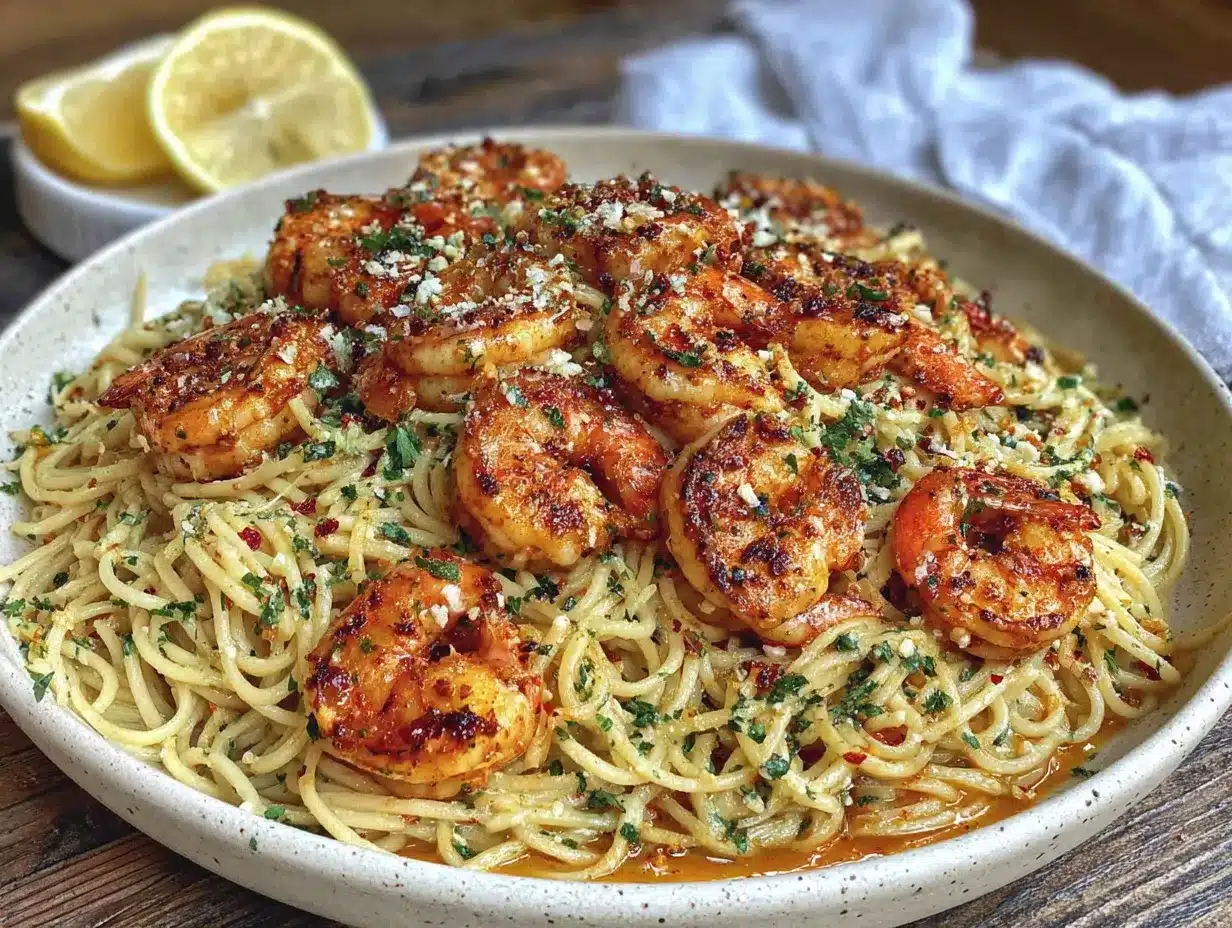
- 1 pound (450g) raw shrimp — peeled and deveined. I use large or jumbo shrimp (21-25 count per pound). Frozen shrimp works great here—just thaw them under cold running water for a few minutes. Pat them really dry with paper towels before cooking, or they won’t get that nice golden sear.
- 4 tablespoons (56g) unsalted butter — divided. We’re using half for cooking the shrimp and half for finishing the sauce. I recommend a good quality butter like Kerrygold if you can find it. The butter is doing a lot of heavy lifting here, so you want the good stuff.
- 5-6 cloves garlic — minced finely. Don’t use pre-minced garlic from a jar if you can help it. Fresh garlic makes a noticeable difference here. I use a microplane for super fine garlic that almost melts into the butter.
- 1/2 teaspoon red pepper flakes — optional but highly recommended. It adds a gentle warmth without making things spicy. My kids eat this without complaint, so it’s really mild.
- 1/2 teaspoon salt — plus more to taste
- 1/4 teaspoon black pepper — freshly cracked
For the Sauce & Finish
- 1/2 cup (120ml) reserved pasta water — this is liquid gold. The starchy water helps the sauce cling to the pasta and gives it that silky restaurant-quality texture.
- 2 tablespoons fresh lemon juice — about half a lemon. Fresh is non-negotiable here. Bottled lemon juice has a weird metallic taste that will ruin your sauce.
- 1 tablespoon lemon zest — from that same lemon. Don’t skip this. The zest adds brightness that the juice alone can’t provide.
- 1/4 cup (10g) fresh parsley — chopped finely. Flat-leaf parsley is best, but curly works too. This adds freshness and color at the end.
- Freshly grated Parmesan cheese — for serving. Get a block and grate it yourself. The pre-shredded stuff has anti-caking agents that prevent it from melting smoothly.
Optional Add-Ins
- 1/4 cup dry white wine — if you have an open bottle, add it after the garlic and before the pasta water. It adds another layer of flavor. Totally optional though.
- 1 cup cherry tomatoes — halved. Toss them in with the garlic for a pop of color and acidity. I do this when I have tomatoes about to go bad.
- Fresh basil — a few leaves, torn, for garnish. Adds a lovely aromatic note.
I recommend using wild-caught shrimp if your budget allows—the flavor is noticeably better and the texture is firmer. But farm-raised works perfectly fine too. Just look for shrimp that smells like the ocean, not like ammonia. That’s the biggest indicator of freshness.
Equipment Needed
One of the best things about this recipe is how little equipment it requires. You don’t need a fancy kitchen to pull this off:
- Large pot — for boiling the pasta. At least 4 quarts capacity. The pasta needs room to move around.
- Large skillet or sauté pan — 12-inch is ideal. You want enough surface area to cook the shrimp in a single layer without overcrowding. A non-stick pan makes cleanup easier, but stainless steel gives you better browning on the shrimp.
- Colander — for draining the pasta. But honestly, I often just use tongs to transfer the pasta directly into the sauce pan. One less dish to wash.
- Chef’s knife — for mincing garlic and chopping parsley. A sharp knife makes everything easier.
- Cutting board — any size works
- Microplane or zester — for getting that lemon zest. A box grater works too, just be careful not to get the bitter white pith.
- Measuring spoons — for accurate measurements, though after making this a few times you’ll be able to eyeball it
- Tongs — for tossing the pasta with the sauce. Two forks work in a pinch.
If you don’t have a microplane, honestly, just use the smallest holes on your box grater. And if you don’t have a large skillet, a Dutch oven or even a wide saucepan will work—just cook the shrimp in batches so they actually brown instead of steam.
Preparation Method
Here’s where the magic happens. The key to making this in 15 minutes is having everything prepped and ready before you turn on the heat. Read through the whole method first, get your ingredients measured and chopped, and then go. Trust me on this—garlic burns fast and you don’t want to be chopping parsley while your shrimp are overcooking.
- Bring a large pot of salted water to a rolling boil. Use about 1 tablespoon of salt per 4 quarts of water. Drop your pasta in and cook according to package directions until al dente. For linguine, this is usually about 8-9 minutes. Set a timer. While the pasta cooks, move on to step 2.
- While the pasta boils, prep everything. Pat your shrimp dry with paper towels—this is crucial for getting a good sear. Season them with a pinch of salt and pepper. Mince your garlic, chop your parsley, zest and juice your lemon. Have everything within arm’s reach of your stove.
- About 2 minutes before the pasta is done, start the sauce. Heat your large skillet over medium-high heat. Add 2 tablespoons of the butter. Once it melts and starts to foam, add the minced garlic and red pepper flakes. Cook for about 30-45 seconds, stirring constantly, until the garlic is fragrant and just starting to turn golden. Do not walk away from this—garlic goes from perfect to burnt in about 10 seconds.
- Add the shrimp to the pan in a single layer. Don’t crowd them—cook in batches if you have to. Let them cook undisturbed for 1-2 minutes until the bottoms are pink and lightly golden. Flip each shrimp and cook for another 1-2 minutes until they’re pink and opaque all the way through. The shrimp should curl into a loose C shape—if they curl into a tight O, they’re overcooked. Remove the shrimp to a plate with a slotted spoon.
- Right before you drain the pasta, reserve 1 cup of the starchy pasta water. Just scoop it out with a measuring cup or a mug. Then drain the pasta in a colander. Don’t rinse it—you want that starch on the noodles.
- Deglaze the pan. Reduce the heat to medium-low. Add the remaining 2 tablespoons of butter to the same skillet (don’t wipe it out—all those brown bits are flavor). Pour in about 1/2 cup of the reserved pasta water and the lemon juice. Stir everything together, scraping up any browned bits from the bottom of the pan. Let it simmer for about 30 seconds until it thickens slightly.
- Add the drained pasta directly to the skillet. Use tongs to toss the pasta in the sauce, coating every strand. If the sauce seems too thick, add more pasta water a tablespoon at a time until it looks silky and glossy. You want it to coat the pasta like a light blanket, not pool at the bottom.
- Return the shrimp to the pan. Add the lemon zest and half the chopped parsley. Toss everything together gently so the shrimp are coated in the sauce without breaking apart. Taste and adjust seasoning—you might want a pinch more salt or another squeeze of lemon.
- Serve immediately. Divide the pasta between warm bowls. Top with the remaining parsley and a generous shower of freshly grated Parmesan cheese. If you have extra lemon wedges, squeeze them over the top right before eating.
One thing I learned the hard way—don’t dump all the pasta water in at once. Start with half a cup and add more as needed. Different pans and different pasta shapes absorb liquid differently, so you want to control the consistency as you go. The sauce should look glossy and almost creamy, not watery or greasy.
Cooking Tips & Techniques
I’ve made this recipe approximately fifty-seven times (I started counting after the first ten), and I’ve made every mistake you can imagine. Here’s what I’ve learned:
Dry your shrimp. This is the number one mistake people make. Wet shrimp don’t brown—they steam. And steamed shrimp have a rubbery texture and no flavor. Take an extra 30 seconds to pat them dry with paper towels. It makes a huge difference.
Don’t overcook the shrimp. Shrimp cook fast—like, scarily fast. They go from raw to perfectly cooked in about 2-3 minutes total. The moment they turn pink and opaque, get them out of the pan. They’ll continue cooking slightly from residual heat, so err on the side of undercooked if you’re unsure. Overcooked shrimp are tough and rubbery, and there’s no fixing that.
Use the right pan size. If your skillet is too small, the shrimp will steam instead of sear. Use a 12-inch pan if you have one. If you’re doubling the recipe, cook the shrimp in two batches. I know it’s annoying, but it’s worth it.
Reserve more pasta water than you think you need. I always save a full cup even though I usually only use half. Sometimes the sauce needs more liquid, and there’s no substitute for that starchy pasta water. Regular water won’t give you the same silky texture.
Timing is everything. Start your sauce about 2 minutes before the pasta finishes cooking. This way, the pasta goes straight from the colander into the waiting sauce while everything is still hot. Cold pasta clumps together and doesn’t absorb sauce as well.
Don’t skip the lemon zest. The juice adds acidity, but the zest adds aromatic citrus oils that make the dish taste brighter and more complex. It’s a small step that makes a big difference.
One more thing— I once tried to make this with margarine instead of butter because I was out. Don’t do it. The sauce separated and tasted weird. Butter is non-negotiable here. If you’re dairy-free, use a good quality vegan butter, but know that the texture won’t be quite the same.
Variations & Adaptations
This recipe is incredibly flexible, which is another reason it’s perfect for busy weeknights. Here are some variations I’ve tried and loved:
Spicy Garlic Butter Shrimp Pasta
Double the red pepper flakes and add a pinch of cayenne pepper along with the garlic. I did this on a whim one night when I had a cold and wanted something warming. It cleared my sinuses and was absolutely delicious. Top with extra fresh parsley to balance the heat.
Creamy Garlic Butter Shrimp Pasta
After deglazing the pan with pasta water, stir in 1/4 cup of heavy cream or half-and-half. Let it simmer for a minute until it thickens slightly before adding the pasta. This turns the sauce into something rich and decadent—perfect for when you want comfort food. My kids prefer this version.
Vegetable-Packed Version
Add 2 cups of fresh spinach or a handful of asparagus tips along with the garlic. The spinach wilts in about 30 seconds, and the asparagus needs about 2 minutes. You can also toss in halved cherry tomatoes for a pop of color and acidity. This is my go-to when I want to pretend I’m eating something healthy.
Gluten-Free Adaptation
Use your favorite gluten-free pasta—I like the brown rice linguine from Trader Joe’s. Cook it according to package directions (usually a minute or two longer than regular pasta) and reserve extra pasta water since gluten-free pasta tends to absorb more liquid. The rest of the recipe stays exactly the same.
Low-Carb Option
Swap the pasta for zucchini noodles or spaghetti squash. If using zucchini noodles, add them to the pan after the shrimp are cooked and toss for just 1-2 minutes until warmed through—any longer and they’ll get watery. The garlic butter sauce works beautifully with vegetables.
I’ve also made this with chicken instead of shrimp when I didn’t have seafood on hand. Just slice a chicken breast thinly, season with salt and pepper, and cook it in the garlic butter for about 4-5 minutes per side before proceeding with the recipe. It’s not quite the same, but it’s still really good.
Serving & Storage Suggestions
This dish is best served immediately, right after you toss everything together. The pasta absorbs the sauce as it sits, so leftovers won’t have that same silky texture. But let’s be realistic—sometimes you have leftovers anyway.
For serving: Divide the pasta into warm bowls (run them under hot water for a few seconds and dry them—it keeps the food hot longer). Top with a generous pile of freshly grated Parmesan and a sprinkle of extra parsley. A lemon wedge on the side lets people add more brightness if they want. I like to serve this with a simple green salad dressed with lemon vinaigrette and some crusty bread for sopping up any extra garlic butter sauce.
For storing leftovers: Transfer the cooled pasta to an airtight container and refrigerate for up to 2 days. The shrimp will release some liquid as it sits, and the pasta will absorb the sauce, so don’t expect it to look as pretty the next day. The flavor will still be good though.
For reheating: The microwave works in a pinch, but it tends to make the shrimp rubbery. A better method is to reheat in a skillet over medium-low heat with a splash of water or chicken broth. Toss gently until warmed through, about 3-4 minutes. Add a pat of butter if you have it—it helps revive the sauce.
Can you freeze this? Technically yes, but I wouldn’t recommend it. The texture of the shrimp changes significantly after freezing and thawing—they become mealy and watery. The pasta also gets mushy. This is one of those dishes that’s meant to be eaten fresh. If you want to meal prep, cook the shrimp and sauce separately and freeze those, then cook fresh pasta when you’re ready to eat.
One thing I’ve noticed—the flavors actually meld together a bit after sitting in the fridge overnight. The garlic mellows out and the lemon becomes less sharp. It’s not better than fresh, but it’s different. I’ve eaten this cold straight from the fridge and enjoyed it, which says something.
Nutritional Information & Benefits
Here’s the approximate nutritional breakdown for one serving (based on 4 servings):
| Nutrient | Amount Per Serving |
|---|---|
| Calories | 485 |
| Protein | 32g |
| Carbohydrates | 48g |
| Fat | 18g |
| Saturated Fat | 10g |
| Cholesterol | 245mg |
| Sodium | 680mg |
| Fiber | 3g |
| Sugar | 2g |
Shrimp is an excellent source of lean protein and contains important nutrients like selenium, vitamin B12, and omega-3 fatty acids. It’s surprisingly low in calories for how satisfying it is—one serving of shrimp provides about 20 grams of protein for only 100 calories.
Garlic isn’t just for flavor—it contains compounds like allicin that have been studied for their potential immune-boosting and anti-inflammatory properties. And lemon juice provides a good dose of vitamin C, which helps your body absorb iron from the shrimp.
This recipe is naturally dairy-free if you use a vegan butter substitute, and gluten-free if you use gluten-free pasta. It’s also relatively low in added sugar and can be part of a balanced diet. The main things to watch are the sodium content (from the pasta water and Parmesan) and the saturated fat from the butter. If you’re watching your salt intake, use less salt in the pasta water and go easy on the Parmesan.
From a wellness perspective, I love that this recipe feels indulgent but isn’t actually that heavy. It’s the kind of meal that satisfies a craving without leaving you feeling sluggish. Perfect for those nights when you want something delicious but don’t want to undo all your healthy eating efforts from the week.
Conclusion
This quick 15-minute garlic butter shrimp pasta has become my most-requested recipe, and I completely understand why. It’s fast enough for a harried weeknight, fancy enough for company, and simple enough that you don’t need to think too hard about it. The garlic butter sauce is glossy and rich, the shrimp are perfectly tender, and the whole thing comes together in less time than it takes to watch a single episode of your favorite show.
What I love most about this recipe is how forgiving it is. You can add vegetables, swap proteins, adjust the spice level, or make it creamy—it always turns out delicious. It’s the kind of recipe that builds your confidence in the kitchen because it works every single time.
I’d love to hear how this turns out for you. Did you add your own twist? Did you make the spicy version or the creamy version? Drop a comment below and let me know—I genuinely read every single one. And if you’re looking for more quick weeknight dinners, try my lemon garlic chicken pasta or this one-pan creamy tomato basil pasta that’s been a huge hit with readers. Happy cooking, friends—you’ve got this.
Frequently Asked Questions
Can I use frozen shrimp for this recipe?
Absolutely. Frozen shrimp works great—just thaw them first under cold running water for about 5 minutes, then pat them very dry with paper towels. The drying step is crucial regardless of whether you use fresh or frozen shrimp.
What if I don’t have linguine? Can I use another pasta shape?
Yes, any long pasta works well—spaghetti, fettuccine, angel hair, or even bucatini. Short pasta like penne or fusilli works too, but the sauce won’t cling to it as well. Angel hair cooks even faster, so adjust your timing accordingly.
How do I know when the shrimp is fully cooked?
Perfectly cooked shrimp turns pink and opaque throughout. They’ll curl into a loose C shape—if they curl into a tight O, they’re overcooked. The internal temperature should reach 120°F, but honestly, the color and shape test is more reliable. When in doubt, cut one open to check.
Can I make this recipe dairy-free?
Yes, use a good quality vegan butter substitute. I recommend Miyoko’s or Earth Balance—they have the closest texture to real butter. The sauce won’t be quite as rich, but it will still be delicious. Skip the Parmesan or use a dairy-free alternative.
Why did my garlic burn?
Garlic burns when the pan is too hot or when it’s cooked for too long. Use medium heat (not high) when cooking the garlic, and keep it moving in the pan. Once it turns golden, add the shrimp immediately. If you need more time to prep, take the pan off the heat entirely—the residual heat will continue cooking the garlic.
Pin This Recipe!
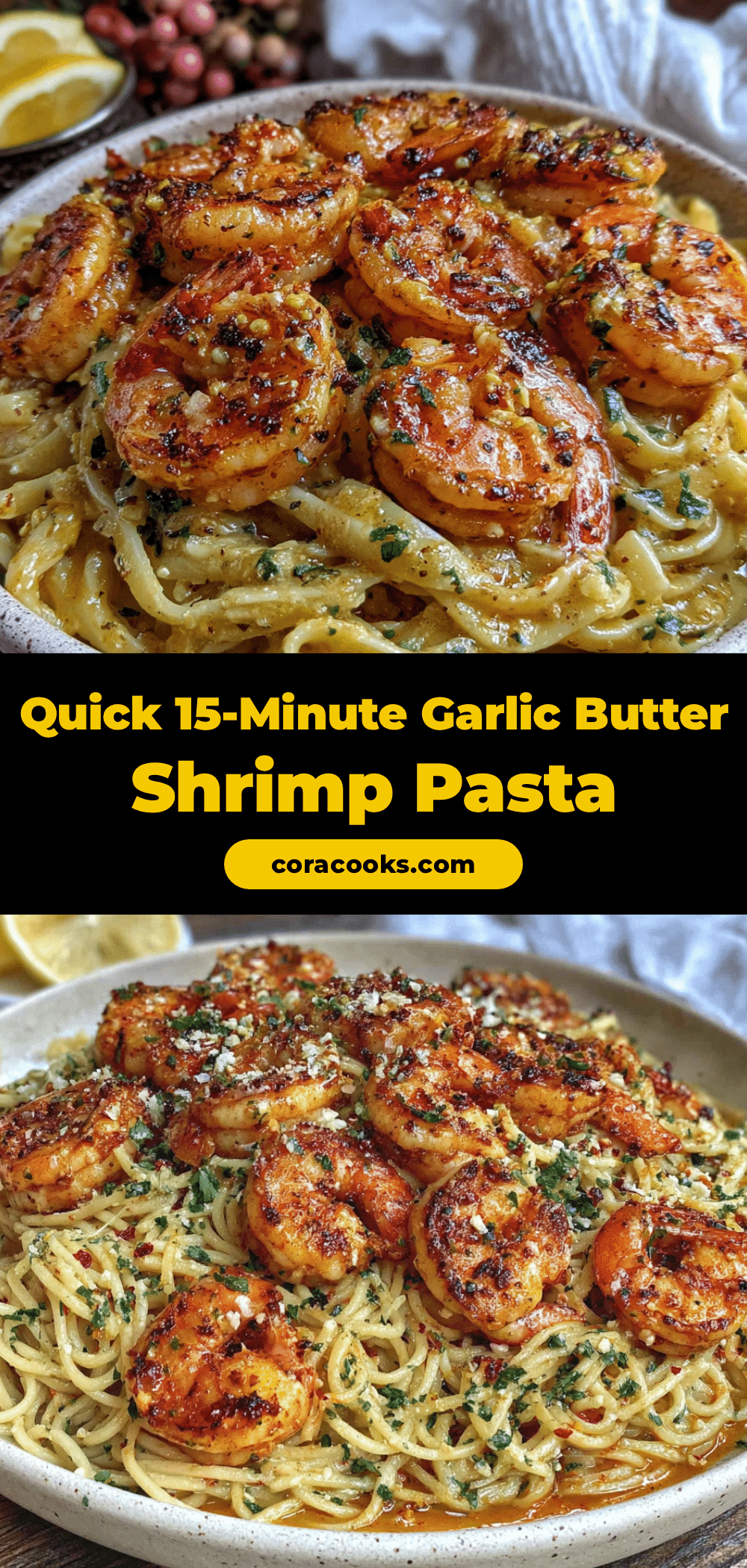
Best 15-Minute Garlic Butter Shrimp Pasta Recipe
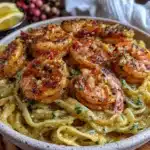
A quick and easy garlic butter shrimp pasta that comes together in just 15 minutes. Perfect for busy weeknights, this one-pan dish features plump shrimp, glossy garlic butter sauce, and fresh lemon for a restaurant-quality meal at home.
- Prep Time: 5 minutes
- Cook Time: 10 minutes
- Total Time: 15 minutes
- Yield: 4 servings 1x
- Category: Main Course
- Cuisine: Italian-American
Ingredients
- 8 ounces (225g) linguine or spaghetti
- Salt, for pasta water
- 1 pound (450g) raw shrimp, peeled and deveined
- 4 tablespoons (56g) unsalted butter, divided
- 5–6 cloves garlic, minced
- 1/2 teaspoon red pepper flakes (optional)
- 1/2 teaspoon salt
- 1/4 teaspoon black pepper
- 1/2 cup (120ml) reserved pasta water
- 2 tablespoons fresh lemon juice
- 1 tablespoon lemon zest
- 1/4 cup (10g) fresh parsley, chopped
- Freshly grated Parmesan cheese, for serving
- 1/4 cup dry white wine (optional)
- 1 cup cherry tomatoes, halved (optional)
- Fresh basil leaves, for garnish (optional)
Instructions
- Bring a large pot of salted water to a rolling boil. Cook pasta according to package directions until al dente. Reserve 1 cup of pasta water before draining.
- While pasta boils, pat shrimp dry with paper towels and season with a pinch of salt and pepper. Mince garlic, chop parsley, zest and juice lemon.
- About 2 minutes before pasta is done, heat a large skillet over medium-high heat. Add 2 tablespoons butter. Once melted and foaming, add minced garlic and red pepper flakes. Cook 30-45 seconds until fragrant.
- Add shrimp to the pan in a single layer. Cook undisturbed 1-2 minutes until bottoms are pink, then flip and cook another 1-2 minutes until opaque. Remove shrimp to a plate.
- Reduce heat to medium-low. Add remaining 2 tablespoons butter to the same skillet. Pour in 1/2 cup reserved pasta water and lemon juice. Stir, scraping up browned bits. Simmer 30 seconds until slightly thickened.
- Add drained pasta to the skillet. Toss with tongs to coat. Add more pasta water if needed for a silky consistency.
- Return shrimp to the pan. Add lemon zest and half the parsley. Toss gently. Adjust seasoning with salt and pepper.
- Serve immediately in warm bowls. Top with remaining parsley and freshly grated Parmesan. Garnish with lemon wedges if desired.
Notes
Pat shrimp dry for best sear. Don’t overcook shrimp—they cook in 2-3 minutes. Reserve more pasta water than needed. Start sauce 2 minutes before pasta finishes. Don’t skip lemon zest. Use good quality butter.
Nutrition
- Serving Size: 1 serving
- Calories: 485
- Sugar: 2
- Sodium: 680
- Fat: 18
- Saturated Fat: 10
- Carbohydrates: 48
- Fiber: 3
- Protein: 32
Keywords: garlic butter shrimp pasta, quick pasta recipe, 15 minute dinner, shrimp pasta, weeknight dinner, easy pasta