Love this? Save it for later!
Share the inspiration with your friends
My neighbor, an 82-year-old retired mechanic named Frank, asked why I couldn’t just boil the sweet potatoes whole, skins and all. I started to explain why that wouldn’t work — something about water content and texture. Then I stopped. I had never actually tried it that way.
Honestly, I was a little embarrassed. Here I was, the person who writes recipes for a living, getting a cooking lesson from a guy who once admitted he eats cereal for dinner three nights a week. But Frank had this look — that calm, patient certainty of someone who has nothing to prove. So I handed him the potatoes.
He dropped them into a pot of cold water, turned the burner on high, and walked away to check his mail. I stood there, watching bubbles form around the purple-red skins, feeling like I’d just been demoted from head chef to sous chef in my own kitchen. The whole thing took longer than my usual method of peeling and cubing first. But when those potatoes were finally fork-tender and I slipped the skins off with just a paper towel, the flesh was somehow creamier — no waterlogged spots, no uneven cooking.
I’ve been making sweet potato casserole for Thanksgiving since I was old enough to hold a mixer. My version was always good — people said so. But Frank’s method changed something fundamental. The texture got better. The flavor concentrated. And the best part? It made the whole “make-ahead” thing even easier, because you can boil them a day early and keep the skins on until you’re ready to mash. Maybe you’ve been there — standing in a hot kitchen, peeling twenty pounds of raw sweet potatoes, wondering why this holiday tradition requires so much elbow grease. I know I have.
This recipe became my go-to after that afternoon with Frank. It’s the kind of dish that tastes like effort but actually, secretly, doesn’t require much at all. And that’s exactly why I keep making it.
Why You’ll Love This Recipe
Let me tell you why this make-ahead sweet potato casserole has earned a permanent spot on my holiday menu — and probably on yours too, once you try it.
- Truly Make-Ahead Friendly: You can assemble this casserole up to two days before serving. That means less stress on the big day and more time with your people. I’ve tested this multiple times, and the texture holds up beautifully.
- Simple, Real Ingredients: No canned soup, no marshmallows with questionable ingredients. Just butter, cream, brown sugar, and the sweet potatoes themselves. You probably already have most of this in your pantry.
- Perfect for Thanksgiving or Cozy Nights: This works just as well for a Tuesday night roast chicken as it does for the holiday table. It’s comfort food that doesn’t require a special occasion.
- Crowd-Pleaser Across Generations: I’ve served this to toddlers and great-aunts, and the bowl always comes back empty. The topping — a buttery pecan streusel — is usually the first thing to disappear.
- Unbelievably Creamy Texture: Boiling the potatoes whole, skins on, gives you a smoother, silkier mash than any other method I’ve tried. It’s the kind of texture that makes you close your eyes after the first bite.
What makes this different from every other sweet potato casserole recipe? It’s the combination of Frank’s whole-potato boiling trick and a topping that stays crunchy even after refrigeration. I’ve tested this with different fat ratios, different sweeteners, and different baking times. This version is the one that works every single time.
This isn’t just another holiday side dish. It’s the one that makes people ask for the recipe before they’ve finished their first helping. It’s comfort food reimagined — make-ahead, stress-free, but with the same soul-soothing satisfaction you remember from childhood Thanksgivings.
What Ingredients You Will Need
This recipe uses simple, wholesome ingredients to deliver bold flavor and satisfying texture without any fuss. Most of these are pantry staples, especially during the fall and winter months.
For the Sweet Potato Base
- Sweet potatoes, 4 pounds (about 4-5 large or 6-7 medium; look for firm, unblemished potatoes with deep orange flesh)
- Unsalted butter, 4 tablespoons (softened; I prefer Kerrygold for its rich flavor, but any good-quality butter works)
- Heavy cream, 1/2 cup (adds richness; you can substitute half-and-half for a lighter version)
- Light brown sugar, 1/3 cup (packed; dark brown sugar works too, but it will give a deeper molasses flavor)
- Large eggs, 2 (room temperature; this helps the mixture emulsify better)
- Vanilla extract, 1 teaspoon (pure, not imitation, if possible)
- Salt, 1/2 teaspoon (fine sea salt or kosher; don’t skip this — it balances the sweetness)
- Cinnamon, 1 teaspoon (ground; I prefer Vietnamese cinnamon for its warmth)
- Nutmeg, 1/4 teaspoon (freshly grated if you have it; pre-ground is fine too)
For the Pecan Streusel Topping
- Pecans, 1 cup (chopped; toast them lightly in a dry pan for extra flavor — about 3 minutes over medium heat)
- All-purpose flour, 1/2 cup (use a gluten-free 1:1 blend if needed)
- Light brown sugar, 1/2 cup (packed)
- Unsalted butter, 4 tablespoons (cold, cut into small cubes)
- Cinnamon, 1/2 teaspoon (ground)
- Salt, a pinch
Ingredient Selection Tips: When choosing sweet potatoes, look for ones that feel heavy for their size and have smooth, taut skin. Avoid any with soft spots or wrinkled skin — those are signs of age and will result in watery flesh. I personally recommend garnet or jewel yams for this recipe; they have the creamiest texture and sweetest flavor. For the pecans, buy raw rather than pre-toasted so you can control the level of toastiness yourself.
Substitution Guidance: If you’re dairy-free, use a high-quality vegan butter (I like Miyoko’s) and full-fat coconut cream instead of heavy cream. For a nut-free version, replace the pecans with an equal amount of crushed cornflakes mixed with a tablespoon of melted butter. And if you’re watching your sugar intake, you can reduce the brown sugar in the base by half — the sweet potatoes themselves are quite sweet already.
Equipment Needed
You don’t need a lot of fancy tools for this recipe, which is part of why I love it. Here’s what you’ll need:
- Large stockpot (at least 6-quart capacity; you need enough water to fully submerge the potatoes)
- 9×13-inch baking dish (glass or ceramic works best; metal can react with the acidity in the potatoes)
- Potato masher or hand mixer (I prefer a masher for a slightly rustic texture, but a hand mixer gives you a smoother result)
- Mixing bowls (one large for the sweet potato mixture, one medium for the streusel topping)
- Sharp knife (for trimming any blemishes after boiling)
- Measuring cups and spoons
- Rubber spatula (for scraping every last bit of that creamy mixture into the dish)
- Aluminum foil (for covering the casserole during refrigeration and initial baking)
Budget-Friendly Tip: If you don’t have a 9×13-inch dish, you can use a 10-inch cast iron skillet or even two 8×8-inch square pans. Just adjust the baking time slightly — smaller pans will cook a bit faster. And honestly, I’ve made the topping in a bowl with a fork when I didn’t feel like dirtying my pastry cutter. It works fine.
Preparation Method
This recipe breaks down into three main stages: cooking the sweet potatoes, making the topping, and assembling everything. Take your time with each step — rushing leads to lumpy mash or soggy topping.
Step 1: Boil the Sweet Potatoes
Place the whole, unpeeled sweet potatoes in a large stockpot and cover them with cold water by at least 2 inches. Add a generous pinch of salt — about a tablespoon — to the water. Bring to a boil over high heat, then reduce to a simmer and cook for 35 to 45 minutes. You’ll know they’re done when a knife slides into the thickest part with almost no resistance. The skins will start to split and peel back slightly. Drain them in a colander and let them sit until they’re cool enough to handle — about 15 minutes. The skins should slip off easily with just your fingers or a paper towel.
Preparation Note: Don’t rinse the potatoes with cold water after draining. Let them steam-dry in the colander. This removes excess moisture and gives you a creamier mash later.
Step 2: Make the Sweet Potato Base
While the potatoes are still warm (but not hot), transfer them to a large mixing bowl. Add the softened butter and mash until the butter is mostly melted and incorporated. You want some small lumps remaining for texture. In a separate small bowl, whisk together the heavy cream, brown sugar, eggs, vanilla, salt, cinnamon, and nutmeg until smooth. Pour this mixture into the mashed potatoes and stir until everything is combined. Don’t overmix — you’re not making a cake batter. Just fold until you don’t see streaks of cream anymore.
Troubleshooting Tip: If your mixture looks a little loose or watery, don’t panic. This happens if your potatoes were particularly large or if you didn’t let them steam-dry enough. Just let the mixture sit for 5 minutes — the starches will absorb the excess liquid. If it still seems thin, stir in a tablespoon of flour or cornstarch.
Step 3: Make the Pecan Streusel Topping
In a medium bowl, combine the chopped pecans, flour, brown sugar, cinnamon, and salt. Add the cold butter cubes and use your fingertips or a pastry cutter to work the butter into the dry ingredients until the mixture resembles coarse sand with some pea-sized butter pieces remaining. You want some variation in size — that’s what creates those crunchy, buttery clusters after baking. Set the topping aside in the refrigerator while you prepare the casserole dish.
Personal Tip: I always make the topping first if I’m doing this as a true make-ahead. It holds up better in the fridge than the sweet potato mixture does, and it’s one less thing to think about later.
Step 4: Assemble the Casserole
Grease your 9×13-inch baking dish with butter or nonstick spray. Spread the sweet potato mixture evenly into the dish. Sprinkle the pecan streusel topping over the surface, covering it completely. Don’t press the topping down — let it sit loosely on top so it can crisp up during baking.
For Make-Ahead: Cover the assembled casserole tightly with aluminum foil and refrigerate for up to 2 days. The topping will stay crunchy if you keep it covered. If you’re baking immediately, skip the foil and go straight to the oven.
Step 5: Bake
Preheat your oven to 350°F. If you’re baking straight from the refrigerator, let the casserole sit on the counter for 20 minutes while the oven preheats — this helps it cook more evenly. Bake covered with foil for 25 minutes, then remove the foil and bake for another 15 to 20 minutes, until the topping is golden brown and the edges are bubbling. Let it rest for 10 minutes before serving. This rest time is crucial — it lets the filling set up so you get clean slices instead of a soupy mess.
Sensory Cue: You’ll know it’s done when you can smell the toasted pecans and brown sugar from across the room, and the topping has turned a deep amber color. The filling should be puffed slightly around the edges.
Cooking Tips & Techniques
I’ve made this sweet potato casserole more times than I can count, and I’ve learned a few things the hard way. Here are the tips that make a real difference.
Don’t Overcook the Potatoes: I once got distracted and let the sweet potatoes boil for almost an hour. They practically disintegrated when I tried to peel them, and the mash was watery and bland. Set a timer. Check them at 30 minutes. They should be tender but not falling apart.
Room Temperature Eggs Matter: I know, I know — everyone says this. But it’s actually true for this recipe. Cold eggs will seize the butter and make your mixture grainy. Just set your eggs on the counter alongside the butter an hour before you start cooking.
Toast Your Pecans: This is non-negotiable. Raw pecans in the topping will steam rather than toast, and you’ll end up with a soggy, pale mess. Spread them on a baking sheet at 350°F for 5 to 7 minutes — just until you can smell them. Let them cool completely before mixing into the streusel.
Multitasking Strategy: While the potatoes are boiling, make the topping. While the topping chills, assemble the rest of your ingredients. While the casserole bakes, clean up your kitchen. This recipe flows beautifully if you think about the timeline ahead of time.
Consistency Check: The sweet potato mixture should be thick enough to hold its shape when you drop a spoonful onto a plate. If it spreads out into a puddle, you need more potatoes or less liquid. Next time, drain the potatoes more thoroughly or add an extra potato to the pot.
My Biggest Failure: I once forgot to add the eggs entirely. The casserole came out of the oven looking beautiful, but it collapsed into a sad, soupy puddle within five minutes. The eggs act as a binder — don’t skip them. Write yourself a note if you have to.
Variations & Adaptations
This recipe is forgiving enough to adapt to different tastes and dietary needs. Here are a few variations I’ve tried and loved.
Maple-Bourbon Version: Replace the vanilla extract with 2 tablespoons of bourbon and 2 tablespoons of pure maple syrup. Reduce the brown sugar in the base by 2 tablespoons. The bourbon adds a warm, smoky depth that pairs beautifully with the sweet potatoes. I made this for a Friendsgiving last year, and someone asked if they could take the leftovers home.
Vegan Adaptation: Use vegan butter in both the base and the topping. Replace the heavy cream with full-fat coconut cream. For the eggs, use 2 tablespoons of flaxseed meal mixed with 5 tablespoons of water — let it sit for 5 minutes to gel before adding. The texture won’t be quite as rich, but it’s still delicious. My vegan sister-in-law requests this version every year.
Savory Twist: Omit the brown sugar and cinnamon from the base. Add 2 cloves of minced garlic, 1 teaspoon of smoked paprika, and 1/2 teaspoon of black pepper. Use only 1 tablespoon of brown sugar in the topping, and add 1/4 cup of grated Parmesan cheese to the pecan mixture. This version is incredible alongside roasted chicken or pork chops.
Individual Servings: Divide the mixture among 8 to 10 ramekins or small oven-safe dishes. Reduce the baking time to 15 minutes covered and 10 minutes uncovered. These are perfect for Thanksgiving when everyone wants a little bit of everything — no more fighting over the corner pieces with extra topping.
Serving & Storage Suggestions
This sweet potato casserole is best served warm, straight from the oven. Let it rest for that crucial 10 minutes before bringing it to the table. The topping should be crunchy, the filling creamy, and the edges slightly caramelized.
What to Serve With It: This casserole is a natural companion to roasted turkey or ham, but don’t limit it to holiday meals. It pairs beautifully with crispy garlic chicken for a cozy Sunday dinner, or alongside a simple green salad with tangy vinaigrette to cut through the richness. For a full holiday spread, serve it with roasted Brussels sprouts and a cranberry sauce that has some acidity to balance the sweetness.
Storage Instructions: Leftovers keep in the refrigerator for up to 4 days in an airtight container. The topping will lose some of its crunch, but the flavor will actually deepen as the spices meld. To reheat, place individual portions in a 350°F oven for 10 to 15 minutes, or microwave for 1 to 2 minutes. The microwave is faster, but the oven will revive more of the topping’s texture.
Freezer Tips: This casserole freezes beautifully for up to 3 months. Assemble it completely (including the topping) in a freezer-safe dish, wrap tightly in plastic wrap and then aluminum foil, and freeze. To serve, thaw overnight in the refrigerator, then bake as directed, adding 10 to 15 minutes to the covered baking time. I always make two — one for now, one for later.
Flavor Development: Honestly, this casserole tastes even better the day after you make it. The flavors have time to meld, and the sweetness becomes more nuanced. If you’re serving it for a holiday meal, making it a day ahead isn’t just convenient — it’s actually the smarter choice for flavor.
Nutritional Information & Benefits
Here’s the estimated nutritional breakdown for one serving (based on 10 servings per casserole):
| Nutrient | Amount Per Serving |
|---|---|
| Calories | 385 |
| Total Fat | 22g |
| Saturated Fat | 10g |
| Cholesterol | 75mg |
| Sodium | 210mg |
| Total Carbohydrates | 45g |
| Dietary Fiber | 6g |
| Sugars | 22g |
| Protein | 5g |
| Vitamin A | 380% DV |
| Vitamin C | 25% DV |
| Potassium | 650mg |
Health Benefits: Sweet potatoes are packed with beta-carotene, which your body converts into vitamin A — essential for eye health and immune function. They’re also a great source of fiber, which helps with digestion and keeps you feeling full. The pecans add healthy monounsaturated fats and magnesium. This isn’t a health food, exactly, but it’s far more nutritious than many holiday side dishes.
Dietary Considerations: This recipe is naturally gluten-free if you use a gluten-free flour blend in the topping. It can be made dairy-free and vegan with the substitutions listed above. The main allergens are dairy, eggs, and tree nuts (pecans).
From a wellness perspective, I love that this dish feels indulgent while still being made from whole, real ingredients. It’s comfort food you can feel good about serving to your family.
Frequently Asked Questions
Can I use canned sweet potatoes instead of fresh?
You can, but I don’t recommend it. Canned sweet potatoes are already cooked and packed in syrup or water, which makes them much softer and wetter than fresh. The texture will be mushy, and you’ll have a harder time getting that creamy-yet-sturdy consistency. If you’re short on time, try microwaving fresh sweet potatoes instead — pierce them with a fork and microwave on high for 8 to 12 minutes, depending on size.
Why is my topping soggy instead of crunchy?
This usually happens for one of three reasons: the butter was too warm when you mixed the topping, you pressed the topping down into the sweet potato mixture, or the casserole wasn’t baked long enough uncovered. Make sure your butter is cold, sprinkle the topping loosely, and give it those full 15 to 20 minutes uncovered at the end.
Can I skip the eggs to make it lighter?
I wouldn’t recommend it. The eggs act as a binder and help the casserole hold its shape when you slice into it. Without them, you’ll end up with something closer to mashed sweet potatoes with topping — still tasty, but not the same texture. If you need an egg-free version, use the flaxseed meal substitution I mentioned in the variations section.
How far ahead can I make this casserole?
You can assemble the entire casserole (including the topping) up to 2 days before baking. Keep it covered tightly in the refrigerator. If you’re planning further ahead than that, I recommend freezing it instead. The texture starts to degrade after about 3 days in the fridge because the sweet potatoes release moisture over time.
Can I double this recipe for a crowd?
Absolutely. Double all the ingredients and bake in two 9×13-inch dishes rather than one larger dish. The baking time will be roughly the same, but you may need to add 5 to 10 minutes to the covered baking time. Rotate the dishes halfway through for even browning. This recipe is my go-to for potlucks and large family gatherings — it travels well and always gets compliments.
Conclusion
This make-ahead sweet potato casserole has become more than just a recipe in my kitchen — it’s a reminder that sometimes the best cooking advice comes from unexpected places. Frank didn’t know he was teaching me something that would change the way I approach an entire dish. He was just making a suggestion, the way neighbors do.
I hope this recipe becomes a staple in your home too. Whether you’re making it for a holiday feast, a Sunday dinner, or just because you need a little comfort on a cold night, it delivers. The creamy sweet potato base, the crunchy pecan topping, the way it fills your kitchen with the smell of brown sugar and cinnamon — it’s the kind of dish that makes people feel cared for.
Customize it however you like. Swap the pecans for walnuts. Add a pinch of cayenne for heat. Use maple syrup instead of brown sugar. The recipe is a starting point, not a rulebook. Make it your own, and then come back and tell me how it turned out.
I’d love to hear about your version — drop a comment below, share a photo, or tag me in your creation. And if you have a neighbor like Frank who’s taught you something in the kitchen, I’d love to hear about that too. Happy cooking, friends.
Pin This Recipe!
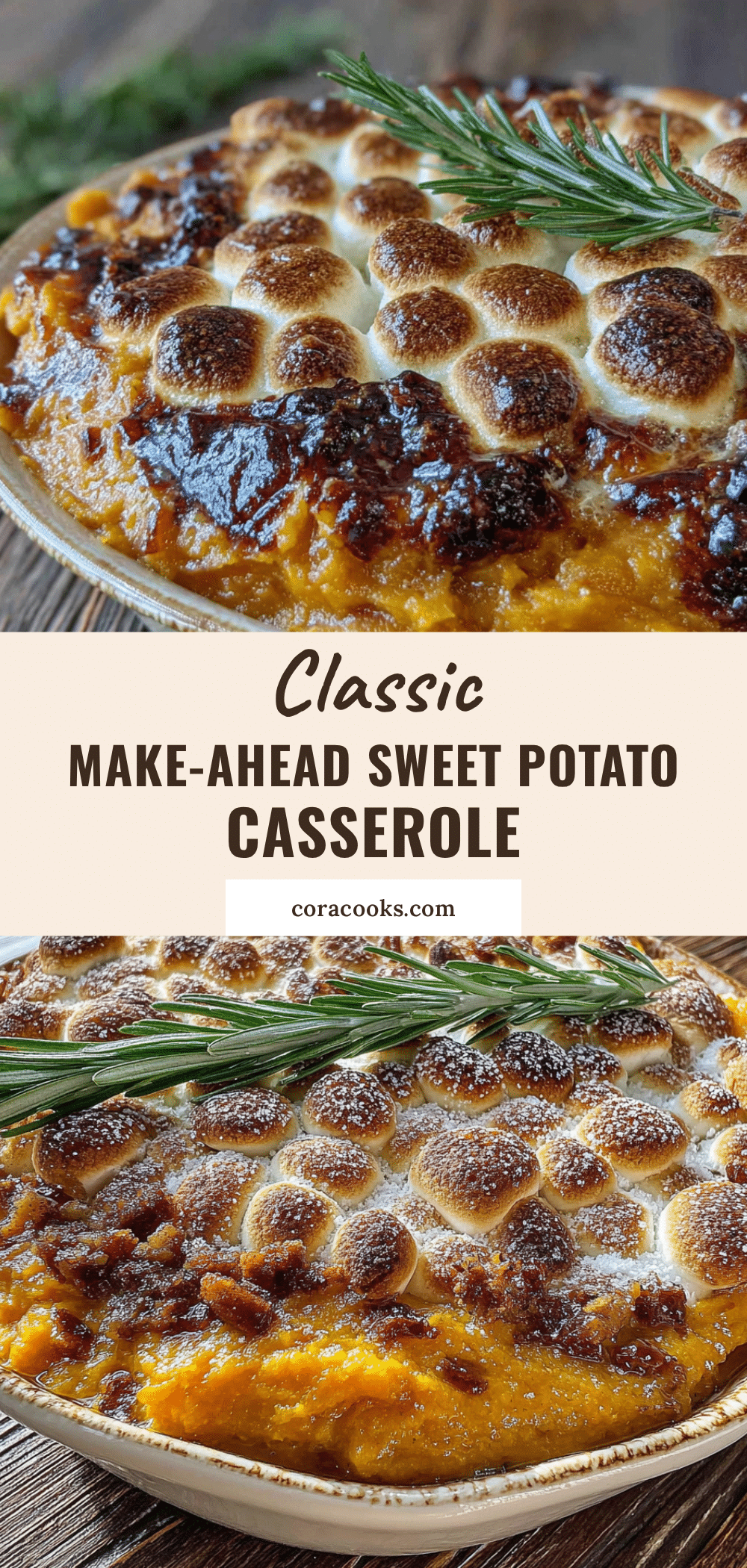
Best Make-Ahead Sweet Potato Casserole Recipe

This make-ahead sweet potato casserole features a creamy, silky sweet potato base and a crunchy pecan streusel topping. It’s the perfect stress-free holiday side dish that can be assembled up to two days in advance.
- Prep Time: 20 minutes
- Cook Time: 1 hour 10 minutes
- Total Time: 1 hour 30 minutes
- Yield: 10 servings 1x
- Category: Side Dish
- Cuisine: American
Ingredients
- 4 pounds sweet potatoes (about 4–5 large or 6–7 medium)
- 4 tablespoons unsalted butter, softened
- 1/2 cup heavy cream
- 1/3 cup light brown sugar, packed
- 2 large eggs, room temperature
- 1 teaspoon vanilla extract
- 1/2 teaspoon fine sea salt
- 1 teaspoon ground cinnamon
- 1/4 teaspoon ground nutmeg
- 1 cup pecans, chopped
- 1/2 cup all-purpose flour
- 1/2 cup light brown sugar, packed
- 4 tablespoons unsalted butter, cold and cubed
- 1/2 teaspoon ground cinnamon
- 1 pinch salt
Instructions
- Place whole, unpeeled sweet potatoes in a large stockpot and cover with cold water by at least 2 inches. Add a generous pinch of salt (about 1 tablespoon). Bring to a boil over high heat, then reduce to a simmer and cook for 35 to 45 minutes until a knife slides into the thickest part with almost no resistance. Drain in a colander and let cool for about 15 minutes until cool enough to handle. The skins should slip off easily.
- While the potatoes are still warm, transfer to a large mixing bowl. Add the softened butter and mash until the butter is mostly melted and incorporated, leaving some small lumps for texture.
- In a separate small bowl, whisk together the heavy cream, 1/3 cup brown sugar, eggs, vanilla, salt, 1 teaspoon cinnamon, and nutmeg until smooth. Pour into the mashed potatoes and stir until combined. Do not overmix.
- For the pecan streusel topping: In a medium bowl, combine the chopped pecans, flour, 1/2 cup brown sugar, 1/2 teaspoon cinnamon, and a pinch of salt. Add the cold butter cubes and use your fingertips or a pastry cutter to work the butter into the dry ingredients until the mixture resembles coarse sand with some pea-sized butter pieces remaining. Refrigerate until ready to use.
- Grease a 9×13-inch baking dish with butter or nonstick spray. Spread the sweet potato mixture evenly into the dish. Sprinkle the pecan streusel topping over the surface, covering it completely. Do not press the topping down.
- For make-ahead: Cover the assembled casserole tightly with aluminum foil and refrigerate for up to 2 days. If baking immediately, skip the foil.
- Preheat oven to 350°F. If baking from the refrigerator, let the casserole sit on the counter for 20 minutes while the oven preheats. Bake covered with foil for 25 minutes, then remove the foil and bake for another 15 to 20 minutes until the topping is golden brown and the edges are bubbling.
- Let the casserole rest for 10 minutes before serving.
Notes
Boil sweet potatoes whole with skins on for a creamier texture. Let potatoes steam-dry after draining to remove excess moisture. Room temperature eggs help emulsify the mixture better. Toast pecans before using for best flavor. The casserole can be assembled up to 2 days ahead and refrigerated. For best results, let the casserole rest 10 minutes after baking before serving.
Nutrition
- Serving Size: 1 serving (1/10 of c
- Calories: 385
- Sugar: 22
- Sodium: 210
- Fat: 22
- Saturated Fat: 10
- Carbohydrates: 45
- Fiber: 6
- Protein: 5
Keywords: sweet potato casserole, make-ahead, Thanksgiving side dish, pecan streusel, holiday recipe, comfort food