Love this? Save it for later!
Share the inspiration with your friends
My neighbor Jen wasn’t trying to impress me. I’d stopped by to borrow a lug wrench — my car had made a concerning noise on the way home from the grocery store — and the smell hit me before I even got through her screen door. It was warm, yeasty, and herbal, like the best bakery in town had somehow relocated to her suburban kitchen. She was pulling this golden, dimpled thing out of the oven, and she just shrugged when I practically drooled on her counter.
“Oh, it’s just my discard focaccia,” she said, sliding it onto a cooling rack. “You want a piece?”
Let me tell you, that first bite stopped me mid-sentence. The crust was shattery and crisp, the inside was pillowy and open, and the rosemary had toasted right into the olive oil pooled in those signature dimples. I stood there in her kitchen, eating focaccia with my hands, still holding the lug wrench, and I knew I’d be making this for the rest of my life. Honestly, that’s how the best recipes find you — when someone’s not trying to show off.
She finally handed me the recipe on a napkin, written in pencil. I’ve made it at least twenty times since then. And now, I’m sharing my perfected version with you. This golden sourdough discard rosemary focaccia has become my go-to for everything from Sunday dinners to holiday appetizers, and it’s shockingly easy. Maybe you’ve been there — staring at a jar of discard in your fridge, wondering what to do with it. This is the answer.
Why You’ll Love This Recipe
This isn’t just another focaccia recipe. After testing this about a dozen times — some flatter than a pancake, some so oily they slid off the pan — I landed on a version that works every single time. Here’s why you’ll love it:
- Uses Up Your Sourdough Discard: That jar of discard sitting in your fridge finally has a purpose. No more guilt about feeding your starter!
- No Yeast Required: The sourdough discard does all the heavy lifting for flavor and rise. One less thing to buy at the store.
- Minimal Hands-On Time: The dough does the work while you do other things. Just a few stretches and folds, then you walk away.
- Perfect for Any Season: This golden sourdough discard rosemary focaccia works for summer picnics, fall soup dunking, or holiday bread baskets.
- Foolproof Texture: The crust gets perfectly golden and crispy, while the inside stays soft and airy. Every single time.
- Better the Next Day: The flavor actually deepens overnight. If it lasts that long in your house.
What makes this version different from the rest? It’s the balance of hydration and the long, slow fermentation that develops that tangy sourdough flavor without being overpowering. I’ve tested this with different flours, different pans, different oven temperatures — and this method wins. It’s the kind of bread that makes you close your eyes after the first bite. Comfort food reimagined, honestly — healthier because it’s naturally leavened, but with the same soul-soothing satisfaction as your favorite bakery loaf.
What Ingredients You Will Need
This recipe uses simple, pantry-friendly ingredients to deliver that signature golden crust and tender crumb. Most of these are probably already in your kitchen, which is exactly how I like it.
- Unbleached all-purpose flour, 3 cups (360g) — I prefer King Arthur Flour for consistent protein content, but any good all-purpose flour works. The protein level matters here for structure, so avoid cake flour or pastry flour.
- Sourdough discard, 1 cup (240g), unfed and straight from the fridge — This is where the magic happens. Use your discard at any stage; it doesn’t need to be active or bubbly. The fermentation has already happened.
- Warm water, 1 cup (240ml), about 90°F — Not too hot! If it’s hotter than your bathwater, it could kill the natural yeast in your discard. Lukewarm is perfect.
- Extra-virgin olive oil, 1/3 cup (80ml), plus more for the pan and drizzling — Use a good-quality oil here; it’s a major flavor component. I like California Olive Ranch for everyday baking.
- Fine sea salt, 1 1/2 teaspoons (9g) — Table salt works too, but reduce to 1 teaspoon if using iodized salt. It’s saltier by volume.
- Fresh rosemary, 2 tablespoons chopped, plus whole sprigs for topping — Fresh is non-negotiable here, friends. Dried rosemary burns in the hot oil and gets bitter. Trust me on this one.
- Flaky sea salt, for finishing — Maldon is my go-to. That crunchy pop of salt on top makes all the difference.
- Optional: Garlic cloves, 4-5, thinly sliced — I add these when I want a more savory, almost pizza-like flavor. They roast into buttery, sweet little morsels.
For the best results, make sure your sourdough discard is at room temperature before mixing. I learned this the hard way after making a dense, cold dough that refused to rise. Also, if you’re in a humid climate, you might need to reduce the water by a tablespoon or two. The dough should be sticky but not soupy — think wet Play-Doh, not pancake batter.
Equipment Needed
You don’t need a fancy kitchen to make this golden sourdough discard rosemary focaccia. Here’s what you’ll need:
- Large mixing bowl — Glass or ceramic works best. Metal can react with the fermentation process over time.
- 9×13-inch baking pan — A quarter-sheet pan works perfectly. Darker pans produce a darker, crispier bottom crust. My favorite is a USA Pan because the corners don’t stick.
- Bench scraper or dough scraper — Honestly, a plastic dough scraper costs about $5 and saves you from scraping dough off your hands for ten minutes.
- Kitchen scale — Not strictly necessary, but weighing your flour changes the game. I’ve been using the same Escali scale for eight years.
- Plastic wrap or a damp kitchen towel — For covering the dough during its long rise.
- Measuring cups and spoons — For those who prefer volume measurements.
- Pastry brush — For slathering that olive oil into every nook and cranny before baking.
If you don’t have a 9×13 pan, you can use a 10-inch cast iron skillet for a thicker, rounder focaccia. Just reduce the baking time by about 5 minutes and keep an eye on the color. I’ve also used disposable aluminum pans when bringing this to potlucks — works perfectly and no pan to wash!
Preparation Method
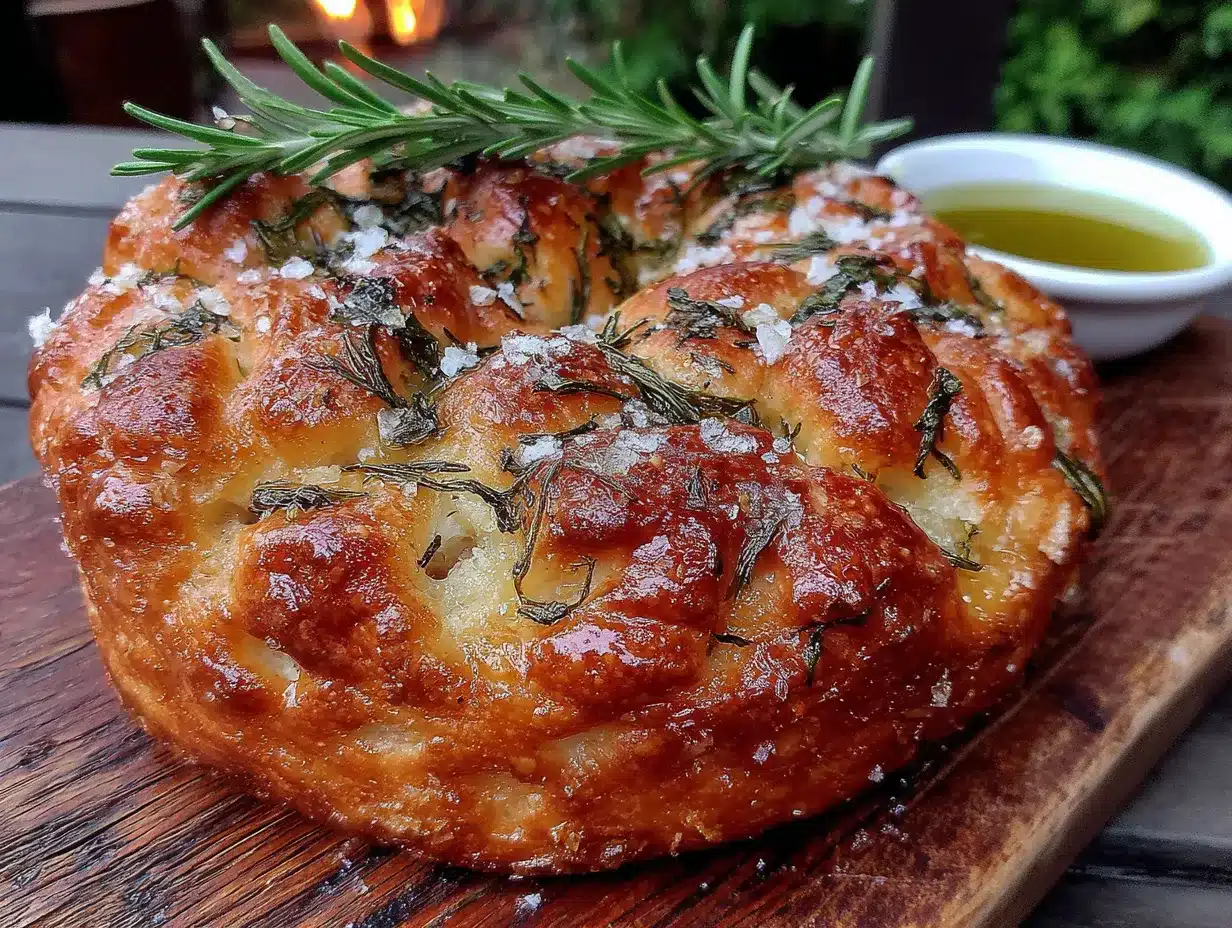
This golden sourdough discard rosemary focaccia takes time, but most of it is hands-off. Plan for about 8-12 hours total, from mixing to cooling. I usually mix the dough in the morning and bake it in the evening, or mix it before bed and bake it for lunch.
- Mix the dough (10 minutes): In your large bowl, combine the warm water and sourdough discard. Stir until the discard is mostly dissolved — it doesn’t need to be perfectly smooth. Add the flour and salt, then mix with a wooden spoon or your hands until a shaggy, sticky dough forms. It will look rough and lumpy. That’s okay. Cover the bowl with plastic wrap and let it rest for 30 minutes. This autolyse step lets the flour absorb the water and makes the dough easier to work with.
- Perform the first stretch and fold (1 minute): After the rest, wet your hands with a little water (this prevents sticking). Grab one side of the dough, stretch it up, and fold it over the center. Rotate the bowl a quarter turn and repeat. Do this four times total, until the dough feels tighter and smoother. Cover and let rest 30 minutes.
- Repeat stretch and folds (1 minute each, over 2 hours): Do two more rounds of stretch and folds, each 30 minutes apart. After the third round, the dough should feel smoother, more elastic, and less sticky. You’ll see bubbles starting to form. Cover the bowl and let it rest at room temperature for 4-6 hours, or until the dough has nearly doubled in size and looks puffy and alive.
- Prepare the pan (5 minutes): Pour about 2 tablespoons of olive oil into your 9×13 pan. Use your fingers to spread it all over the bottom and up the sides. This is crucial — the oil creates that crispy, golden crust. Don’t skimp here.
- Transfer and stretch the dough (5 minutes): Gently scrape the dough into the oiled pan. It will be soft and billowy. Let it rest for 10 minutes, then use your fingertips to gently stretch it toward the edges of the pan. If it resists or springs back, let it rest another 10 minutes and try again. Patience is your friend here.
- Final proof (1-2 hours): Cover the pan with plastic wrap and let the dough rise until it’s puffy and has nearly doubled in height. It should feel airy and jiggly when you gently shake the pan. This can take anywhere from 1 to 3 hours depending on your kitchen temperature.
- Preheat and dimple (10 minutes): About 30 minutes before baking, preheat your oven to 425°F (220°C). Once the dough has finished its final proof, drizzle another 2 tablespoons of olive oil over the top. Use your fingertips to press deep dimples all across the surface — go all the way to the bottom of the pan. Don’t be shy about this! Sprinkle the chopped rosemary and flaky salt evenly over the top. If using garlic slices, press them into the dimples.
- Bake (20-25 minutes): Place the pan on the middle rack and bake until the top is deep golden brown and the edges look almost caramelized. The internal temperature should reach 200°F (93°C) if you want to be precise. Let it cool in the pan for 5 minutes, then transfer to a wire rack. Resist the urge to cut into it immediately — the steam needs to settle for the perfect texture.
Pro tip from my many failures: If your focaccia seems pale after 20 minutes, let it keep going. I’ve pulled underbaked focaccia before and regretted it. That golden color means flavor. Let it get dark, almost amber, around the edges.
Cooking Tips & Techniques
After making this golden sourdough discard rosemary focaccia more times than I can count, I’ve collected some hard-won wisdom. Here’s what I wish someone had told me:
Don’t skip the autolyse. That 30-minute rest before the first stretch and fold isn’t optional. It gives the flour time to hydrate fully, which means better gluten development with less work. I once skipped it because I was in a hurry, and the dough never developed the same silky, extensible texture.
Use cold discard straight from the fridge. Unlike active sourdough recipes that need bubbly, vigorous starter, discard focaccia actually benefits from cold discard. It slows the fermentation down, giving you more time to develop flavor. I’ve used discard that was two weeks old and the bread was still fantastic.
Watch your water temperature. If your kitchen is cold (below 70°F), use slightly warmer water, around 95°F. If it’s a hot summer day, use cool tap water. The dough should feel like a warm handshake, not a hot bath. I killed the yeast in my first batch with water that was too hot, and the dough never rose. Learn from my mistake.
Don’t over-flour your work surface. The stretch and folds are done right in the bowl, so there’s no need to flour anything. If the dough sticks to your hands, just wet them with water. Adding extra flour changes the hydration ratio and can make the bread dense.
Trust the dimples. Those deep indentations aren’t just for looks. They create little pools of olive oil that toast the rosemary and create those signature crispy bits. Press firmly and confidently. I used to be too gentle, and my focaccia came out flat and sad. Now I really go for it.
Variations & Adaptations
This golden sourdough discard rosemary focaccia is endlessly adaptable. Here are some of my favorite ways to change it up:
- Everything Bagel Focaccia: Skip the rosemary and sprinkle everything bagel seasoning over the top before baking. The sesame seeds and garlic toast into the olive oil beautifully. I make this version for breakfast sandwiches.
- Roasted Tomato & Basil: Press halved cherry tomatoes into the dimples along with fresh basil leaves. The tomatoes roast into sweet, jammy pockets. This is my go-to summer version when the garden is overflowing.
- Cheese-Stuffed Crust: Before the final proof, press small cubes of mozzarella or fontina into the dough. They melt into gooey pockets that are absolutely irresistible. Just warn your guests about the hot cheese!
- Whole Wheat Version: Substitute 1 cup of the all-purpose flour with whole wheat flour. You’ll need to add an extra tablespoon of water, as whole wheat absorbs more liquid. The flavor gets nuttier and more complex.
- Herb-Infused Oil: Warm 1/3 cup olive oil with a few sprigs of rosemary, thyme, and a smashed garlic clove. Let it steep for an hour, then use that oil in the recipe. The flavor is more subtle and evenly distributed.
I once made a caramelized onion and blue cheese version for a dinner party, and people literally asked for the recipe before they finished their first piece. Don’t be afraid to experiment — this dough is forgiving and takes well to all kinds of toppings.
Serving & Storage Suggestions
This golden sourdough discard rosemary focaccia is best served warm, but it’s still incredible at room temperature. Here’s how to make the most of it:
Serving: Let it cool for at least 15 minutes before cutting. Use a serrated knife and saw gently — don’t press down or you’ll crush those beautiful air pockets. Serve it alongside a bowl of good olive oil and balsamic vinegar for dipping, or slice it horizontally for sandwiches. It’s also amazing with soups, stews, or simply on its own as a snack.
Storage: Store leftover focaccia in an airtight container at room temperature for up to 2 days. Do NOT refrigerate it — the starch retrogrades in the cold and makes the bread go stale faster. I learned this the hard way after refrigerating a half-eaten loaf and finding it dry and sad the next morning.
Freezing: This focaccia freezes beautifully. Wrap the cooled, unsliced loaf tightly in plastic wrap, then in foil, and freeze for up to 3 months. To reheat, unwrap and place directly on the oven rack at 350°F for 10-15 minutes. It comes back to life with that same crispy crust and soft interior.
Reheating: The microwave will make it soggy and rubbery. Instead, reheat slices in a toaster oven or under the broiler for 2-3 minutes. For the whole loaf, wrap in foil and warm in a 350°F oven for 10 minutes, then unwrap and bake for 5 more minutes to crisp the crust.
The flavor actually improves on day two, as the rosemary and olive oil have time to meld together. If you can resist eating it all on day one, you’re in for a treat.
Nutritional Information & Benefits
While I don’t make focaccia for its health benefits, I appreciate that sourdough fermentation does offer some advantages. Here’s a rough nutritional breakdown per serving (assuming 12 servings per pan):
- Calories: Approximately 210 per serving
- Carbohydrates: 28g
- Protein: 5g
- Fat: 9g (mostly from olive oil)
- Fiber: 1g
- Sodium: 290mg
The sourdough fermentation process breaks down some of the phytic acid in the flour, making the nutrients more bioavailable. It also creates a lower glycemic index compared to bread made with commercial yeast, meaning your blood sugar won’t spike as dramatically. Plus, the olive oil provides heart-healthy monounsaturated fats and antioxidants.
If you’re watching your sodium, reduce or skip the flaky salt on top. And for a lower-fat version, you can reduce the olive oil by half — just know the texture will be less crispy and golden.
This bread is not gluten-free, but it is vegetarian and can be made vegan by ensuring your sourdough starter doesn’t contain any dairy. It’s also dairy-free as written.
Conclusion
This golden sourdough discard rosemary focaccia has become a staple in my kitchen for a reason. It’s the recipe that turns a byproduct of sourdough baking into something genuinely spectacular. I still think about that first bite at Jen’s house — the way the rosemary had toasted into the olive oil, the crunch of flaky salt, the pillowy interior that practically melted on my tongue.
Now it’s your turn. Whether you’re using up discard from your weekly sourdough bake or you’re just looking for a showstopping bread that doesn’t require kneading or fancy techniques, this recipe delivers. Make it for your next dinner party, your Sunday meal prep, or just because you want your house to smell incredible.
I’d love to hear how yours turns out! Did you add any fun toppings? Did you serve it with something amazing? Drop a comment below and share your experience. And if you loved this recipe, save it to your Pinterest boards and share it with a friend who needs to use up their sourdough discard. Happy baking, friends!
Frequently Asked Questions
Can I use active sourdough starter instead of discard?
Absolutely! Active starter will work, but you’ll need to adjust the fermentation time. Active starter ferments faster, so your dough might be ready to bake in 4-6 hours instead of 8-12. Keep an eye on it and bake when it’s puffy and jiggly.
Why is my focaccia dense and not airy?
This usually happens for one of three reasons: the dough didn’t ferment long enough, the water was too hot and killed the yeast, or you added too much flour during mixing. Make sure your water is lukewarm (around 90°F) and give the dough enough time to develop those beautiful air pockets.
Can I make this gluten-free?
I haven’t tested a gluten-free version of this specific recipe, but I’ve had success with gluten-free sourdough starters in other recipes. You’d need to use a gluten-free flour blend with xanthan gum and likely increase the hydration. I’d recommend searching for a dedicated gluten-free focaccia recipe for best results.
How do I know when the dough has fermented enough?
Look for visual cues: the dough should be nearly doubled in size, look puffy and billowy, and have visible bubbles on the surface. When you gently shake the bowl, the dough should jiggle. It should also smell pleasantly sour and yeasty, not like alcohol or vinegar.
Can I use dried rosemary instead of fresh?
I really don’t recommend it. Dried rosemary burns in the hot olive oil and becomes bitter and hard. If fresh rosemary isn’t available, try using fresh thyme, oregano, or even chopped sage instead. All of those hold up better to the high heat.
Pin This Recipe!
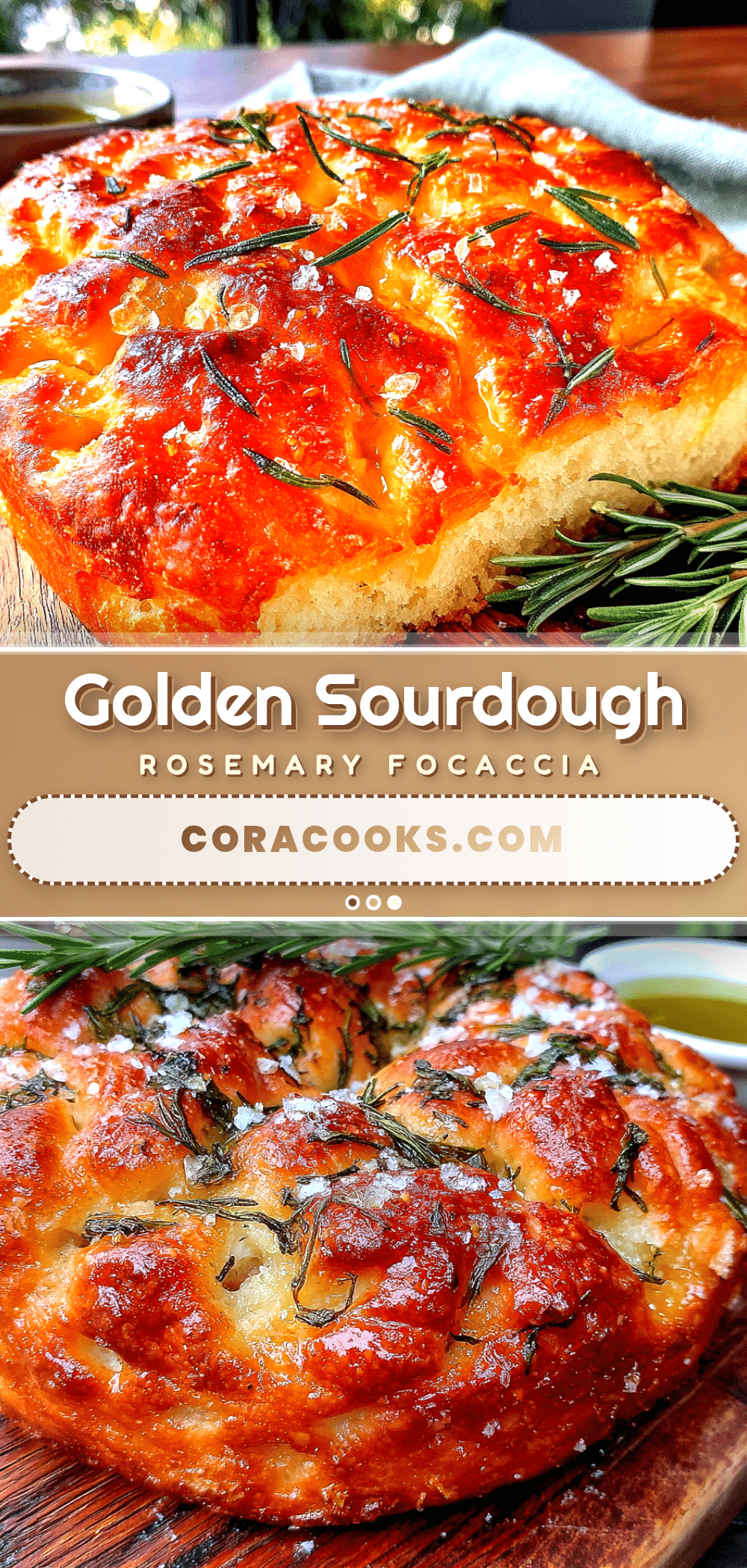
Easy Golden Sourdough Discard Rosemary Focaccia
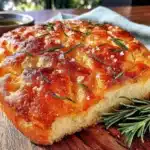
This golden sourdough discard rosemary focaccia is a foolproof, no-yeast bread that uses up your sourdough discard. With a crispy, golden crust and a soft, airy interior, it’s perfect for any occasion and gets even better the next day.
- Prep Time: 15 minutes
- Cook Time: 25 minutes
- Total Time: 8-12 hours (including fermentation)
- Yield: 12 servings 1x
- Category: Bread
- Cuisine: Italian
Ingredients
- 3 cups (360g) unbleached all-purpose flour
- 1 cup (240g) sourdough discard, unfed and straight from the fridge
- 1 cup (240ml) warm water, about 90°F
- 1/3 cup (80ml) extra-virgin olive oil, plus more for the pan and drizzling
- 1 1/2 teaspoons (9g) fine sea salt
- 2 tablespoons chopped fresh rosemary, plus whole sprigs for topping
- Flaky sea salt, for finishing
- Optional: 4-5 garlic cloves, thinly sliced
Instructions
- Mix the dough: In a large bowl, combine warm water and sourdough discard. Stir until mostly dissolved. Add flour and salt, mix until a shaggy, sticky dough forms. Cover and let rest for 30 minutes.
- Perform the first stretch and fold: Wet your hands, stretch one side of the dough up and fold over the center. Rotate bowl and repeat four times. Cover and let rest 30 minutes.
- Repeat stretch and folds: Do two more rounds of stretch and folds, each 30 minutes apart. Cover and let rest at room temperature for 4-6 hours, until nearly doubled in size.
- Prepare the pan: Pour about 2 tablespoons olive oil into a 9×13-inch pan and spread all over bottom and sides.
- Transfer and stretch the dough: Gently scrape dough into the oiled pan. Let rest 10 minutes, then use fingertips to stretch toward edges. If it resists, rest another 10 minutes and try again.
- Final proof: Cover pan with plastic wrap and let rise until puffy and nearly doubled, about 1-2 hours.
- Preheat and dimple: Preheat oven to 425°F (220°C). Drizzle another 2 tablespoons olive oil over dough. Use fingertips to press deep dimples all across surface. Sprinkle chopped rosemary and flaky salt evenly. If using garlic, press into dimples.
- Bake: Place pan on middle rack and bake 20-25 minutes until deep golden brown and edges are caramelized. Internal temperature should reach 200°F (93°C). Cool in pan 5 minutes, then transfer to wire rack.
Notes
Use fresh rosemary; dried burns and becomes bitter. Cold discard from the fridge works best. Don’t skip the autolyse. For a thicker focaccia, use a 10-inch cast iron skillet and reduce baking time by 5 minutes. Store at room temperature; do not refrigerate. Freezes well for up to 3 months.
Nutrition
- Serving Size: 1 serving (1/12 of r
- Calories: 210
- Sodium: 290
- Fat: 9
- Saturated Fat: 1
- Carbohydrates: 28
- Fiber: 1
- Protein: 5
Keywords: sourdough discard, focaccia, rosemary, easy bread, no yeast, sourdough bread, discard recipe