Love this? Save it for later!
Share the inspiration with your friends
My neighbor, a retired butcher named Frank, watched me struggling with a bag of grocery store stew meat one Tuesday afternoon. He didn’t say anything at first. Then he just shook his head, walked over to his garage, and came back holding a piece of paper with a handwritten recipe that looked older than me. “That packaged stuff won’t do,” he said, handing it over. “You need the right cut and the right patience.” I felt a little embarrassed, honestly, but mostly grateful. Frank wasn’t the type to offer advice lightly, so I knew this was something special.
That evening, I followed his instructions exactly. I browned the meat in batches, which took forever and made a mess of my stovetop. I forgot to add the bay leaf until the last hour. And I definitely used a regular knife instead of a proper chef’s knife to chop the carrots, which meant they were all different sizes. But you know what? The smell that filled my kitchen was incredible. It was the kind of deep, savory aroma that makes your neighbors knock on your door. And when I finally sat down with that bowl of best ever beef stew with root vegetables, I understood what Frank meant about patience. The beef was so tender it fell apart with a fork, and the carrots and potatoes had soaked up all that rich, beefy broth.
I’ve made this stew dozens of times since then. It’s become my go-to for fall potlucks, Sunday family dinners, and especially for those chilly evenings when I want to impress guests without being stuck in the kitchen all night. Maybe you’ve been there—standing in front of the stove, wondering if your stew will ever taste as good as the one your grandmother made. Let me tell you, this one comes close. It’s the kind of recipe that feels like a hug in a bowl, and I think Frank would be proud of how many people have asked me for it.
Why You’ll Love This Recipe
I have tested this recipe more times than I can count, and I can tell you without hesitation that it delivers every single time. The beef becomes meltingly tender, the root vegetables soak up all that savory goodness, and the broth is thick enough to coat the back of a spoon. It is the best ever beef stew with root vegetables for a reason—it just works.
- Crowd-Pleaser: This stew always gets rave reviews, whether I am serving it at a casual family dinner or a more formal gathering. It is one of those dishes that makes people close their eyes after the first bite.
- Simple Ingredients: You don’t need any fancy grocery store trips. Most of these ingredients are already in your pantry or fridge, which makes it perfect for those days when you need a hearty meal without a lot of planning.
- Perfect for Hosting: This is the ideal dish for a dinner party or potluck. You can make it a day ahead, and the flavors actually get better overnight. It gives you time to focus on your guests instead of being stuck in the kitchen.
- Stress-Free Cooking: Once you get the ingredients in the pot, the oven does all the work. You can relax, set the table, or even prep a salad while the stew simmers away.
- Unbelievably Delicious: The combination of seared beef, sweet carrots, earthy potatoes, and a rich, wine-infused broth is pure comfort food. It is the kind of meal that makes you feel warm from the inside out.
What makes this recipe different from all the others? It is the technique. Most stew recipes rush the browning step, but I take the time to get a deep, dark sear on the beef. That browned crust is where all the flavor lives. And the secret ingredient? A splash of balsamic vinegar at the end. It sounds weird, but it adds a brightness that balances the richness of the stew perfectly.
Honestly, this recipe is more than just dinner. It is comfort food reimagined—hearty, satisfying, and perfect for sharing with the people you care about. It is the kind of meal that makes you feel like a great cook, even if you are just following the steps.
What Ingredients You Will Need
This recipe uses simple, wholesome ingredients to deliver bold flavor and satisfying texture without the fuss. Most of these are pantry staples, but a few key components make all the difference. Let me walk you through each one.
- Beef chuck (3 pounds, cut into 2-inch cubes): This is the best cut for stew. It has enough marbling to stay tender during long cooking. I recommend getting a whole chuck roast and cutting it yourself. Pre-cut stew meat is often inconsistent in size and can include tougher scraps. Look for meat with good fat marbling.
- All-purpose flour (1/4 cup): This helps thicken the stew and gives the beef a nice crust when you sear it. You can use a gluten-free flour blend if needed, but the texture will be slightly different.
- Olive oil (3 tablespoons): Use a good quality extra-virgin olive oil for browning. It has a higher smoke point than butter and adds a lovely fruity note to the beef.
- Yellow onions (2 large, chopped): Onions are the backbone of this stew. They soften and sweeten as they cook, adding depth to the broth. I prefer yellow onions for their balanced flavor.
- Garlic (4 cloves, minced): Fresh garlic is non-negotiable here. It adds a punch of flavor that powdered garlic just can’t match.
- Tomato paste (2 tablespoons): This concentrated paste adds a rich, savory umami note to the broth. It also helps deepen the color of the stew.
- Red wine (1 cup): A dry red wine like Cabernet Sauvignon or Merlot works beautifully. It adds acidity and complexity to the broth. If you don’t drink wine, you can use an extra cup of beef broth with a tablespoon of red wine vinegar.
- Beef broth (4 cups): Use a good quality low-sodium broth so you can control the salt level. I prefer Better Than Bouillon for its rich flavor, but any brand works.
- Bay leaves (2): These add a subtle herbal note that complements the beef. Remember to remove them before serving.
- Fresh thyme (4 sprigs): Thyme is a classic herb for stew. It adds a woodsy, slightly floral flavor that pairs perfectly with root vegetables.
- Carrots (4 large, peeled and cut into 1-inch chunks): Carrots add sweetness and color to the stew. Look for firm, bright orange carrots. In summer, you can use local farmers’ market carrots for an even sweeter flavor.
- Potatoes (1.5 pounds, peeled and cut into 1.5-inch chunks): Yukon Gold or Russet potatoes work best. They hold their shape during cooking and become creamy and tender. Avoid waxy potatoes like red potatoes, as they can become mushy.
- Parsnips (2 large, peeled and cut into 1-inch chunks): Parsnips are my secret weapon. They have a sweet, slightly peppery flavor that adds another layer of complexity to the stew. If you can’t find them, you can use extra carrots or celery root.
- Frozen peas (1 cup): Add these at the very end. They add a pop of color and a burst of sweetness that cuts through the richness of the broth.
- Balsamic vinegar (1 tablespoon): This is my secret ingredient. It adds a bright, tangy finish that balances the deep, savory flavors. Trust me on this one.
- Salt and black pepper (to taste): Use kosher salt for better control. Freshly ground black pepper is always best.
Equipment Needed
You don’t need a lot of fancy equipment to make this stew, but a few key tools will make the process much easier. Here is what I use every time.
- Dutch oven (6 to 8 quarts): This is the most important tool. A heavy-bottomed Dutch oven distributes heat evenly and retains it well, which is perfect for slow cooking. I use a Le Creuset, but any enameled cast iron pot works beautifully. If you don’t have one, a large heavy-bottomed pot with a tight-fitting lid will do.
- Chef’s knife (8-inch): A sharp knife makes chopping vegetables and cutting meat much easier and safer. I learned the hard way that a dull knife is more dangerous than a sharp one.
- Cutting board: Use a large wooden or plastic cutting board. I prefer a wooden one because it is gentler on knives.
- Wooden spoon or spatula: This is perfect for stirring the stew and scraping up the browned bits from the bottom of the pot. Those bits are pure flavor.
- Measuring cups and spoons: Accurate measurements are important for consistent results. I use a set of stainless steel measuring cups and spoons that have lasted for years.
- Tongs: Tongs make it easy to turn the beef while browning and to remove the bay leaves later.
- Ladle: A large ladle is perfect for serving the stew into bowls.
If you don’t have a Dutch oven, you can use a slow cooker or an Instant Pot. For the slow cooker, brown the beef and onions on the stovetop first, then transfer everything to the slow cooker and cook on low for 8 hours. For the Instant Pot, use the sauté function for browning, then pressure cook on high for 35 minutes with a natural release.
Preparation Method
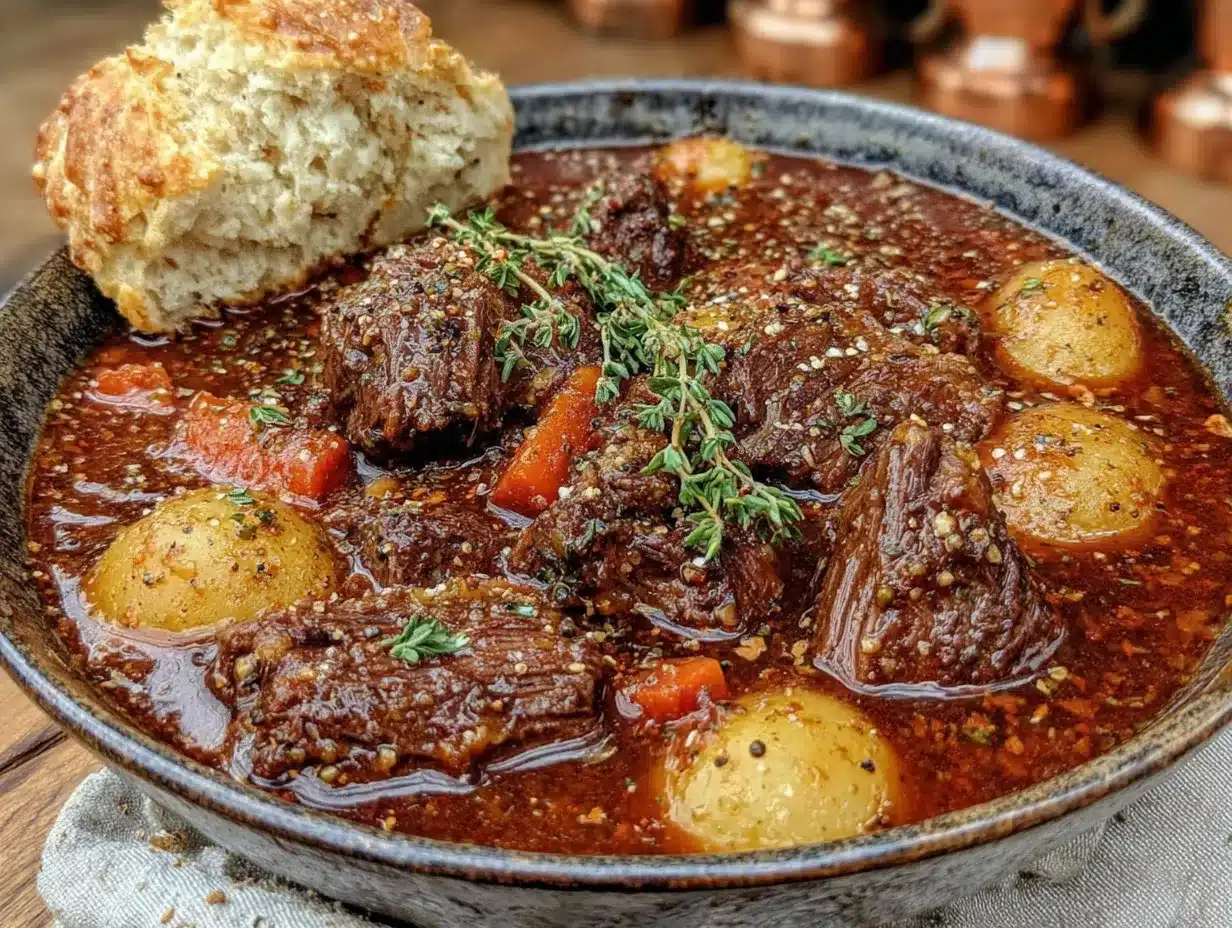
Making this stew is a process, but it is not difficult. Take your time with each step, and you will be rewarded with the best ever beef stew with root vegetables you have ever tasted. Here is how I do it.
Step 1: Prep the Beef (10 minutes)
Pat the beef chuck dry with paper towels. This is crucial—wet meat won’t brown properly. Cut the meat into 2-inch cubes, trimming off any large pieces of fat. Season the cubes generously with salt and black pepper. Place the flour in a shallow bowl and toss the beef cubes in the flour until they are lightly coated. Shake off any excess flour.
Step 2: Sear the Beef (15 minutes)
Heat the olive oil in your Dutch oven over medium-high heat until it shimmers. Add the beef cubes in a single layer—do not overcrowd the pot. You will need to work in batches. Let the beef brown undisturbed for 3 to 4 minutes per side, until a deep, dark crust forms. Use tongs to turn the pieces. Transfer the browned beef to a plate and set aside. If the pot looks dry, add a little more oil between batches.
Step 3: Cook the Aromatics (8 minutes)
Reduce the heat to medium. Add the chopped onions to the pot and cook, stirring occasionally, for 5 minutes, until they soften and start to turn golden. Add the minced garlic and cook for 1 minute more, until fragrant. Stir in the tomato paste and cook for 2 minutes, stirring constantly. The paste will darken and smell amazing.
Step 4: Deglaze the Pot (2 minutes)
Pour the red wine into the pot and use your wooden spoon to scrape up all the browned bits from the bottom. This is called deglazing, and it is where a lot of the flavor comes from. Let the wine simmer for 2 minutes, until it reduces slightly.
Step 5: Build the Broth (5 minutes)
Return the browned beef to the pot along with any juices that have accumulated on the plate. Add the beef broth, bay leaves, and fresh thyme sprigs. Stir everything together. Bring the liquid to a gentle simmer—you should see small bubbles breaking the surface, not a rolling boil.
Step 6: Slow Cook the Stew (2 to 2.5 hours)
Cover the pot with the lid and transfer it to a preheated 325°F (160°C) oven. Let the stew cook for 1.5 hours. After that, remove the pot from the oven and add the carrots, potatoes, and parsnips. Stir gently to combine. Return the pot to the oven, uncovered, and cook for another 45 minutes to 1 hour, until the vegetables are tender and the beef is fork-tender.
Step 7: Finish the Stew (5 minutes)
Remove the pot from the oven. Discard the bay leaves and thyme sprigs. Stir in the frozen peas and let them warm through for 2 minutes. Finally, stir in the balsamic vinegar. Taste the stew and adjust the seasoning with more salt and pepper if needed. The stew should be thick and rich, with a deep, savory flavor.
Step 8: Rest and Serve (10 minutes)
Let the stew rest for 10 minutes before serving. This allows the flavors to meld and the broth to thicken slightly. Serve hot in deep bowls, garnished with a sprinkle of fresh parsley if you like.
Cooking Tips & Techniques
Over the years, I have made every mistake you can imagine with beef stew. I have rushed the browning and ended up with gray, flavorless meat. I have added the vegetables too early and ended up with mush. I have even forgotten to add the salt entirely. But each failure taught me something, and now I want to share those lessons with you.
Don’t Skip the Searing: This is the most important step. The Maillard reaction—that browning of the meat—creates hundreds of flavor compounds that make the stew taste deeply savory. Take your time and let the beef develop a dark crust. If the pot gets too hot and the bits start to burn, reduce the heat.
Use the Right Cut of Beef: Chuck roast is your best friend here. It has enough connective tissue and fat to break down during long cooking, resulting in tender, juicy meat. Avoid lean cuts like sirloin or round, as they will become tough and dry.
Don’t Overcrowd the Pot: When you sear the beef, make sure each piece has room to breathe. If you crowd the pot, the meat will steam instead of brown. Work in batches if necessary. It takes a little longer, but the payoff is worth it.
Add Vegetables at the Right Time: Root vegetables need time to cook, but they don’t need as much time as the beef. Adding them too early will result in mushy, disintegrated vegetables. I add them after the beef has cooked for 1.5 hours, which gives them enough time to become tender without losing their shape.
Let It Rest: The stew tastes even better the next day. The flavors continue to develop as it sits, so don’t hesitate to make it a day ahead. Just reheat it gently on the stovetop before serving.
Adjust the Thickness: If your stew is too thin, you can thicken it with a slurry of 1 tablespoon cornstarch mixed with 2 tablespoons cold water. Stir it in and let the stew simmer for 5 minutes. If it is too thick, add a splash of beef broth.
Variations & Adaptations
One of the best things about this stew is how adaptable it is. I have tried several variations over the years, and each one has been delicious in its own way. Here are a few ideas to inspire you.
Vegetarian Version: Replace the beef with 2 cans of chickpeas (drained and rinsed) and use vegetable broth instead of beef broth. Add a tablespoon of soy sauce or tamari for umami. The cooking time will be shorter—about 30 minutes after adding the vegetables.
Gluten-Free Adaptation: Skip the flour and use a gluten-free all-purpose blend or cornstarch to coat the beef. You can also thicken the stew at the end with a cornstarch slurry if needed. The texture will be slightly different, but the flavor will still be amazing.
Slow Cooker Method: Brown the beef and onions on the stovetop first, then transfer everything to a slow cooker. Add the broth, wine, and herbs. Cook on low for 8 hours. Add the vegetables during the last 2 hours of cooking. Stir in the peas and balsamic vinegar before serving.
Seasonal Vegetable Swap: In the fall, I love adding cubed butternut squash or sweet potatoes along with the carrots and parsnips. In the spring, I swap the root vegetables for asparagus tips and fresh green beans, adding them during the last 15 minutes of cooking.
Spicy Kick: If you like a little heat, add a chopped chipotle pepper in adobo sauce along with the tomato paste. It adds a smoky, spicy depth that is absolutely delicious.
Serving & Storage Suggestions
This stew is a complete meal on its own, but a few thoughtful accompaniments can make it even more special. Here is how I like to serve and store it.
Serving Temperature and Presentation: Serve the stew hot, straight from the pot into deep bowls. I like to garnish each bowl with a sprinkle of fresh parsley or a few fresh thyme leaves for a pop of color. A slice of crusty bread or a warm dinner roll is perfect for sopping up the broth.
Complementary Dishes: A simple green salad with a tangy vinaigrette is a great contrast to the rich stew. For a more substantial meal, serve it over mashed potatoes, egg noodles, or creamy polenta. I also love pairing it with roasted Brussels sprouts or steamed green beans.
Beverage Pairings: A full-bodied red wine like a Cabernet Sauvignon or a Malbec is a classic choice. For a non-alcoholic option, try a sparkling apple cider or a rich, dark beer like a stout.
Storage Instructions: Let the stew cool completely before storing it in an airtight container. It will keep in the refrigerator for up to 5 days. The flavors actually improve over time, so leftovers are always a treat.
Freezing Tips: This stew freezes beautifully. Portion it into freezer-safe containers or zip-top bags, leaving a little room for expansion. It will keep for up to 3 months. Thaw it overnight in the refrigerator before reheating.
Reheating Methods: Reheat the stew gently on the stovetop over medium-low heat, stirring occasionally. You can also reheat it in the microwave in 1-minute intervals, stirring between each. If the stew has thickened too much, add a splash of beef broth or water to loosen it up.
Nutritional Information & Benefits
This stew is not just delicious—it is also packed with nutrients that are good for you. Here is a quick breakdown of what is in each serving.
Estimated Nutritional Values (per serving, based on 8 servings):
- Calories: 450
- Protein: 35g
- Fat: 18g
- Carbohydrates: 35g
- Fiber: 6g
- Sugar: 8g
- Sodium: 600mg
Health Benefits of Key Ingredients:
- Beef: A great source of high-quality protein, iron, and B vitamins, which support energy metabolism and red blood cell production.
- Carrots: Rich in beta-carotene, which the body converts to vitamin A for healthy vision and immune function.
- Potatoes: Provide potassium, vitamin C, and fiber, especially if you leave the skin on.
- Parsnips: A good source of folate, vitamin C, and fiber. They also contain antioxidants that help reduce inflammation.
- Garlic and Onions: Both are known for their immune-boosting and anti-inflammatory properties.
Dietary Considerations:
- This recipe is naturally dairy-free and nut-free.
- For a gluten-free version, use a gluten-free flour blend or cornstarch.
- For a lower-carb option, reduce the potatoes and add more non-starchy vegetables like celery or mushrooms.
Conclusion
I have made this stew for friends, family, and even a few dinner parties where I was nervous about impressing the guests. Every single time, it has been a hit. There is something about the combination of tender beef, sweet root vegetables, and rich, savory broth that just feels like home. It is the kind of meal that makes you slow down and savor every bite.
I hope you give this recipe a try. Don’t be afraid to make it your own—swap in your favorite vegetables, adjust the herbs, or add a little extra wine if you are feeling bold. The beauty of a good stew is that it is forgiving and adaptable. And honestly, the best ever beef stew with root vegetables is the one that you make with love and share with the people you care about.
If you make this stew, I would love to hear about it. Leave a comment below and tell me how it turned out, or share a photo on social media and tag me. Your feedback and adaptations inspire me to keep experimenting in the kitchen. Until next time, happy cooking!
Frequently Asked Questions
Can I make this stew in a slow cooker?
Yes, absolutely. Brown the beef and onions on the stovetop first, then transfer everything to the slow cooker. Add the broth, wine, and herbs. Cook on low for 8 hours. Add the vegetables during the last 2 hours of cooking. Stir in the peas and balsamic vinegar before serving.
Can I freeze this stew?
Yes, it freezes beautifully. Let the stew cool completely, then portion it into freezer-safe containers or zip-top bags. It will keep for up to 3 months. Thaw overnight in the refrigerator before reheating.
What is the best cut of beef for stew?
Beef chuck is the best choice. It has enough marbling and connective tissue to become tender and flavorful during long cooking. Avoid lean cuts like sirloin, as they will become tough and dry.
Can I make this stew without wine?
Yes, you can substitute the red wine with an extra cup of beef broth plus a tablespoon of red wine vinegar or balsamic vinegar. The vinegar adds the acidity that balances the richness of the stew.
How do I thicken the stew if it is too thin?
If your stew is too thin, you can thicken it with a slurry of 1 tablespoon cornstarch mixed with 2 tablespoons cold water. Stir it into the simmering stew and let it cook for 5 minutes until thickened. Alternatively, you can mash some of the potatoes against the side of the pot to release their starch.
Pin This Recipe!
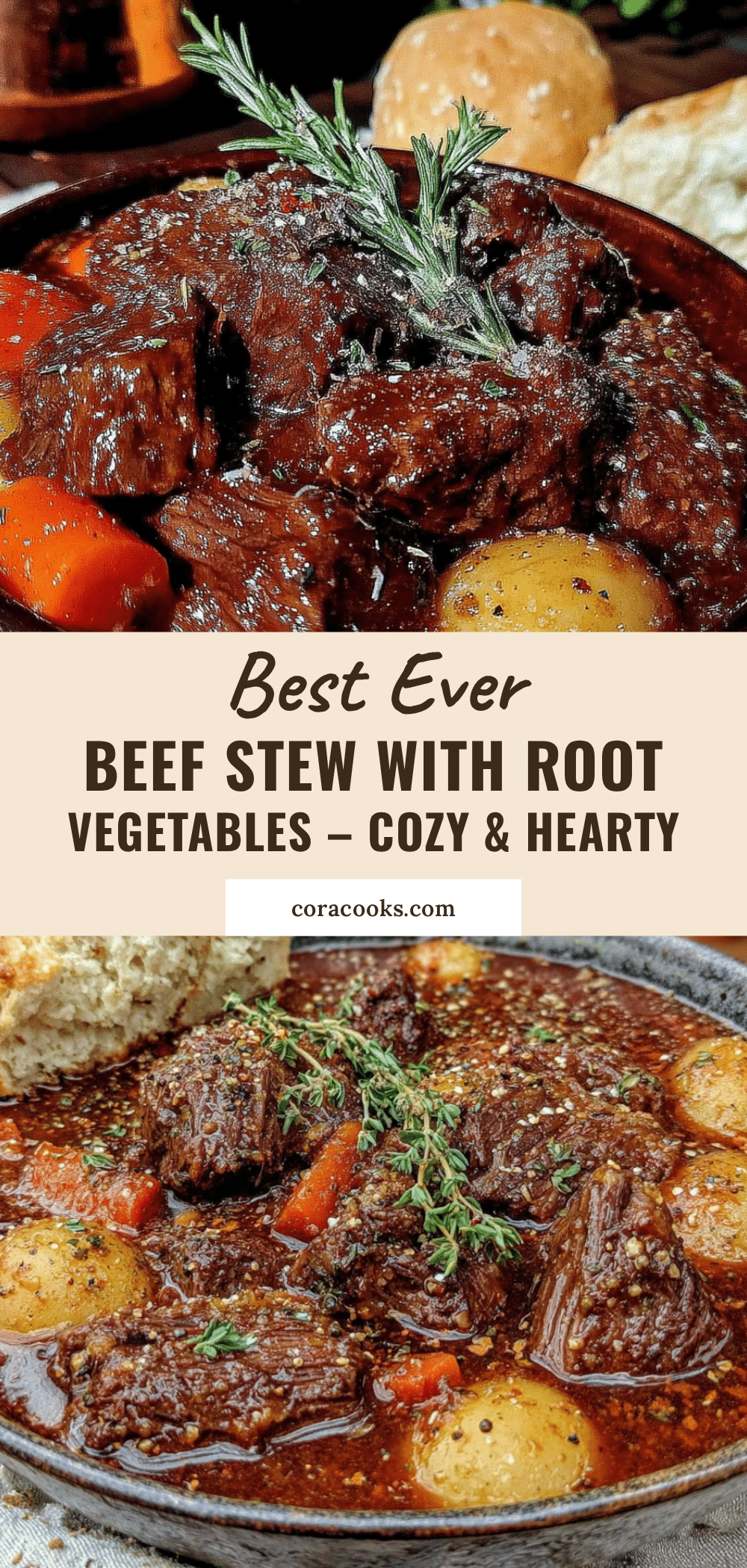
Best Ever Beef Stew with Root Vegetables – Easy Hearty Dinner
This hearty beef stew features meltingly tender chuck roast, sweet root vegetables, and a rich, wine-infused broth. It’s the ultimate comfort food for chilly evenings and family dinners.
- Prep Time: 20 minutes
- Cook Time: 2 hours 30 minutes
- Total Time: 2 hours 50 minutes
- Yield: 8 servings 1x
- Category: Main Course
- Cuisine: American
Ingredients
- 3 pounds beef chuck, cut into 2-inch cubes
- 1/4 cup all-purpose flour
- 3 tablespoons olive oil
- 2 large yellow onions, chopped
- 4 cloves garlic, minced
- 2 tablespoons tomato paste
- 1 cup dry red wine (e.g., Cabernet Sauvignon or Merlot)
- 4 cups low-sodium beef broth
- 2 bay leaves
- 4 sprigs fresh thyme
- 4 large carrots, peeled and cut into 1-inch chunks
- 1.5 pounds potatoes (Yukon Gold or Russet), peeled and cut into 1.5-inch chunks
- 2 large parsnips, peeled and cut into 1-inch chunks
- 1 cup frozen peas
- 1 tablespoon balsamic vinegar
- Salt and black pepper to taste
Instructions
- Prep the Beef: Pat beef chuck dry with paper towels. Cut into 2-inch cubes, trimming large fat pieces. Season generously with salt and pepper. Toss cubes in flour to coat lightly; shake off excess.
- Sear the Beef: Heat olive oil in a Dutch oven over medium-high heat until shimmering. Add beef in a single layer (work in batches). Brown undisturbed for 3-4 minutes per side until a deep crust forms. Transfer to a plate.
- Cook the Aromatics: Reduce heat to medium. Add onions and cook 5 minutes until softened and golden. Add garlic and cook 1 minute. Stir in tomato paste and cook 2 minutes, stirring constantly.
- Deglaze the Pot: Pour in red wine and scrape up browned bits with a wooden spoon. Simmer 2 minutes until slightly reduced.
- Build the Broth: Return beef and any juices to the pot. Add beef broth, bay leaves, and thyme sprigs. Stir and bring to a gentle simmer.
- Slow Cook the Stew: Cover and transfer to a preheated 325°F (160°C) oven. Cook for 1.5 hours. Remove from oven, add carrots, potatoes, and parsnips. Stir gently. Return to oven, uncovered, and cook 45 minutes to 1 hour until vegetables are tender and beef is fork-tender.
- Finish the Stew: Remove from oven. Discard bay leaves and thyme sprigs. Stir in frozen peas and let warm through for 2 minutes. Stir in balsamic vinegar. Adjust seasoning with salt and pepper.
- Rest and Serve: Let stew rest 10 minutes before serving. Serve hot in deep bowls, garnished with fresh parsley if desired.
Notes
For best results, don’t skip the searing step—it builds deep flavor. The stew tastes even better the next day. To thicken, use a cornstarch slurry (1 tablespoon cornstarch mixed with 2 tablespoons cold water). For a slow cooker, brown beef and onions first, then cook on low for 8 hours, adding vegetables during the last 2 hours.
Nutrition
- Serving Size: 1 bowl (about 1.5 cu
- Calories: 450
- Sugar: 8
- Sodium: 600
- Fat: 18
- Saturated Fat: 6
- Carbohydrates: 35
- Fiber: 6
- Protein: 35
Keywords: beef stew, root vegetables, hearty dinner, comfort food, fall recipe, winter recipe, slow cooked, Dutch oven