Love this? Save it for later!
Share the inspiration with your friends
It was 11:47 PM on a drizzly Thursday in March, and I had a very specific craving for something warm, crusty, and faintly sweet—not cake, not toast, but that in-between bread you tear apart with your hands. I didn’t have any yeast in the house (because who remembers to buy yeast on a random Thursday?), but I had a carton of buttermilk that was about to turn, a half-empty jar of golden raisins from Christmas baking, and a dusty tin of caraway seeds that I’d bought on a whim last fall. Honestly, I thought about giving up and just making popcorn. But then that little voice in my head—the one that only gets loud after 11 PM—said, “What about soda bread?”
I’d made Irish soda bread before, but it was always that dense, brick-like version that sits in your stomach like a stone. I wanted something lighter. Something you could eat a second slice of without regret. So I started tinkering. I swapped out some all-purpose flour for whole wheat pastry flour, added a touch of honey instead of sugar, and tossed in those golden raisins and caraway seeds because, let’s face it, plain soda bread can be a little boring. The result was so good I actually texted my sister a photo at midnight. She replied with three question marks and a “Are you baking at midnight again?”
Maybe you’ve been there—standing in your kitchen at an unreasonable hour, determined to make something out of nothing. That’s the energy this bread was born from. And I’ve made it at least a dozen times since that night, tweaking and adjusting until it was just right. It’s not the soda bread your Irish grandmother made (probably), but it’s the one I keep coming back to. It’s light, it’s rustic, and it has just enough sweetness and spice to feel special without trying too hard.
Why You’ll Love This Recipe
This isn’t your average Irish soda bread. After testing this recipe more times than I care to admit, I can honestly say this version hits that sweet spot between traditional and modern. It’s been taste-tested by my neighbor, my picky-eater nephew, and a friend who swore she “didn’t like caraway.” She asked for the recipe.
- Quick & Easy: From mixing bowl to cooling rack in under an hour. No kneading, no rising, no waiting around. Just mix, shape, and bake.
- Simple Ingredients: You probably have most of these in your pantry right now. Buttermilk, flour, baking soda, salt—that’s the backbone. The raisins and caraway are optional, but trust me, they make it sing.
- Perfect for St. Patrick’s Day or Any Day: Sure, it’s great for a themed dinner, but I make this year-round. It’s the kind of bread that makes a bowl of soup feel like a meal or turns a simple breakfast into something memorable.
- Crowd-Pleaser: My nephew ate three slices with butter and honey. My caraway-skeptic friend ate two. It’s got that universal appeal—familiar enough to feel comforting, different enough to feel special.
- Unbelievably Delicious: The texture is what gets people. It’s tender but sturdy, with a crisp, flour-dusted crust and a crumb that’s light and almost scone-like. The golden raisins add little pockets of sweetness, and the caraway seeds give it that subtle, earthy warmth.
What makes this recipe different from the rest? It’s the combination of whole wheat pastry flour and all-purpose flour that gives it that lighter texture without losing the rustic character. Plus, I use cold butter cut in like you’re making biscuits—that’s the secret to a tender crumb. This isn’t just another soda bread recipe. It’s the one I’ve perfected through trial, error, and a lot of late-night baking.
What Ingredients You Will Need
This recipe uses simple, wholesome ingredients to deliver a bread that’s both rustic and refined. Most of these are pantry staples, which makes this perfect for those moments when you want fresh bread but don’t want to run to the store.
- All-purpose flour: 2 cups (260g) — gives structure and a familiar texture. I use King Arthur Flour for consistency.
- Whole wheat pastry flour: 1 cup (130g) — this is the secret to a lighter crumb. Regular whole wheat flour works too, but pastry flour gives a more tender result. (If you only have regular whole wheat, use ¾ cup and add ¼ cup more all-purpose.)
- Baking soda: 1 teaspoon — the leavening agent that reacts with the buttermilk. Make sure it’s fresh!
- Salt: 1 teaspoon — don’t skip it. It balances the sweetness and enhances the flavor of the caraway.
- Cold unsalted butter: 3 tablespoons (42g), cubed — adds richness and tenderness. Cut it in like you would for biscuits. I’ve used salted butter in a pinch and just reduced the added salt to ½ teaspoon.
- Golden raisins: ½ cup (80g) — sweeter and more delicate than regular raisins. If you only have dark raisins, they work fine. You can also soak them in warm water for 10 minutes if they’re a bit dry.
- Caraway seeds: 1 tablespoon — this is the classic Irish soda bread flavor. Not a fan? You can reduce to 2 teaspoons or leave them out entirely. Fennel seeds make an interesting substitute.
- Buttermilk: 1¼ cups (300ml), plus more for brushing — the acidic ingredient that activates the baking soda. No buttermilk? Add 1 tablespoon of lemon juice or white vinegar to regular milk and let it sit for 5 minutes.
- Honey: 1 tablespoon — adds a subtle sweetness and helps with browning. Maple syrup works too, or you can use granulated sugar if that’s what you have.
Equipment Needed
You don’t need much to make this bread, which is honestly one of the things I love about it. Here’s what you’ll need:
- Large mixing bowl: Any bowl will do, but I prefer a wide one for easy mixing.
- Whisk or fork: For mixing the dry ingredients together.
- Pastry cutter or two knives: For cutting the cold butter into the flour. You can also use your fingertips, but work quickly so the butter doesn’t warm up.
- Wooden spoon or rubber spatula: For mixing the dough. It’s a sticky dough, so a sturdy spoon works best.
- Baking sheet: A rimmed baking sheet lined with parchment paper. I’ve also used a cast-iron skillet, which gives a nice crust.
- Sharp knife or bench scraper: For scoring the cross on top of the bread. That deep cut isn’t just for looks—it helps the bread bake evenly.
- Pastry brush: For brushing the top with buttermilk before baking. A paper towel works in a pinch.
- Cooling rack: Essential for letting the bread cool properly so the bottom doesn’t get soggy.
I bought my pastry cutter at a thrift store for two dollars, and it’s one of my favorite kitchen tools. Don’t overthink the equipment—this recipe is forgiving.
Preparation Method
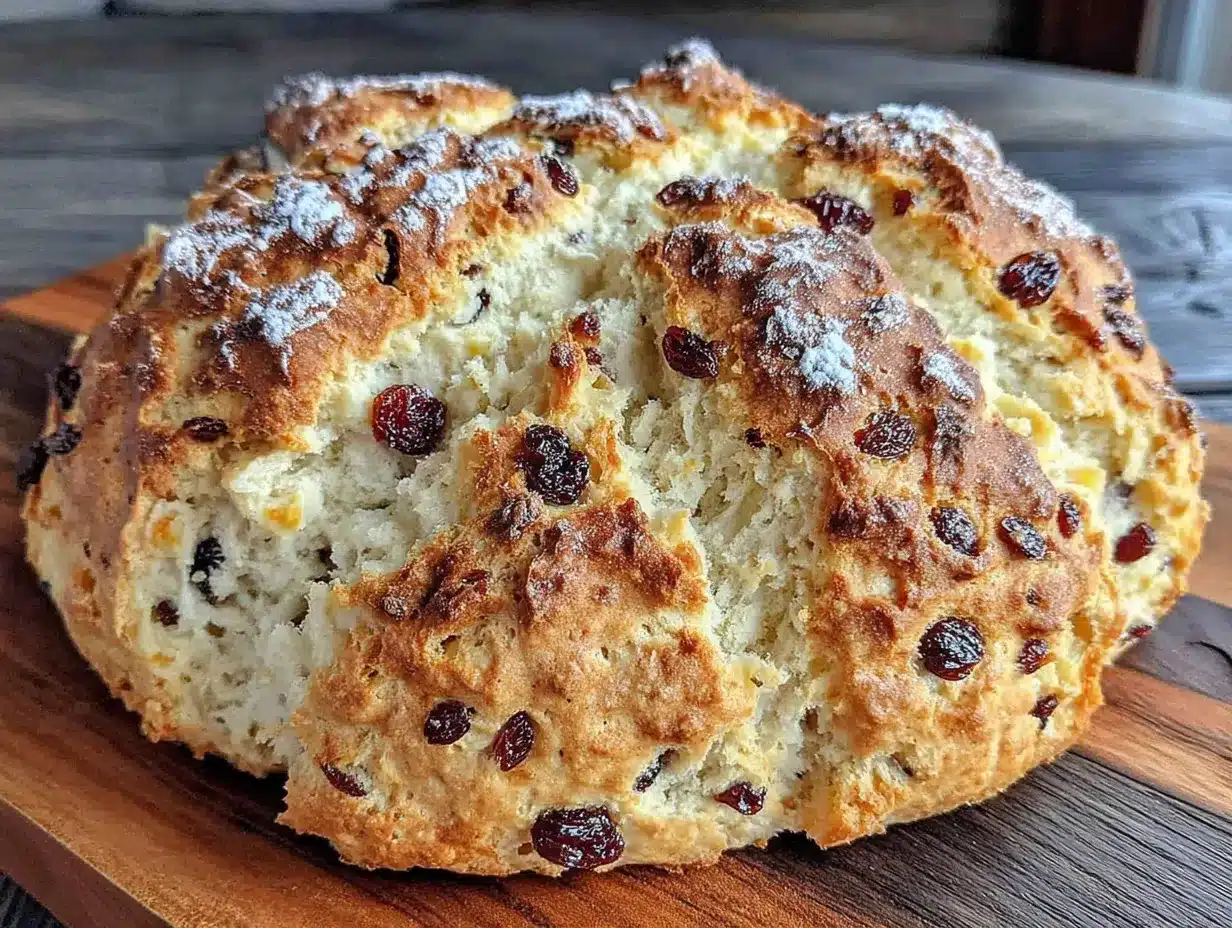
Preheat your oven to 400°F (200°C) and line a baking sheet with parchment paper. Trust me on the preheating—this bread needs that initial blast of heat to get a good rise.
- Mix the dry ingredients: In a large bowl, whisk together the all-purpose flour, whole wheat pastry flour, baking soda, and salt. Make sure the baking soda is evenly distributed—nobody wants a bitter bite of baking soda in their bread.
- Cut in the butter: Add the cold, cubed butter to the flour mixture. Using a pastry cutter or your fingertips, work the butter into the flour until it resembles coarse meal with some pea-sized butter pieces remaining. This takes about 2 minutes. Don’t overdo it—those little butter bits create steam pockets that make the bread tender. (I once got distracted and overworked the butter, and the bread came out dense and sad. Learn from my mistakes.)
- Add the raisins and caraway: Stir in the golden raisins and caraway seeds until they’re evenly distributed. If your raisins are particularly sticky, toss them with a tablespoon of the flour mixture first to keep them from sinking to the bottom.
- Add the buttermilk and honey: Make a well in the center of the dry ingredients. Pour in the buttermilk and honey. Stir with a wooden spoon or rubber spatula until just combined. The dough will be shaggy and sticky—this is exactly what you want. Don’t overmix or the bread will be tough. Stop as soon as you don’t see dry flour anymore.
- Shape the dough: Turn the dough out onto a lightly floured surface. With floured hands, gently bring the dough together into a round loaf, about 7 inches in diameter. Don’t knead it—just shape it. A few gentle folds are fine, but that’s it. The dough should look rough and rustic, not smooth and perfect.
- Transfer to baking sheet: Place the shaped dough onto your prepared baking sheet. It will look a bit lumpy and uneven—that’s the rustic charm.
- Score the top: Using a sharp knife, cut a deep cross into the top of the loaf, about ½ inch deep. This is traditional for Irish soda bread—it’s said to let the fairies out, but practically, it helps the bread bake evenly and gives it that classic look. The cuts should go almost to the edges of the loaf.
- Brush with buttermilk: Brush the top of the loaf with a little extra buttermilk. This gives it a beautiful golden crust. If you don’t have extra buttermilk, a beaten egg works too.
- Bake: Place the baking sheet in the preheated oven and bake for 35-40 minutes, until the bread is deep golden brown and sounds hollow when tapped on the bottom. The internal temperature should read about 200°F (93°C) on an instant-read thermometer. I start checking at 35 minutes because ovens vary.
- Cool: Transfer the bread to a wire rack and let it cool for at least 30 minutes before slicing. I know it’s tempting to cut into it right away, but the texture sets as it cools. Plus, the steam needs to escape—otherwise, you’ll end up with a gummy interior.
Cooking Tips & Techniques
After making this bread more times than I can count, I’ve learned a few things the hard way. Here’s what I wish someone had told me:
Don’t overmix the dough. This is the number one mistake people make with soda bread. Mix until the flour is just incorporated, then stop. Overmixing develops the gluten, and you’ll end up with a tough, dense loaf instead of a tender, light one. I learned this lesson when I made a loaf that could have doubled as a doorstop.
Use cold ingredients. Cold butter, cold buttermilk—it matters. The cold butter creates steam pockets as it melts in the oven, giving you that tender crumb. If your kitchen is warm, you can even pop the shaped dough in the fridge for 10 minutes before baking.
Score deeply enough. That cross on top isn’t just decorative. If you don’t cut deep enough, the bread won’t expand properly, and you’ll get cracks in weird places. I once made a loaf that looked like it had been in a minor car accident because I was too timid with my scoring.
Check your baking soda. Baking soda loses potency over time. If yours has been sitting in the cabinet for a year, it might not give you a good rise. To test it, drop a teaspoon into a small amount of vinegar—if it fizzes vigorously, it’s still good.
Let it cool completely. I know, I know. Fresh bread is irresistible. But if you cut into it while it’s still warm, the interior will be gummy and dense. Give it at least 30 minutes on a wire rack. The bread continues to cook from residual heat as it cools, and the texture sets up beautifully.
Toast leftovers. Day-old soda bread makes the best toast. The slices get crispy on the outside while staying tender on the inside. Slather with butter and a drizzle of honey, and you’ve got breakfast.
Variations & Adaptations
This recipe is wonderfully adaptable. Here are some variations I’ve tried and loved:
Savory Herb Version: Omit the raisins and honey, and add 2 tablespoons of fresh chopped rosemary or thyme, plus ½ teaspoon of black pepper. This version is incredible with a bowl of hearty stew or alongside roasted chicken. I made this for a friend’s soup night, and it was gone in 20 minutes.
Gluten-Free Option: Substitute the all-purpose and whole wheat pastry flours with a good gluten-free flour blend that contains xanthan gum. I’ve had success with Bob’s Red Mill 1-to-1 Baking Flour. The texture will be slightly different—a bit more crumbly—but the flavor is still wonderful. Add an extra tablespoon of buttermilk if the dough seems too dry.
Dairy-Free Version: Use cold coconut oil or vegan butter instead of regular butter, and replace the buttermilk with a mixture of unsweetened almond milk (or oat milk) and 1 tablespoon of lemon juice. Let it sit for 5 minutes before using. I’ve tested this with oat milk, and it works surprisingly well.
Spiced Raisin Version: Add 1 teaspoon of cinnamon, ½ teaspoon of nutmeg, and ¼ teaspoon of cardamom along with the dry ingredients. This turns the bread into something closer to a tea cake—perfect for breakfast or an afternoon snack with a cup of tea. I made this version during the holidays, and it smelled like Christmas.
Seeded Crust Version: After brushing with buttermilk, sprinkle the top with rolled oats, pumpkin seeds, or sesame seeds before baking. It adds a lovely crunch and makes the bread look even more rustic and beautiful.
Serving & Storage Suggestions
This bread is best served warm or at room temperature, with a generous smear of good salted butter. Honestly, butter is non-negotiable here—it takes the bread from good to unforgettable. A drizzle of honey or a spoonful of your favorite jam doesn’t hurt either.
For a savory meal, serve it alongside a bowl of hearty soup—think potato leek, tomato basil, or a chunky vegetable stew. It’s also perfect for sopping up the broth from a slow-cooked beef stew or a pot of Irish lamb stew. If you’re feeling fancy, slice it and toast it lightly, then top with smoked salmon and a dollop of crème fraîche for an appetizer.
For breakfast or brunch, toasted slices with butter and a poached egg on top is a simple but satisfying meal. The slight sweetness from the raisins pairs beautifully with salty butter and a runny yolk.
Storage: Store the bread wrapped in a clean kitchen towel at room temperature for up to 2 days. Do not store it in plastic—the crust will lose its crispness. If you live in a humid climate, the bread might soften faster, so keep it in a paper bag instead.
Freezing: This bread freezes beautifully. Wrap the completely cooled loaf tightly in plastic wrap, then in aluminum foil, and freeze for up to 3 months. To thaw, leave it at room temperature for a few hours, then reheat in a 350°F (175°C) oven for 10 minutes to revive the crust.
Reheating: For best results, reheat slices in a toaster or under the broiler for a minute or two. For a whole loaf, wrap it in foil and warm it in a 350°F (175°C) oven for 10-15 minutes. The flavors actually develop overnight—day-old soda bread has a more pronounced tang from the buttermilk, which I personally love.
Nutritional Information & Benefits
Per slice (based on 12 slices per loaf):
| Nutrient | Amount |
|---|---|
| Calories | 195 |
| Total Fat | 4g |
| Saturated Fat | 2.5g |
| Cholesterol | 10mg |
| Sodium | 320mg |
| Total Carbohydrates | 36g |
| Dietary Fiber | 2.5g |
| Sugars | 9g |
| Protein | 5g |
This bread offers more nutritional value than your standard white loaf, thanks to the whole wheat pastry flour, which provides additional fiber and minerals. Golden raisins are a good source of iron and potassium, and caraway seeds have been traditionally used to aid digestion. The buttermilk adds calcium and protein without the fat of cream.
If you’re watching your sugar intake, you can reduce the honey to 2 teaspoons or omit it entirely—the raisins provide enough natural sweetness. For a lower-sodium version, reduce the salt to ½ teaspoon. This bread is vegetarian-friendly and can be made dairy-free with the substitutions mentioned above.
Conclusion
This light and rustic Irish soda bread has become a staple in my kitchen, and I have a feeling it will become one in yours too. It’s the kind of recipe that feels special enough for a holiday table but simple enough for a random Tuesday night. The combination of tender crumb, sweet golden raisins, and earthy caraway seeds is just perfect—especially when it’s fresh from the oven with a pat of melting butter.
I love that this bread doesn’t demand much from me. No kneading, no rising, no complicated techniques. Just a few ingredients and a little bit of time, and I’ve got something that makes my kitchen smell incredible and my family happy. It’s forgiving, adaptable, and honestly, it’s hard to mess up.
I’d love to hear how yours turns out! Did you try any of the variations? Did you add your own twist? Drop a comment below and let me know—I read every single one. And if you share a photo on Pinterest or Instagram, tag me so I can see your beautiful loaf. Happy baking, friend!
Frequently Asked Questions
Can I make this recipe without buttermilk?
Yes! If you don’t have buttermilk, make a quick substitute by adding 1 tablespoon of lemon juice or white vinegar to 1¼ cups of regular milk. Let it sit for 5 minutes until it curdles slightly. It works perfectly. I’ve used this trick more times than I can count when I’ve been out of buttermilk.
Why did my soda bread turn out dense and heavy?
The most common culprit is overmixing the dough. Soda bread relies on a light touch—mix only until the ingredients come together, and don’t knead it. Another possibility is that your baking soda is old and has lost its potency. Always check the expiration date, and store baking soda in a cool, dry place.
Can I use all whole wheat flour instead of the pastry flour?
You can, but the bread will be denser and less tender. If you want to use all regular whole wheat flour, I recommend using 1½ cups whole wheat and 1½ cups all-purpose flour instead. The whole wheat pastry flour gives a lighter texture because it’s ground from a softer wheat variety with lower protein content.
How do I know when the bread is fully baked?
The bread should be deep golden brown on top and sound hollow when you tap the bottom. The most reliable method is to use an instant-read thermometer—the internal temperature should reach about 200°F (93°C). If you don’t have a thermometer, insert a thin knife into the center; it should come out clean or with just a few moist crumbs.
Can I add other dried fruits or nuts to this recipe?
Absolutely! Dried cranberries, chopped dried apricots, or chopped dates work beautifully in place of the golden raisins. For nuts, try chopped walnuts or pecans—add about ¼ cup along with the raisins. Just keep in mind that adding too many extras can make the dough harder to shape, so stick to about ¾ cup total of add-ins.
Pin This Recipe!

Light & Rustic Irish Soda Bread with Golden Raisins

A tender, lightly sweet Irish soda bread with golden raisins and caraway seeds. Quick to make with no kneading or rising, perfect for any occasion.
- Prep Time: 15 minutes
- Cook Time: 35-40 minutes
- Total Time: 50-55 minutes
- Yield: 12 servings 1x
- Category: Bread
- Cuisine: Irish
Ingredients
- 2 cups (260g) all-purpose flour
- 1 cup (130g) whole wheat pastry flour
- 1 teaspoon baking soda
- 1 teaspoon salt
- 3 tablespoons (42g) cold unsalted butter, cubed
- 1/2 cup (80g) golden raisins
- 1 tablespoon caraway seeds
- 1 1/4 cups (300ml) buttermilk, plus more for brushing
- 1 tablespoon honey
Instructions
- Preheat oven to 400°F (200°C) and line a baking sheet with parchment paper.
- In a large bowl, whisk together all-purpose flour, whole wheat pastry flour, baking soda, and salt.
- Add cold cubed butter to the flour mixture. Using a pastry cutter or fingertips, work the butter into the flour until it resembles coarse meal with some pea-sized butter pieces remaining.
- Stir in golden raisins and caraway seeds until evenly distributed.
- Make a well in the center of the dry ingredients. Pour in buttermilk and honey. Stir with a wooden spoon or rubber spatula until just combined. The dough will be shaggy and sticky.
- Turn the dough out onto a lightly floured surface. With floured hands, gently bring the dough together into a round loaf, about 7 inches in diameter. Do not knead.
- Place the shaped dough onto the prepared baking sheet.
- Using a sharp knife, cut a deep cross into the top of the loaf, about 1/2 inch deep.
- Brush the top of the loaf with a little extra buttermilk.
- Bake for 35-40 minutes, until deep golden brown and sounds hollow when tapped on the bottom. Internal temperature should reach about 200°F (93°C).
- Transfer to a wire rack and let cool for at least 30 minutes before slicing.
Notes
Don’t overmix the dough; mix until just combined. Use cold ingredients for best texture. Score deeply enough for even baking. Let cool completely before slicing to avoid gummy interior. Day-old bread makes excellent toast.
Nutrition
- Serving Size: 1 slice
- Calories: 195
- Sugar: 9
- Sodium: 320
- Fat: 4
- Saturated Fat: 2.5
- Carbohydrates: 36
- Fiber: 2.5
- Protein: 5
Keywords: Irish soda bread, soda bread, golden raisins, caraway seeds, quick bread, no yeast bread, St. Patrick's Day